

Tested Applications
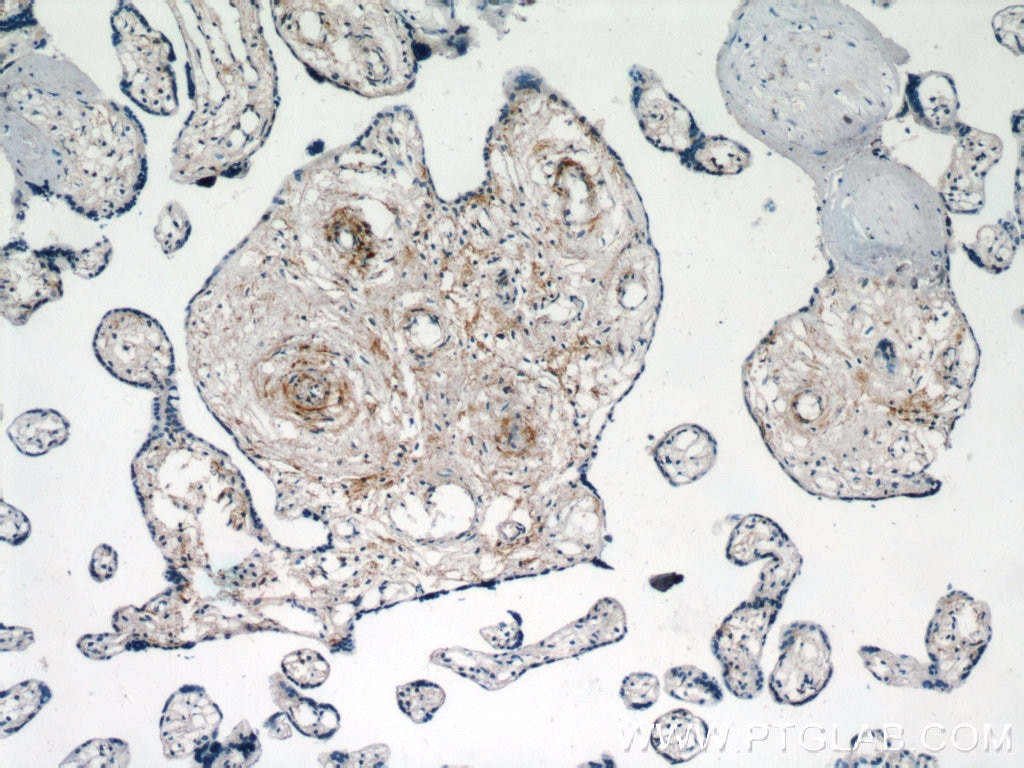
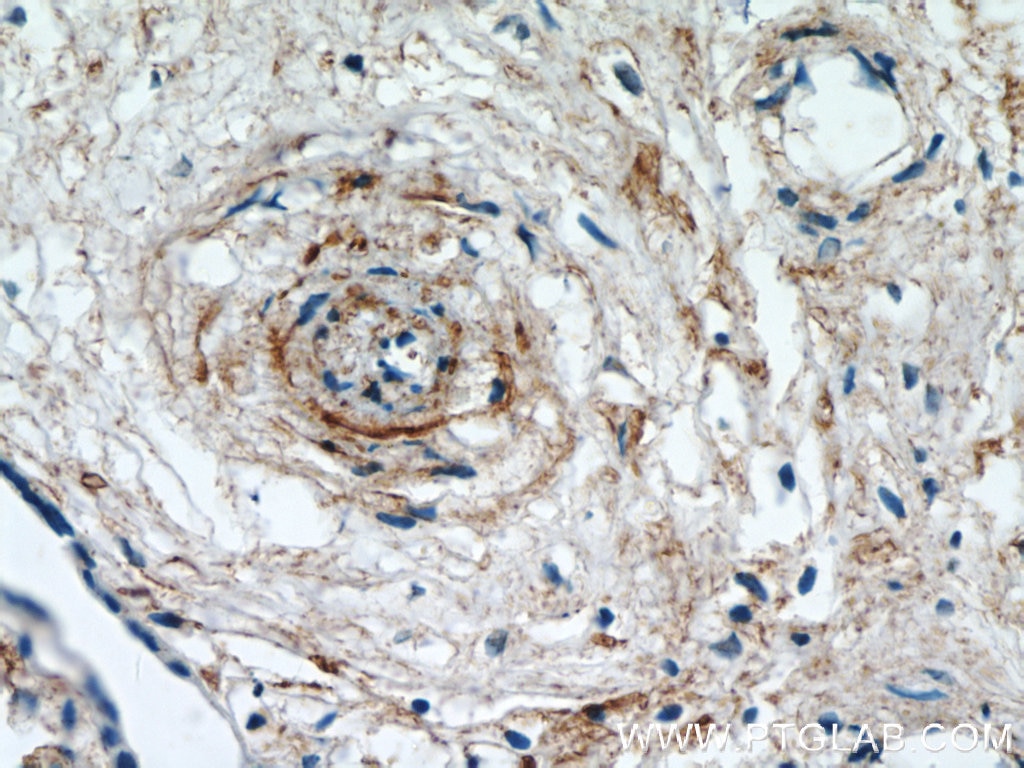
| Positive IHC detected in | human placenta tissue Note: suggested antigen retrieval with TE buffer pH 9.0; (*) Alternatively, antigen retrieval may be performed with citrate buffer pH 6.0 |
Recommended dilution
| Application | Dilution |
|---|---|
| Immunohistochemistry (IHC) | IHC : 1:50-1:500 |
| It is recommended that this reagent should be titrated in each testing system to obtain optimal results. | |
| Sample-dependent, Check data in validation data gallery. | |
Product Information
18103-1-AP targets KCNA10 in IHC, IF, ELISA applications and shows reactivity with human, mouse, rat samples.
| Tested Reactivity | human, mouse, rat |
| Cited Reactivity | mouse |
| Host / Isotype | Rabbit / IgG |
| Class | Polyclonal |
| Type | Antibody |
| Immunogen |
CatNo: Ag12434 Product name: Recombinant human KCNA10 protein Source: e coli.-derived, PGEX-4T Tag: GST Domain: 1-216 aa of BC074990 Sequence: MDVCGWKEMEVALVNFDNSDEIQEEPGYATDFDSTSPKGRPGGSSFSNGKILISESTNHETAFSKLPGDYADPPGPEPVVLNEGNQRVIINIAGLRFETQLRTLSQFPETLLGDREKRMQFFDSMRNEYFFDRNRPSFDGILYYYQSGGKIRRPANVPIDIFADEISFYELGSEAMDQFREDEGFIKDPETLLPTNDIHRQFWLLFEYPESSSAAR Predict reactive species |
| Full Name | potassium voltage-gated channel, shaker-related subfamily, member 10 |
| Calculated Molecular Weight | 511 aa, 58 kDa |
| GenBank Accession Number | BC074990 |
| Gene Symbol | KCNA10 |
| Gene ID (NCBI) | 3744 |
| RRID | AB_2878500 |
| Conjugate | Unconjugated |
| Form | Liquid |
| Purification Method | Antigen affinity purification |
| UNIPROT ID | Q16322 |
| Storage Buffer | PBS with 0.02% sodium azide and 50% glycerol, pH 7.3. |
| Storage Conditions | Store at -20°C. Stable for one year after shipment. Aliquoting is unnecessary for -20oC storage. 20ul sizes contain 0.1% BSA. |
Protocols
| Product Specific Protocols | |
|---|---|
| IHC protocol for KCNA10 antibody 18103-1-AP | Download protocol |
| Standard Protocols | |
|---|---|
| Click here to view our Standard Protocols |
Publications
What published studies show
The KCNA10 Polyclonal antibody (Cat# 18103-1-AP) has 1 citation. It appears in Science China Life Sciences (IF 9.6), published in January 2025. The study, titled "Optimized inner ear organoids for efficient hair cell generation and ototoxicity response modeling," utilized the antibody for immunofluorescence (IF) in mouse samples. The research field encompasses inner ear organoid biology, hair cell development, and ototoxicity modeling.
| Species | Application | Title |
|---|---|---|
Sci China Life Sci Optimized inner ear organoids for efficient hair cell generation and ototoxicity response modeling |

