

Tested Applications
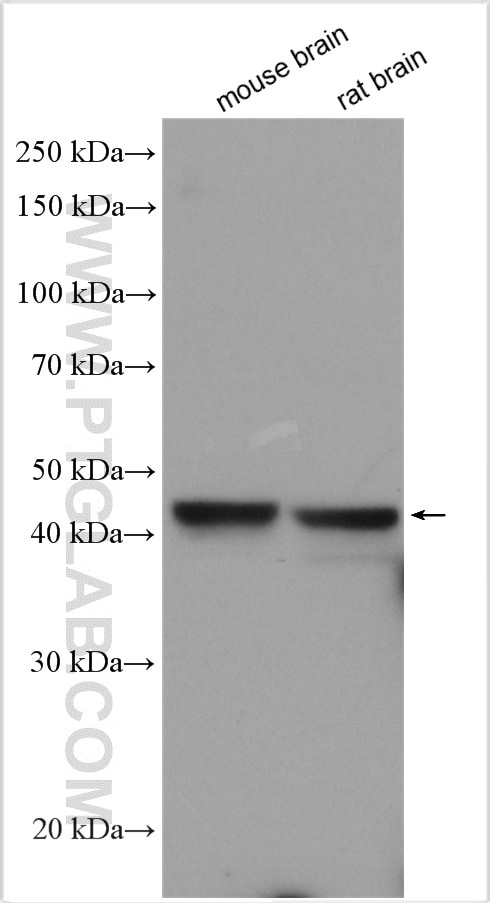
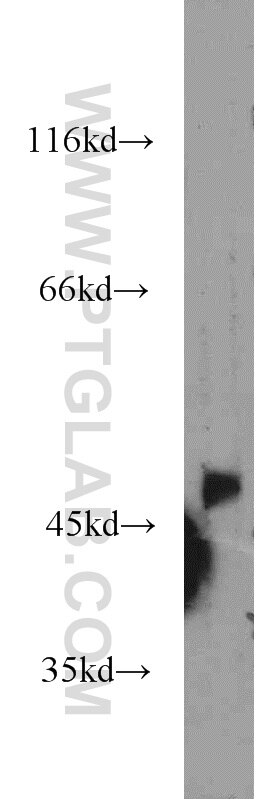
| Positive WB detected in | mouse brain tissue, rat brain tissue |
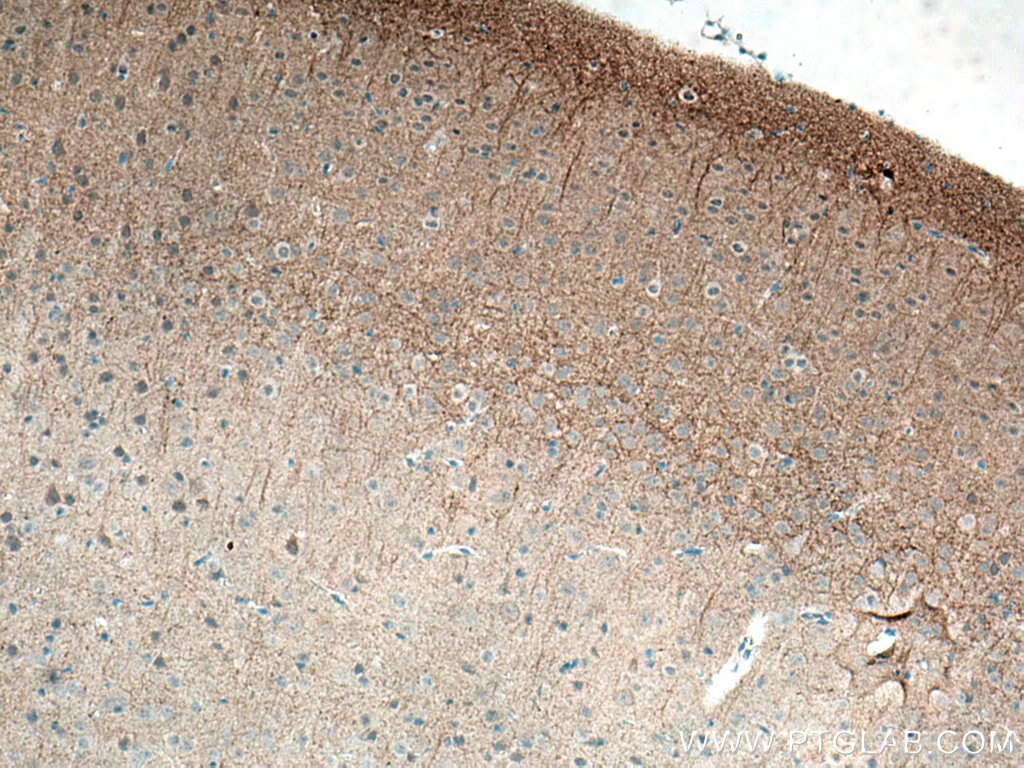
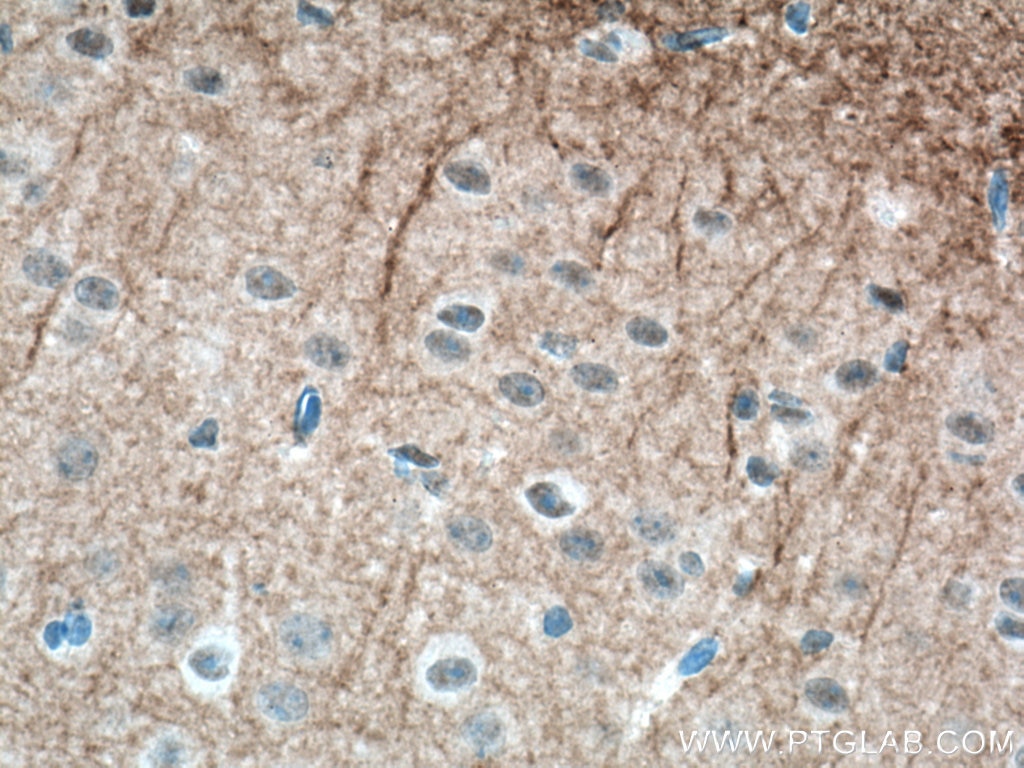
| Positive IHC detected in | mouse brain tissue Note: suggested antigen retrieval with TE buffer pH 9.0; (*) Alternatively, antigen retrieval may be performed with citrate buffer pH 6.0 |
Recommended dilution
| Application | Dilution |
|---|---|
| Western Blot (WB) | WB : 1:500-1:3000 |
| Immunohistochemistry (IHC) | IHC : 1:50-1:500 |
| It is recommended that this reagent should be titrated in each testing system to obtain optimal results. | |
| Sample-dependent, Check data in validation data gallery. | |
Product Information
21647-1-AP targets GIRK2 in WB, IHC, IF, ELISA applications and shows reactivity with human, mouse, rat samples.
| Tested Reactivity | human, mouse, rat |
| Cited Reactivity | human, mouse |
| Host / Isotype | Rabbit / IgG |
| Class | Polyclonal |
| Type | Antibody |
| Immunogen |
CatNo: Ag16344 Product name: Recombinant human KCNJ6 protein Source: e coli.-derived, PGEX-4T Tag: GST Domain: 351-423 aa of BC101547 Sequence: YNSFHETYETSTPSLSAKELAELASRAELPLSWSVSSKLNQHAELETEEEEKNLEEQTERNGDVANLENESKV Predict reactive species |
| Full Name | potassium inwardly-rectifying channel, subfamily J, member 6 |
| Calculated Molecular Weight | 423 aa, 48 kDa |
| Observed Molecular Weight | 45-48 kDa |
| GenBank Accession Number | BC101547 |
| Gene Symbol | GIRK2 |
| Gene ID (NCBI) | 3763 |
| RRID | AB_10794447 |
| Conjugate | Unconjugated |
| Form | Liquid |
| Purification Method | Antigen affinity purification |
| UNIPROT ID | P48051 |
| Storage Buffer | PBS with 0.02% sodium azide and 50% glycerol, pH 7.3. |
| Storage Conditions | Store at -20°C. Stable for one year after shipment. Aliquoting is unnecessary for -20oC storage. 20ul sizes contain 0.1% BSA. |
Background Information
GIRK2 (also known as Kir3.2), encoded by KCNJ6 gene, is a member of the G protein-coupled inwardly-rectifying potassium channel (GIRK, Kir3) family of inward rectifier potassium channels. GIRK channels are activated following stimulation of G protein-coupled receptors (PMID: 26422984). They play important roles in regulating cellular excitabilities in the heart and brain (PMID: 31043612). Mutations in KCNJ6 gene are associated with Keppen-Lubinsky Syndrome (PMID: 25620207).
Protocols
| Product Specific Protocols | |
|---|---|
| IHC protocol for GIRK2 antibody 21647-1-AP | Download protocol |
| WB protocol for GIRK2 antibody 21647-1-AP | Download protocol |
| Standard Protocols | |
|---|---|
| Click here to view our Standard Protocols |
Publications
What published studies show
The GIRK2 Polyclonal antibody (catalog number 21647-1-AP) has 5 total citations. These appear in Nature Communications, Molecular Therapy Nucleic Acids, Progress in Neurobiology, the FASEB Journal, and Frontiers in Neuroscience. The associated research fields center on Parkinson's disease, dopaminergic neuronal degeneration, calcium signaling, and anxiety-like behaviors, with applications including immunofluorescence and Western blot in human and mouse models.
| Species | Application | Title |
|---|---|---|
Nat Commun Parkinson's disease-associated PLA2G6 protects IP3R1 protein to control ER-mitochondria tethering and Ca(2+) transfer. | ||
Mol Ther Nucleic Acids Modulation of miR-181 influences dopaminergic neuronal degeneration in a mouse model of Parkinson's disease. | ||
Prog Neurobiol TRPM2 as a conserved gatekeeper determines the vulnerability of DA neurons by mediating ROS sensing and calcium dyshomeostasis | ||
FASEB J Electro-acupuncture alleviates adolescent cocaine exposure-enhanced anxiety-like behaviors in adult mice by attenuating the activities of PV interneurons in PrL. | ||
Front Neurosci Deregulation of mTORC1-TFEB axis in human iPSC model of GBA1-associated Parkinson's disease |

