
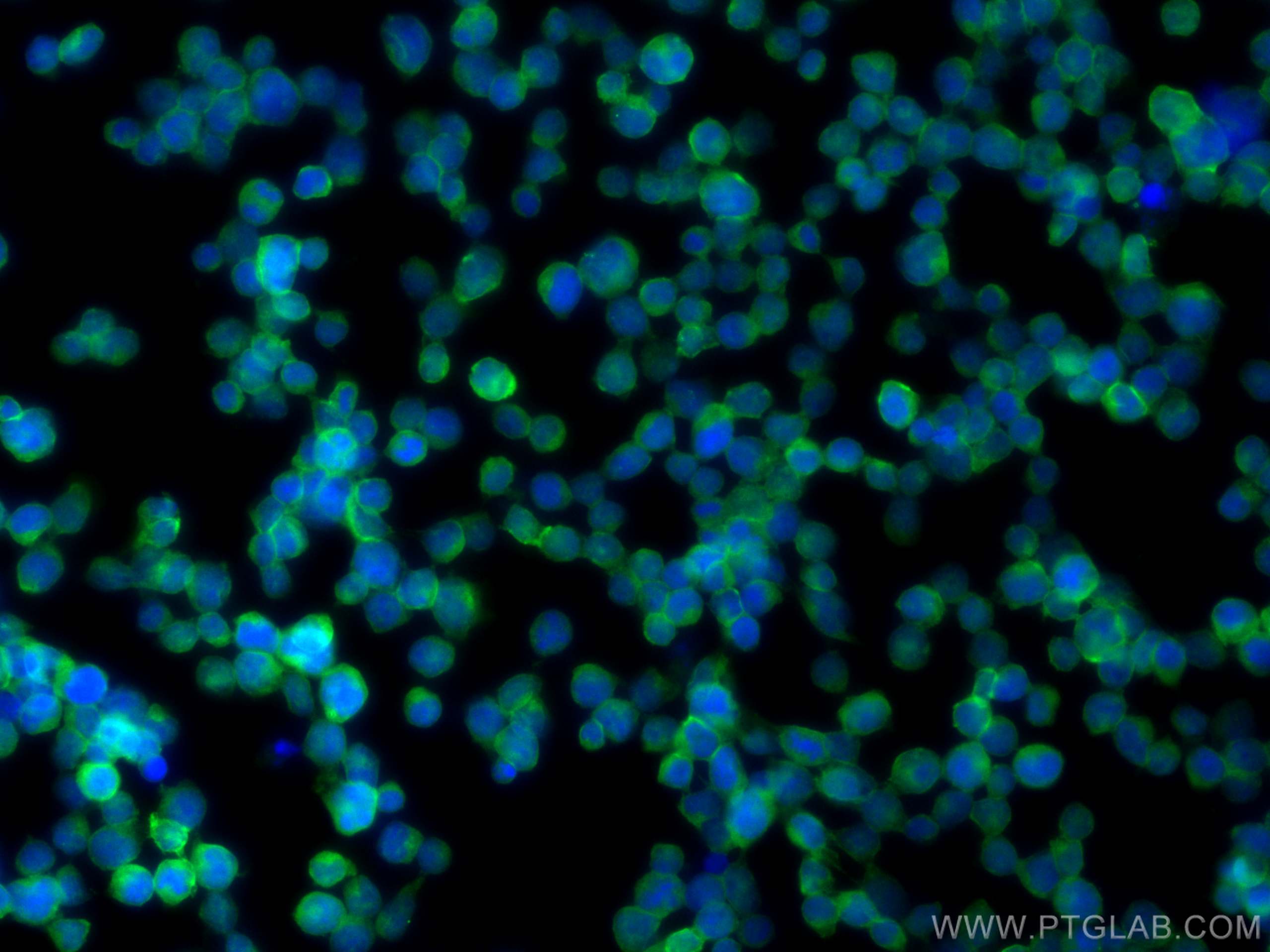

Tested Applications
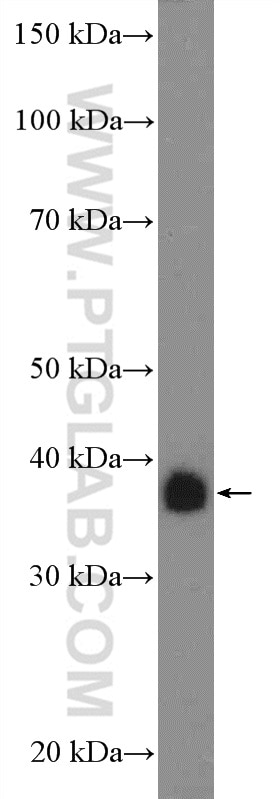
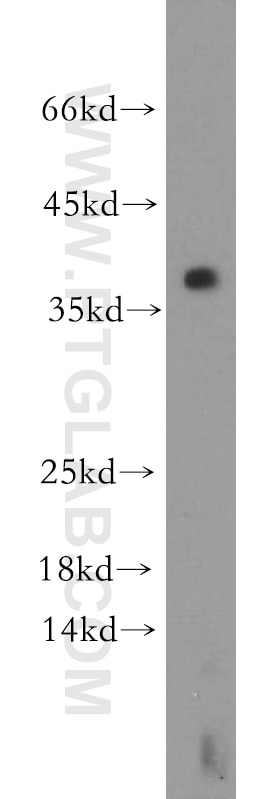
| Positive WB detected in | Jurkat cells, mouse thymus |
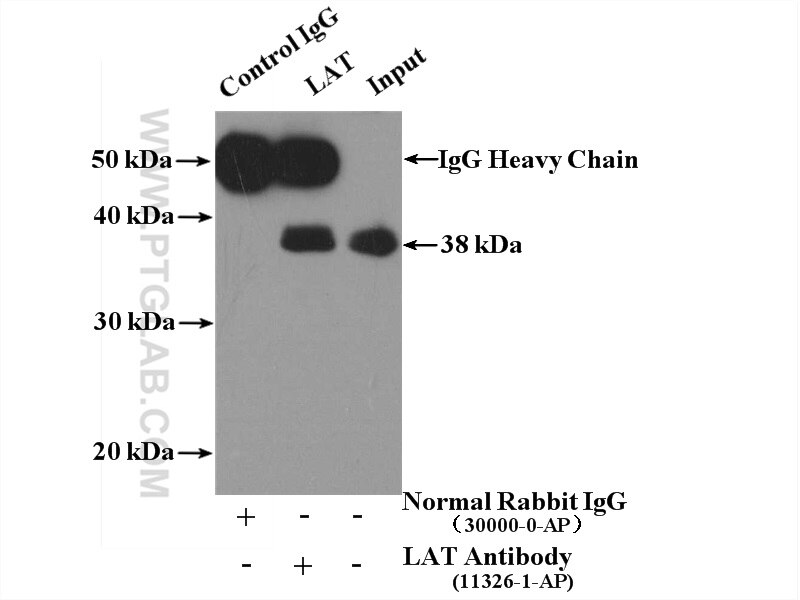
| Positive IP detected in | Jurkat cells |
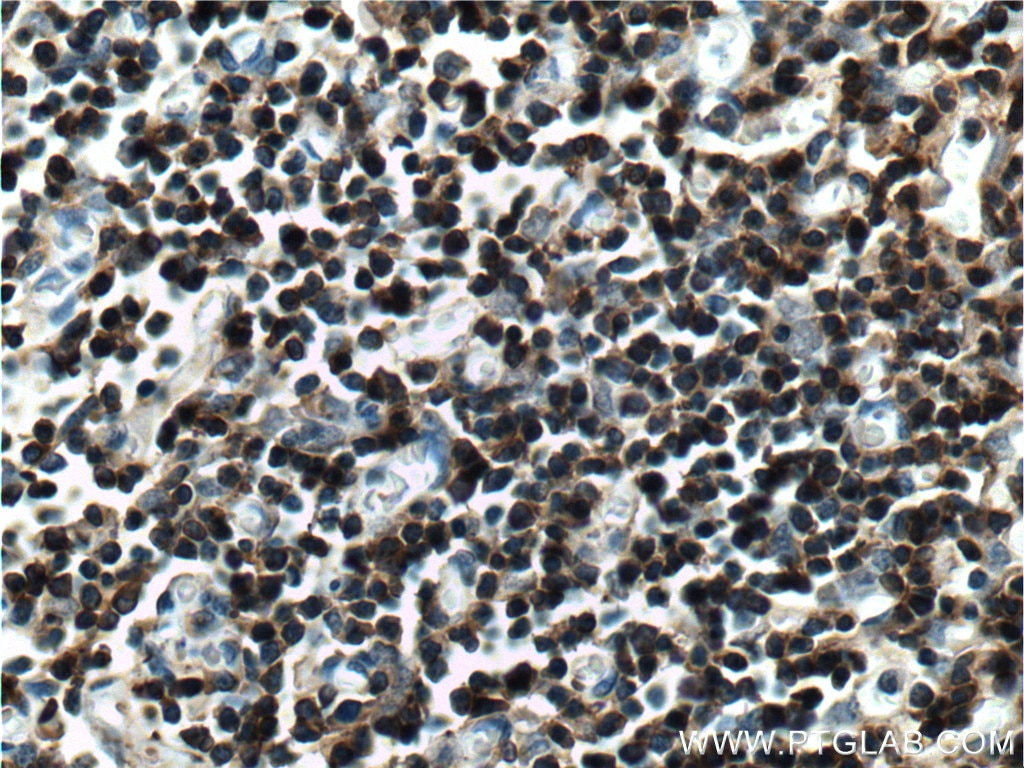
| Positive IHC detected in | human thymus tissue Note: suggested antigen retrieval with TE buffer pH 9.0; (*) Alternatively, antigen retrieval may be performed with citrate buffer pH 6.0 |
| Positive IF/ICC detected in | Jurkat cells |
Recommended dilution
| Application | Dilution |
|---|---|
| Western Blot (WB) | WB : 1:500-1:2000 |
| Immunoprecipitation (IP) | IP : 0.5-4.0 ug for 1.0-3.0 mg of total protein lysate |
| Immunohistochemistry (IHC) | IHC : 1:50-1:500 |
| Immunofluorescence (IF)/ICC | IF/ICC : 1:200-1:800 |
| It is recommended that this reagent should be titrated in each testing system to obtain optimal results. | |
| Sample-dependent, Check data in validation data gallery. | |
Product Information
11326-1-AP targets LAT in WB, IHC, IF/ICC, IP, ELISA applications and shows reactivity with human, mouse samples.
| Tested Reactivity | human, mouse |
| Cited Reactivity | human, mouse |
| Host / Isotype | Rabbit / IgG |
| Class | Polyclonal |
| Type | Antibody |
| Immunogen |
CatNo: Ag1868 Product name: Recombinant human LAT protein Source: e coli.-derived, PGEX-4T Tag: GST Domain: 1-233 aa of BC011563 Sequence: MEEAILVPCVLGLLLLPILAMLMALCVHCHRLPGSYDSTSSDSLYPRGIQFKRPHTVAPWPPAYPPVTSYPPLSQPDLLPIPRSPQPLGGSHRTPSSRRDSDGANSVASYENEEPACEDADEDEDDYHNPGYLVVLPDSTPATSTAAPSAPALSTPGIRDSAFSMESIDDYVNVPESGESAEASLDGSREYVNVSQELHPGAAKTEPAALSSQEAEEVEEEGAPDYENLQELN Predict reactive species |
| Full Name | linker for activation of T cells |
| Calculated Molecular Weight | 262 aa, 28 kDa |
| Observed Molecular Weight | 36-38 kDa |
| GenBank Accession Number | BC011563 |
| Gene Symbol | LAT |
| Gene ID (NCBI) | 27040 |
| RRID | AB_10695624 |
| Conjugate | Unconjugated |
| Form | Liquid |
| Purification Method | Antigen affinity purification |
| UNIPROT ID | O43561 |
| Storage Buffer | PBS with 0.02% sodium azide and 50% glycerol, pH 7.3. |
| Storage Conditions | Store at -20°C. Stable for one year after shipment. Aliquoting is unnecessary for -20oC storage. 20ul sizes contain 0.1% BSA. |
Background Information
LAT is a membrane-localized adaptor protein which is primarily concentrated in microdomains by palmitoylation. LAT plays a central role in T-cell activation by nucleating signaling complexes that are critical for the propagation of T-cell signals from the plasma membrane to the cellular interior. In addition to being a positive regulator of T cell signaling, LAT also recruits several negative regulatory proteins, including kinases, phosphatases, and ubiquitin ligases, which ultimately leads to signal termination. LAT is subject to ubiquitylation, and ubiquitin-resistant mutants of LAT display enhanced signaling.
Protocols
| Product Specific Protocols | |
|---|---|
| IF protocol for LAT antibody 11326-1-AP | Download protocol |
| IHC protocol for LAT antibody 11326-1-AP | Download protocol |
| IP protocol for LAT antibody 11326-1-AP | Download protocol |
| WB protocol for LAT antibody 11326-1-AP | Download protocol |
| Standard Protocols | |
|---|---|
| Click here to view our Standard Protocols |
Publications
What published studies show
The LAT Polyclonal antibody (Cat# 11326-1-AP) has 14 citations spanning journals including Nature Immunology, Nature Communications, Molecular Therapy, Journal of Advanced Research, Science China Life Sciences, Hepatology International, Nutrients, Frontiers in Pharmacology, Scientific Reports, iScience, Cell Immunology, Discovery Oncology, and European Journal of Haematology. Research fields encompass T cell immunology, ferroptosis, oncology (lung cancer, HCC, head and neck SCC, CLL), amino acid metabolism, vascular remodeling, and CAR-T therapy.
| Species | Application | Title |
|---|---|---|
Nat Immunol The epitranscriptional factor PCIF1 orchestrates CD8+ T cell ferroptosis and activation to control antitumor immunity | ||
Nat Commun Cell volume controlled by LRRC8A-formed volume-regulated anion channels fine-tunes T cell activation and function | ||
Nat Commun Sterically chained amino acid-rich water-soluble carbon quantum dots as a robust tumor-targeted drug delivery platform | ||
J Adv Res Baicalein is a potential agent targeting glutamine that induces apoptosis by inhibiting the glutamine-mTOR metabolic pathway in lung cancer | ||
Mol Ther Targeting the TRIM21-PD-1 axis potentiates immune checkpoint blockade and CAR T cell therapy | ||

