

Tested Applications
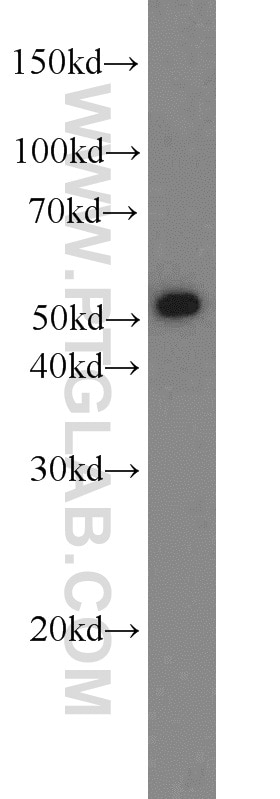
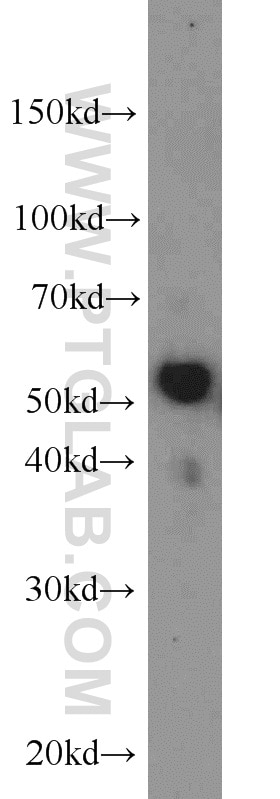
| Positive WB detected in | mouse liver tissue |
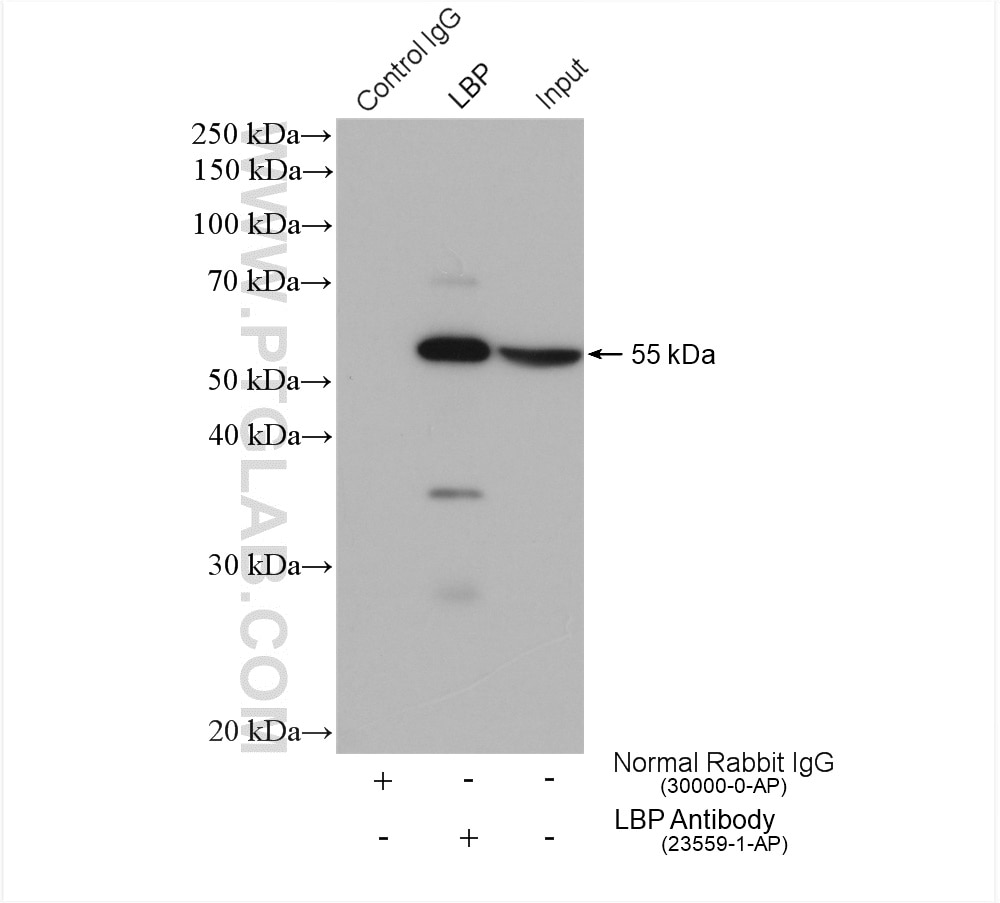
| Positive IP detected in | mouse liver tissue |
Recommended dilution
| Application | Dilution |
|---|---|
| Western Blot (WB) | WB : 1:500-1:2000 |
| Immunoprecipitation (IP) | IP : 0.5-4.0 ug for 1.0-3.0 mg of total protein lysate |
| It is recommended that this reagent should be titrated in each testing system to obtain optimal results. | |
| Sample-dependent, Check data in validation data gallery. | |
Product Information
23559-1-AP targets LBP in WB, IHC, IF, IP, ELISA applications and shows reactivity with human, mouse, rat samples.
| Tested Reactivity | human, mouse, rat |
| Cited Reactivity | human, mouse, rat, bovine |
| Host / Isotype | Rabbit / IgG |
| Class | Polyclonal |
| Type | Antibody |
| Immunogen |
CatNo: Ag13485 Product name: Recombinant human LBP protein Source: e coli.-derived, PET28a Tag: 6*His Domain: 128-477 aa of BC022256 Sequence: SFDVSVKGISISVNLLLGSESSGRPTVTASSCSSDIADVEVDMSGDLGWLLNLFHNQIESKFQKVLESRICEMIQKSVSSDLQPYLQTLPVTTEIDSFADIDYSLVEAPRATAQMLEVMFKGEIFHRNHRSPVTLLAAVMSLPEEHNKMVYFAISDYVFNTASLVYHEEGYLNFSITDDMIPPDSNIRLTTKSFRPFVPRLARLYPNMNLELQGSVPSAPLLNFSPGNLSVDPYMEIDAFVLLPSSSKEPVFRLSVATNVSATLTFNTSKITGFLKPGKVKVELKESKVGLFNAELLEALLNYYILNTFYPKFNDKLAEGFPLPLLKRVQLYDLGLQIHKDFPSRRDHPP Predict reactive species |
| Full Name | lipopolysaccharide binding protein |
| Calculated Molecular Weight | 481 aa, 53 kDa |
| Observed Molecular Weight | 53-60 kDa |
| GenBank Accession Number | BC022256 |
| Gene Symbol | LBP |
| Gene ID (NCBI) | 3929 |
| RRID | AB_11232597 |
| Conjugate | Unconjugated |
| Form | Liquid |
| Purification Method | Antigen affinity purification |
| UNIPROT ID | P18428 |
| Storage Buffer | PBS with 0.02% sodium azide and 50% glycerol, pH 7.3. |
| Storage Conditions | Store at -20°C. Stable for one year after shipment. Aliquoting is unnecessary for -20oC storage. 20ul sizes contain 0.1% BSA. |
Background Information
LBP (lipopolysaccharide-binding protein) is an acute-phase protein, predominantly synthesized by hepatocytes. It is present in normal serum at concentrations of 5 to 10 μg/ml, rising up to 200 μg/ml 24 h after induction of an acute-phase response. LBP binds to the lipid A moiety of bacterial lipopolysaccharides (LPS), a glycolipid present in the outer membrane of all Gram-negative bacteria, and acts as an affinity enhancer for CD14, facilitating its association with LPS. (PMID: 9665271; 11598069)
Protocols
| Product Specific Protocols | |
|---|---|
| IP protocol for LBP antibody 23559-1-AP | Download protocol |
| WB protocol for LBP antibody 23559-1-AP | Download protocol |
| Standard Protocols | |
|---|---|
| Click here to view our Standard Protocols |
Publications
What published studies show
The LBP Polyclonal antibody (Cat# 23559-1-AP) has 14 citations spanning journals including Nature Communications, Antioxidants, Journal of Ethnopharmacology, Geroscience, Frontiers in Microbiology, European Journal of Pharmacology, Zoological Research, Journal of Ovarian Research, Scientific Reports, Nutrition, Journal of Proteomics, PLoS ONE, Journal of Molecular Histology, and Inflammopharmacology. Research fields cover hepatic oxidative stress, steatohepatitis, sepsis-induced lung injury, NAFLD, tuberculosis, obesity/PCOS, renal injury, liver cirrhosis, bovine proteomics, pyroptosis, and ulcerative colitis.
| Species | Application | Title |
|---|---|---|
Nat Commun Lipopolysaccharide binding protein resists hepatic oxidative stress by regulating lipid droplet homeostasis | ||
Antioxidants (Basel) Antioxidative Self-Assembling Nanoparticles Attenuate the Development of Steatohepatitis and Inhibit Hepatocarcinogenesis in Mice | ||
J Ethnopharmacol Bupleurum chinense DC. ameliorates depression through hepatic lipopolysaccharide-binding protein-associated inflammation and monoamine biosynthesis. | ||
Geroscience Exploring the transformative effects of calorie restriction on the lacrimal gland in adult mice. | ||
Front Microbiol Proteomics Analysis of Exosomes From Patients With Active Tuberculosis Reveals Infection Profiles and Potential Biomarkers. | ||
Eur J Pharmacol Chromofungin, a chromogranin A-derived peptide, protects against sepsis-induced acute lung injury by inhibiting LBP/TLR4-dependent inflammatory signaling |

