

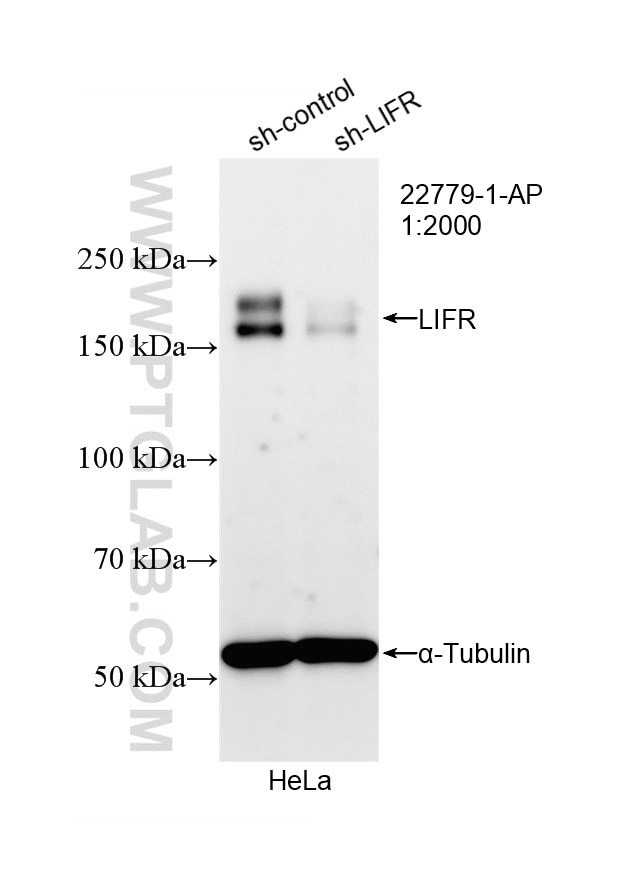



Tested Applications
| Positive WB detected in | HeLa cells, mouse skeletal muscle tissue, human skeletal muscle tissue, human placenta tissue |
| Positive IP detected in | mouse skeletal muscle tissue |
| Positive IHC detected in | human skeletal muscle tissue, human placenta tissue, human kidney tissue, mouse skeletal muscle tissue, mouse cerebellum tissue Note: suggested antigen retrieval with TE buffer pH 9.0; (*) Alternatively, antigen retrieval may be performed with citrate buffer pH 6.0 |
| Positive IF-P detected in | mouse cerebellum tissue |
| Positive IF/ICC detected in | HeLa cells |
Recommended dilution
| Application | Dilution |
|---|---|
| Western Blot (WB) | WB : 1:500-1:3000 |
| Immunoprecipitation (IP) | IP : 0.5-4.0 ug for 1.0-3.0 mg of total protein lysate |
| Immunohistochemistry (IHC) | IHC : 1:50-1:500 |
| Immunofluorescence (IF)-P | IF-P : 1:50-1:500 |
| Immunofluorescence (IF)/ICC | IF/ICC : 1:200-1:800 |
| It is recommended that this reagent should be titrated in each testing system to obtain optimal results. | |
| Sample-dependent, Check data in validation data gallery. | |
Product Information
22779-1-AP targets LIFR in WB, IHC, IF/ICC, IF-P, IP, ELISA applications and shows reactivity with human, mouse samples.
| Tested Reactivity | human, mouse |
| Cited Reactivity | human, mouse, pig |
| Host / Isotype | Rabbit / IgG |
| Class | Polyclonal |
| Type | Antibody |
| Immunogen |
CatNo: Ag18742 Product name: Recombinant human LIFR protein Source: e coli.-derived, PGEX-4T Tag: GST Domain: 906-1097 aa of BC153096 Sequence: NNVEVLETRSAFPKIEDTEIISPVAERPEDRSDAEPENHVVVSYCPPIIEEEIPNPAADEAGGTAQVIYIDVQSMYQPQAKPEEEQENDPVGGAGYKPQMHLPINSTVEDIAAEEDLDKTAGYRPQANVNTWNLVSPDSPRSIDSNSEIVSFGSPCSINSRQFLIPPKDEDSPKSNGGGWSFTNFFQNKPND Predict reactive species |
| Full Name | leukemia inhibitory factor receptor alpha |
| Calculated Molecular Weight | 1097 aa, 124 kDa |
| Observed Molecular Weight | 190 kDa, 170 kDa |
| GenBank Accession Number | BC153096 |
| Gene Symbol | LIFR |
| Gene ID (NCBI) | 3977 |
| RRID | AB_2879165 |
| Conjugate | Unconjugated |
| Form | Liquid |
| Purification Method | Antigen Affinity purified |
| UNIPROT ID | P42702 |
| Storage Buffer | PBS with 0.02% sodium azide and 50% glycerol, pH 7.3. |
| Storage Conditions | Store at -20°C. Stable for one year after shipment. Aliquoting is unnecessary for -20oC storage. 20ul sizes contain 0.1% BSA. |
Background Information
LIFR, also known as CD118, is a subunit of a receptor for leukemia inhibitory factor (LIF). LIF is a pleiotropic cytokine of the interleukin-6 family which affects the differentiation, survival, and proliferation of a wide variety of cells in the adult and the embryo. LIFR is the low-affinity binding chain that, together with the high-affinity converter subunit gp130, forms a high-affinity receptor complex that mediates the action of LIF. The high-affinity complex also binds a related cytokine, oncostatin M (PMID: 8999038). LIFR has also been identified as a breast cancer metastasis suppressor that functions through the HIPPO-YAP pathway (PMID: 23001183). LIFR appeared as doublets with 190 and 170 kDa (PMID: 10858440). They represented different glycosylated forms of the LIFR in different steps of protein maturation.
Protocols
| Product Specific Protocols | |
|---|---|
| IF protocol for LIFR antibody 22779-1-AP | Download protocol |
| IHC protocol for LIFR antibody 22779-1-AP | Download protocol |
| IP protocol for LIFR antibody 22779-1-AP | Download protocol |
| WB protocol for LIFR antibody 22779-1-AP | Download protocol |
| Standard Protocols | |
|---|---|
| Click here to view our Standard Protocols |
Publications
What published studies show
The LIFR Polyclonal antibody (Cat# 22779-1-AP) has 27 citations. Journals include Nature, Science, Nature Metabolism, Nature Communications, Journal of Experimental & Clinical Cancer Research, Advanced Science, Journal of Translational Medicine, International Journal of Biological Macromolecules, BMC Medicine, Clinical & Translational Medicine, Cancer Cell International, Communications Biology, Scientific Reports, Journal of Inflammation Research, iScience, IEEE Transactions on Biomedical Engineering, Biotechnology and Bioengineering, Archives of Biochemistry and Biophysics, Frontiers in Oncology, Human Molecular Genetics, Ultrasound in Medicine & Biology, Cancer Management and Research, and bioRxiv. Research fields span liver regeneration, cancer (gastric, breast, esophageal, prostate, endometrial, pancreatic, osteosarcoma), stem cell biology, ferroptosis, preeclampsia, and cell culture techniques.
| Species | Application | Title |
|---|---|---|
Nat Metab LIFR regulates cholesterol-driven bidirectional hepatocyte-neutrophil cross-talk to promote liver regeneration | ||
Nat Commun A targetable LIFR-NF-κB-LCN2 axis controls liver tumorigenesis and vulnerability to ferroptosis.
| ||
Nat Commun Defective O-fucosylation of EDIL3 attenuates invasion and vascular remodeling of trophoblasts via LIFR signaling pathway in preeclampsia. | ||
J Exp Clin Cancer Res miR-589 promotes gastric cancer aggressiveness by a LIFR-PI3K/AKT-c-Jun regulatory feedback loop. |
Reviews
What customers say
Able is busy answering your previous question. Please try again later.
The reviews below have been submitted by verified Proteintech customers who received an incentive for providing their feedback.
Clarisse (Verified Customer) (12-12-2022) | Low signal, regardless of the method of fixation.
|


