
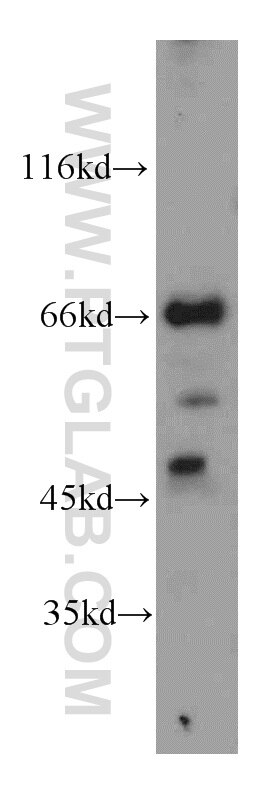
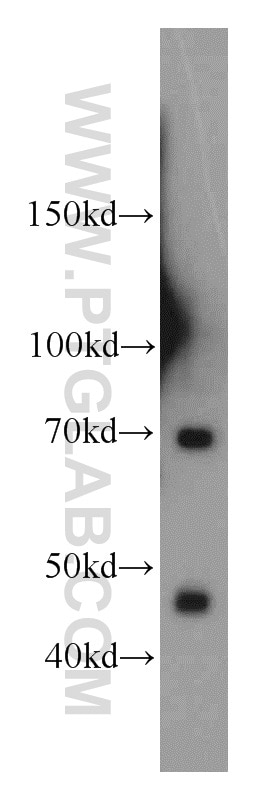
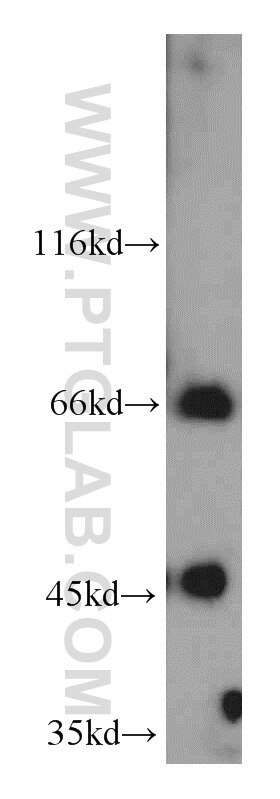
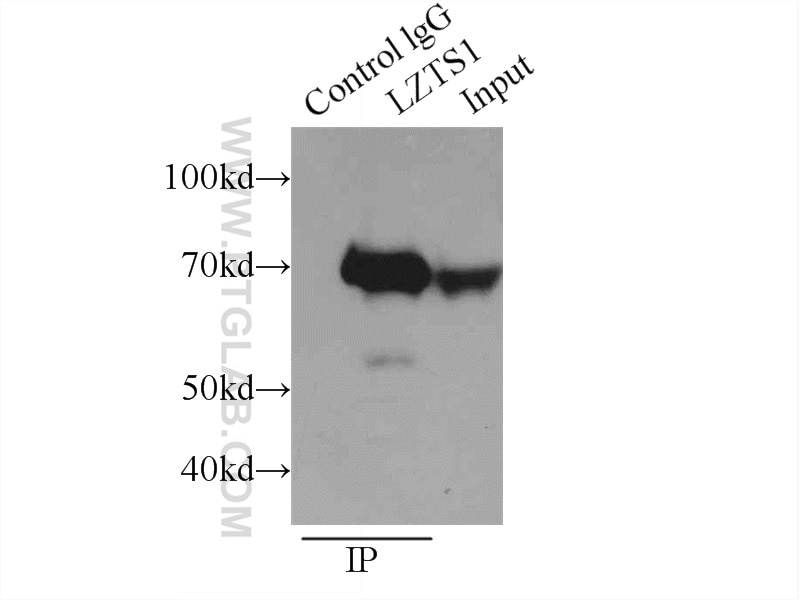
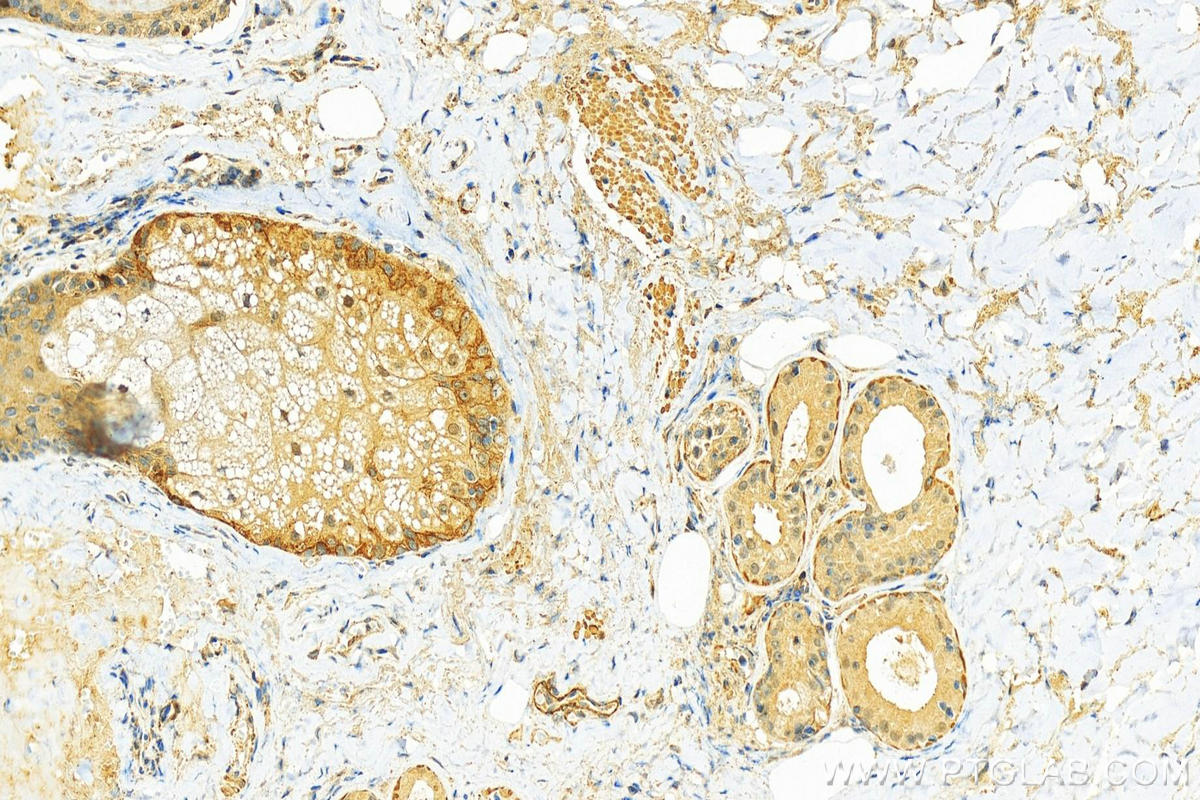
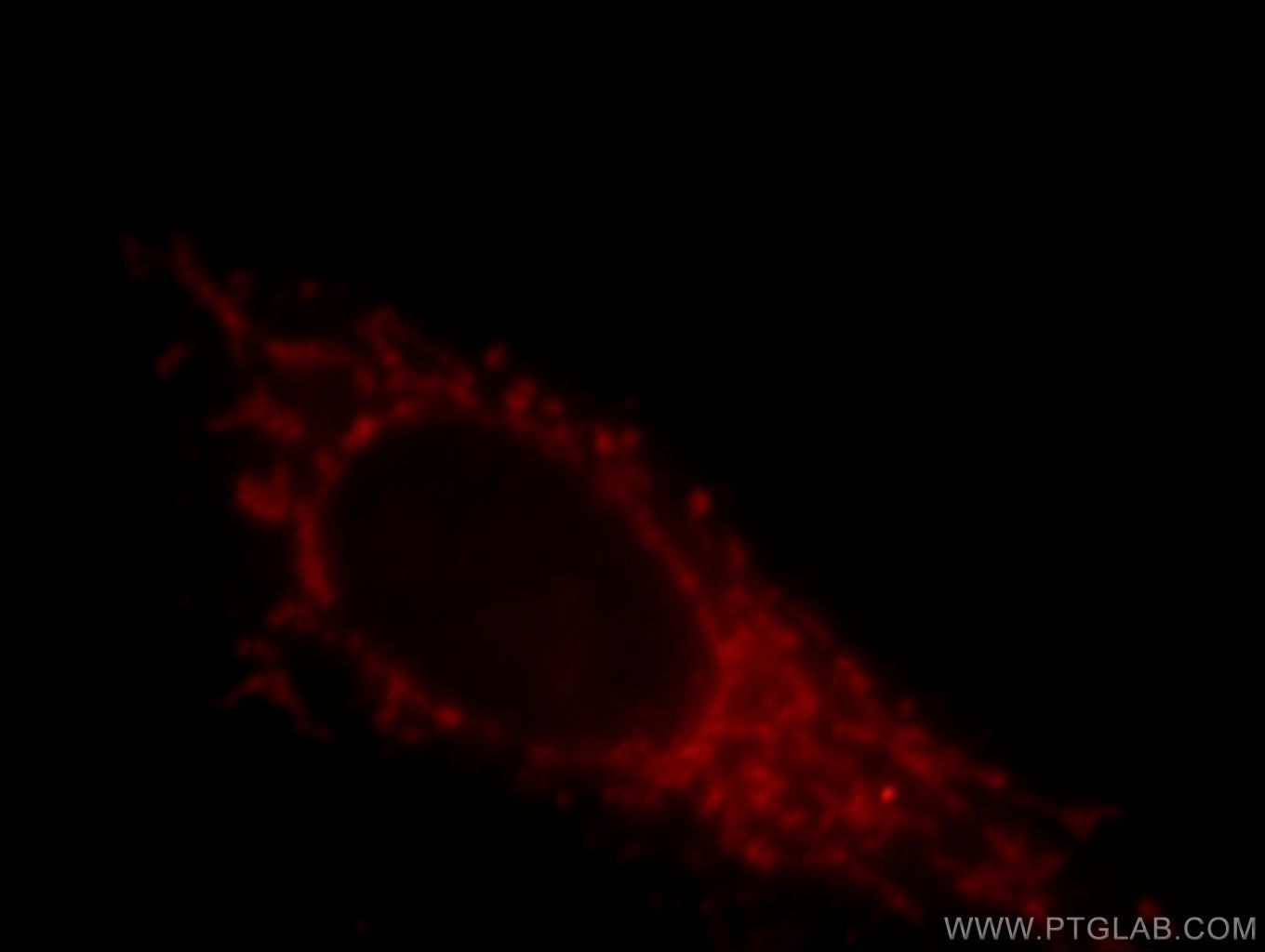
Tested Applications
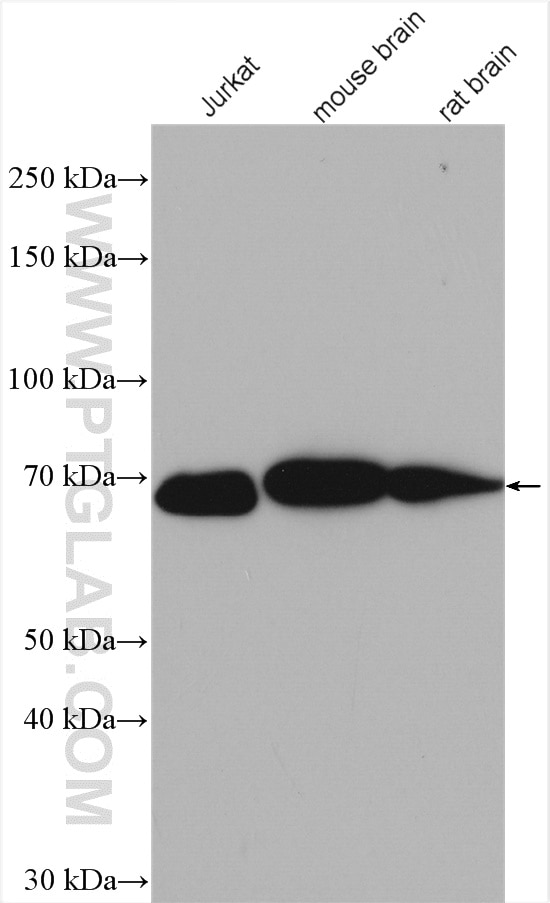
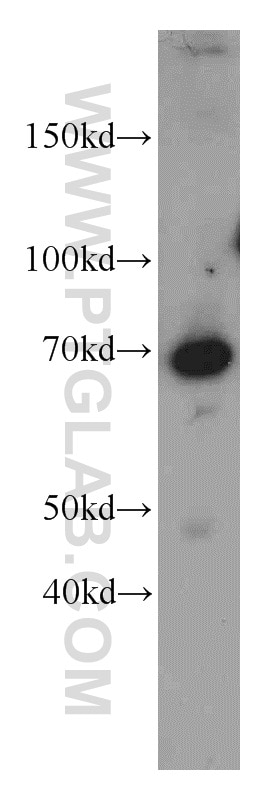
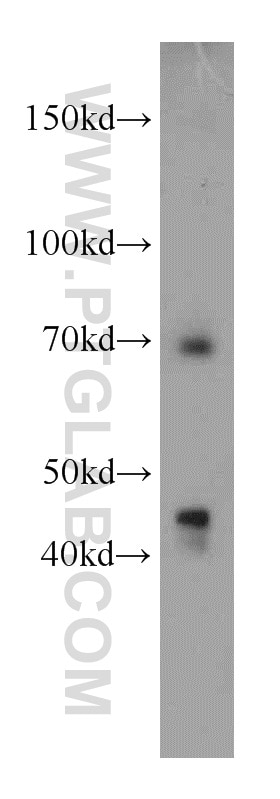
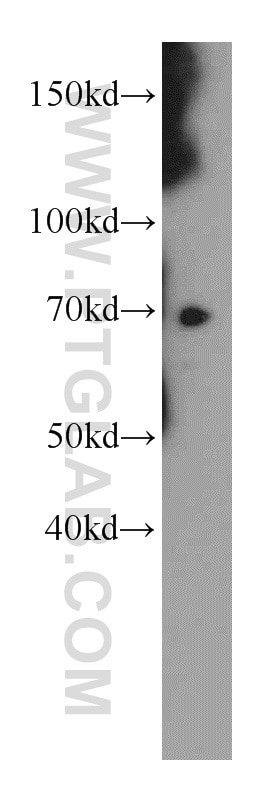
| Positive WB detected in | Jurkat cells, HEK-293 cells, human testis tissue, mouse ovary tissue, mouse thymus tissue, PC-3 cells, rat brain tissue, mouse brain tissue |
| Positive IP detected in | mouse brain tissue |
| Positive IHC detected in | human skin cancer tissue Note: suggested antigen retrieval with TE buffer pH 9.0; (*) Alternatively, antigen retrieval may be performed with citrate buffer pH 6.0 |
| Positive IF/ICC detected in | HepG2 cells |
Recommended dilution
| Application | Dilution |
|---|---|
| Western Blot (WB) | WB : 1:2000-1:10000 |
| Immunoprecipitation (IP) | IP : 0.5-4.0 ug for 1.0-3.0 mg of total protein lysate |
| Immunohistochemistry (IHC) | IHC : 1:500-1:2000 |
| Immunofluorescence (IF)/ICC | IF/ICC : 1:10-1:100 |
| It is recommended that this reagent should be titrated in each testing system to obtain optimal results. | |
| Sample-dependent, Check data in validation data gallery. | |
Product Information
20878-1-AP targets LZTS1 in WB, IHC, IF/ICC, IP, ELISA applications and shows reactivity with human, mouse, rat samples.
| Tested Reactivity | human, mouse, rat |
| Cited Reactivity | human, mouse |
| Host / Isotype | Rabbit / IgG |
| Class | Polyclonal |
| Type | Antibody |
| Immunogen |
CatNo: Ag14977 Product name: Recombinant human LZTS1 protein Source: e coli.-derived, PGEX-4T Tag: GST Domain: 397-596 aa of BC075007 Sequence: QLKESQTEVNAKASEILGLKAQLKDTRGKLEGLELRTQDLEGALRTKGLELEVCENELQRKKNEAELLREKVNLLEQELQELRAQAALARDMGPPTFPEDVPALQRELERLRAELREERQGHDQMSSGFQHERLVWKEEKEKVIQYQKQLQQSYVAMYQRNQRLEKALQQLARGDSAGEPLEVDLEGADIPYEDIIATEI Predict reactive species |
| Full Name | leucine zipper, putative tumor suppressor 1 |
| Calculated Molecular Weight | 596 aa, 67 kDa |
| Observed Molecular Weight | 67 kDa |
| GenBank Accession Number | BC075007 |
| Gene Symbol | LZTS1 |
| Gene ID (NCBI) | 11178 |
| RRID | AB_10693683 |
| Conjugate | Unconjugated |
| Form | Liquid |
| Purification Method | Antigen affinity purification |
| UNIPROT ID | Q9Y250 |
| Storage Buffer | PBS with 0.02% sodium azide and 50% glycerol, pH 7.3. |
| Storage Conditions | Store at -20°C. Stable for one year after shipment. Aliquoting is unnecessary for -20oC storage. 20ul sizes contain 0.1% BSA. |
Background Information
LZTS1 (Leucine Zipper Tumor Suppressor 1), also known as FEZ1, is a tumor suppressor protein that plays a critical role in regulating cell cycle progression and maintaining microtubule stability. It is frequently downregulated in various human cancers, including breast, gastric, and prostate cancer. LZTS1 interacts with the anaphase-promoting complex/cyclosome (APC/C) to promote the degradation of key mitotic regulators such as cyclin B1, thereby controlling the G2/M transition. Additionally, it influences cytoskeletal dynamics by binding to microtubules and actin filaments, affecting cell adhesion, migration, and proliferation. Loss or reduced expression of LZTS1 is associated with aggressive tumor behavior, increased metastatic potential, and poor clinical prognosis, highlighting its importance as a potential biomarker and therapeutic target in oncology.
Protocols
| Product Specific Protocols | |
|---|---|
| IF protocol for LZTS1 antibody 20878-1-AP | Download protocol |
| IHC protocol for LZTS1 antibody 20878-1-AP | Download protocol |
| IP protocol for LZTS1 antibody 20878-1-AP | Download protocol |
| WB protocol for LZTS1 antibody 20878-1-AP | Download protocol |
| Standard Protocols | |
|---|---|
| Click here to view our Standard Protocols |
Publications
What published studies show
| Species | Application | Title |
|---|---|---|
Nat Commun Lzts1 controls both neuronal delamination and outer radial glial-like cell generation during mammalian cerebral development.
| ||
Mol Oncol Ryanodine receptor 2 promotes colorectal cancer metastasis by the ROS/BACH1 axis | ||
Int Dent J Screening Differentially Expressed Proteins in Areca Nut-Related Oral Squamous Cell Carcinoma Using Tandem Mass Tag Proteomics |

