

Tested Applications
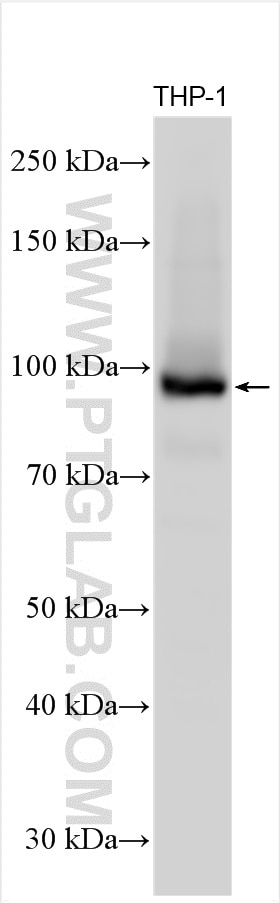
| Positive WB detected in | THP-1 cells |
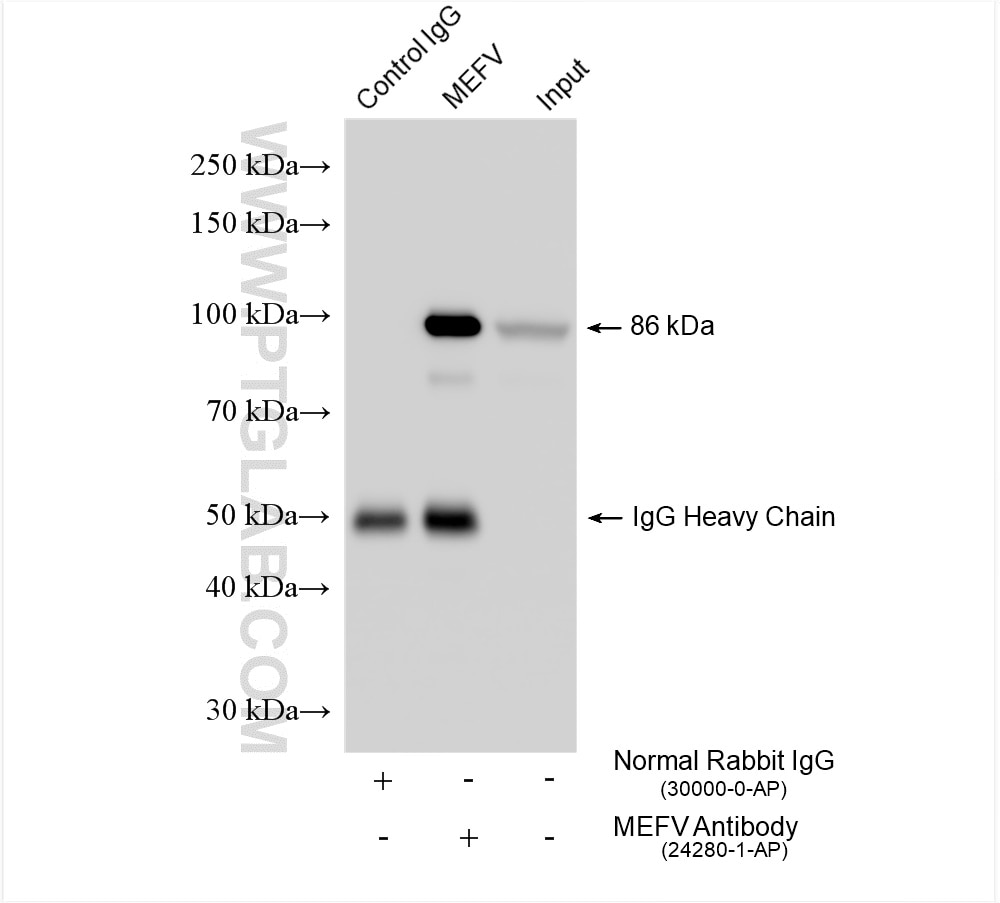
| Positive IP detected in | THP-1 cells |
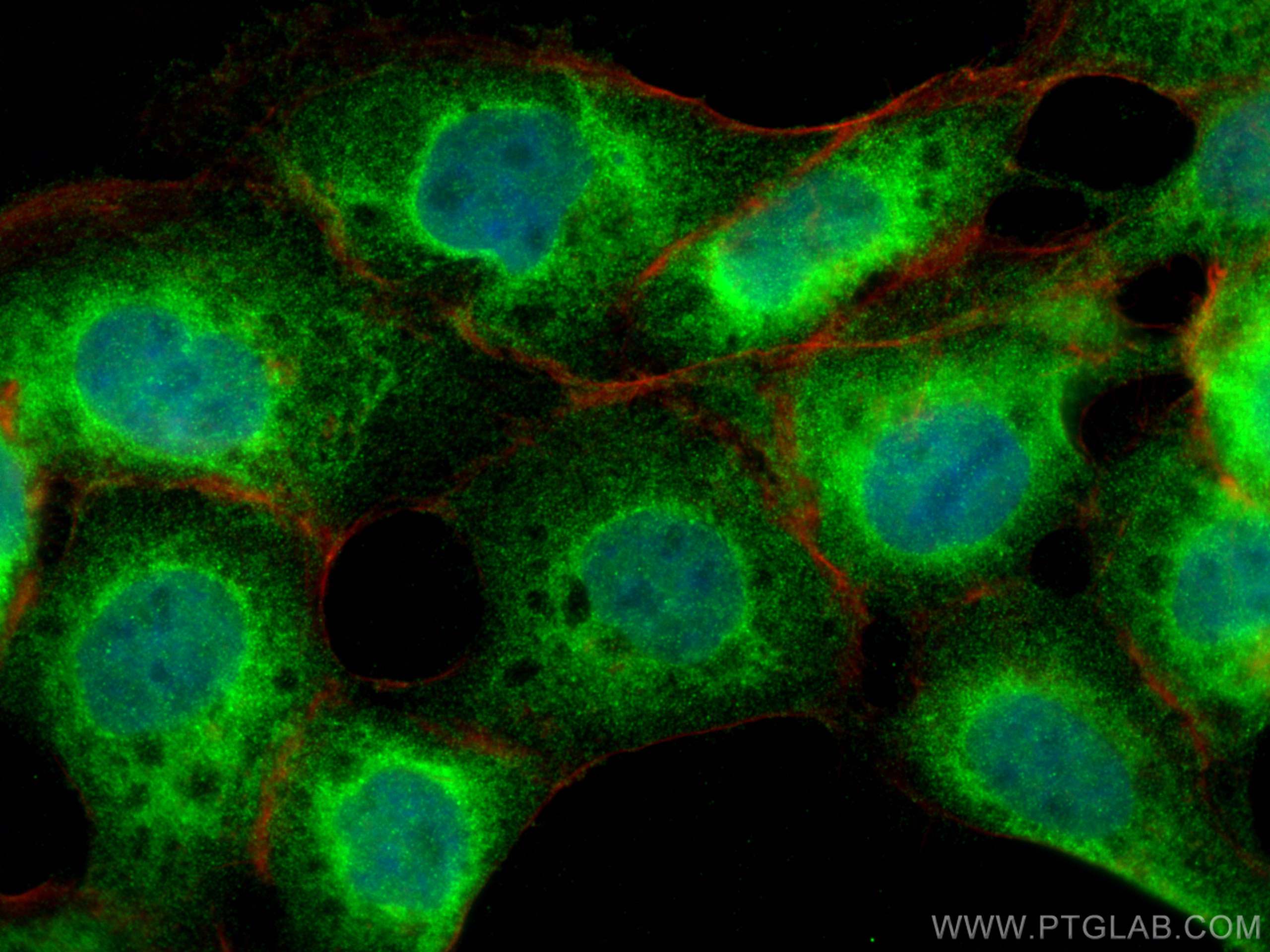
| Positive IF/ICC detected in | A431 cells |
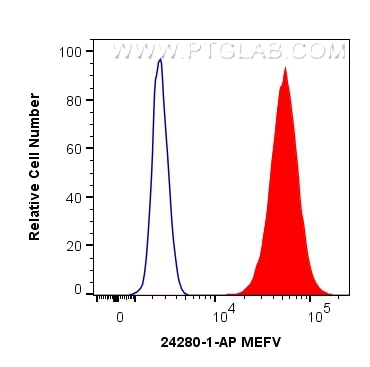
| Positive FC (Intra) detected in | A431 cells |
Recommended dilution
| Application | Dilution |
|---|---|
| Western Blot (WB) | WB : 1:1000-1:5000 |
| Immunoprecipitation (IP) | IP : 0.5-4.0 ug for 1.0-3.0 mg of total protein lysate |
| Immunofluorescence (IF)/ICC | IF/ICC : 1:200-1:800 |
| Flow Cytometry (FC) (INTRA) | FC (INTRA) : 0.40 ug per 10^6 cells in a 100 ul suspension |
| It is recommended that this reagent should be titrated in each testing system to obtain optimal results. | |
| Sample-dependent, Check data in validation data gallery. | |
Product Information
24280-1-AP targets MEFV in WB, IF/ICC, FC (Intra), IP, ELISA applications and shows reactivity with human samples.
| Tested Reactivity | human |
| Cited Reactivity | human, mouse, rat |
| Host / Isotype | Rabbit / IgG |
| Class | Polyclonal |
| Type | Antibody |
| Immunogen |
CatNo: Ag18000 Product name: Recombinant human MEFV protein Source: e coli.-derived, PGEX-4T Tag: GST Domain: 1-350 aa of BC101511 Sequence: MAKTPSDHLLSTLEELVPYDFEKFKFKLQNTSVQKEHSRIPRSQIQRARPVKMATLLVTYYGEEYAVQLTLQVLRAINQRLLAEELHRAAIQEYSTQENGTDDSAASSSLGENKPRSLKTPDHPEGNEGNGPRPYGGGAASLRCSQPEAGRGLSRKPLSKRREKASEGLDAQGKPRTRSPALPGGRSPGPCRALEGGQAEVQLRRNASSAGRLQGLAGGAPGQKECRPFEVYLPSGKMRPRSLEVTISTGEKAPANPEILLTLEEKTAANLDSATEPRARPTPDGGASADLKEGPGNPEHSVTGRPPDTAASPRCHAQEGDPVDGTCVRDSCSFPEAVSGHPQASGSRSP Predict reactive species |
| Full Name | Mediterranean fever |
| Calculated Molecular Weight | 781 aa, 86 kDa |
| Observed Molecular Weight | 86 kDa |
| GenBank Accession Number | BC101511 |
| Gene Symbol | MEFV |
| Gene ID (NCBI) | 4210 |
| RRID | AB_2879468 |
| Conjugate | Unconjugated |
| Form | Liquid |
| Purification Method | Antigen affinity purification |
| UNIPROT ID | O15553 |
| Storage Buffer | PBS with 0.02% sodium azide and 50% glycerol, pH 7.3. |
| Storage Conditions | Store at -20°C. Stable for one year after shipment. Aliquoting is unnecessary for -20oC storage. 20ul sizes contain 0.1% BSA. |
Background Information
MEFV, a gene encoding a protein of unknown function, is the genetic cause of Familial Mediterranean fever (FMF), a recessively inherited disorder characterized by recurring attacks of fever and serositis. Recently mutation of MEFV has been reported to cause autoinflammatory disease distinct from FMF.
Protocols
| Product Specific Protocols | |
|---|---|
| FC protocol for MEFV antibody 24280-1-AP | Download protocol |
| IF protocol for MEFV antibody 24280-1-AP | Download protocol |
| IP protocol for MEFV antibody 24280-1-AP | Download protocol |
| WB protocol for MEFV antibody 24280-1-AP | Download protocol |
| Standard Protocols | |
|---|---|
| Click here to view our Standard Protocols |
Publications
What published studies show
The MEFV (Pyrin) Polyclonal antibody (Cat# 24280-1-AP) has 16 citations. These appear in journals including Nature, Autophagy, Science Immunology, Biomaterials, Acta Pharmacologica Sinica, PLoS Biology, Journal of Agricultural and Food Chemistry, Scientific Reports, Neurochemical Research, Neurotoxicity Research, Experimental & Therapeutic Medicine, Rejuvenation Research, and Pharmacological Research. Research fields span pyrin inflammasome activation, PANoptosis, pyroptosis, and autophagy, with applications in neurology (stroke, Alzheimer's), sepsis-induced cardiomyopathy, kidney injury, melanoma, and SARS-CoV-2 infection.
| Species | Application | Title |
|---|---|---|
Autophagy Inhibition of autophagy in microglia and macrophages exacerbates innate immune responses and worsens brain injury outcomes | ||
Sci Immunol A genotype-first approach reveals the molecular basis of pyrin inflammasome activation. | ||
Sci Immunol An N-terminal CDC42 T43I variant reveals the mechanism of pyrin inflammasome activation. | ||
Biomaterials Dual-targeting nuclear and mitochondrial DNA damage drives immunogenic activation via PANoptosis for synergistic magneto-thermodynamic-chemotherapy. | ||
Acta Pharmacol Sin PYRIN m(6)A modification drives cardiomyocyte PANoptosis in sepsis-induced cardiomyopathy. |

