
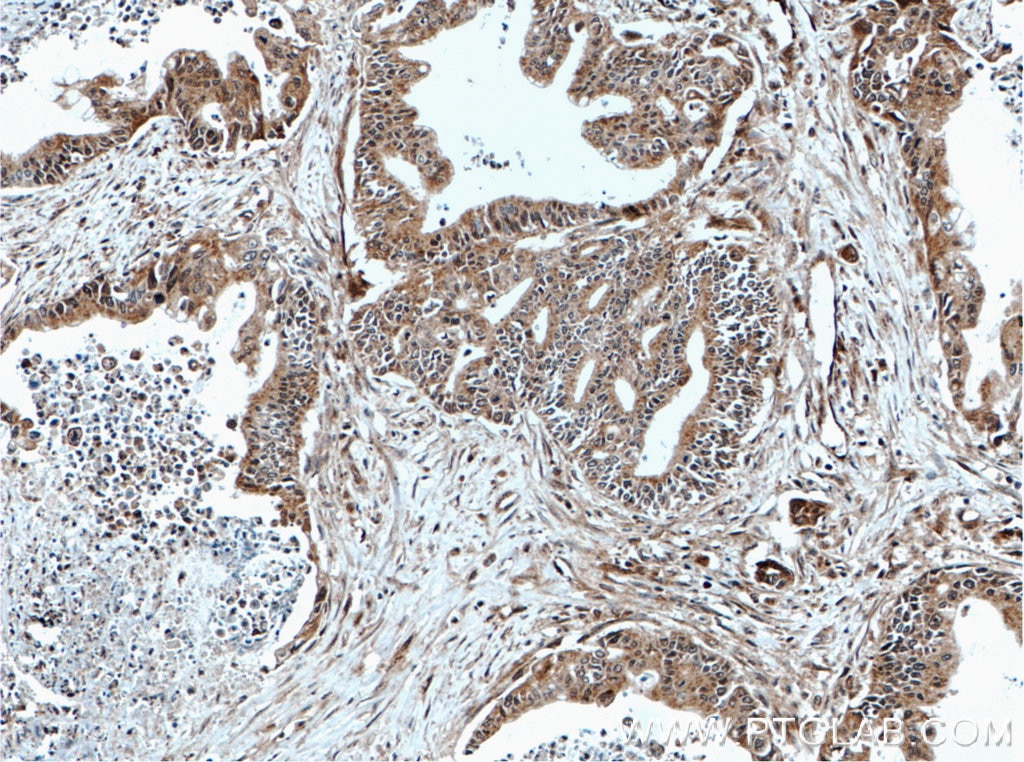
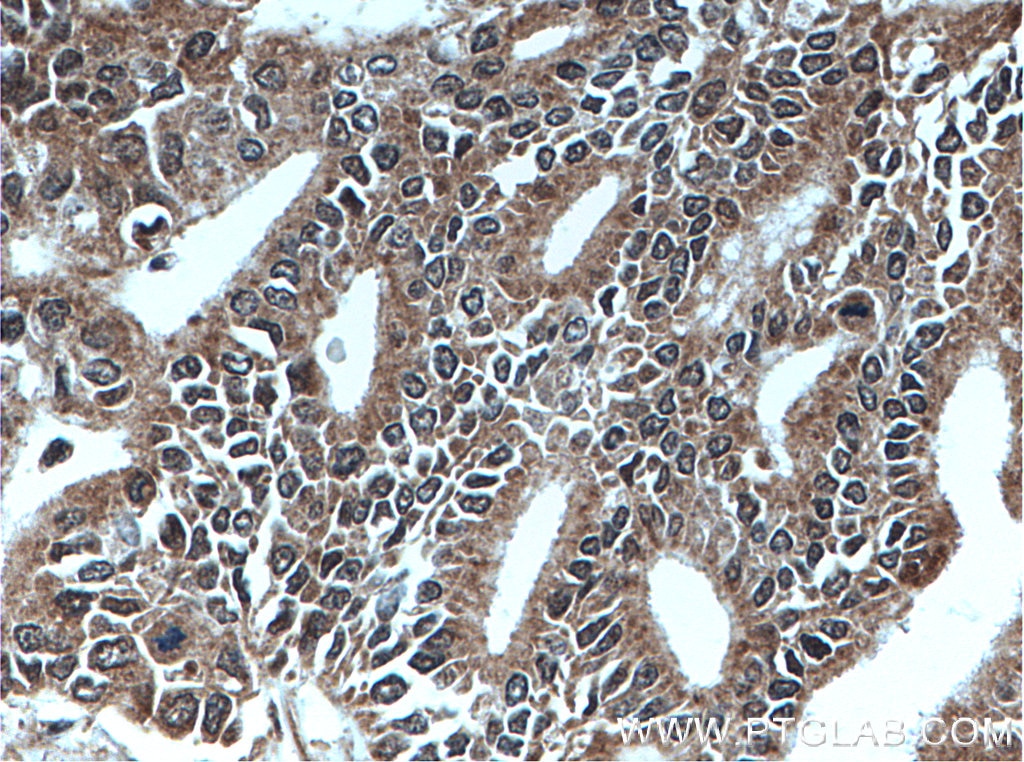

Tested Applications
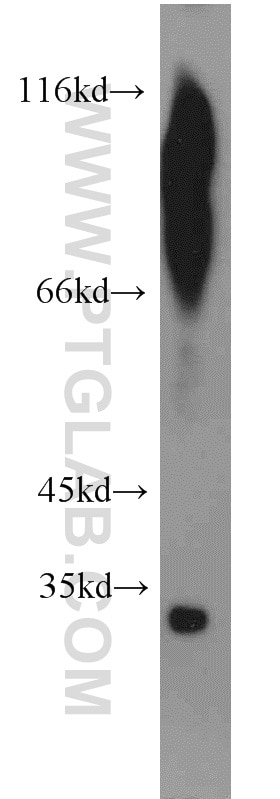
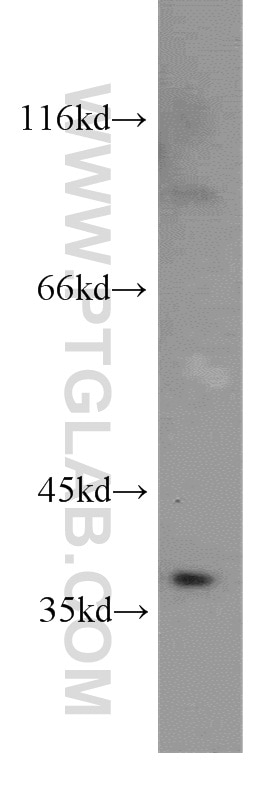
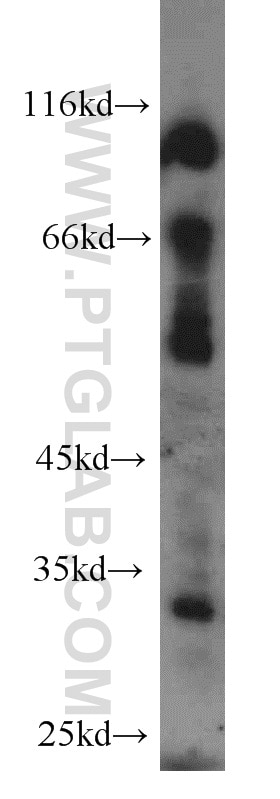
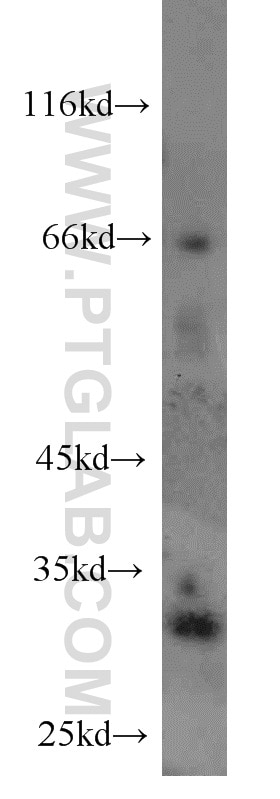
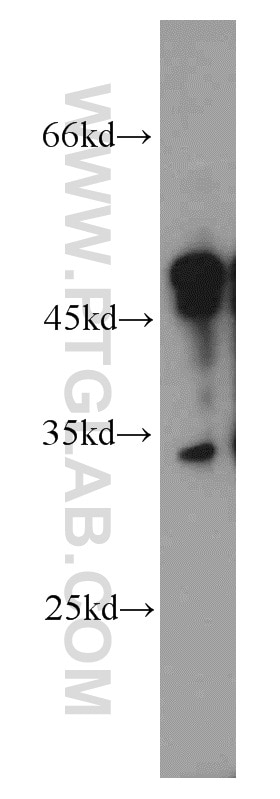
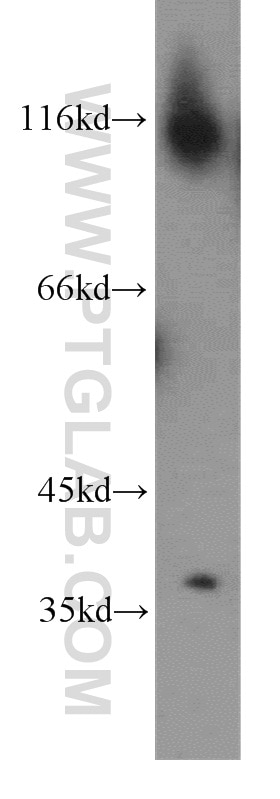
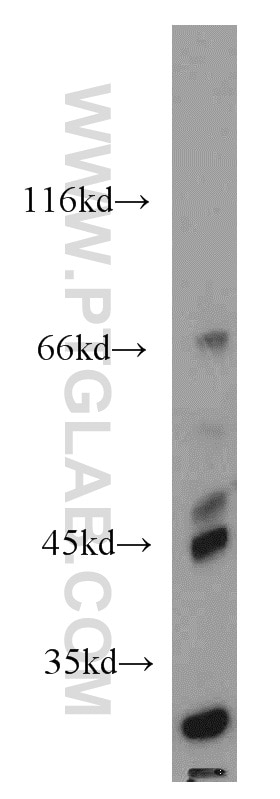
| Positive WB detected in | human testis tissue, mouse testis tissue, PC-3 cells |
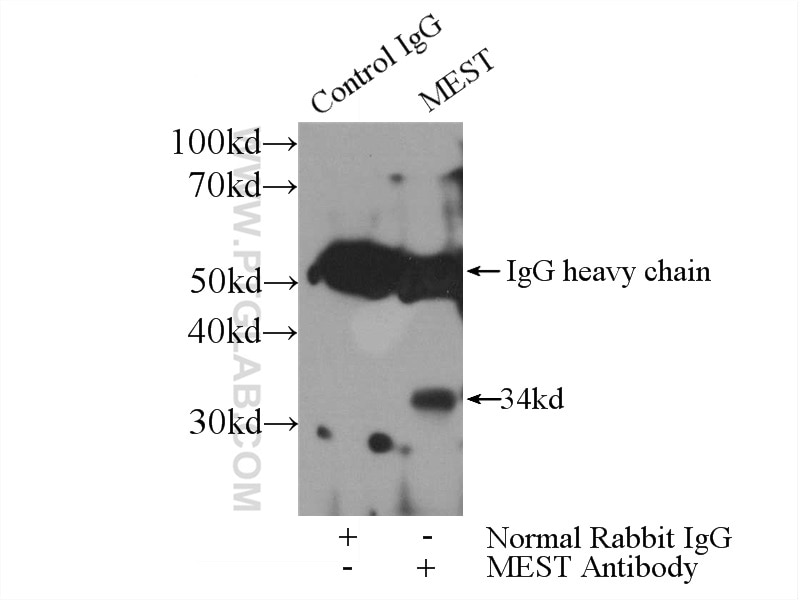
| Positive IP detected in | PC-3 cells |
| Positive IHC detected in | human pancreas cancer tissue Note: suggested antigen retrieval with TE buffer pH 9.0; (*) Alternatively, antigen retrieval may be performed with citrate buffer pH 6.0 |
Recommended dilution
| Application | Dilution |
|---|---|
| Western Blot (WB) | WB : 1:500-1:1000 |
| Immunoprecipitation (IP) | IP : 0.5-4.0 ug for 1.0-3.0 mg of total protein lysate |
| Immunohistochemistry (IHC) | IHC : 1:50-1:500 |
| It is recommended that this reagent should be titrated in each testing system to obtain optimal results. | |
| Sample-dependent, Check data in validation data gallery. | |
Product Information
11118-1-AP targets MEST in WB, IHC, IF, IP, ELISA applications and shows reactivity with human, mouse, rat samples.
| Tested Reactivity | human, mouse, rat |
| Cited Reactivity | human, mouse |
| Host / Isotype | Rabbit / IgG |
| Class | Polyclonal |
| Type | Antibody |
| Immunogen |
CatNo: Ag1617 Product name: Recombinant human MEST protein Source: e coli.-derived, PGEX-4T Tag: GST Domain: 1-234 aa of BC011908 Sequence: MVRRDRLRRMREWWVQVGLLAVPLLAAYLHIPPPQLSPALHSWKSSGKFFTYKGLRIFYQDSVGVVGSPEIVVLLHGFPTSSYDWYKIWEGLTLRFHRVIALDFLGFGFSDKPRPHHYSIFEQASIVEALLRHLGLQNRRINLLSHDYGDIVAQELLYRYKQNRSGRLTIKSLCLSNGGIFPETHRPLLLQKLLKDGGVLSPILTRLMNFFVFSRGLTPVFGPYTRPSESELWD Predict reactive species |
| Full Name | mesoderm specific transcript homolog (mouse) |
| Calculated Molecular Weight | 38 kDa |
| Observed Molecular Weight | 34 kDa |
| GenBank Accession Number | BC011908 |
| Gene Symbol | MEST |
| Gene ID (NCBI) | 4232 |
| RRID | AB_2143740 |
| Conjugate | Unconjugated |
| Form | Liquid |
| Purification Method | Antigen affinity purification |
| UNIPROT ID | Q5EB52 |
| Storage Buffer | PBS with 0.02% sodium azide and 50% glycerol, pH 7.3. |
| Storage Conditions | Store at -20°C. Stable for one year after shipment. Aliquoting is unnecessary for -20oC storage. 20ul sizes contain 0.1% BSA. |
Background Information
MEST(Mesoderm-specific transcript homolog protein) is also named as PEG1 and belongs to the AB hydrolase superfamily. The gene is a imprinting gene, which is associated with growth of mesodermal origin cells(PMID:20339302) and plays important roles in embryo development(PMID:21375506). It is also a novel regulator of Wnt/CTNNB signalling during adipogenic differentiation(PMID:21375506). It has 3 isoforms produced by alternative splicing and the full length protein has a glycosylation site.
Protocols
| Product Specific Protocols | |
|---|---|
| IHC protocol for MEST antibody 11118-1-AP | Download protocol |
| IP protocol for MEST antibody 11118-1-AP | Download protocol |
| WB protocol for MEST antibody 11118-1-AP | Download protocol |
| Standard Protocols | |
|---|---|
| Click here to view our Standard Protocols |
Publications
What published studies show
The MEST Polyclonal antibody (Cat# 11118-1-AP) has 14 citations published in journals including Nature Communications, Nucleic Acids Research, Cell Death & Disease, Cancer Letters, Oncogenesis, Gynecologic Oncology, Placenta, Archives of Toxicology, Cell Communication & Signaling, Nitric Oxide, Pharmaceutical Biology, and Translational Cancer Research. Research fields span wound healing, gene imprinting, placental development, DNA methylation, atherosclerosis, and multiple cancer types (ovarian, glioblastoma, bladder, nasopharyngeal, endometrial), with applications in WB, IF, and IHC.
| Species | Application | Title |
|---|---|---|
Nat Commun Tracing immune cells around biomaterials with spatial anchors during large-scale wound regeneration | ||
Nat Commun Single-cell analysis reveals fibroblast heterogeneity and myeloid-derived adipocyte progenitors in murine skin wounds. | ||
Nucleic Acids Res Tissue-specific alternative polyadenylation at the imprinted gene Mest regulates allelic usage at Copg2. | ||
Cell Death Dis α1,3-fucosylation of MEST promotes invasion potential of cytotrophoblast cells by activating translation initiation | ||
Cancer Lett Novel target genes responsive to the anti-growth activity of triptolide in endometrial and ovarian cancer cells. | ||
Cell Commun Signal High estrogen during ovarian stimulation induced loss of maternal imprinted methylation that is essential for placental development via overexpression of TET2 in mouse oocytes |

