

Tested Applications
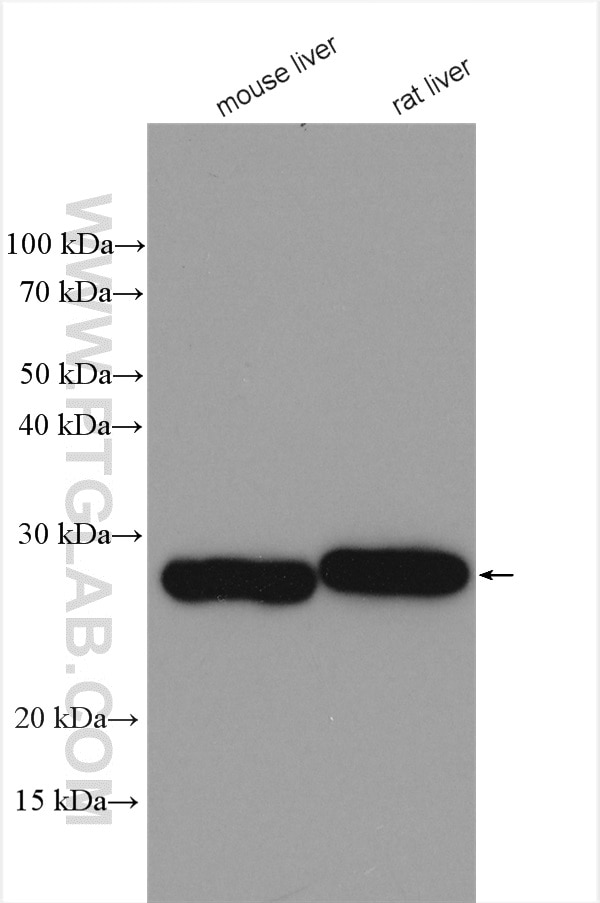
| Positive WB detected in | mouse liver tissue, rat liver tissue |
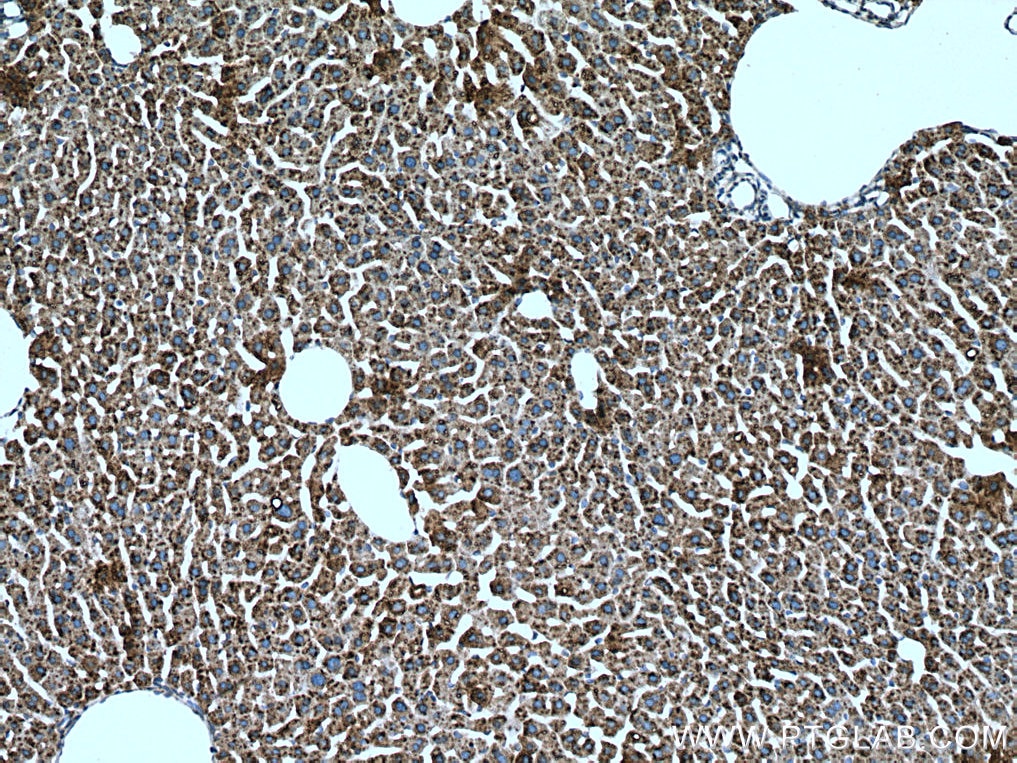
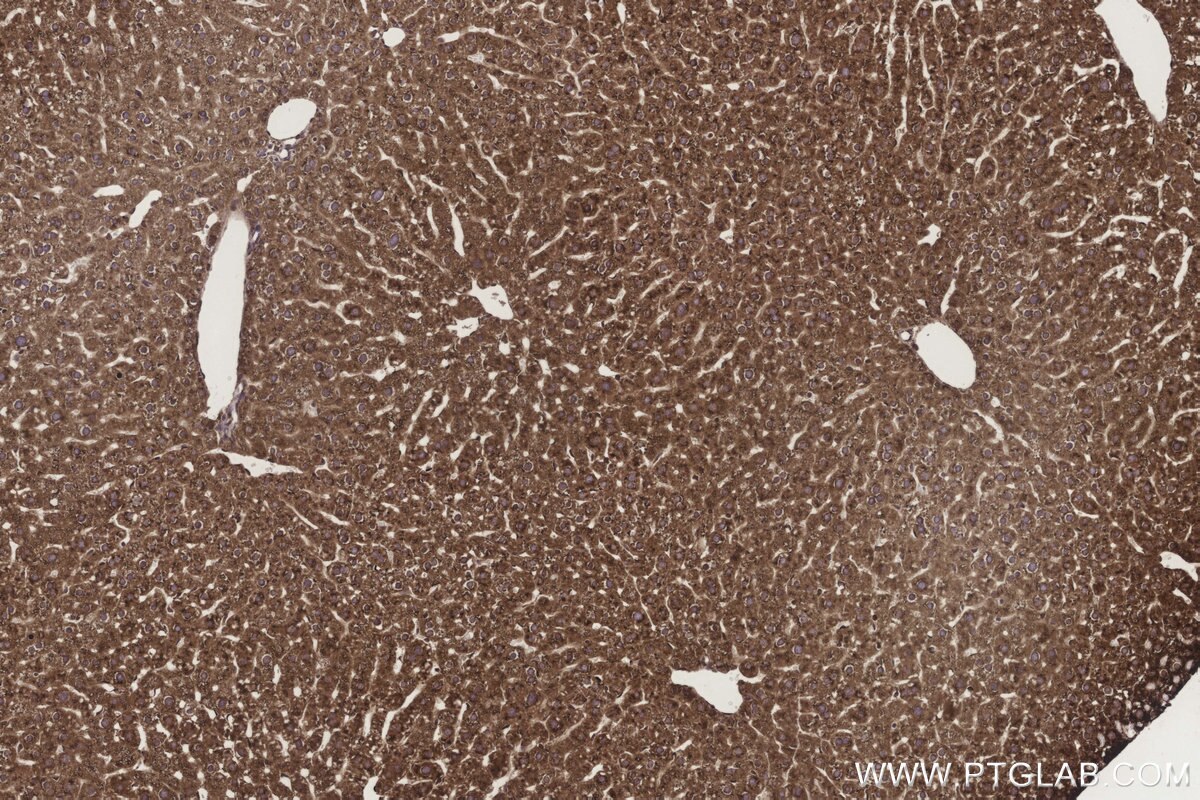
| Positive IHC detected in | mouse liver tissue Note: suggested antigen retrieval with TE buffer pH 9.0; (*) Alternatively, antigen retrieval may be performed with citrate buffer pH 6.0 |
Recommended dilution
| Application | Dilution |
|---|---|
| Western Blot (WB) | WB : 1:1000-1:4000 |
| Immunohistochemistry (IHC) | IHC : 1:50-1:500 |
| It is recommended that this reagent should be titrated in each testing system to obtain optimal results. | |
| Sample-dependent, Check data in validation data gallery. | |
Product Information
17001-1-AP targets METTL7B in WB, IHC, IF, ELISA applications and shows reactivity with human, mouse, rat samples.
| Tested Reactivity | human, mouse, rat |
| Cited Reactivity | human, mouse |
| Host / Isotype | Rabbit / IgG |
| Class | Polyclonal |
| Type | Antibody |
| Immunogen |
CatNo: Ag10694 Product name: Recombinant human METTL7B protein Source: e coli.-derived, PGEX-4T Tag: GST Domain: 39-244 aa of BC020509 Sequence: MAVLTPKSNRKMESKKRELFSQIKGLTGASGKVALLELGCGTGANFQFYPPGCRVTCLDPNPHFEKFLTKSMAENRHLQYERFVVAPGEDMRQLADGSMDVVVCTLVLCSVQSPRKVLQEVRRVLRPGGVLFFWEHVAEPYGSWAFMWQQVFEPTWKHIGDGCCLTRETWKDLENAQFSEIQMERQPPPLKWLPVGPHIMGKAVK Predict reactive species |
| Full Name | methyltransferase like 7B |
| Calculated Molecular Weight | 244aa,28 kDa |
| Observed Molecular Weight | 28 kDa |
| GenBank Accession Number | BC020509 |
| Gene Symbol | METTL7B |
| Gene ID (NCBI) | 196410 |
| RRID | AB_2142199 |
| Conjugate | Unconjugated |
| Form | Liquid |
| Purification Method | Antigen affinity purification |
| UNIPROT ID | Q6UX53 |
| Storage Buffer | PBS with 0.02% sodium azide and 50% glycerol, pH 7.3. |
| Storage Conditions | Store at -20°C. Stable for one year after shipment. Aliquoting is unnecessary for -20oC storage. 20ul sizes contain 0.1% BSA. |
Background Information
METTL7B is a membrane-associated small-molecule methyltransferase that catalyzes S-methylation of alkyl thiols, thereby linking thiol/sulfur metabolism, redox homeostasis, and cellular stress responses. By influencing antioxidant enzyme expression and detoxification pathways, METTL7B plays a pivotal role in tumor growth and drug resistance, particularly in lung adenocarcinoma. Its upregulation in multiple cancers and involvement in redox/thiol metabolism make it an emerging therapeutic target in oncology and possibly in metabolic/oxidative stress-related disease settings. (PMID: 40068772)
Protocols
| Product Specific Protocols | |
|---|---|
| IHC protocol for METTL7B antibody 17001-1-AP | Download protocol |
| WB protocol for METTL7B antibody 17001-1-AP | Download protocol |
| Standard Protocols | |
|---|---|
| Click here to view our Standard Protocols |
Publications
What published studies show
METTL7B Polyclonal Antibody (catalog 17001-1-AP) has 13 total citations. It appears in journals including Nature Communications, International Journal of Biological Macromolecules, Frontiers in Immunology, Biology Direct, Cancers, iScience, Frontiers in Molecular Biosciences, Neuroimmunomodulation, Archives of Biochemistry and Biophysics, Annals of Translational Medicine, Gene, Journal of Oncology, and Oncology Letters. Research fields span cancer biology (lung adenocarcinoma, glioblastoma, gastric, and bladder cancer), tumor immune microenvironment and ferroptosis, inflammation and colitis, renal fibrosis, and atherosclerosis.
| Species | Application | Title |
|---|---|---|
Int J Biol Macromol Tannic acid protects against colitis by regulating the IL17 - NFκB and microbiota - methylation pathways | ||
Front Immunol Heart failure-related genes associated with oxidative stress and the immune landscape in lung cancer | ||
Biol Direct Methyltransferase-like 7B participates in bladder cancer via ACSL3 m6A modification in a ferroptosis manner
| ||
Cancers (Basel) Single-Cell Dissection Identifies METTL7B as Associated with Cell Adhesion-Mediated Tumor Invasion in Lung Adenocarcinoma and Glioblastoma.
| ||
iScience TWIK-related acid-sensitive K+ channel 2 promotes renal fibrosis by inducing cell-cycle arrest |

