
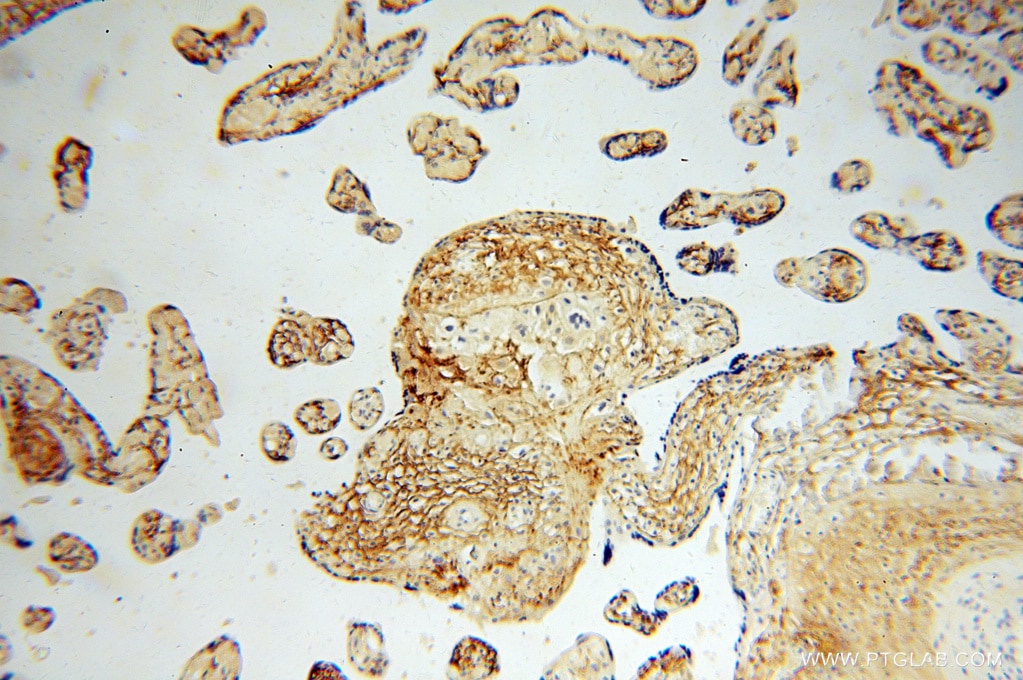
Tested Applications
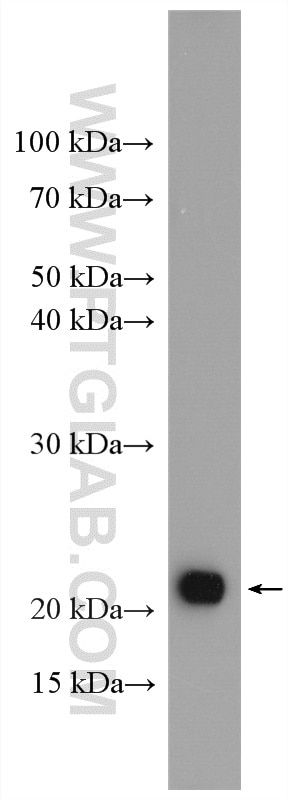
| Positive WB detected in | HeLa cells |
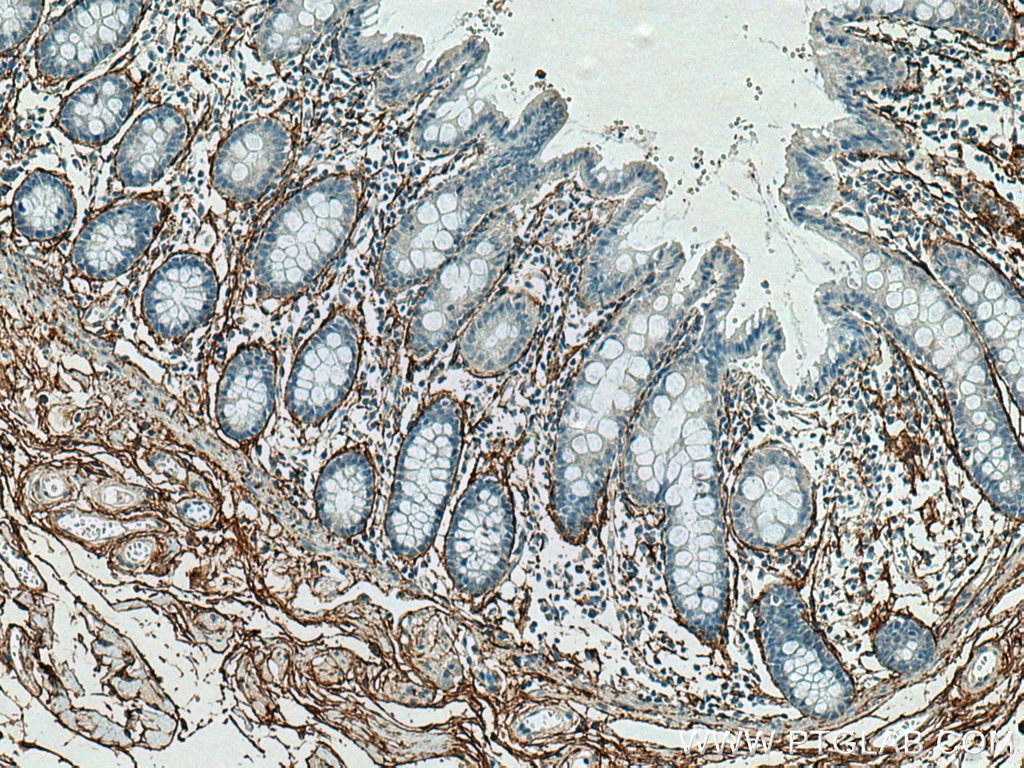
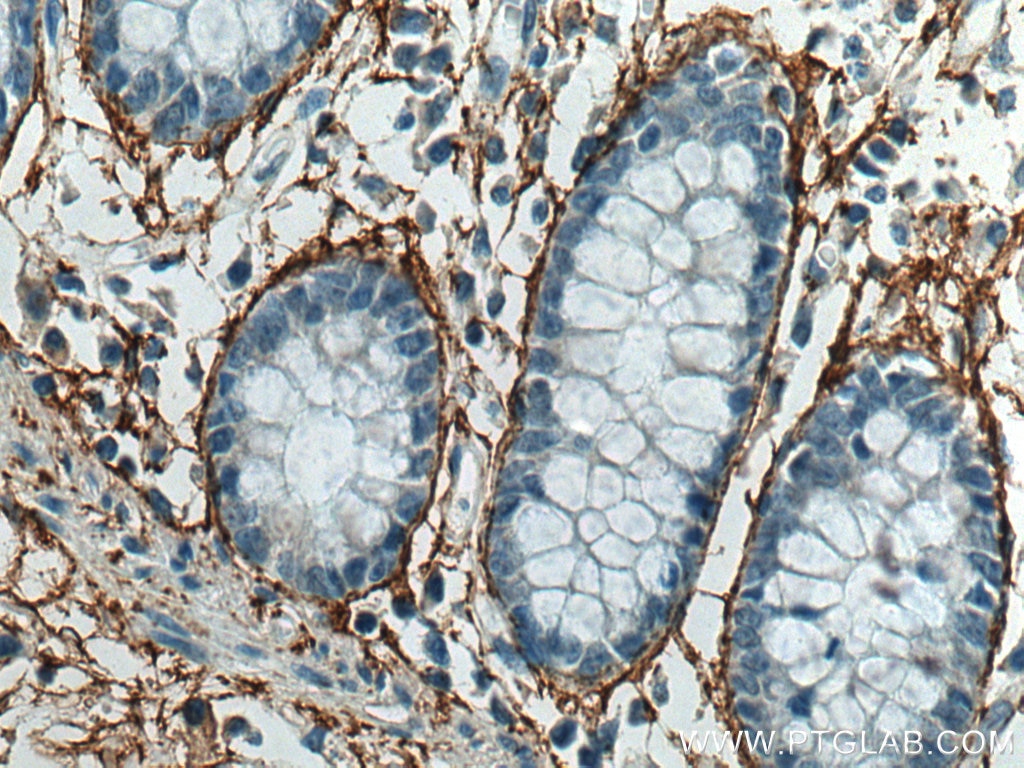
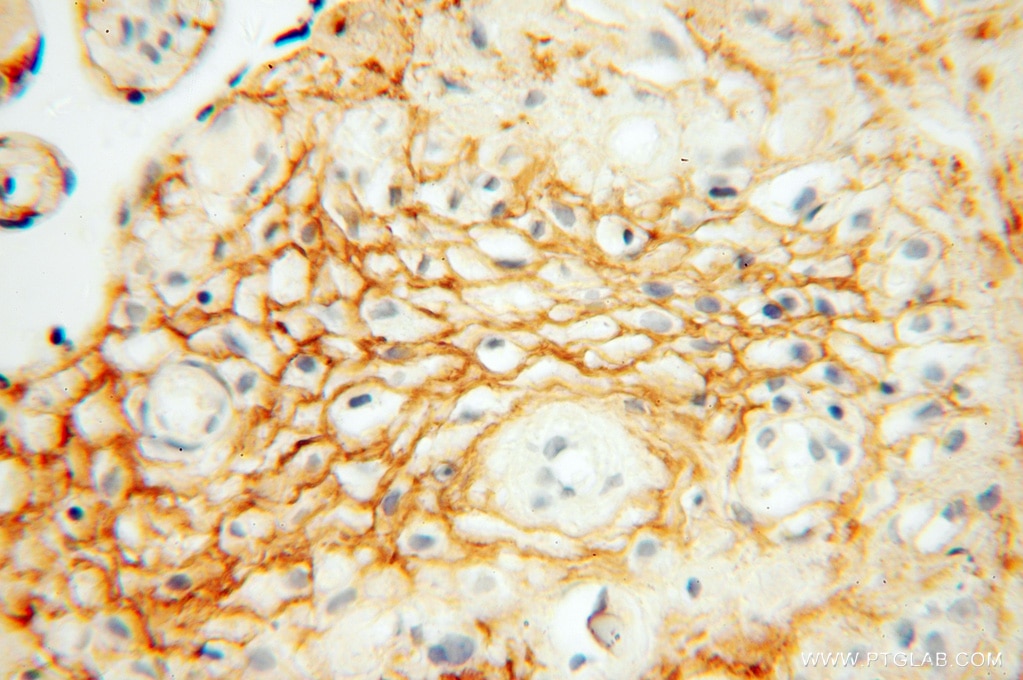
| Positive IHC detected in | human colon tissue, human placenta tissue Note: suggested antigen retrieval with TE buffer pH 9.0; (*) Alternatively, antigen retrieval may be performed with citrate buffer pH 6.0 |
Recommended dilution
| Application | Dilution |
|---|---|
| Western Blot (WB) | WB : 1:1000-1:4000 |
| Immunohistochemistry (IHC) | IHC : 1:400-1:1600 |
| It is recommended that this reagent should be titrated in each testing system to obtain optimal results. | |
| Sample-dependent, Check data in validation data gallery. | |
Product Information
15727-1-AP targets MFAP5 in WB, IHC, IF, ELISA applications and shows reactivity with human samples.
| Tested Reactivity | human |
| Cited Reactivity | human |
| Host / Isotype | Rabbit / IgG |
| Class | Polyclonal |
| Type | Antibody |
| Immunogen |
CatNo: Ag8467 Product name: Recombinant human MFAP5 protein Source: e coli.-derived, PGEX-4T Tag: GST Domain: 27-173 aa of BC005901 Sequence: NSQRGDDVTQATPETFTEDPNLVNDPATDETVLAVLADIAPSTDDLASLSEKNTTAECWDEKFTCTRLYSVHRPVKQCIHQLCFTSLRRMYIVNKEICSRLVCKEHEAMKDELCRQMAGLPPRRLRRSNYFRLPPCENVDLQRPNGL Predict reactive species |
| Full Name | microfibrillar associated protein 5 |
| Calculated Molecular Weight | 173 aa, 20 kDa |
| Observed Molecular Weight | 20-25 kDa |
| GenBank Accession Number | BC005901 |
| Gene Symbol | MFAP5 |
| Gene ID (NCBI) | 8076 |
| RRID | AB_2266295 |
| Conjugate | Unconjugated |
| Form | Liquid |
| Purification Method | Antigen affinity purification |
| UNIPROT ID | Q13361 |
| Storage Buffer | PBS with 0.02% sodium azide and 50% glycerol, pH 7.3. |
| Storage Conditions | Store at -20°C. Stable for one year after shipment. Aliquoting is unnecessary for -20oC storage. 20ul sizes contain 0.1% BSA. |
Background Information
MFAP5 (microfibrillar-associated protein 5), also known as MAGP2, is a secreted extracellular matrix protein with a predicted molecular weight of ~25.5 kDa (UniProt: Q13361). However, due to extensive post-translational modifications including glycosylation and disulfide bond formation, its apparent molecular weight on SDS-PAGE ranges from ~28 to 32 kDa. The protein contains a signal peptide (~1.8 kDa) and a central proline-rich region, contributing to its anomalous electrophoretic migration. MFAP5 functions in elastic fiber assembly and TGF-β signaling regulation, with elevated expression associated with tumor progression and poor prognosis in various cancers.
Protocols
| Product Specific Protocols | |
|---|---|
| IHC protocol for MFAP5 antibody 15727-1-AP | Download protocol |
| WB protocol for MFAP5 antibody 15727-1-AP | Download protocol |
| Standard Protocols | |
|---|---|
| Click here to view our Standard Protocols |
Publications
What published studies show
| Species | Application | Title |
|---|---|---|
Hepatology YAP promotes proliferation, chemoresistance and angiogenesis in human cholangiocarcinoma via TEAD transcription factors.
| ||
Clin Transl Med Single-cell transcriptomes reveal heterogeneity of high-grade serous ovarian carcinoma. | ||
Front Oncol DPP6 and MFAP5 are associated with immune infiltration as diagnostic biomarkers in distinguishing uterine leiomyosarcoma from leiomyoma | ||
Hum Cell Development of a CAFs-related gene signature to predict survival and drug response in bladder cancer. | ||
Clin Transl Oncol Stromal fibroblast-derived MFAP5 promotes the invasion and migration of breast cancer cells via Notch1/slug signaling.
| ||
Clin Transl Med Angiotensin receptor blockers retard the progression and fibrosis via inhibiting the viability of AGTR1+ CAFs in intrahepatic cholangiocarcinoma |

