
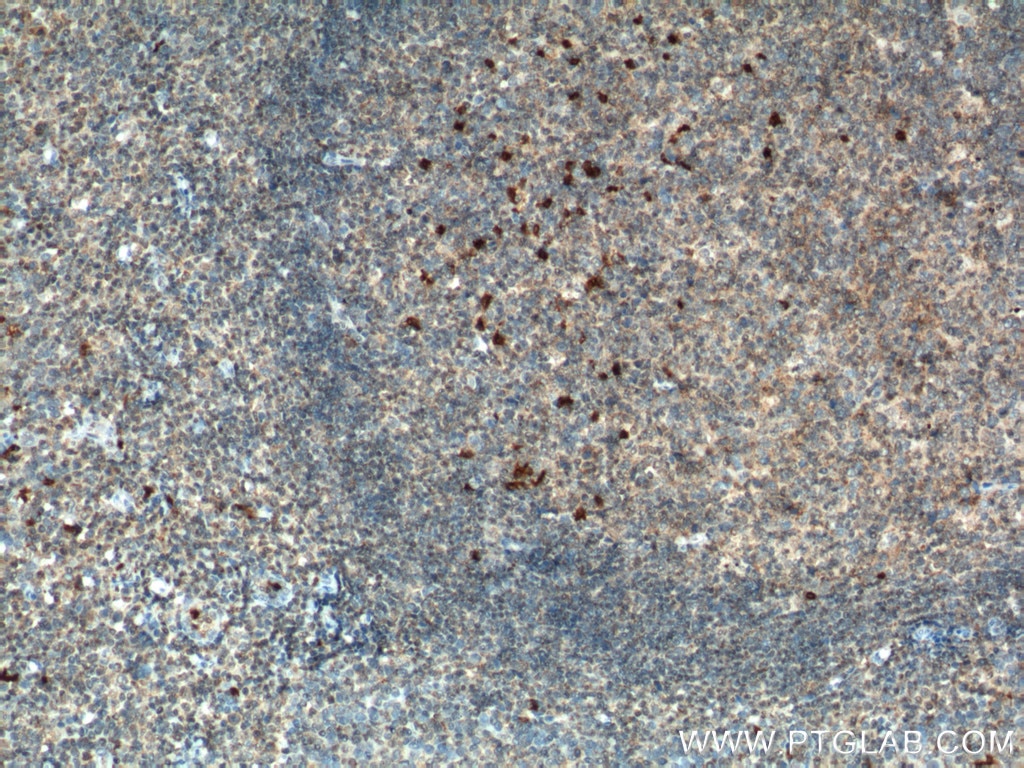
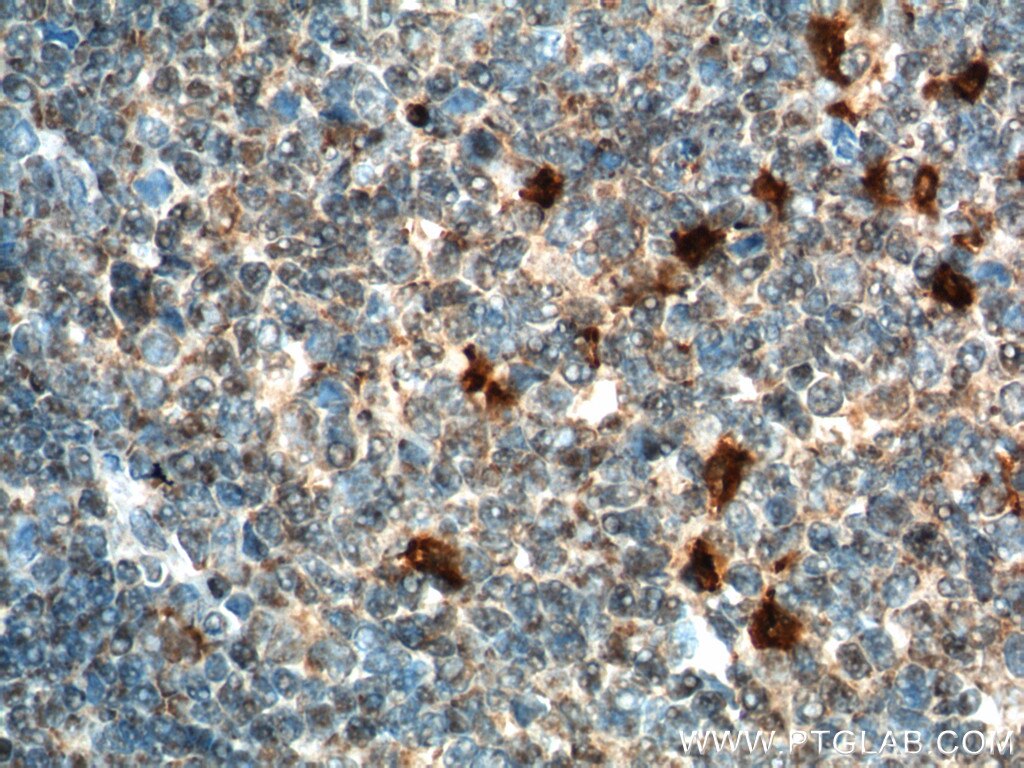

Tested Applications
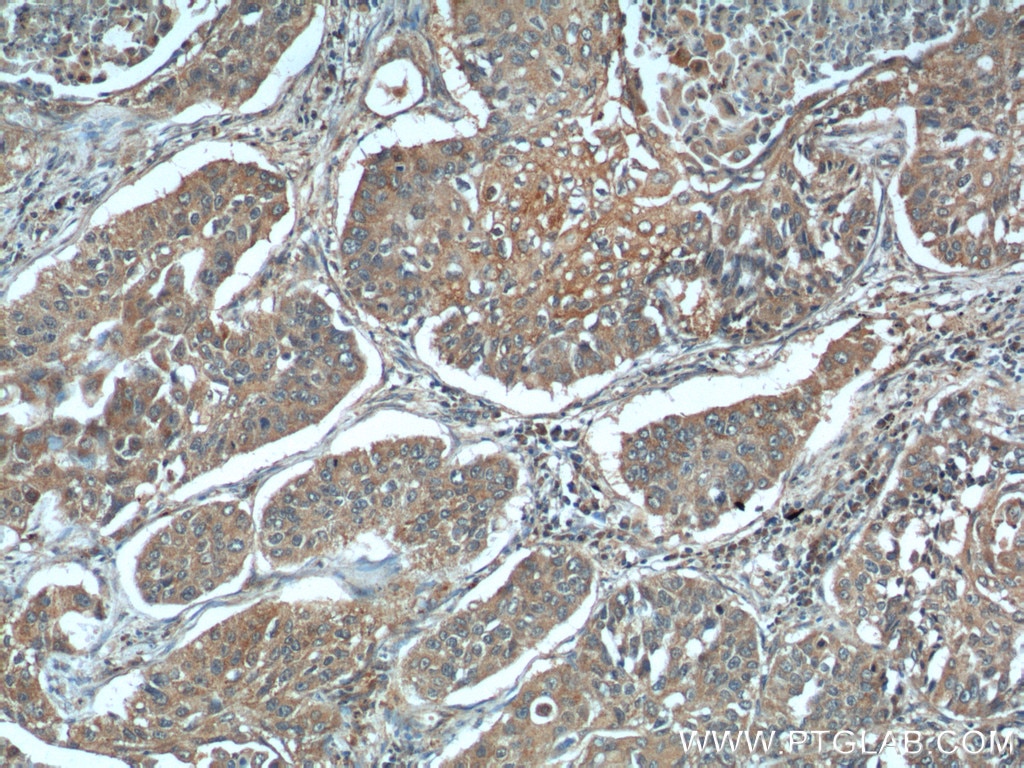
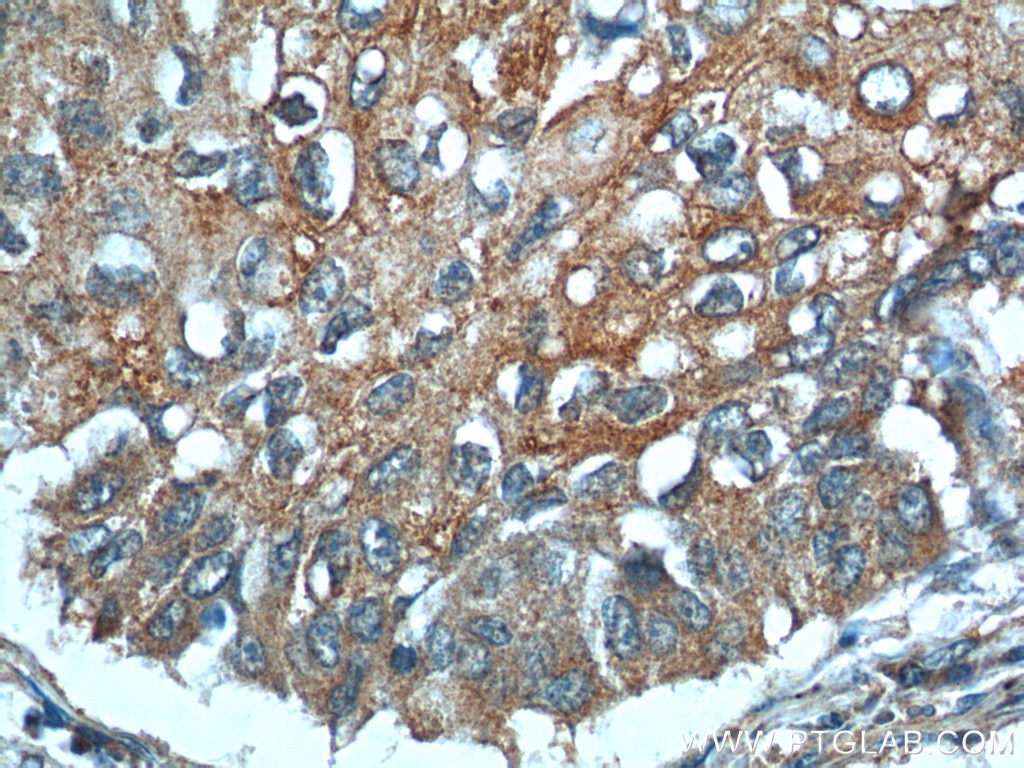
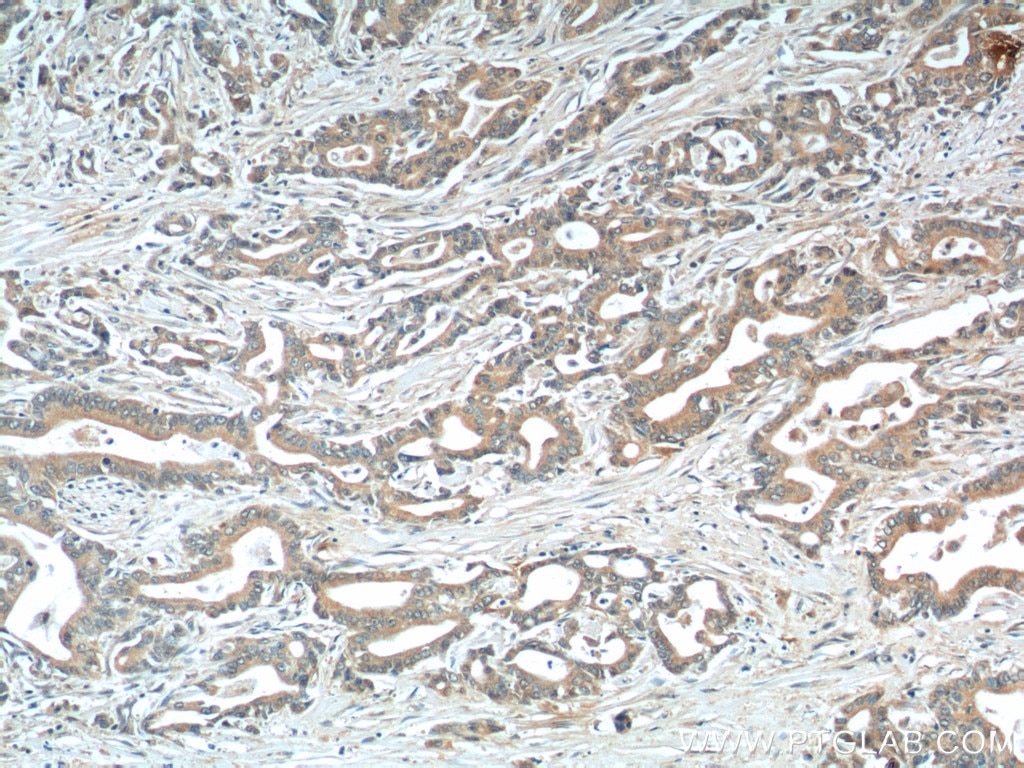
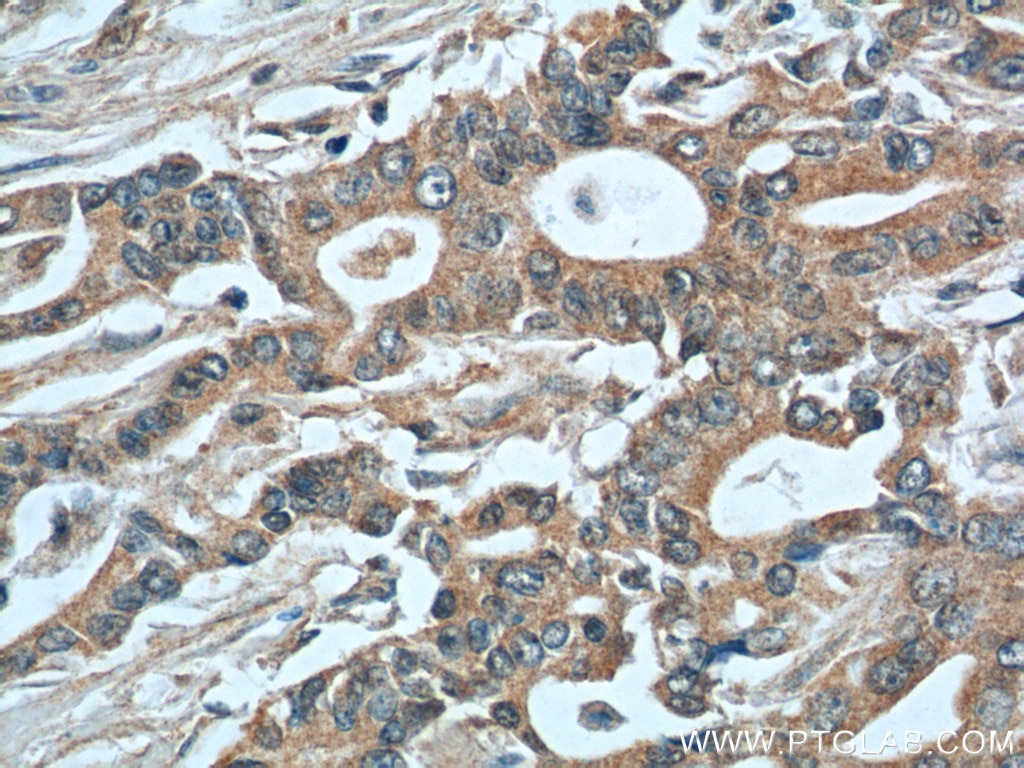
| Positive IHC detected in | human lung cancer tissue, human pancreas cancer tissue, human tonsillitis tissue Note: suggested antigen retrieval with TE buffer pH 9.0; (*) Alternatively, antigen retrieval may be performed with citrate buffer pH 6.0 |
Recommended dilution
| Application | Dilution |
|---|---|
| Immunohistochemistry (IHC) | IHC : 1:50-1:500 |
| It is recommended that this reagent should be titrated in each testing system to obtain optimal results. | |
| Sample-dependent, Check data in validation data gallery. | |
Product Information
26527-1-AP targets CCL20/MIP-3 alpha in IHC, IF, ELISA applications and shows reactivity with human samples.
| Tested Reactivity | human |
| Cited Reactivity | human, mouse, rat |
| Host / Isotype | Rabbit / IgG |
| Class | Polyclonal |
| Type | Antibody |
| Immunogen |
CatNo: Ag24069 Product name: Recombinant human MIP-3α protein Source: e coli.-derived, PGEX-4T Tag: GST Domain: 26-95 aa of BC020698 Sequence: ASNFDCCLGYTDRILHPKFIVGFTRQLANEGCDINAIIFHTKKKLSVCANPKQTWVKYIVRLLSKKVKNM Predict reactive species |
| Full Name | chemokine (C-C motif) ligand 20 |
| Calculated Molecular Weight | 11 kDa |
| GenBank Accession Number | BC020698 |
| Gene Symbol | CCL20/MIP-3 alpha |
| Gene ID (NCBI) | 6364 |
| RRID | AB_2880543 |
| Conjugate | Unconjugated |
| Form | Liquid |
| Purification Method | Antigen affinity purification |
| UNIPROT ID | P78556 |
| Storage Buffer | PBS with 0.02% sodium azide and 50% glycerol, pH 7.3. |
| Storage Conditions | Store at -20°C. Stable for one year after shipment. Aliquoting is unnecessary for -20oC storage. 20ul sizes contain 0.1% BSA. |
Background Information
CCL20, also known as macrophage infiltrating factor protein 3α, is a C-C chemokine that specifically binds to the receptor CCR6. CCL20 is produced in various tissues and by a wide range of immune cells, including neutrophils, natural killer cells, T-helper type 17 (Th17) cells, B cells, and various antigen-presenting cells, such as dendritic cells (DCs), Langerhans cells, and macrophages. Increased expression of CCL20 is likely involved in the increased recruitment of dendritic cells observed in fibroinflammatory diseases such as chronic obstructive pulmonary disease (COPD). CCL20 expression is increased by the proinflammatory cytokine IL-1 beta.
Protocols
| Product Specific Protocols | |
|---|---|
| IHC protocol for CCL20/MIP-3 alpha antibody 26527-1-AP | Download protocol |
| Standard Protocols | |
|---|---|
| Click here to view our Standard Protocols |
Publications
What published studies show
The CCL20/MIP-3 alpha Polyclonal antibody (Catalog No. 26527-1-AP) has 16 total citations. Citations appear in Metabolism, Gut Microbes, Cell Death Dis, Phytomedicine, Front Immunol, Front Cell Infect Microbiol, Inflammation, Front Cell Dev Biol, Oncol Rep, J Inflamm Res, Asian J Androl, Hum Pathol, Oncol Lett, Exp Anim, and Adv Sci. Research fields include cancer biology (colorectal, pancreatic, hepatocellular, renal cell, triple-negative breast, lung, glioma), immunology, chemokine/inflammation, metabolic dysfunction-associated steatohepatitis, and aging. Applications cited include IHC, IF, and WB across human, mouse, and rat samples.
| Species | Application | Title |
|---|---|---|
Metabolism The chemokine CCL20 promotes hepatocyte cholesterol deposition during metabolic dysfunction-associated steatohepatitis by regulating OLR1 expression | ||
Gut Microbes Fusobacterium nucleatum promotes colorectal cancer metastasis through miR-1322/CCL20 axis and M2 polarization | ||
Cell Death Dis Tumor-derived exosomal CCT6A serves as a matchmaker introducing chemokines to tumor-associated macrophages in pancreatic ductal adenocarcinoma | ||
Cell Death Dis Comprehensive characterisation of age-related changes in cell subpopulations and tissue structural properties in secondary lymphoid organs. | ||
Phytomedicine The secretion of sIgA and dendritic cells activation in the intestinal of cyclophosphamide-induced immunosuppressed mice are regulated by Alhagi honey polysaccharides. | ||
Front Immunol Macrophage-derived CCL20 promotes abdominal aortic aneurysm progression via lymphocytes CCR6. |

