

Tested Applications
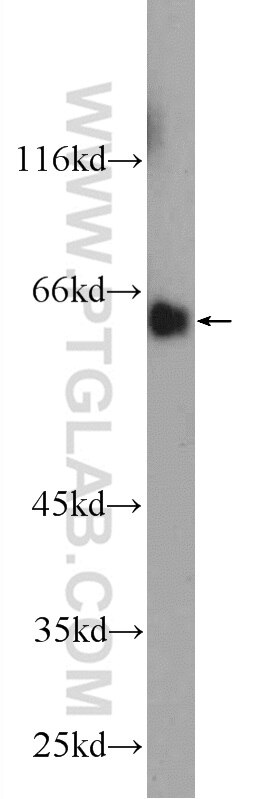
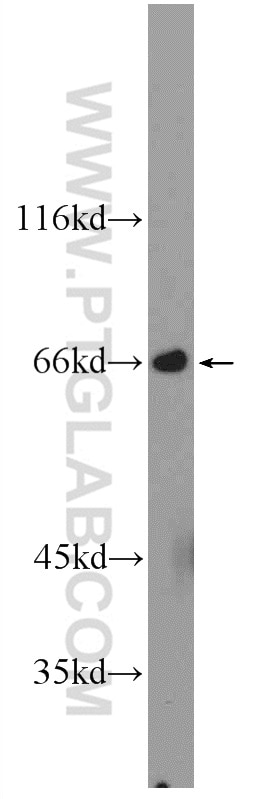
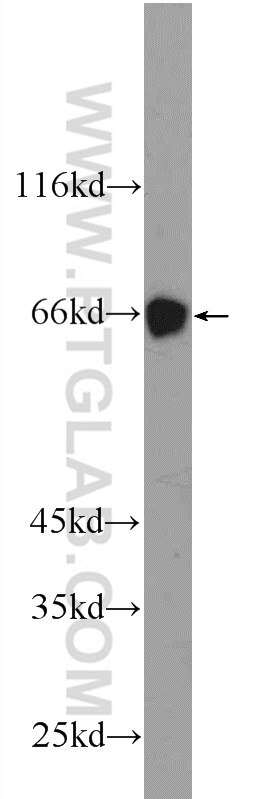
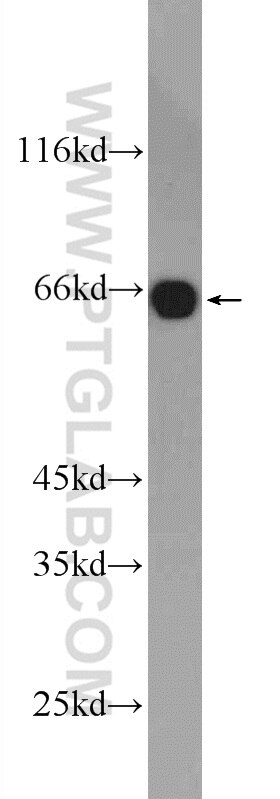
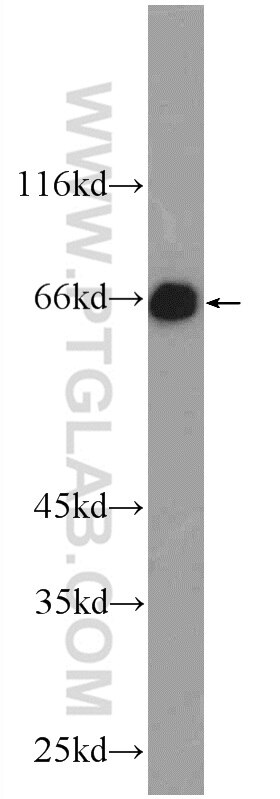
| Positive WB detected in | mouse liver tissue, Jurkat cells, mouse brain tissue, mouse heart tissue, mouse skeletal muscle tissue |
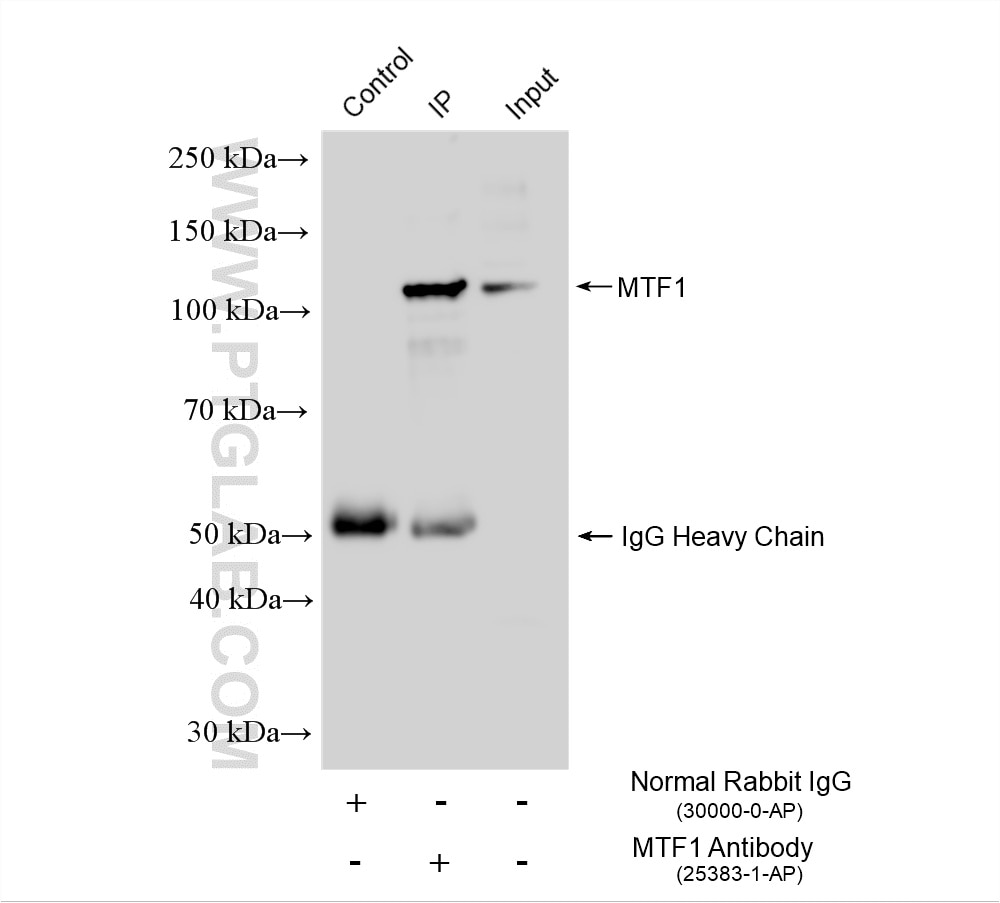
| Positive IP detected in | HepG2 cells |
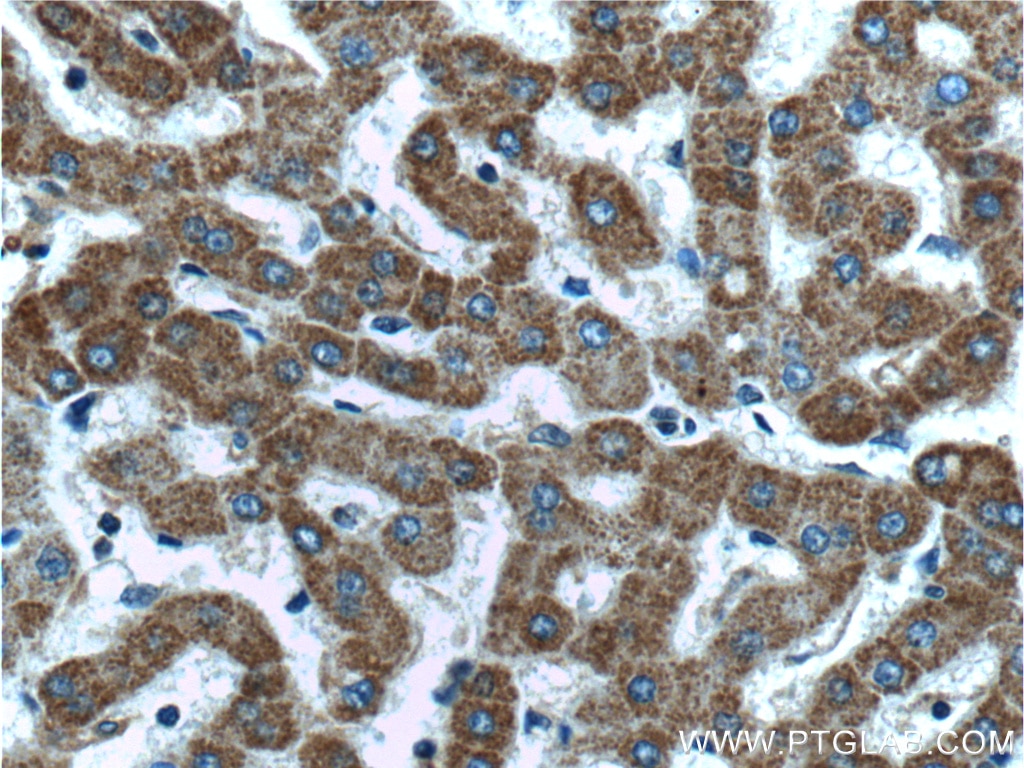
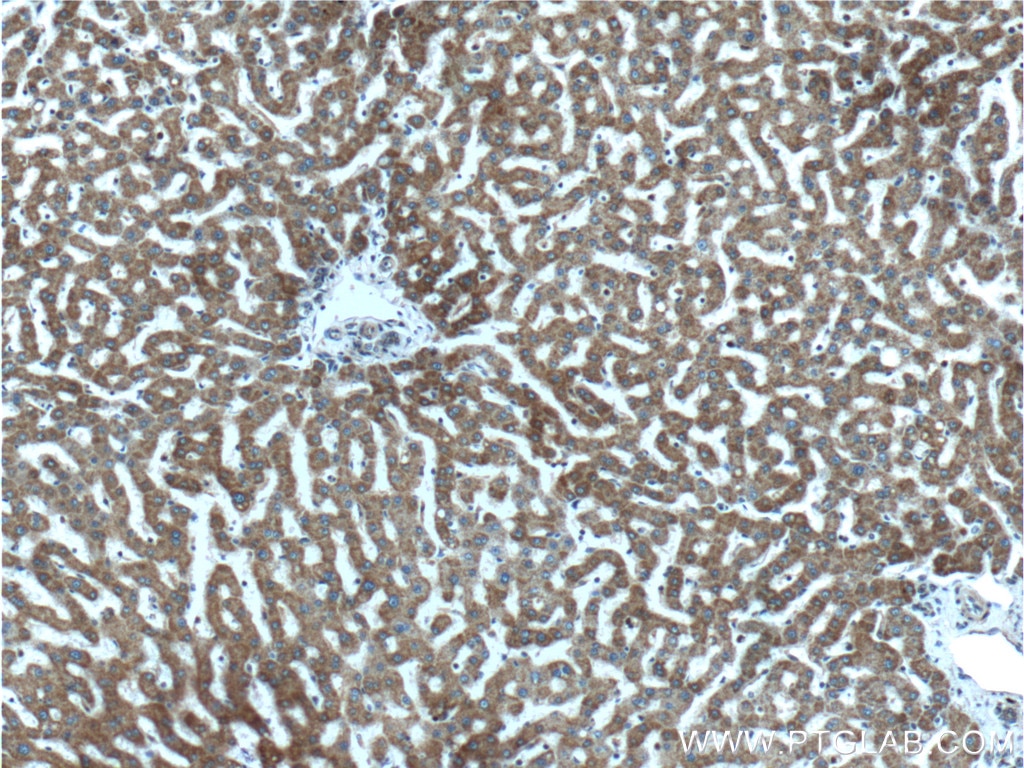
| Positive IHC detected in | human liver tissue Note: suggested antigen retrieval with TE buffer pH 9.0; (*) Alternatively, antigen retrieval may be performed with citrate buffer pH 6.0 |
Recommended dilution
| Application | Dilution |
|---|---|
| Western Blot (WB) | WB : 1:500-1:2000 |
| Immunoprecipitation (IP) | IP : 0.5-4.0 ug for 1.0-3.0 mg of total protein lysate |
| Immunohistochemistry (IHC) | IHC : 1:50-1:500 |
| It is recommended that this reagent should be titrated in each testing system to obtain optimal results. | |
| Sample-dependent, Check data in validation data gallery. | |
Product Information
25383-1-AP targets MTF1 in WB, IHC, IF, IP, ChIP, ELISA applications and shows reactivity with human, mouse samples.
| Tested Reactivity | human, mouse |
| Cited Reactivity | human, mouse, rat, fish |
| Host / Isotype | Rabbit / IgG |
| Class | Polyclonal |
| Type | Antibody |
| Immunogen |
CatNo: Ag21848 Product name: Recombinant human MTF1 protein Source: e coli.-derived, PGEX-4T Tag: GST Domain: 404-753 aa of BC014454 Sequence: VSDVPPSTGNSASLSLPLVLQPGLSEPPQPLLPASAPSAPPPAPSLGPGSQQAAFGNPPALLQPPEVPVPHSTQFAANHQEFLPHPQAPQPIVPGLSVVAGASASAAAVASAVAAPAPPQSTTEPLPAMVQTLPLGANSVLTNNPTITITPTPNTAILQSSLVMGEQNLQWILNGATSSPQNQEQIQQASKVEKVFFTTAVPVASSPGSSVQQIGLSVPVIIIKQEEACQCQCACRDSAKERASSRRKGCSSPPPPEPSPQAPDGPSLQLPAQTFSSAPVPGSSSSTLPSSCEQSRQAETPSDPQTETLSAMDVSEFLSLQSLDTPSNLIPIEALLQGEEEMGLTSSFSK Predict reactive species |
| Full Name | metal-regulatory transcription factor 1 |
| Calculated Molecular Weight | 753 aa, 81 kDa |
| Observed Molecular Weight | 65-70 kDa, 100 kDa |
| GenBank Accession Number | BC014454 |
| Gene Symbol | MTF1 |
| Gene ID (NCBI) | 4520 |
| RRID | AB_2880053 |
| Conjugate | Unconjugated |
| Form | Liquid |
| Purification Method | Antigen affinity purification |
| UNIPROT ID | Q14872 |
| Storage Buffer | PBS with 0.02% sodium azide and 50% glycerol, pH 7.3. |
| Storage Conditions | Store at -20°C. Stable for one year after shipment. Aliquoting is unnecessary for -20oC storage. 20ul sizes contain 0.1% BSA. |
Background Information
Metal regulatory transcription factor 1 (MTF1), contains six C2H2-type zinc finger and localizes in the nucleus. MTF1 is a 753 amino acid protein and calculated molecular weight is 81 kDa. We always dectected a 65-70 protein by western blot. MTF1 binds to the metal responsive element and activates the metallothionein I promoter.
Protocols
| Product Specific Protocols | |
|---|---|
| IHC protocol for MTF1 antibody 25383-1-AP | Download protocol |
| IP protocol for MTF1 antibody 25383-1-AP | Download protocol |
| WB protocol for MTF1 antibody 25383-1-AP | Download protocol |
| Standard Protocols | |
|---|---|
| Click here to view our Standard Protocols |
Publications
What published studies show
I'll search for the citations for this product.25383-1-AP MTF1 Polyclonal Antibody — Citation Summary
Antibody: MTF1 Polyclonal antibody
Catalog No.: 25383-1-AP
Total Citations: 43 (across 40 unique publications)
Journals: Cancer Cell, Cell, Nature Communications, ACS Nano, J Exp Clin Cancer Res, Advanced Science, Science Advances, Carbohydrate Polymers, Environmental Science & Technology, Acta Pharmacologica Sinica, Free Radical Biology and Medicine, Cell Reports, British Journal of Pharmacology, Oxidative Medicine and Cellular Longevity, Antioxidants & Redox Signaling, Molecular Therapy Nucleic Acids, International Immunopharmacology, International Journal of Molecular Sciences, European Journal of Human Genetics, Biomedicines, FASEB Journal, Biological Trace Element Research, Journal of Cellular Physiology, BBA Gene Regulatory Mechanisms, Journal of Cancer, Reproductive Toxicology, BMC Pulmonary Medicine, Chemical Biodiversity, Discovery Oncology, and others.
Research Fields: Cuproptosis, metal (zinc/copper) homeostasis & toxicity, oxidative stress, ferroptosis, lipid metabolism/lipotoxicity, cancer biology (HCC, myeloma, prostate, glioma, lung), neuroprotection, reproductive/toxicology, immunology, and gene regulation. Applications mainly WB, IHC, IF, IP, and ChIP across human, mouse, rat, and fish species.
| Species | Application | Title |
|---|---|---|
Cell Cuproptosis-immunity crosstalk informs strategy to overcome immunotherapy resistance. | ||
Cell Cuproptosis-immunity crosstalk informs strategy to overcome immunotherapy resistance. | ||
Nat Commun Autophagy of the m6A mRNA demethylase FTO is impaired by low-level arsenic exposure to promote tumorigenesis.
| ||
ACS Nano Amplification of Metalloregulatory Proteins in Macrophages by Bioactive ZnMn@SF Hydrogels for Spinal Cord Injury Repair | ||
ACS Nano A CRISPR-Customizable Copper-Coordinated DNA Nanoplatform Potentiates Cuproptosis Through Circadian and Metabolic Pathway Manipulation. |
Reviews
What customers say
Able is busy answering your previous question. Please try again later.
The reviews below have been submitted by verified Proteintech customers who received an incentive for providing their feedback.
David (Verified Customer) (09-15-2025) | Concentration used 1:1000. Works pretty good. Strong clean signal
|

