

Tested Applications
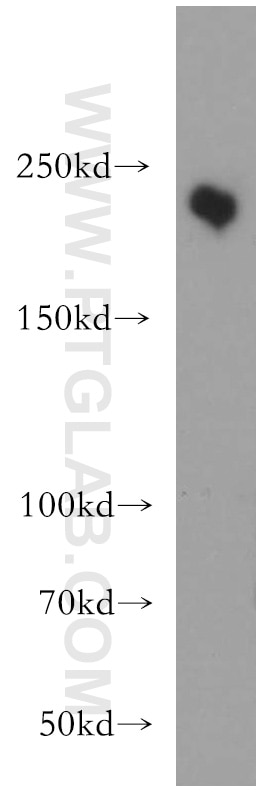
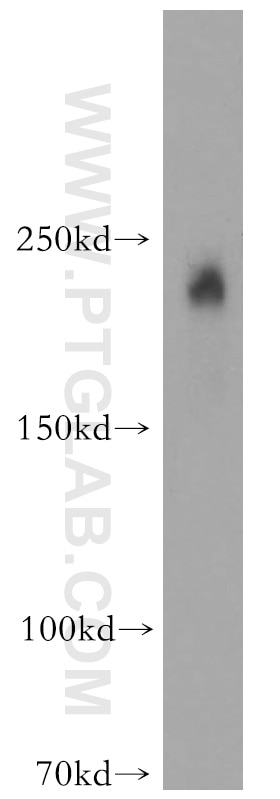
| Positive WB detected in | L02 cells, A431 cells |
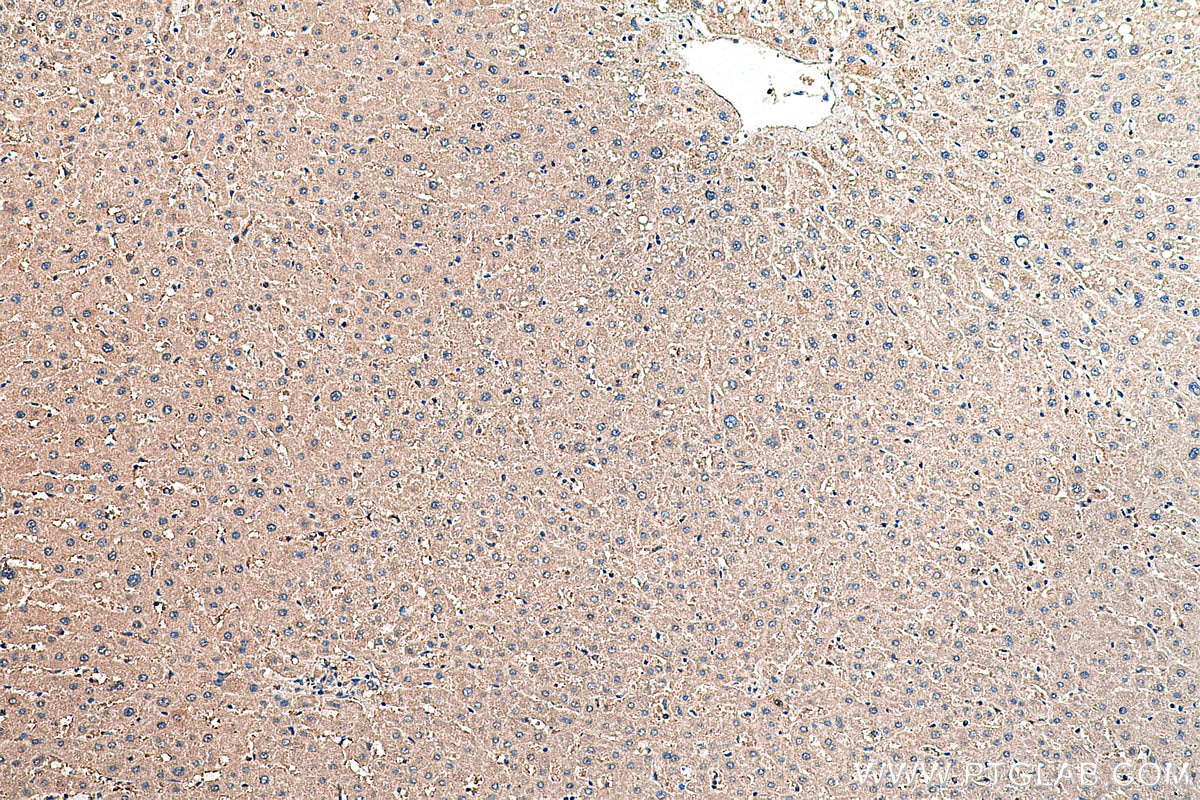
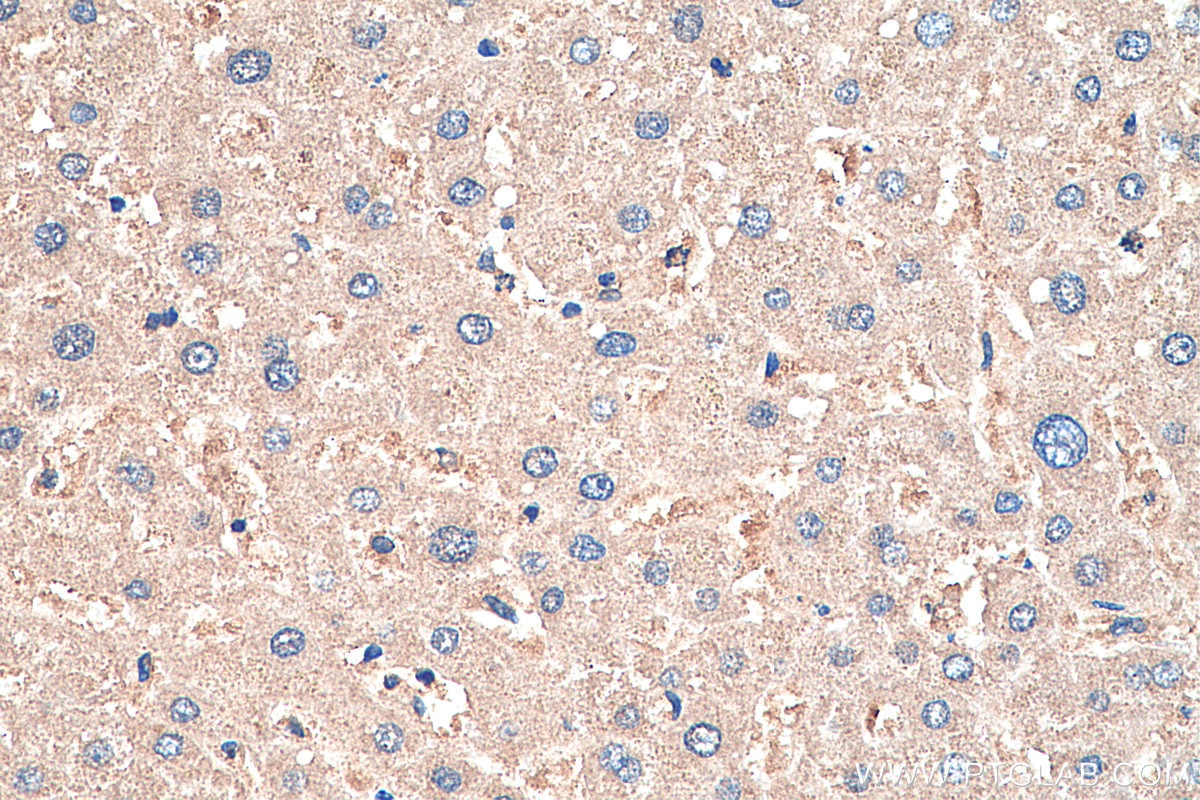
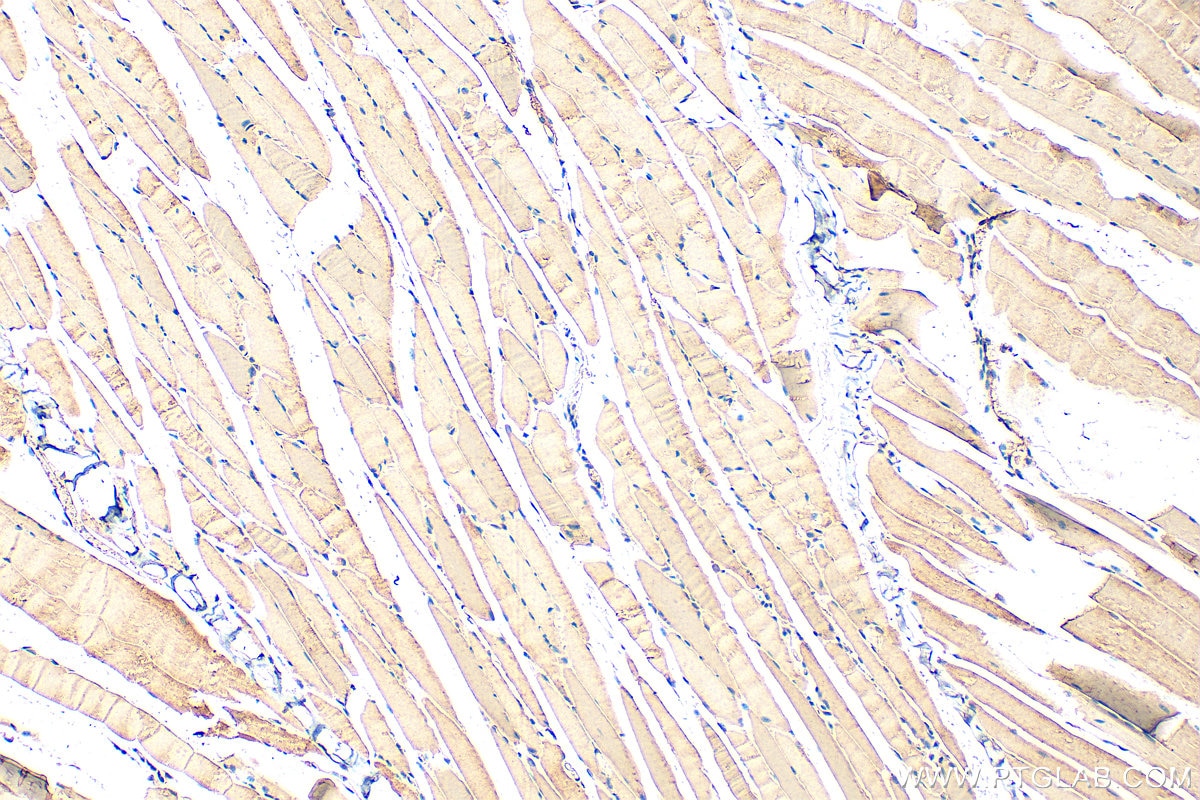
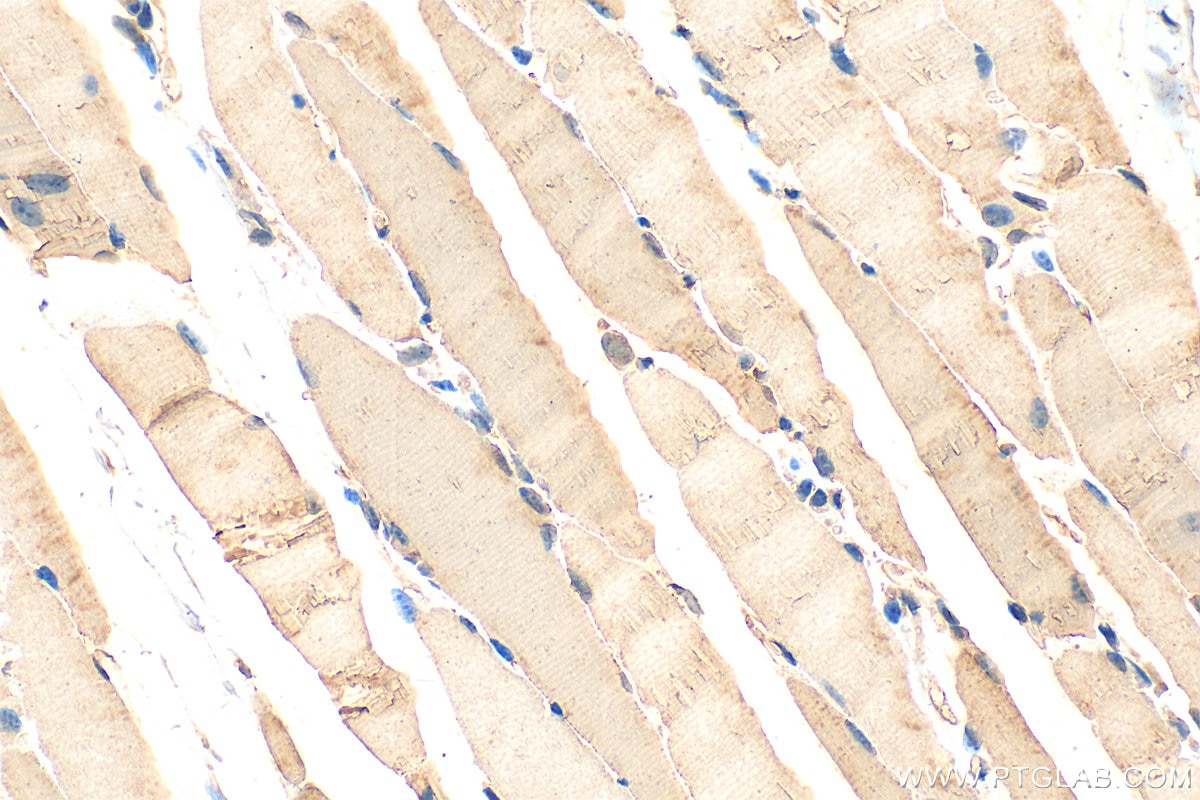
| Positive IHC detected in | human liver tissue, mouse skeletal muscle tissue Note: suggested antigen retrieval with TE buffer pH 9.0; (*) Alternatively, antigen retrieval may be performed with citrate buffer pH 6.0 |
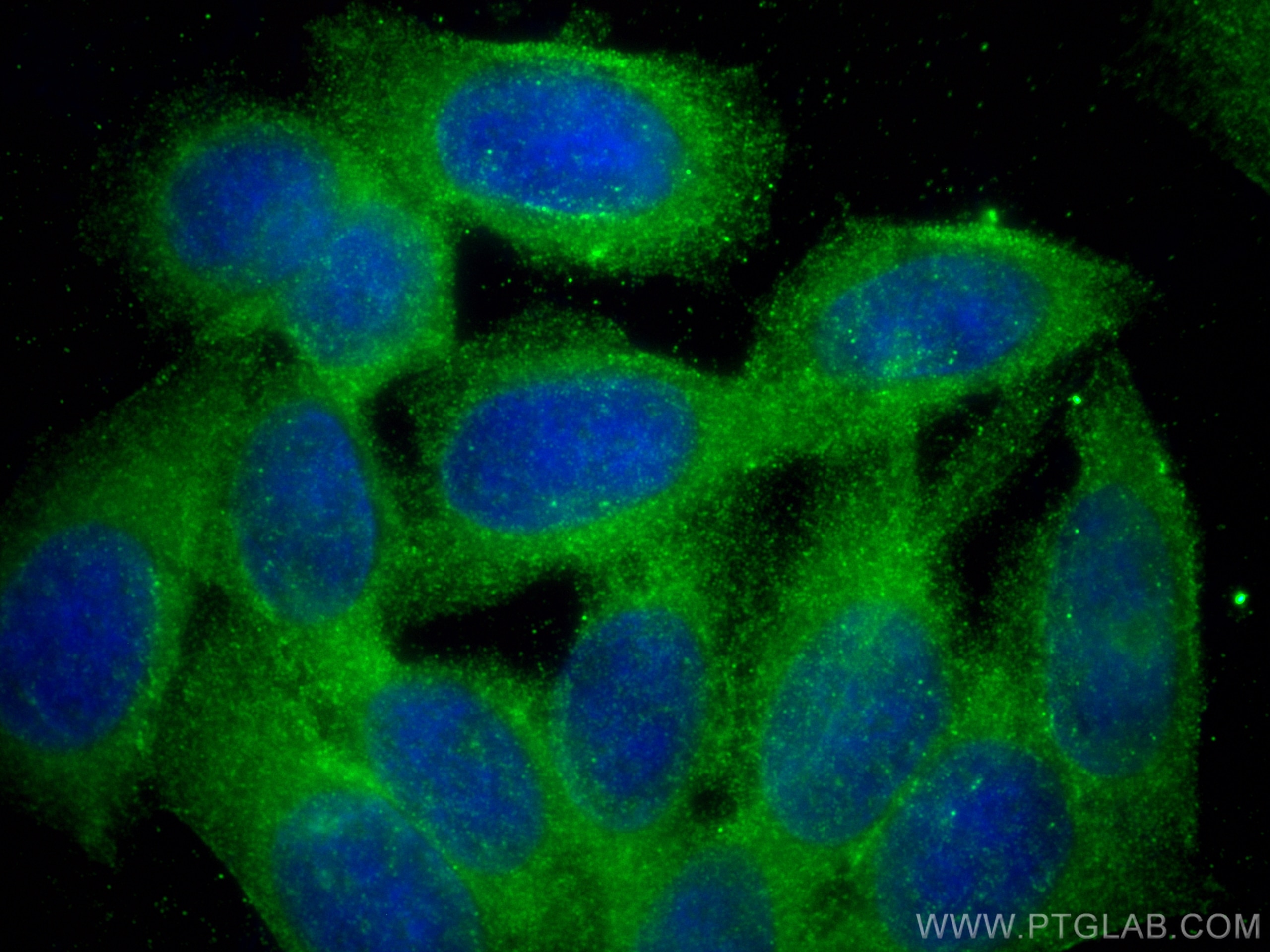
| Positive IF/ICC detected in | HepG2 cells |
Recommended dilution
| Application | Dilution |
|---|---|
| Western Blot (WB) | WB : 1:500-1:1000 |
| Immunohistochemistry (IHC) | IHC : 1:500-1:2000 |
| Immunofluorescence (IF)/ICC | IF/ICC : 1:50-1:500 |
| It is recommended that this reagent should be titrated in each testing system to obtain optimal results. | |
| Sample-dependent, Check data in validation data gallery. | |
Product Information
20720-1-AP targets MYO7A in WB, IHC, IF/ICC, ELISA applications and shows reactivity with human, mouse, rat samples.
| Tested Reactivity | human, mouse, rat |
| Cited Reactivity | human, mouse, rat, zebrafish |
| Host / Isotype | Rabbit / IgG |
| Class | Polyclonal |
| Type | Antibody |
| Immunogen |
Peptide Predict reactive species |
| Full Name | myosin VIIA |
| Calculated Molecular Weight | 254 kDa |
| Observed Molecular Weight | 240-250 kDa |
| GenBank Accession Number | NM_000260 |
| Gene Symbol | MYO7A |
| Gene ID (NCBI) | 4647 |
| RRID | AB_10734441 |
| Conjugate | Unconjugated |
| Form | Liquid |
| Purification Method | Antigen affinity purification |
| UNIPROT ID | Q13402 |
| Storage Buffer | PBS with 0.02% sodium azide and 50% glycerol, pH 7.3. |
| Storage Conditions | Store at -20°C. Stable for one year after shipment. Aliquoting is unnecessary for -20oC storage. 20ul sizes contain 0.1% BSA. |
Background Information
MYO7A, also named a USH1B, is one of myosins protein which are actin-based motor molecules with ATPase activity. Unconventional myosins serve in intracellular movements. Their highly divergent tails are presumed to bind to membranous compartments, which would be moved relative to actin filaments. In retina, MYO7A might play a role in trafficking of ribbon-synaptic vesicle complexes and renewal of the outer photoreceptors disks. In inner ear, it might maintain the rigidity of stereocilia during the dynamic movements of the bundle. It is involved in hair-cell vesicle trafficking of aminoglycosides, which are known to induce ototoxicity. Defects in MYO7A are the cause of Usher syndrome type 1B (USH1B). Defects in MYO7A are the cause of deafness autosomal recessive type 2 (DFNB2). Defects in MYO7A are the cause of deafness autosomal dominant type 11 (DFNA11). The antibody is specific to MYO7A.
Protocols
| Product Specific Protocols | |
|---|---|
| IF protocol for MYO7A antibody 20720-1-AP | Download protocol |
| IHC protocol for MYO7A antibody 20720-1-AP | Download protocol |
| WB protocol for MYO7A antibody 20720-1-AP | Download protocol |
| Standard Protocols | |
|---|---|
| Click here to view our Standard Protocols |
Publications
What published studies show
The MYO7A Polyclonal antibody (Cat# 20720-1-AP) has 12 citations published in journals including Advanced Science, International Journal of Biological Macromolecules, Neuroscience Bulletin, Biochemical Pharmacology, ACS Biomaterials Science & Engineering, Communications Biology, iScience, Biomedicines, Advanced Biology, Molecular Biology of the Cell, Translational Andrology and Urology, and Developmental Dynamics. Research fields span oocyte development, neuroinflammation, cochlear regeneration, hair cell biology, inner ear development, ferroptosis, and reproductive biology.
| Species | Application | Title |
|---|---|---|
Adv Sci (Weinh) Microfilament-Myosin II Regulates the Differentiation of Multinucleated Cysts into Oocytes and Influences Oocyte Developmental Potential in Mice. | ||
Int J Biol Macromol Molecular mechanism of Rolupram reducing neuroinflammation in noise induced tinnitus mice through TLR4/NF kB/NLRP3 protein/caspase-1/IL-1 β signaling pathway | ||
Neurosci Bull MSC-sEV Promote Regeneration of Cochlear Spiral Ganglion Neurons and Myelin Sheaths in 3D Culture System. | ||
Biochem Pharmacol Taraxasterol prevents cisplatin-induced cochlear hair cell loss via inducing GNAQ. | ||
ACS Biomater Sci Eng Microenvironment Can Induce Development of Auditory Progenitor Cells from Human Gingival Mesenchymal Stem Cells. | ||
Commun Biol Abnormal iron homeostasis mediates cochlear hair cell impairment and hearing loss in Gprasp2-deficient mice. |

