

Tested Applications
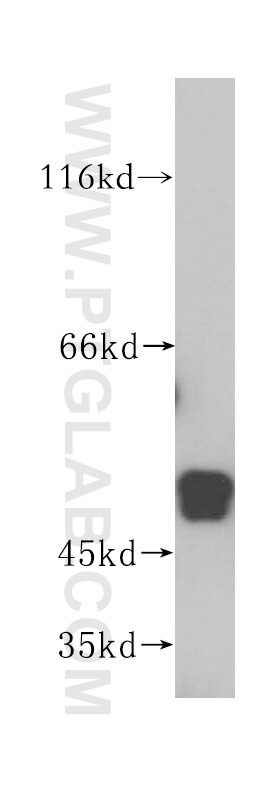
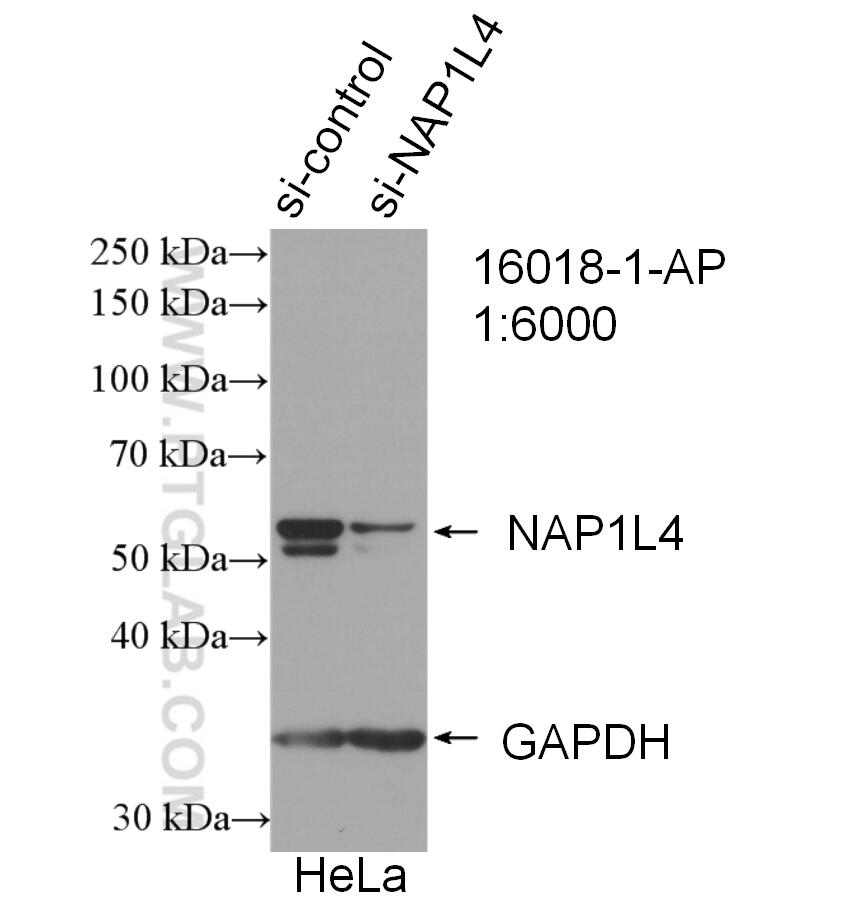
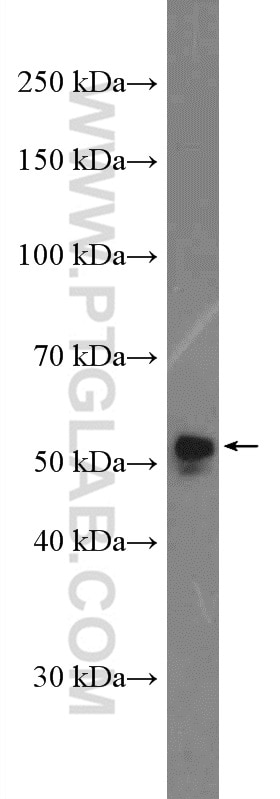
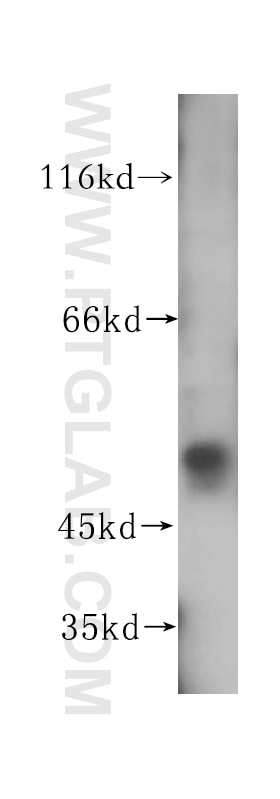
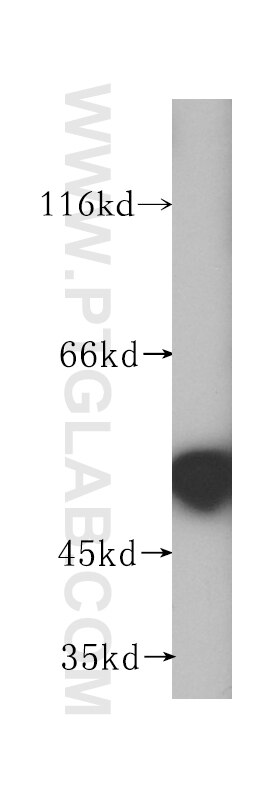
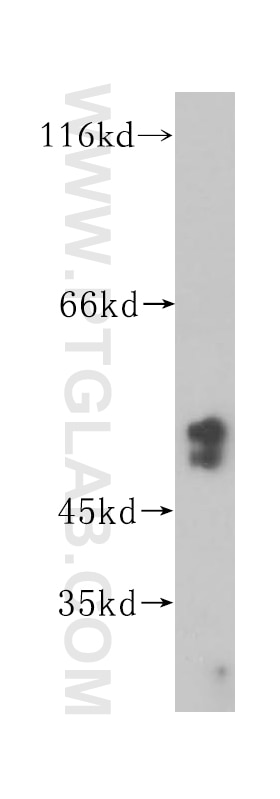
| Positive WB detected in | HeLa cells, mouse liver tissue, mouse testis tissue, HEK-293 cells, A431 cells |
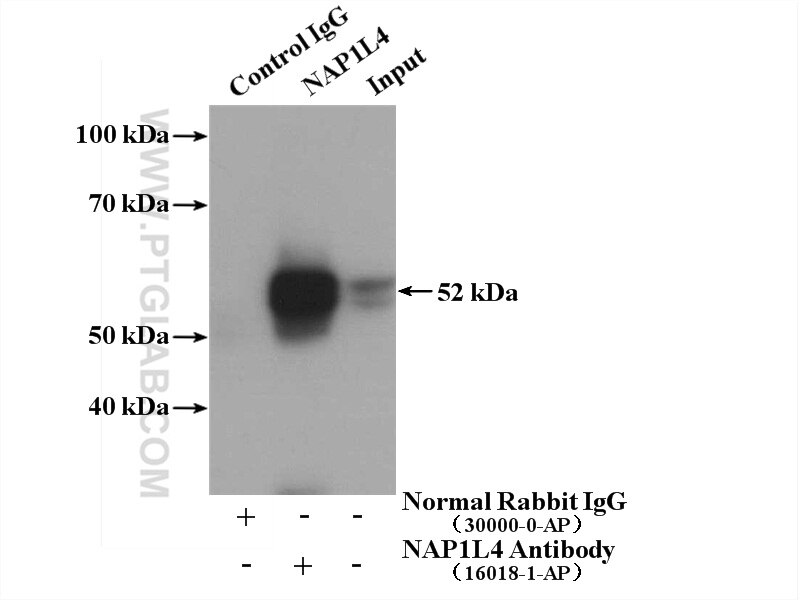
| Positive IP detected in | HeLa cells |
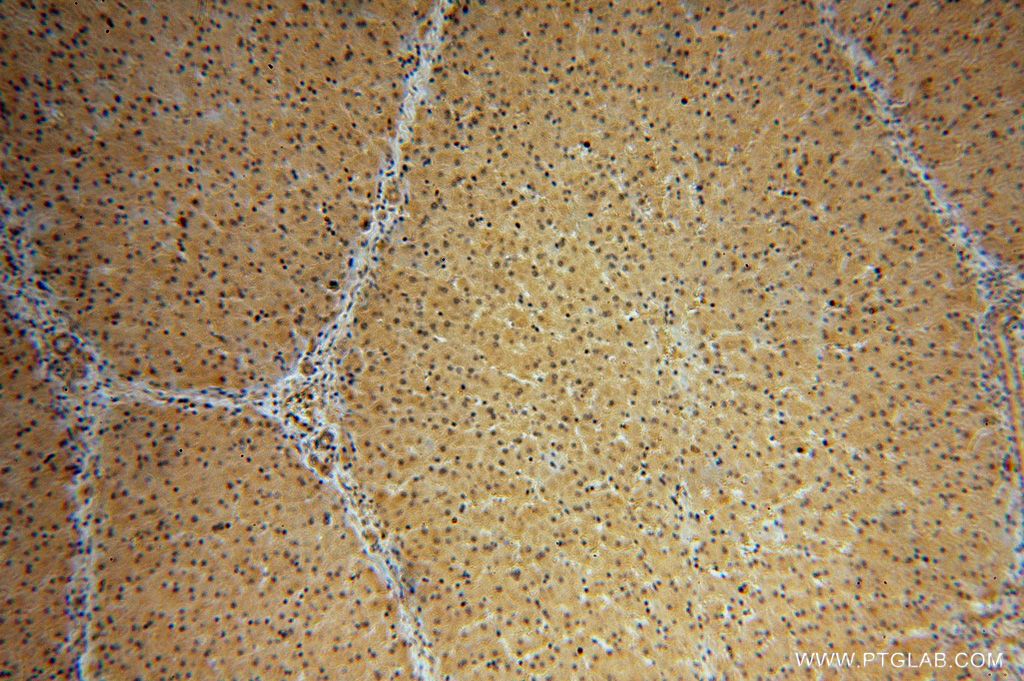
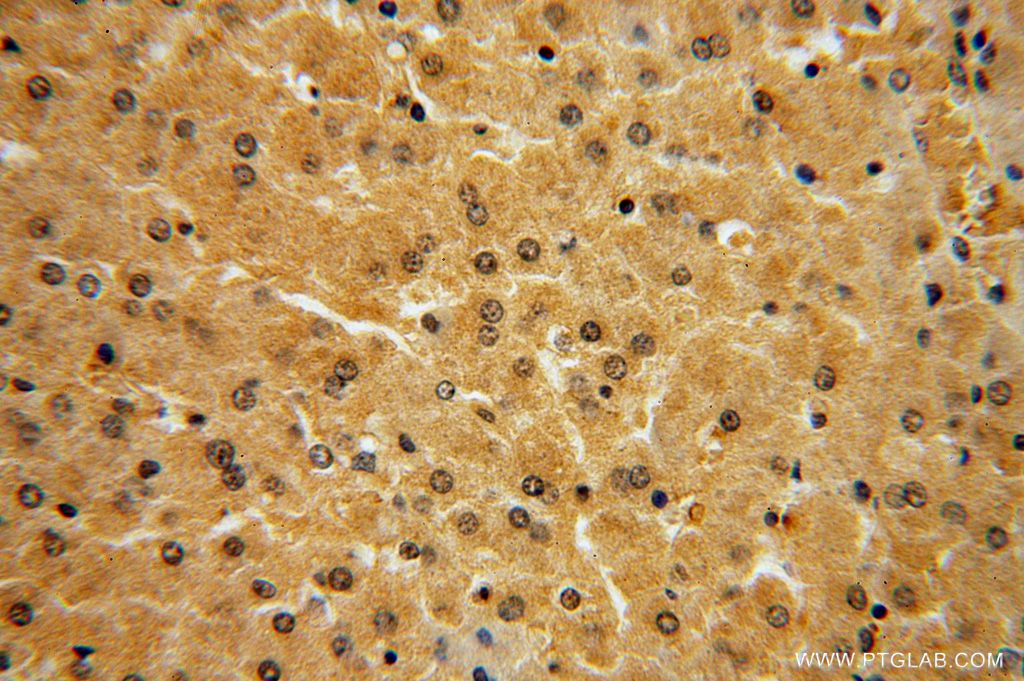
| Positive IHC detected in | human liver tissue Note: suggested antigen retrieval with TE buffer pH 9.0; (*) Alternatively, antigen retrieval may be performed with citrate buffer pH 6.0 |
Recommended dilution
| Application | Dilution |
|---|---|
| Western Blot (WB) | WB : 1:1000-1:4000 |
| Immunoprecipitation (IP) | IP : 0.5-4.0 ug for 1.0-3.0 mg of total protein lysate |
| Immunohistochemistry (IHC) | IHC : 1:20-1:200 |
| It is recommended that this reagent should be titrated in each testing system to obtain optimal results. | |
| Sample-dependent, Check data in validation data gallery. | |
Product Information
16018-1-AP targets NAP1L4 in WB, IHC, IF, IP, RIP, ELISA applications and shows reactivity with human, mouse, rat samples.
| Tested Reactivity | human, mouse, rat |
| Cited Reactivity | human, mouse |
| Host / Isotype | Rabbit / IgG |
| Class | Polyclonal |
| Type | Antibody |
| Immunogen |
CatNo: Ag8827 Product name: Recombinant human NAP1L4 protein Source: e coli.-derived, PET28a Tag: 6*His Domain: 1-375 aa of BC022090 Sequence: MADHSFSDGVPSDSVEAAKNASNTEKLTDQVMQNPRVLAALQERLDNVPHTPSSYIETLPKAVKRRINALKQLQVRCAHIEAKFYEEVHDLERKYAALYQPLFDKRREFITGDVEPTDAESEWHSENEEEEKLAGDMKSKVVVTEKAAATAEEPDPKGIPEFWFTIFRNVDMLSELVQEYDEPILKHLQDIKVKFSDPGQPMSFVLEFHFEPNDYFTNSVLTKTYKMKSEPDKADPFSFEGPEIVDCDGCTIDWKKGKNVTVKTIKKKQKHKGRGTVRTITKQVPNESFFNFFNPLKASGDGESLDEDSEFTLASDFEIGHFFRERIVPRAVLYFTGEAIEDDDNFEEGEEGEEEELEGDEEGEDEDDAEINPKV Predict reactive species |
| Full Name | nucleosome assembly protein 1-like 4 |
| Calculated Molecular Weight | 375 aa, 43 kDa |
| Observed Molecular Weight | 52 kDa |
| GenBank Accession Number | BC022090 |
| Gene Symbol | NAP1L4 |
| Gene ID (NCBI) | 4676 |
| RRID | AB_2150711 |
| Conjugate | Unconjugated |
| Form | Liquid |
| Purification Method | Antigen affinity purification |
| UNIPROT ID | Q99733 |
| Storage Buffer | PBS with 0.02% sodium azide and 50% glycerol, pH 7.3. |
| Storage Conditions | Store at -20°C. Stable for one year after shipment. Aliquoting is unnecessary for -20oC storage. 20ul sizes contain 0.1% BSA. |
Protocols
| Product Specific Protocols | |
|---|---|
| IHC protocol for NAP1L4 antibody 16018-1-AP | Download protocol |
| IP protocol for NAP1L4 antibody 16018-1-AP | Download protocol |
| WB protocol for NAP1L4 antibody 16018-1-AP | Download protocol |
| Standard Protocols | |
|---|---|
| Click here to view our Standard Protocols |
Publications
What published studies show
The NAP1L4 Polyclonal antibody (catalog number 16018-1-AP) has 9 total citations. These appear in journals including Science Advances, Nature Structural & Molecular Biology, Molecular & Cellular Proteomics, Journal of Cell Biology, Journal of Dermatological Science, iScience, FASEB Journal, Journal of Virology, and Discover Oncology. Research fields span intestinal stem cell regeneration, protein quality control, protein–protein interactions, C9orf72 phase separation, melanoma, pulmonary hypertension, virology, and hepatocellular carcinoma.
| Species | Application | Title |
|---|---|---|
Sci Adv Snora54 negatively regulates self-renewal of intestinal stem cells and gut regeneration via suppression of Notch2 signaling | ||
Nat Struct Mol Biol Mechanism of client selection by the protein quality-control factor UBE2O | ||
Mol Cell Proteomics A novel immuno-competitive capture mass spectrometry strategy for protein-protein interaction profiling reveals that LATS kinases regulate HCV replication through NS5A phosphorylation. | ||
J Cell Biol Phase separation and toxicity of C9orf72 poly(PR) depends on alternate distribution of arginine. | ||
J Dermatol Sci Nucleosome assembly protein 1-like 4, a new therapeutic target for proliferation and invasion of melanoma cells.
| ||
iScience Differential toxicity and localization of arginine-rich C9ORF72 dipeptide repeat proteins depend on de-clustering of positive charges |

