

Tested Applications
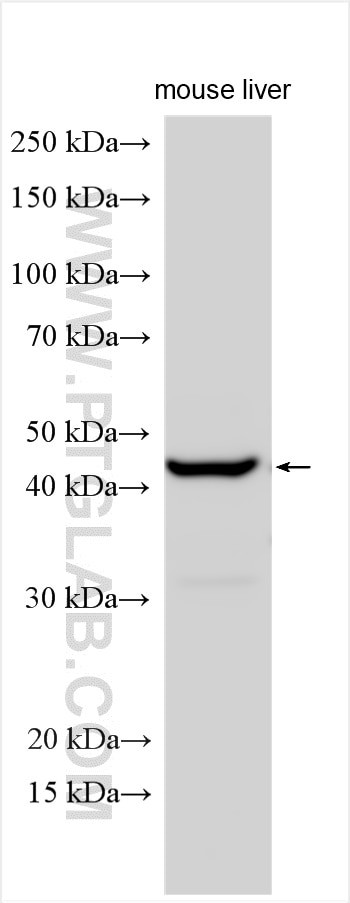
| Positive WB detected in | mouse liver tissue |
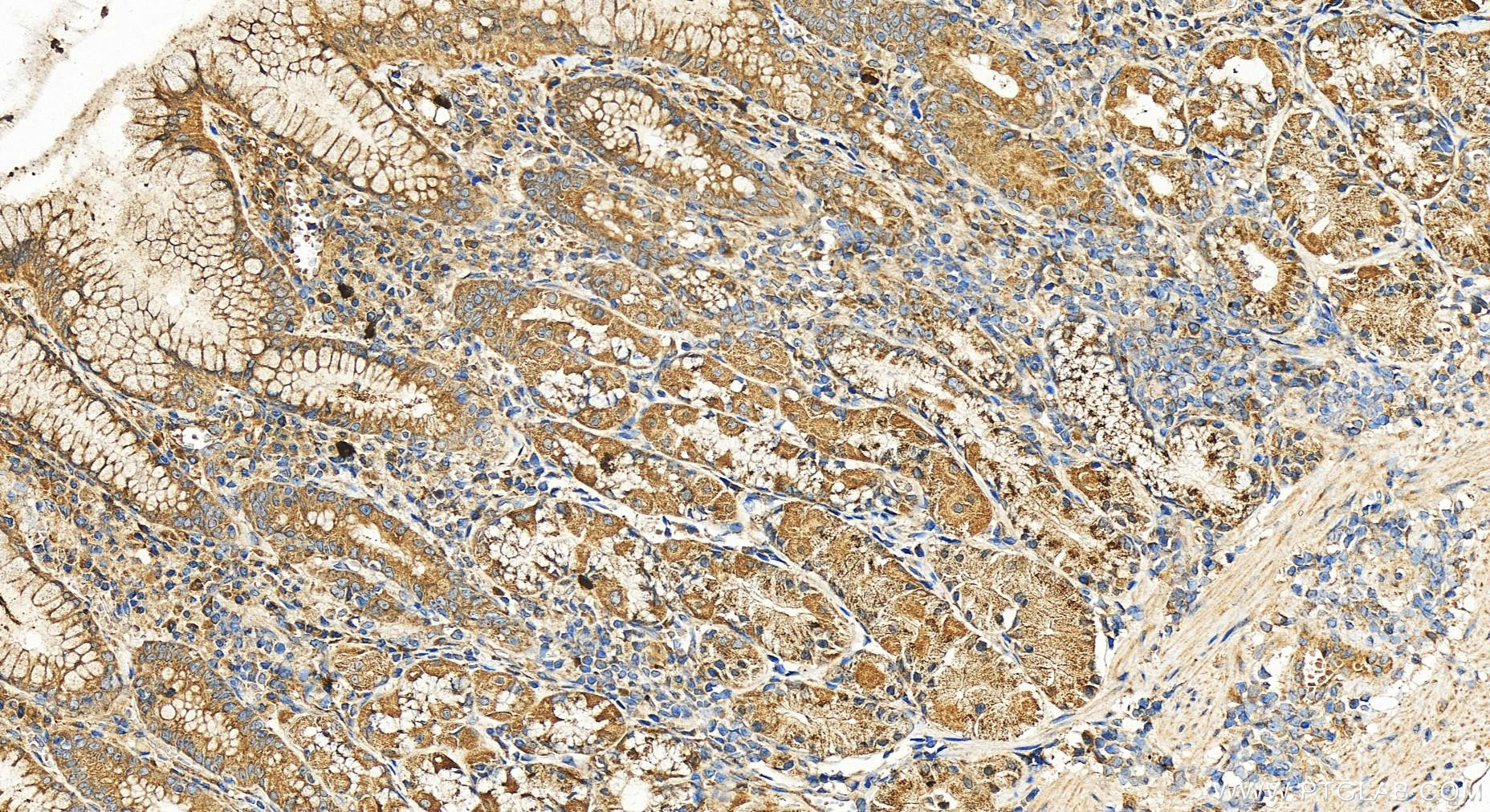
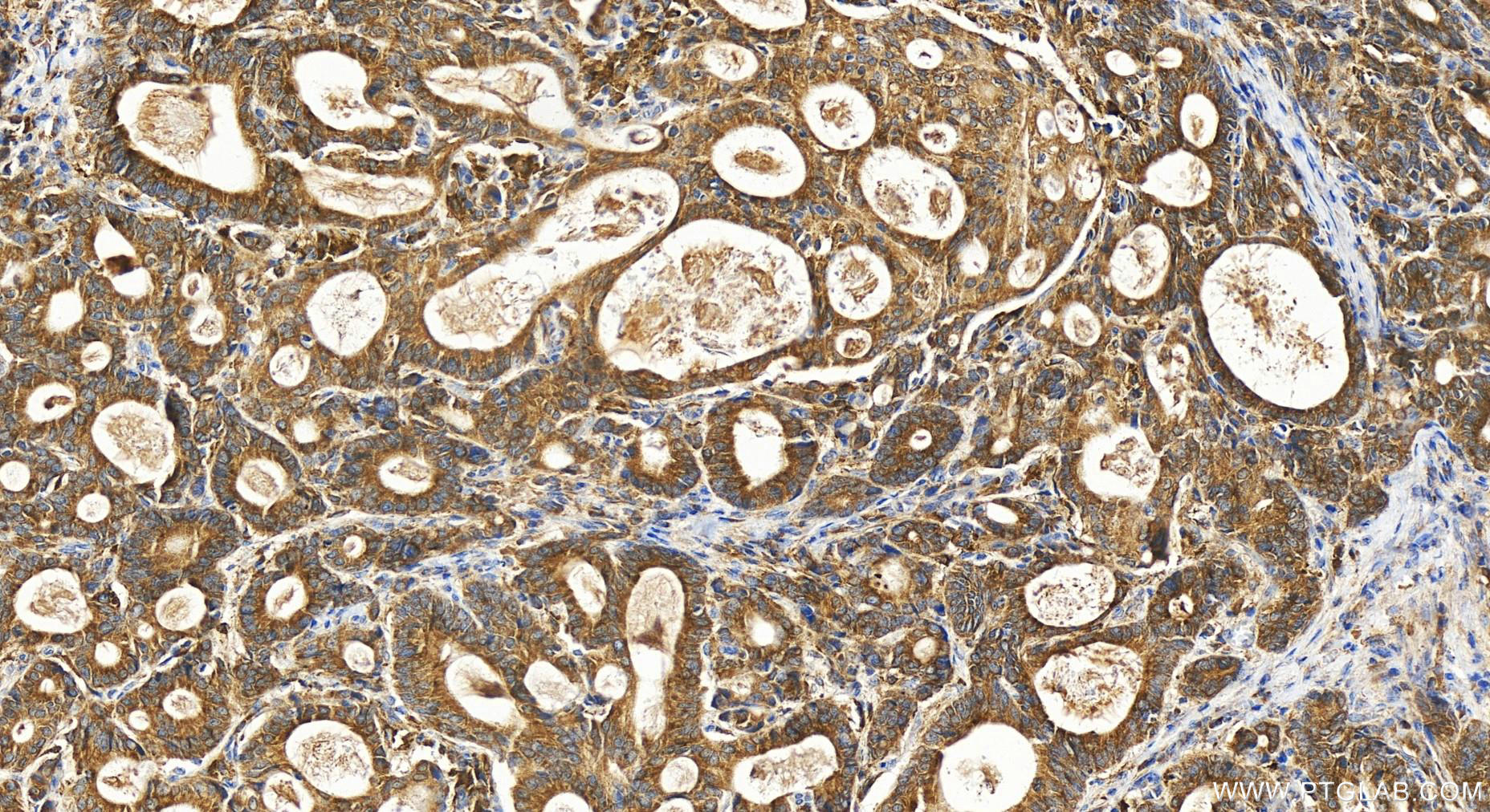
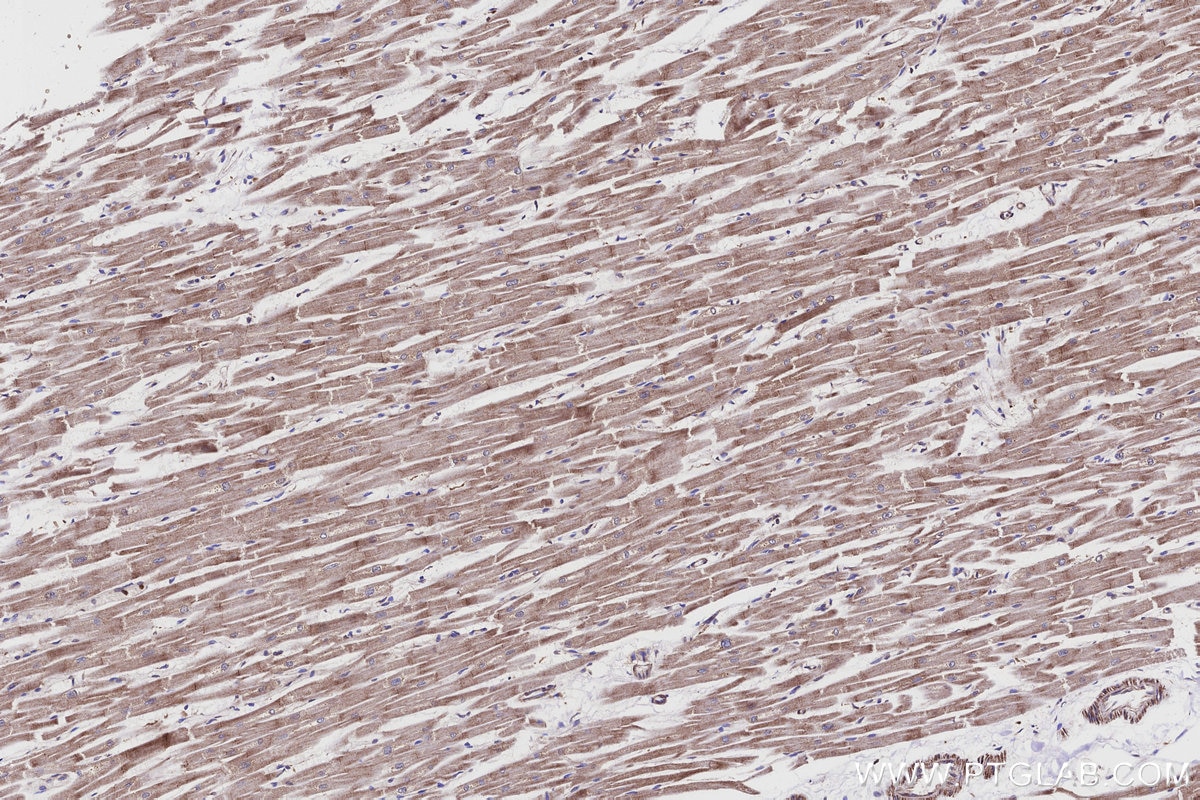
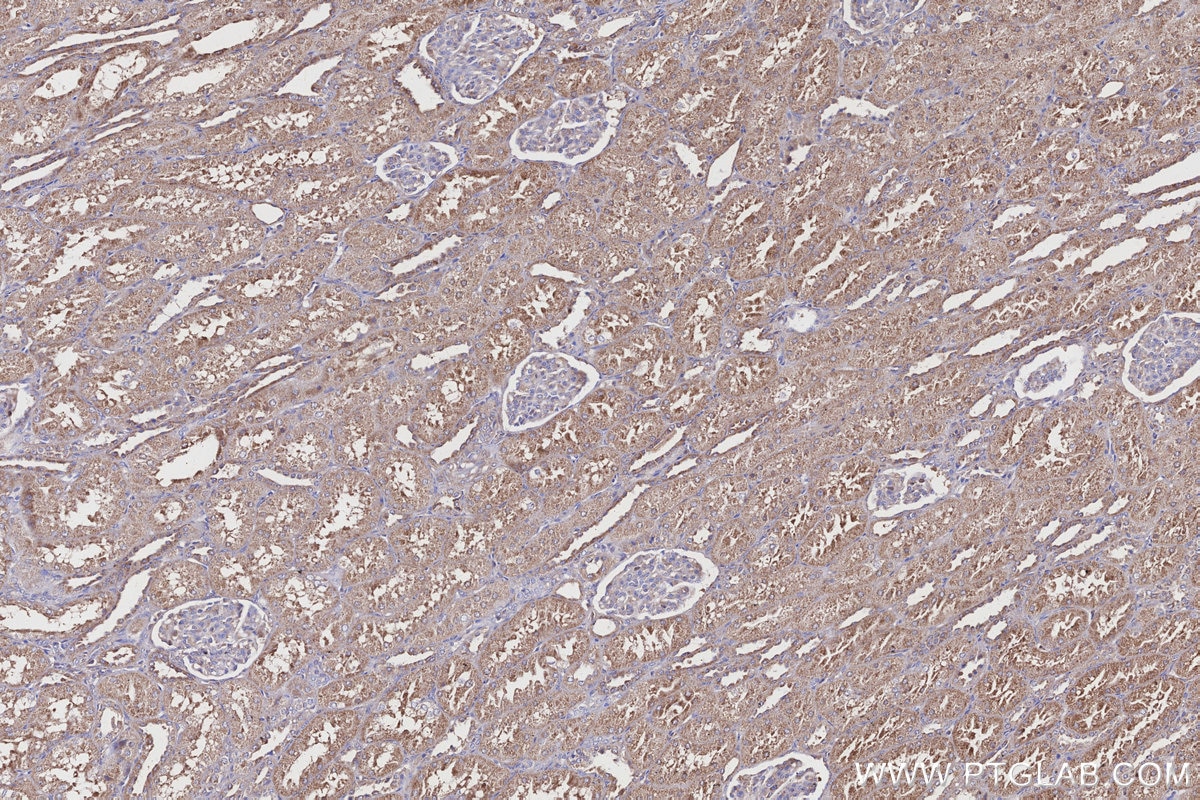
| Positive IHC detected in | human stomach tissue, human kidney tissue, human stomach cancer tissue, human heart tissue Note: suggested antigen retrieval with TE buffer pH 9.0; (*) Alternatively, antigen retrieval may be performed with citrate buffer pH 6.0 |
Recommended dilution
| Application | Dilution |
|---|---|
| Western Blot (WB) | WB : 1:500-1:1000 |
| Immunohistochemistry (IHC) | IHC : 1:50-1:500 |
| It is recommended that this reagent should be titrated in each testing system to obtain optimal results. | |
| Sample-dependent, Check data in validation data gallery. | |
Product Information
19704-1-AP targets ND2 in WB, IHC, ELISA applications and shows reactivity with human, mouse samples.
| Tested Reactivity | human, mouse |
| Cited Reactivity | human, mouse, rat |
| Host / Isotype | Rabbit / IgG |
| Class | Polyclonal |
| Type | Antibody |
| Immunogen |
Peptide Predict reactive species |
| Full Name | NADH dehydrogenase, subunit 2 (complex I) |
| Calculated Molecular Weight | 39 kDa |
| Observed Molecular Weight | 42-44 kDa |
| GenBank Accession Number | GQ398480 |
| Gene Symbol | ND2 |
| Gene ID (NCBI) | 4536 |
| RRID | AB_10638920 |
| Conjugate | Unconjugated |
| Form | Liquid |
| Purification Method | Antigen affinity purification |
| UNIPROT ID | P03891 |
| Storage Buffer | PBS with 0.02% sodium azide and 50% glycerol, pH 7.3. |
| Storage Conditions | Store at -20°C. Stable for one year after shipment. Aliquoting is unnecessary for -20oC storage. 20ul sizes contain 0.1% BSA. |
Background Information
ND2, also named as MTND2, NADH2 and ND2, belongs to the complex I subunit 2 family. ND2 is a core subunit of the mitochondrial membrane respiratory chain NADH dehydrogenase (Complex I) that is believed to belong to the minimal assembly required for catalysis. Complex I functions in the transfer of electrons from NADH to the respiratory chain. The immediate electron acceptor for the enzyme is believed to be ubiquinone.
Protocols
| Product Specific Protocols | |
|---|---|
| IHC protocol for ND2 antibody 19704-1-AP | Download protocol |
| WB protocol for ND2 antibody 19704-1-AP | Download protocol |
| Standard Protocols | |
|---|---|
| Click here to view our Standard Protocols |
Publications
What published studies show
Able is busy answering your previous question. Please try again later.
| Species | Application | Title |
|---|---|---|
Signal Transduct Target Ther Fructose directly remodels the translocase of the outer membrane to impair oxidative phosphorylation in podocytes | ||
Signal Transduct Target Ther Targeting N(1)-methyladenosine modification in osteoblasts through tRNA methyltransferase 10C reverses mitochondrial dysfunction and ameliorates osteoporosis. | ||
Nat Med The inhibition of TDP-43 mitochondrial localization blocks its neuronal toxicity. | ||
Cell PAX translocations remodel mitochondrial metabolism through altered leucine usage in rhabdomyosarcoma | ||
Cell Metab Aging-induced tRNAGlu-derived fragment impairs glutamate biosynthesis by targeting mitochondrial translation-dependent cristae organization | ||
Nat Metab Asparagine deprivation enhances T cell antitumour response in patients via ROS-mediated metabolic and signal adaptations |
Reviews
What customers say
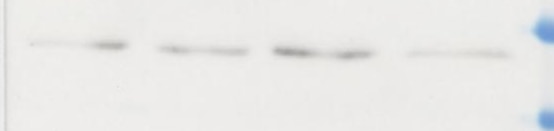
Both reviews are for Western Blot applications. One user found the antibody performed well but produced a slightly faint signal at 1:1000 dilution in HCT116 cells, suggesting a lower dilution might improve intensity. The other user reported excellent performance at 1:2000 dilution in human adipocyte cell lines. Overall, the antibody is well-received for WB, with users noting it works reliably across different cell types, though signal strength may vary depending on the sample and dilution used.
The reviews below have been submitted by verified Proteintech customers who received an incentive for providing their feedback.
Morgane (Verified Customer) (10-09-2025) | Good but a little faint, could use a more lower dilution
 |
Mi (Verified Customer) (02-01-2023) | works very well in human adipocyte cell lines
|

