


Tested Applications
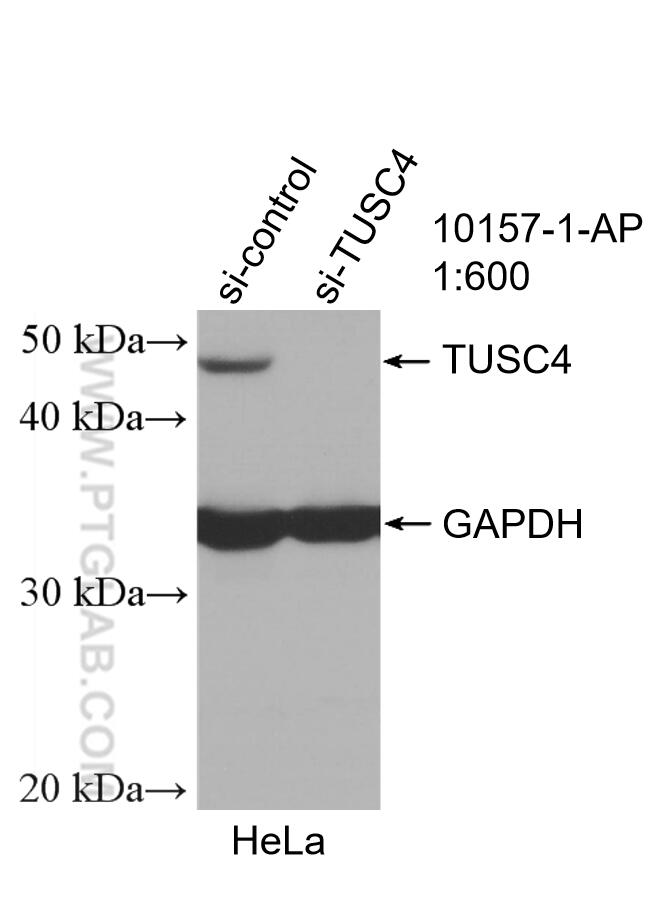
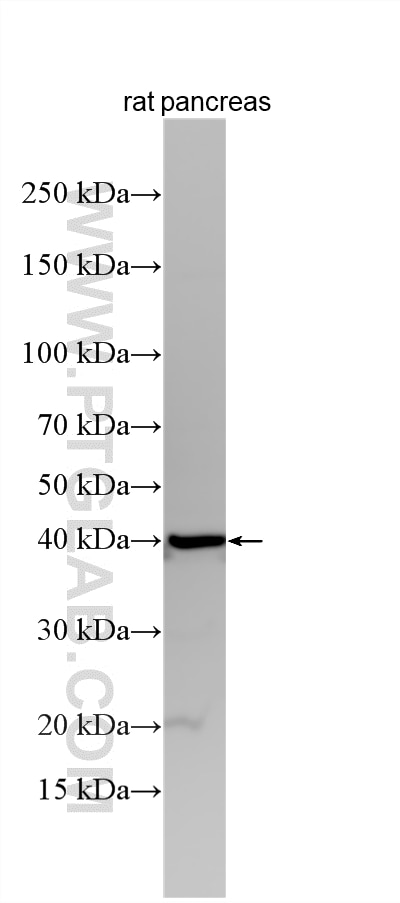
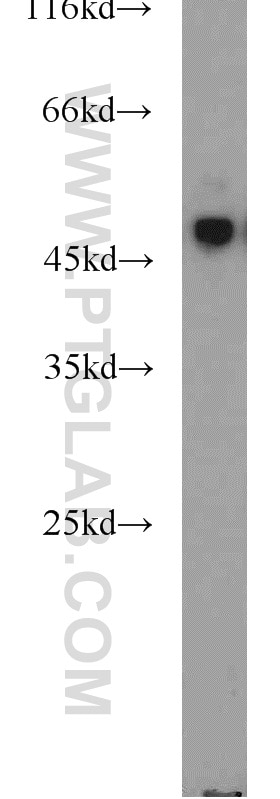
| Positive WB detected in | rat pancreas tissue, HeLa cells, mouse pancreas tissue |
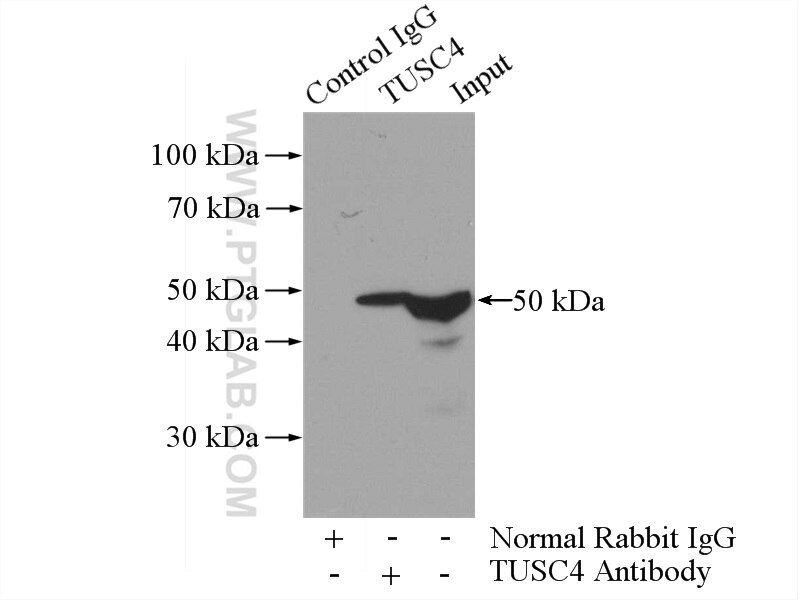
| Positive IP detected in | mouse pancreas tissue |
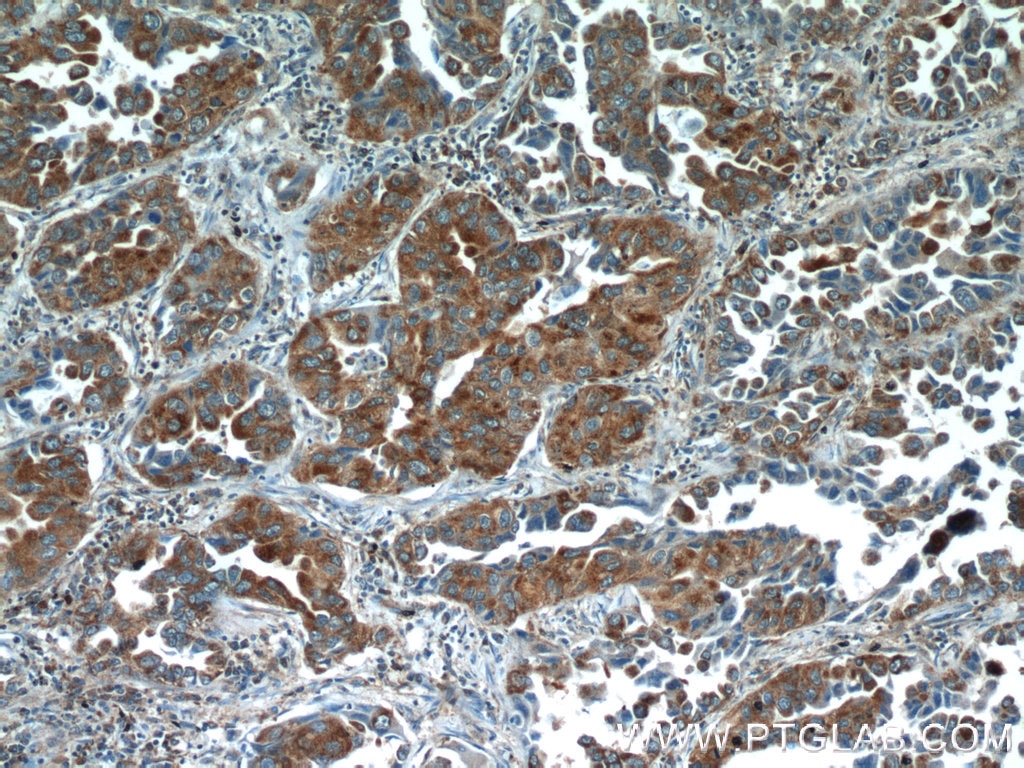
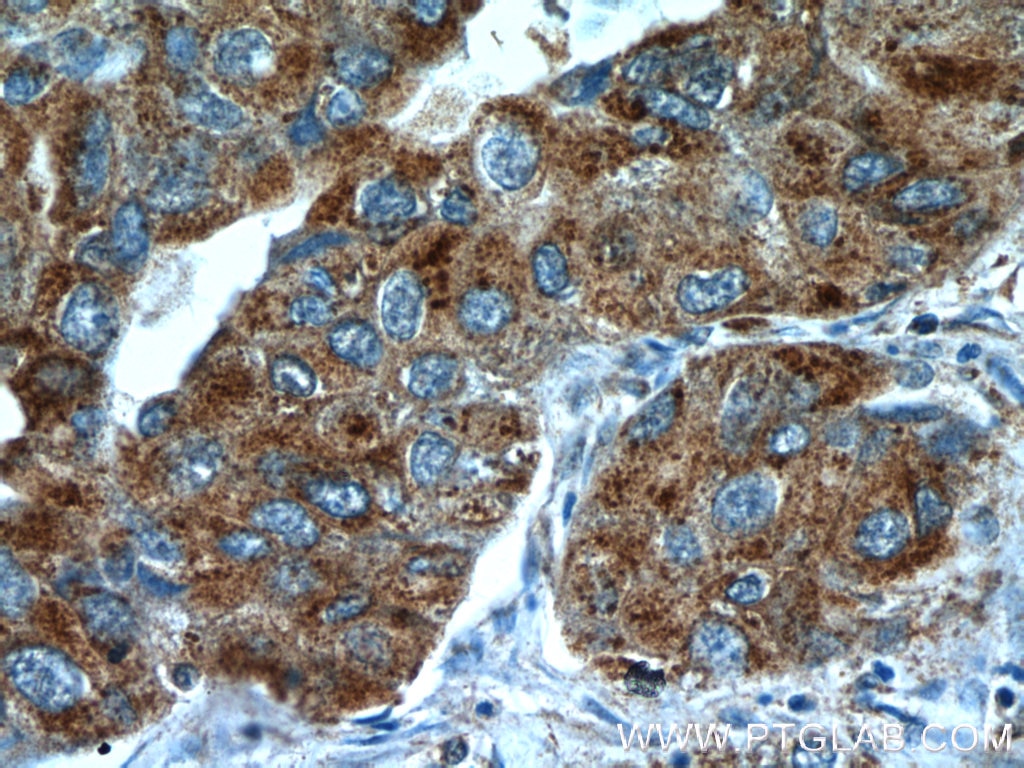
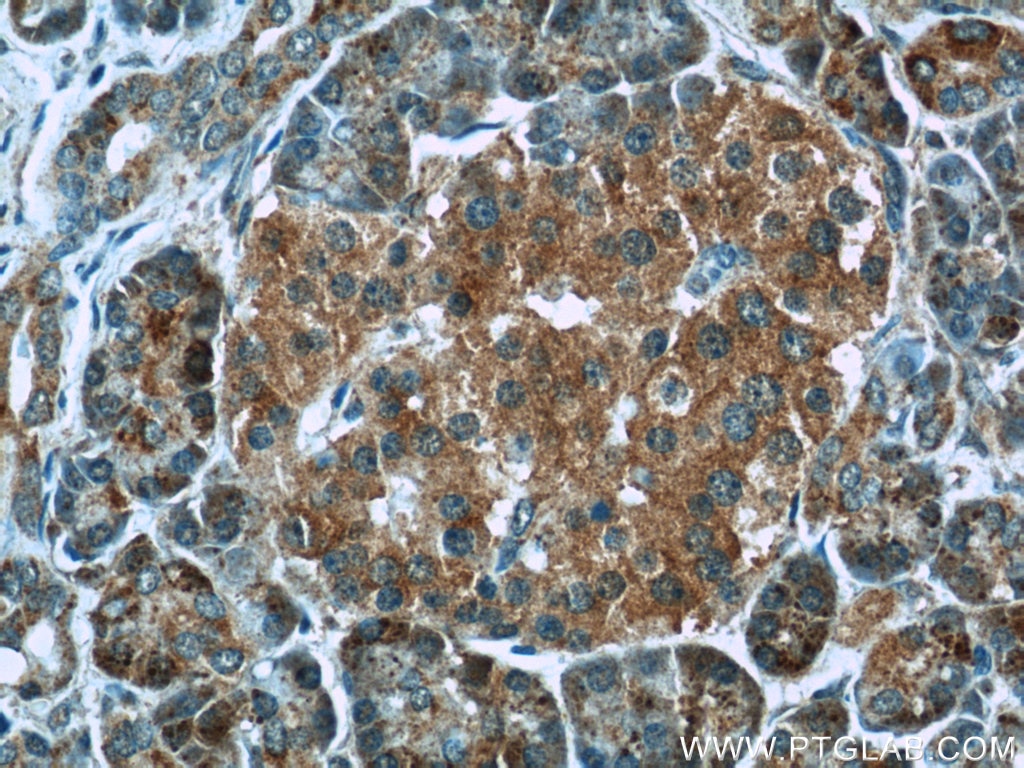
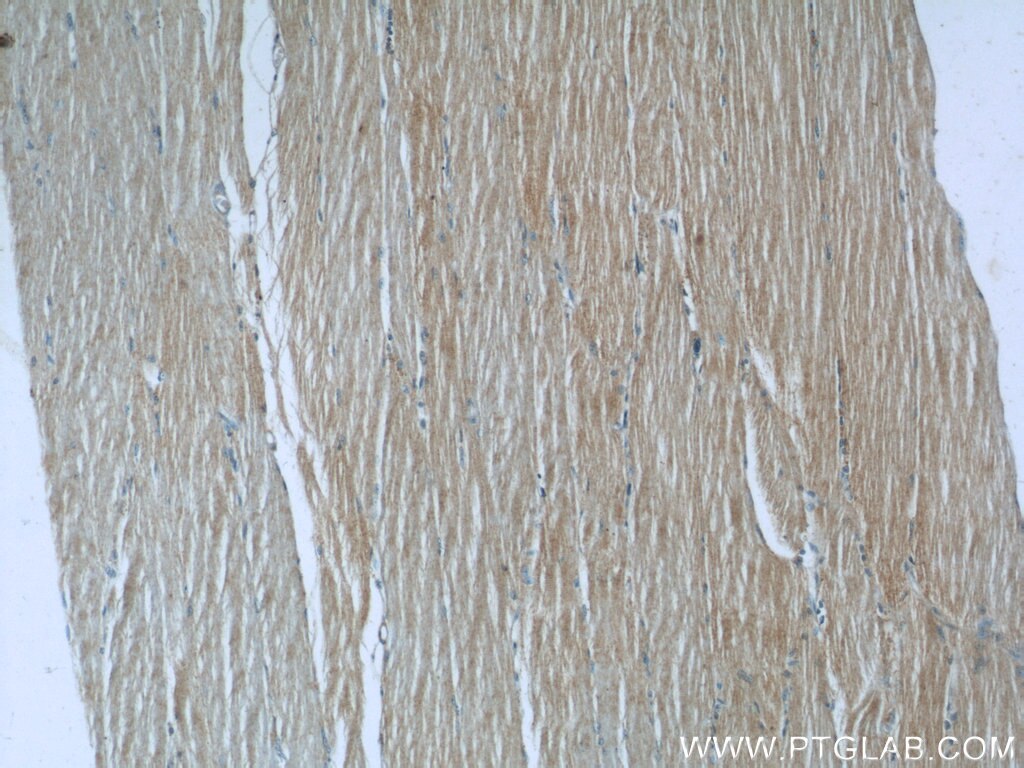
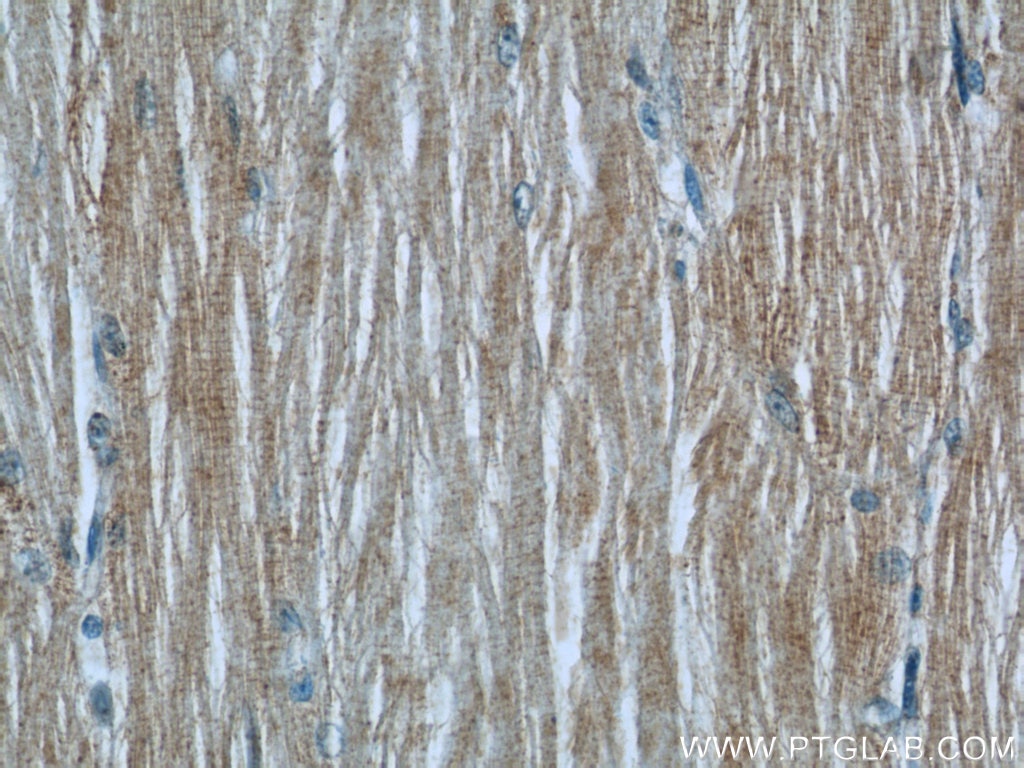
| Positive IHC detected in | human lung cancer tissue, human pancreas tissue, human skeletal muscle tissue Note: suggested antigen retrieval with TE buffer pH 9.0; (*) Alternatively, antigen retrieval may be performed with citrate buffer pH 6.0 |
Recommended dilution
| Application | Dilution |
|---|---|
| Western Blot (WB) | WB : 1:2000-1:12000 |
| Immunoprecipitation (IP) | IP : 0.5-4.0 ug for 1.0-3.0 mg of total protein lysate |
| Immunohistochemistry (IHC) | IHC : 1:20-1:200 |
| It is recommended that this reagent should be titrated in each testing system to obtain optimal results. | |
| Sample-dependent, Check data in validation data gallery. | |
Product Information
10157-1-AP targets NPRL2 in WB, IHC, IF, IP, CoIP, ELISA applications and shows reactivity with human, mouse samples.
| Tested Reactivity | human, mouse |
| Cited Reactivity | human, mouse |
| Host / Isotype | Rabbit / IgG |
| Class | Polyclonal |
| Type | Antibody |
| Immunogen |
CatNo: Ag0210 Product name: Recombinant human NPR2L,TUSC4 protein Source: e coli.-derived, PGEX-4T Tag: GST Domain: 1-270 aa of BC002791 Sequence: GCRIECIFFSEFHPTLGPKITYQVPEDFISRELFDTVQVYIITKPELQNKLITVTAMEKKLIGCPVCIEHKKYSRNALLFNLGFVCDAQAKTCALEPIVKKLAGYLTTLELESSFVSMEESKQKLVPIMTILLEELNASGRCTLPIDESNTIHLKVIEQRPDPPVAQEYDVPVFTKDKEDFFNSQWDLTTQQILPYIDGFRHIQKISAEADVELNLVRIAIQNLLYYGVVTLVSILQYSNVYCPTPKVQDLVDDKSLQEACLSYVTKQGH Predict reactive species |
| Full Name | tumor suppressor candidate 4 |
| Calculated Molecular Weight | 44 kDa |
| Observed Molecular Weight | 40, 44-50 kDa |
| GenBank Accession Number | BC002791 |
| Gene Symbol | TUSC4 |
| Gene ID (NCBI) | 10641 |
| RRID | AB_514025 |
| Conjugate | Unconjugated |
| Form | Liquid |
| Purification Method | Antigen affinity purification |
| UNIPROT ID | Q8WTW4 |
| Storage Buffer | PBS with 0.02% sodium azide and 50% glycerol, pH 7.3. |
| Storage Conditions | Store at -20°C. Stable for one year after shipment. Aliquoting is unnecessary for -20oC storage. 20ul sizes contain 0.1% BSA. |
Background Information
NPRL2 (NPR2 Like, GATOR1 Complex Subunit) is a Protein Coding gene associated with Epilepsy, Familial Focal. As a component of the GATOR1 complex functions as an inhibitor of the amino acid-sensing branch of the TORC1 pathway. Homologous to yeast nitrogen permease (candidate tumor suppressor) (NM_006545, BC021984) gene encodes a protein of molecular mass of 50 kDa. Data by using overlapping and nested homozygous deletions methods indicate that this protein might be a tumor suppressor involved in the development of lung cancers.
Protocols
| Product Specific Protocols | |
|---|---|
| IHC protocol for NPRL2 antibody 10157-1-AP | Download protocol |
| IP protocol for NPRL2 antibody 10157-1-AP | Download protocol |
| WB protocol for NPRL2 antibody 10157-1-AP | Download protocol |
| Standard Protocols | |
|---|---|
| Click here to view our Standard Protocols |
Publications
What published studies show
The NPRL2 Polyclonal antibody (Cat# 10157-1-AP) has 10 citations published in journals including Cancer Research, Journal of Genetics and Genomics, Cancer Science, Experimental Cell Research, Cell Biology International, Molecular Carcinogenesis, Human Pathology, and Prostate. Research fields span tumor suppression (BRCA1 regulation), CAR-T cell therapy in B-cell malignancies, PDK1 signaling, autophagy-mediated chemoresistance in prostate cancer, mTOR pathway, glioma growth, and NPRL2's role in neddylation and drug resistance.
| Species | Application | Title |
|---|---|---|
J Genet Genomics Intrinsic NPRL2 and NPRL3 regulate the sensitivity of B-cell malignancies to CAR-T cell therapy.
| ||
Cancer Sci TUSC4/NPRL2, a novel PDK1-interacting protein, inhibits PDK1 tyrosine phosphorylation and its downstream signaling.
| ||
Cell Biol Int FOXO1 inhibits prostate cancer cell proliferation via suppressing E2F1 activated NPRL2 expression | ||
Exp Cell Res The aberrantly activated AURKB supports and complements the function of AURKA in CALR mutated cells through regulating the cell growth and differentiation |


