

Tested Applications
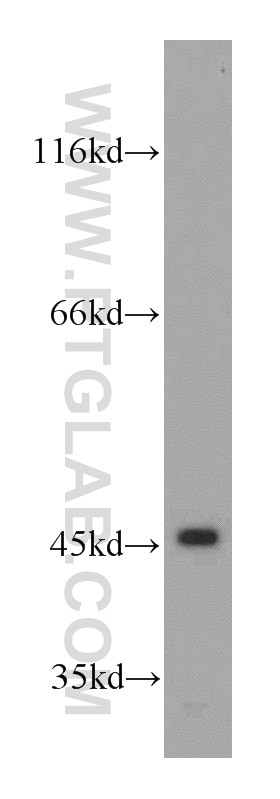
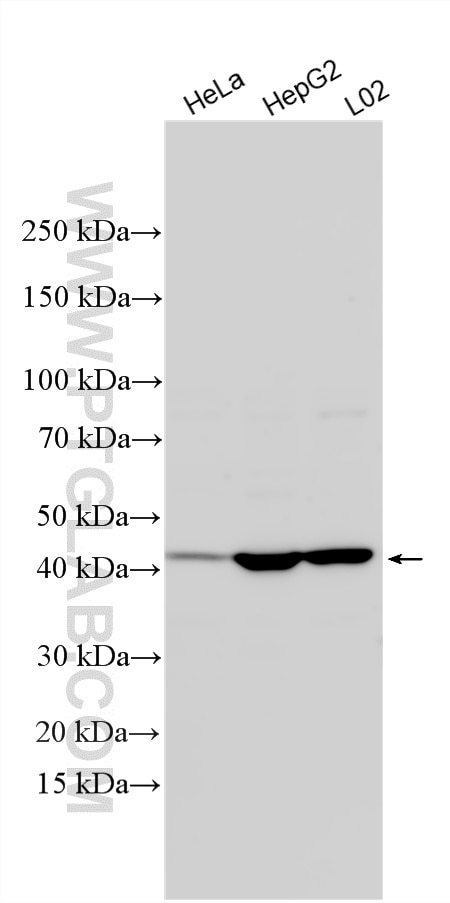
| Positive WB detected in | HeLa cells, HepG2 cells, L02 cells |
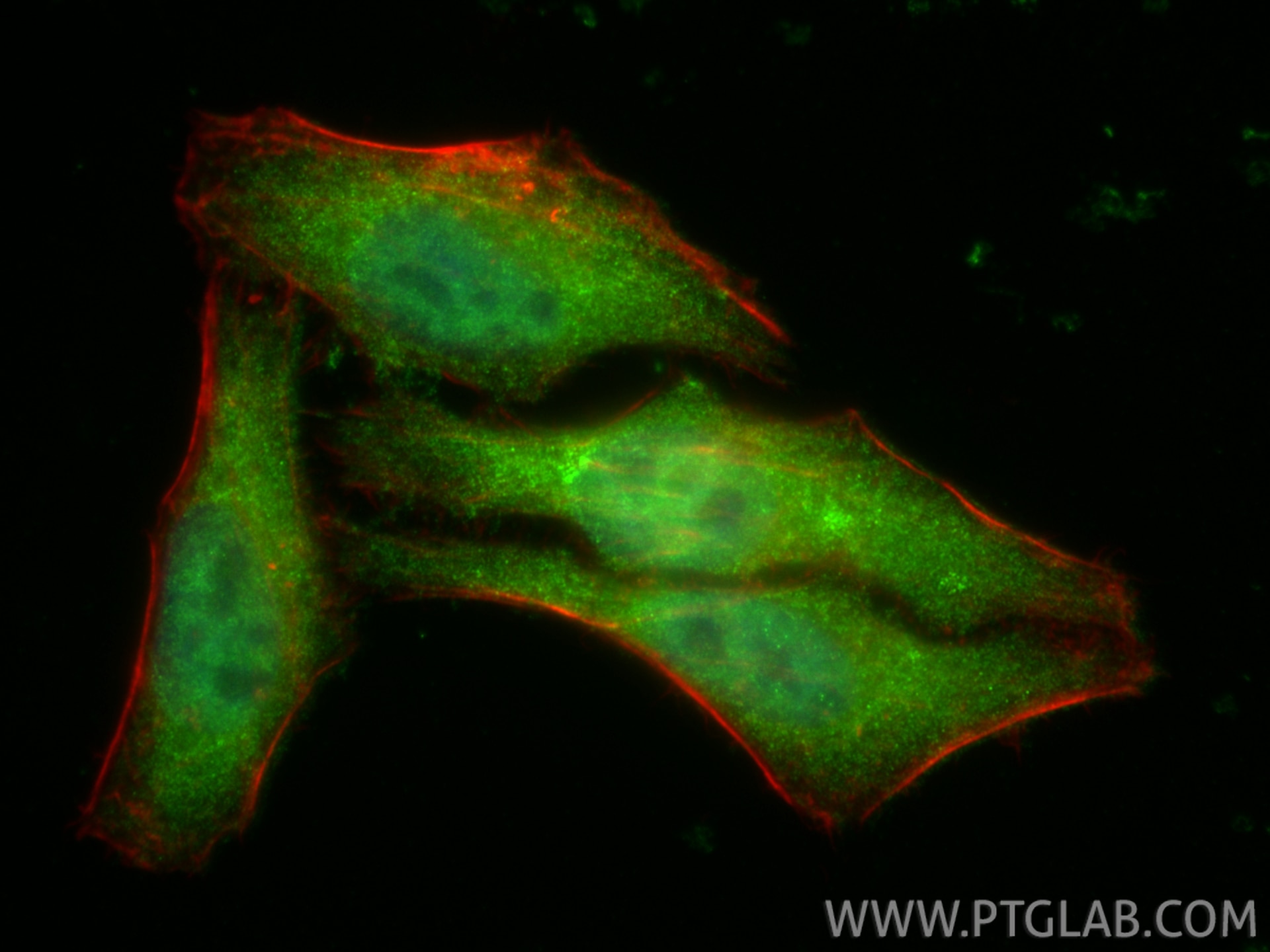
| Positive IF/ICC detected in | HepG2 cells |
Recommended dilution
| Application | Dilution |
|---|---|
| Western Blot (WB) | WB : 1:500-1:2000 |
| Immunofluorescence (IF)/ICC | IF/ICC : 1:200-1:800 |
| It is recommended that this reagent should be titrated in each testing system to obtain optimal results. | |
| Sample-dependent, Check data in validation data gallery. | |
Product Information
21042-1-AP targets CAR/NR1I3 in WB, IHC, IF/ICC, ELISA applications and shows reactivity with human samples.
| Tested Reactivity | human |
| Cited Reactivity | human, mouse |
| Host / Isotype | Rabbit / IgG |
| Class | Polyclonal |
| Type | Antibody |
| Immunogen |
CatNo: Ag15378 Product name: Recombinant human NR1I3 protein Source: e coli.-derived, PGEX-4T Tag: GST Domain: 7-156 aa of BC069651 Sequence: RRTVSKSIGPTCPFAGSCEVSKTQRRHCPACRLQKCLDAGMRKDMILSAEALALRRAKQAQRRAQQTPVQLSKEQEELIRTLLGAHTRHMGTMFEQFVQFRPPAHLFIHHQPLPTLAPVLPLVTHFADINTFMVLQVIKFTKDLPVFRSL Predict reactive species |
| Full Name | nuclear receptor subfamily 1, group I, member 3 |
| Calculated Molecular Weight | 352 aa, 40 kDa |
| Observed Molecular Weight | 45 kDa |
| GenBank Accession Number | BC069651 |
| Gene Symbol | NR1I3 |
| Gene ID (NCBI) | 9970 |
| RRID | AB_10732602 |
| Conjugate | Unconjugated |
| Form | Liquid |
| Purification Method | Antigen affinity purification |
| UNIPROT ID | Q14994 |
| Storage Buffer | PBS with 0.02% sodium azide and 50% glycerol, pH 7.3. |
| Storage Conditions | Store at -20°C. Stable for one year after shipment. Aliquoting is unnecessary for -20oC storage. 20ul sizes contain 0.1% BSA. |
Background Information
The nuclear hormone receptor superfamily is a large group of related transcription factors which includes members that bind a diverse array of ligands, including steroids, retinoic acid, thyroid hormone, and vitamin D. Nuclear hormone receptors contain a DNA-binding domain (DBD) and a ligand-binding domain [PMID: 10221899]. Nuclear receptor subfamily 1 group I member 3 (NR1I3; Constitutive androstane receptor: CAR), binds and transactivates the retinoic acid response elements that control expression of the retinoic acid receptor beta 2 and alcohol dehydrogenase 3 genes. It is expressed primarily in liver and regulates the expression of genes involved in xenobiotic metabolism as well as hormone, energy, and lipid homeostasis [PMID:22896671].
Protocols
| Product Specific Protocols | |
|---|---|
| IF protocol for CAR/NR1I3 antibody 21042-1-AP | Download protocol |
| WB protocol for CAR/NR1I3 antibody 21042-1-AP | Download protocol |
| Standard Protocols | |
|---|---|
| Click here to view our Standard Protocols |
Publications
What published studies show
Able is busy answering your previous question. Please try again later.
| Species | Application | Title |
|---|---|---|
Adv Sci (Weinh) Constitutive Androstane Receptor in Macrophages Regulates Toll-Like Receptor 4-Mediated Innate Immune Responses Against Endotoxemic Liver Injury | ||
Food Res Int Cyanidin-3-glucoside mitigates zearalenone-enhanced hepatic lipotoxicity via inhibition of PXR activation. | ||
J Ethnopharmacol Integrated approach for exploring the mechanism of cholestatic liver injury induced by Psoraleae Fructus | ||
J Ethnopharmacol Panaxytriol upregulates CYP3A4 expression through the interaction between nuclear regulators and DNA response elements
| ||
Biochem Pharmacol Constitutive androstane receptor weakens the induction of panaxytriol on CYP3A4 by repressing the activation of pregnane X receptor.
| ||
Front Pharmacol Oleanolic Acid and Ursolic Acid Induce UGT1A1 Expression in HepG2 Cells by Activating PXR Rather Than CAR.
|
Reviews
What customers say
Customers consistently rate this antibody 4–5 stars across multiple applications. It performs reliably in immunohistochemistry on mouse liver tissue at 1:100, Western blot at 1:2000 in TBST, and immunofluorescence at 1:200 in 1× PBS. One user also confirmed strong results in immunoprecipitation on HepG2 cells at 1:1000. Overall, reviewers highlight its consistent performance, ease of use, and suitability for repeat purchases across WB, IHC, IF, and IP applications.
The reviews below have been submitted by verified Proteintech customers who received an incentive for providing their feedback.
Kamal (Verified Customer) (02-15-2024) | This antibody never lets me down. Purchased again for immunohistochemistry.
|
Kamal (Verified Customer) (07-05-2023) | Worked well when diluted in TBST (1:2000) for WB and 1:200 in 1X PBS for IFC.
|
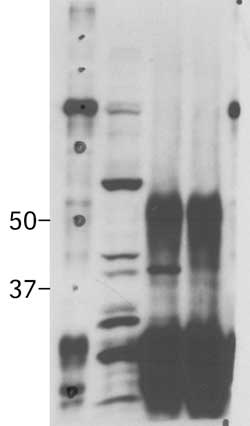
Zehua (Verified Customer) (11-07-2019) | It works well for immunoprecipitation!
 |

