
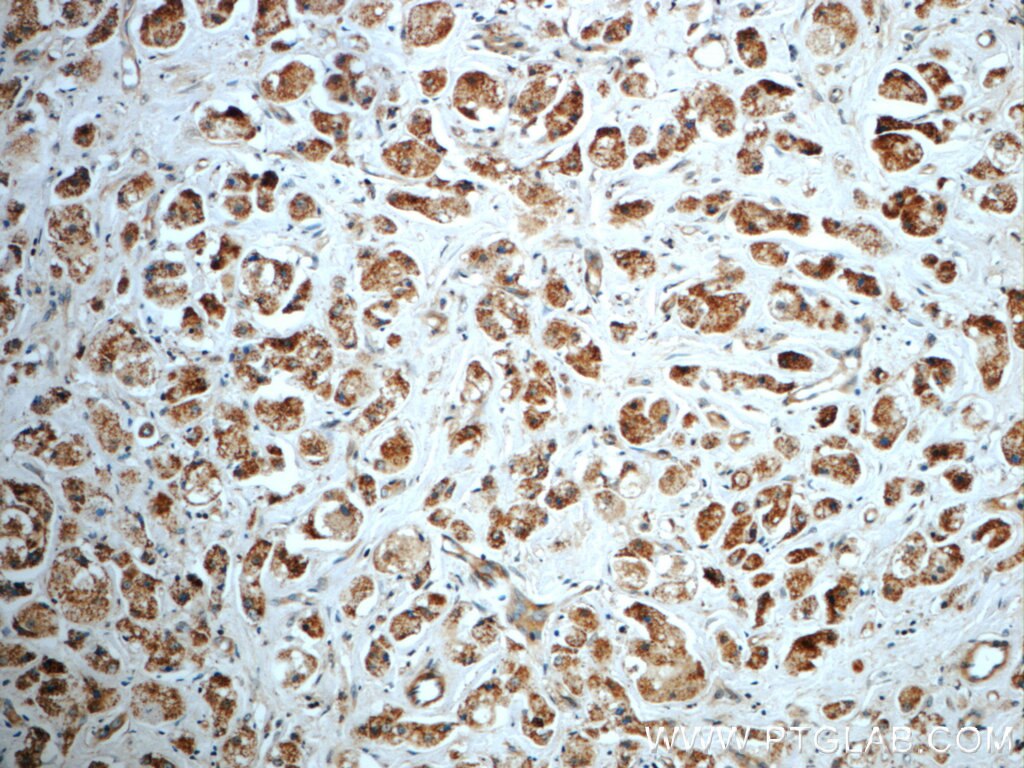
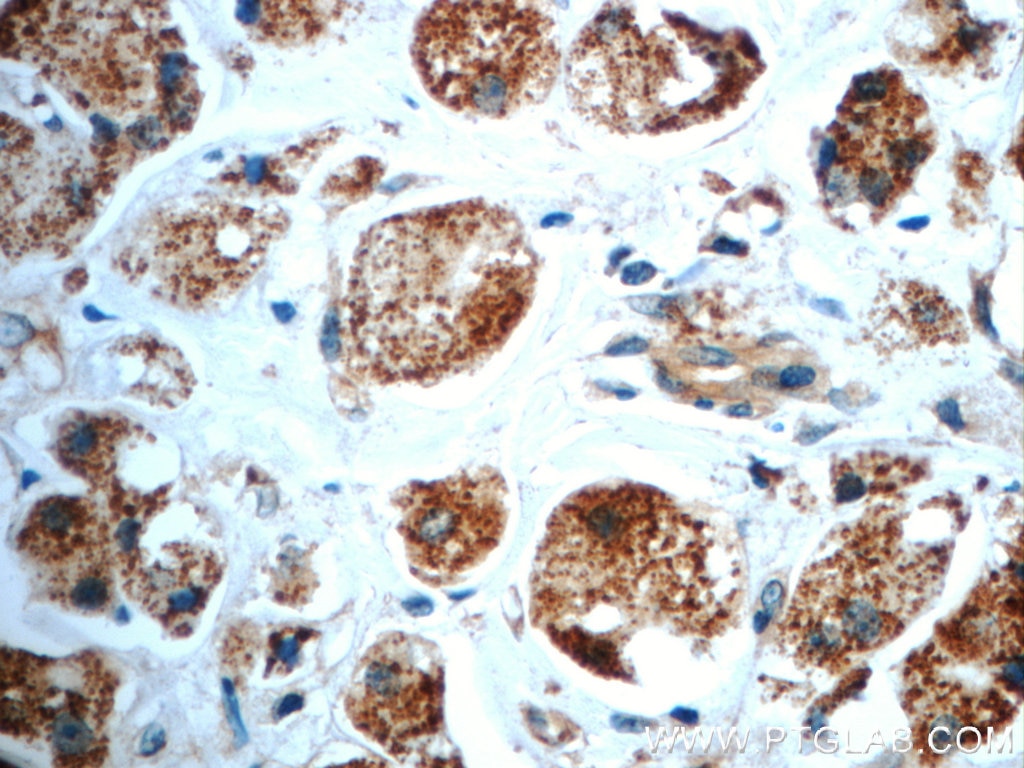

Tested Applications
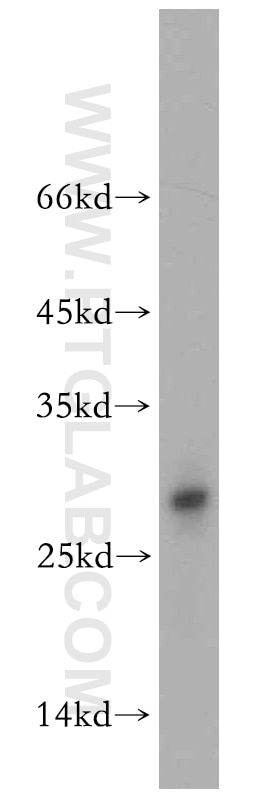
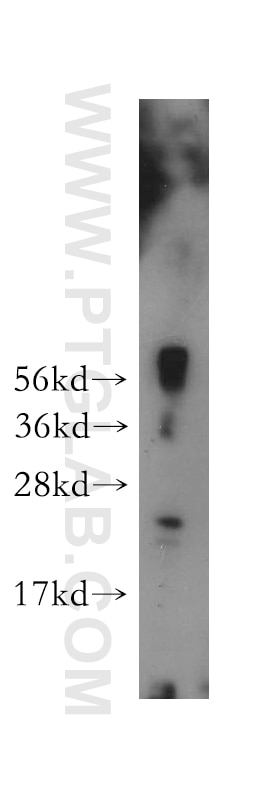
| Positive WB detected in | mouse brain tissue, HeLa cells |
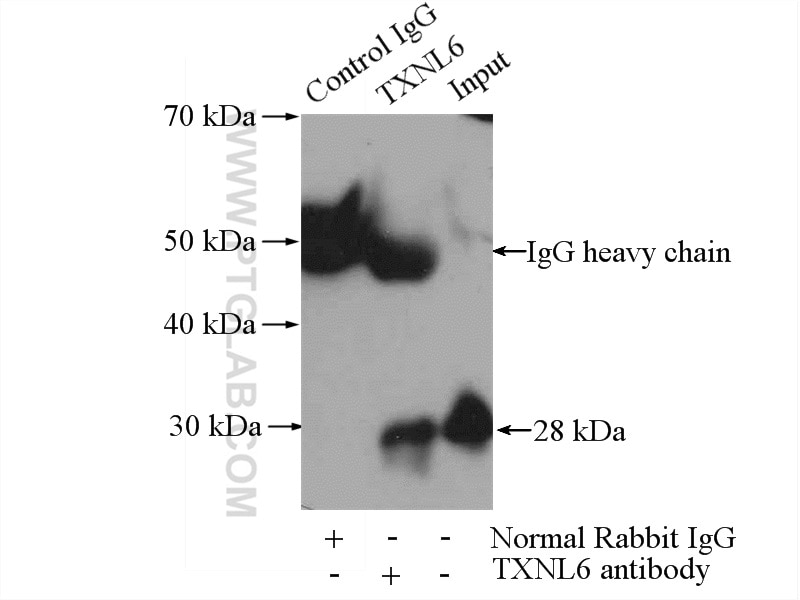
| Positive IP detected in | mouse brain tissue |
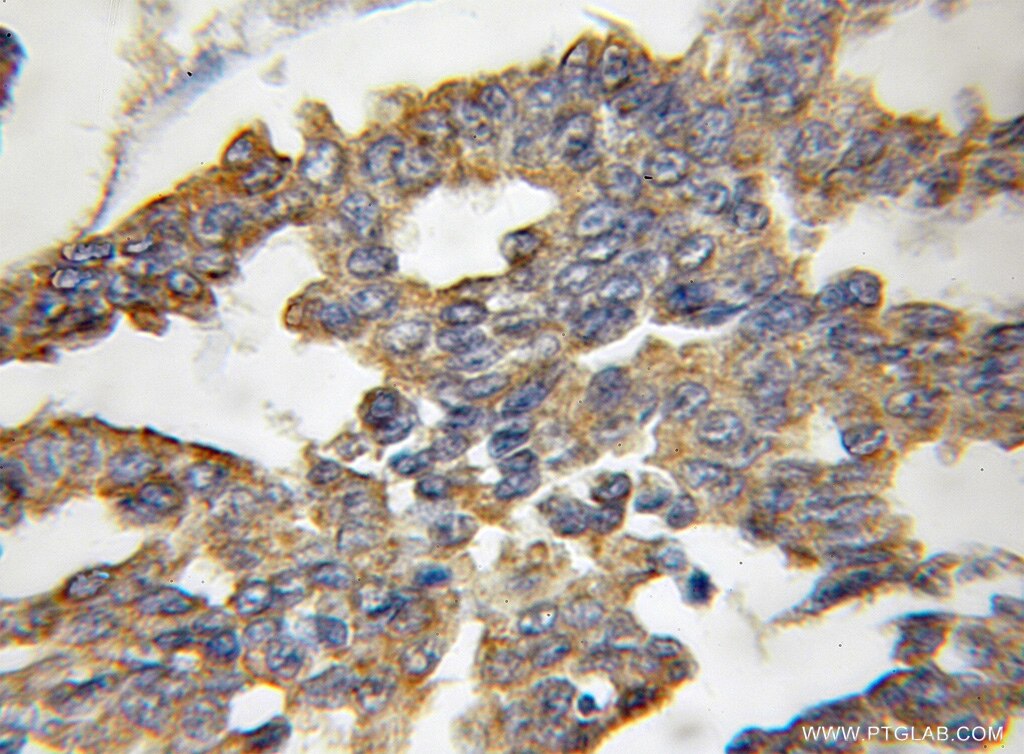
| Positive IHC detected in | human breast cancer tissue Note: suggested antigen retrieval with TE buffer pH 9.0; (*) Alternatively, antigen retrieval may be performed with citrate buffer pH 6.0 |
Recommended dilution
| Application | Dilution |
|---|---|
| Western Blot (WB) | WB : 1:500-1:3000 |
| Immunoprecipitation (IP) | IP : 0.5-4.0 ug for 1.0-3.0 mg of total protein lysate |
| Immunohistochemistry (IHC) | IHC : 1:20-1:200 |
| It is recommended that this reagent should be titrated in each testing system to obtain optimal results. | |
| Sample-dependent, Check data in validation data gallery. | |
Product Information
11203-1-AP targets TXNL6 in WB, IHC, IF, IP, ELISA applications and shows reactivity with human, mouse samples.
| Tested Reactivity | human, mouse |
| Cited Reactivity | human, rat, pig |
| Host / Isotype | Rabbit / IgG |
| Class | Polyclonal |
| Type | Antibody |
| Immunogen |
CatNo: Ag1691 Product name: Recombinant human TXNL6 protein Source: e coli.-derived, PGEX-4T Tag: GST Domain: 1-212 aa of BC014127 Sequence: MASLFSGRILIRNNSDQDELDTEAEVSRRLENRLVLLFFGAGACPQCQAFVPILKDFFVRLTDEFYVLRAAQLALVYVSQDSTEEQQDLFLKDMPKKWLFLPFEDDLRRDLGRQFSVERLPAVVVLKPDGDVLTRDGADEIQRLGTACFANWQEAAEVLDRNFQLPEDLEDQEPRSLTECLRRHKYRVEKAARGGRDPGGGGGEEGGAGGLF Predict reactive species |
| Full Name | nucleoredoxin-like 1 |
| Calculated Molecular Weight | 24 kDa |
| Observed Molecular Weight | 26-28 kDa |
| GenBank Accession Number | BC014127 |
| Gene Symbol | NXNL1 |
| Gene ID (NCBI) | 115861 |
| RRID | AB_2158126 |
| Conjugate | Unconjugated |
| Form | Liquid |
| Purification Method | Antigen affinity purification |
| UNIPROT ID | Q96CM4 |
| Storage Buffer | PBS with 0.02% sodium azide and 50% glycerol, pH 7.3. |
| Storage Conditions | Store at -20°C. Stable for one year after shipment. Aliquoting is unnecessary for -20oC storage. 20ul sizes contain 0.1% BSA. |
Background Information
TXNL6, also named as NXNL1, belongs to the nucleoredoxin family. It may play a role in cone cell viability, slowing down cone degeneration, does not seem to play a role in degenerating rods. TXNL6 is a Novel Oxidative Stress-Induced Reducing System for Methionine Sulfoxide Reductase A Repair of a-Crystallin and Cytochrome C in the Eye Lens. It serve as a reducing system for MsrA repair of the essential lens chaperone a-crystallin/sHSP and mitochondrial cytochrome c. TXNL6 is induced at high levels in human lens epithelial cells exposed to H2O2-induced oxidative stress.(PMID:21079812)
Protocols
| Product Specific Protocols | |
|---|---|
| IHC protocol for TXNL6 antibody 11203-1-AP | Download protocol |
| IP protocol for TXNL6 antibody 11203-1-AP | Download protocol |
| WB protocol for TXNL6 antibody 11203-1-AP | Download protocol |
| Standard Protocols | |
|---|---|
| Click here to view our Standard Protocols |
Publications
What published studies show
The TXNL6 Polyclonal antibody (catalog #11203-1-AP) has 3 citations. These appear in Nature Communications, Cell Reports, and PLoS One. The research fields span retinitis pigmentosa and vision preservation (neural progenitor cell grafting and cone reactivation), as well as oxidative stress and methionine sulfoxide reductase repair in the eye lens. Applications include immunofluorescence and Western blot across rat, pig, and human species.
| Species | Application | Title |
|---|---|---|
Nat Commun Dynamic transcriptomic remodeling in grafted human neural progenitor cells uncovers mechanisms for vision preservation in a rat model of retinitis pigmentosa. | ||
PLoS One TXNL6 is a novel oxidative stress-induced reducing system for methionine sulfoxide reductase a repair of α-crystallin and cytochrome C in the eye lens. |

