
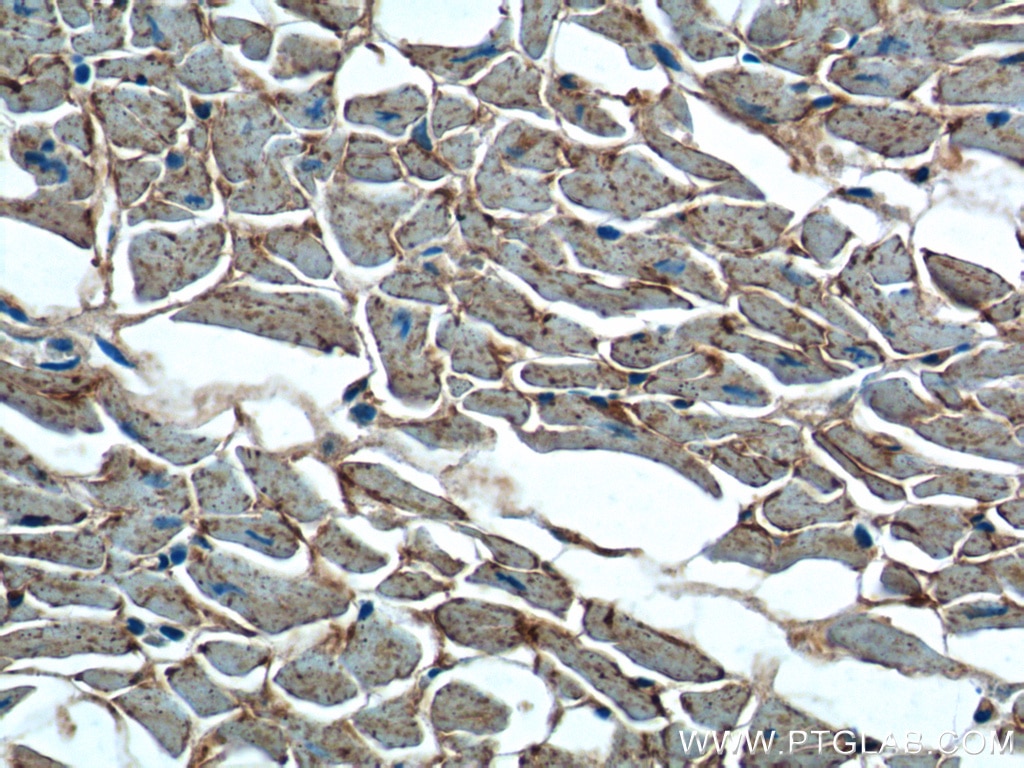


Tested Applications
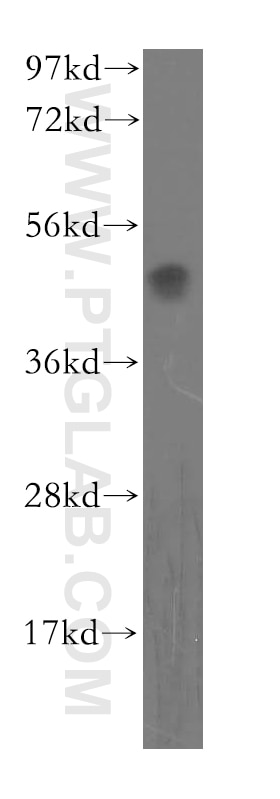
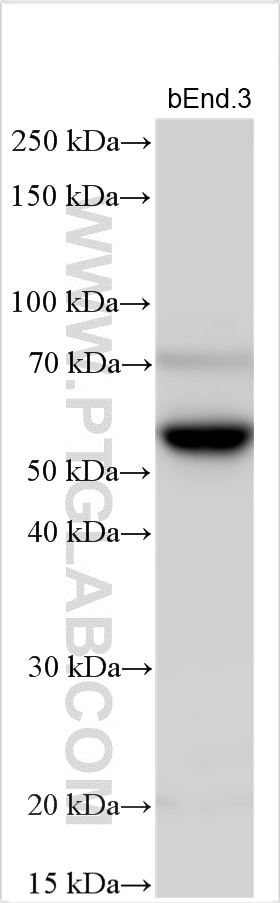
| Positive WB detected in | bEnd.3 cells, human liver tissue |
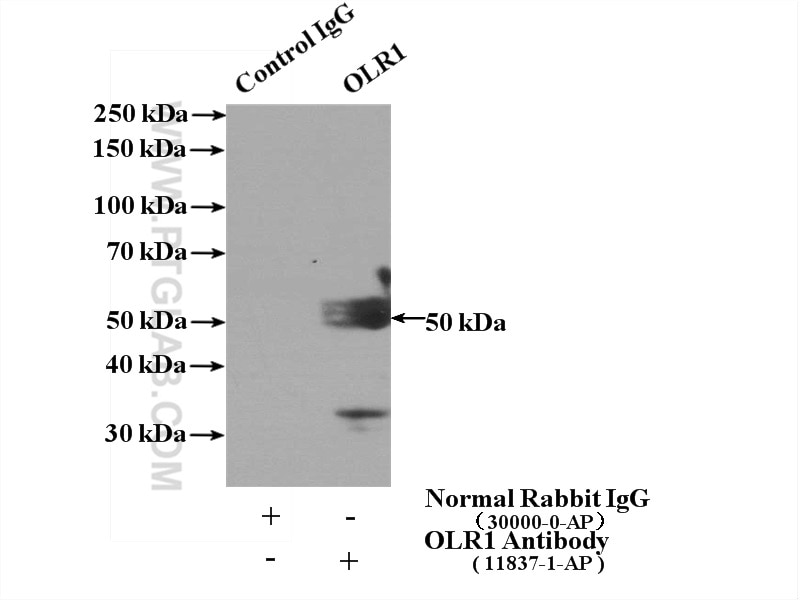
| Positive IP detected in | L02 cells |
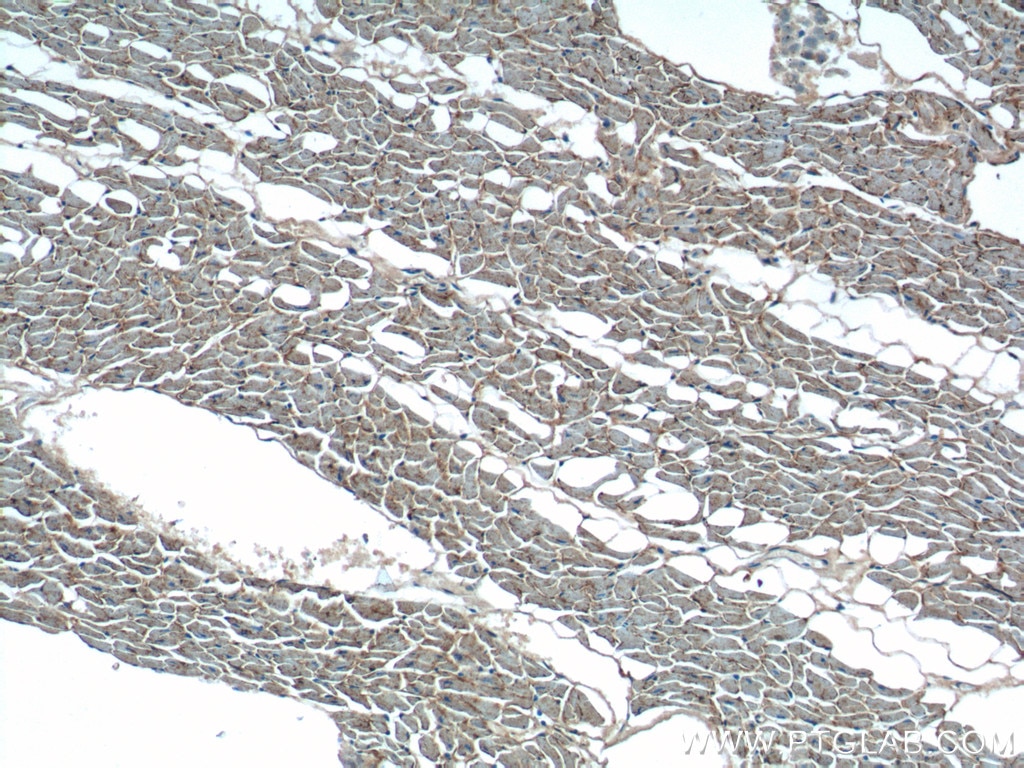
| Positive IHC detected in | human heart tissue, human placenta tissue Note: suggested antigen retrieval with TE buffer pH 9.0; (*) Alternatively, antigen retrieval may be performed with citrate buffer pH 6.0 |
Recommended dilution
| Application | Dilution |
|---|---|
| Western Blot (WB) | WB : 1:1000-1:6000 |
| Immunoprecipitation (IP) | IP : 0.5-4.0 ug for 1.0-3.0 mg of total protein lysate |
| Immunohistochemistry (IHC) | IHC : 1:50-1:500 |
| It is recommended that this reagent should be titrated in each testing system to obtain optimal results. | |
| Sample-dependent, Check data in validation data gallery. | |
Product Information
11837-1-AP targets OLR1/LOX1 in WB, IHC, IF, IP, CoIP, ELISA applications and shows reactivity with human, mouse samples.
| Tested Reactivity | human, mouse |
| Cited Reactivity | human, mouse |
| Host / Isotype | Rabbit / IgG |
| Class | Polyclonal |
| Type | Antibody |
| Immunogen |
CatNo: Ag2437 Product name: Recombinant human OLR1 protein Source: e coli.-derived, PGEX-4T Tag: GST Domain: 1-273 aa of BC022295 Sequence: MTFDDLKIQTVKDQPDEKSNGKKAKGLQFLYSPWWCLAAATLGVLCLGLVVTIMVLGMQLSQVSDLLTQEQANLTHQKKKLEGQISARQQAEEASQESENELKEMIETLARKLNEKSKEQMELHHQNLNLQETLKRVANCSAPCPQDWIWHGENCYLFSSGSFNWEKSQEKCLSLDAKLLKINSTADLDFIQQAISYSSFPFWMGLSRRNPSYPWLWEDGSPLMPHLFRVRGAVSQTYPSGTCAYIQRGAVYAENCILAAFSICQKKANLRAQ Predict reactive species |
| Full Name | oxidized low density lipoprotein (lectin-like) receptor 1 |
| Calculated Molecular Weight | 273 aa, 31 kDa |
| Observed Molecular Weight | 50-55 kDa |
| GenBank Accession Number | BC022295 |
| Gene Symbol | OLR1 |
| Gene ID (NCBI) | 4973 |
| RRID | AB_2299037 |
| Conjugate | Unconjugated |
| Form | Liquid |
| Purification Method | Antigen affinity purification |
| UNIPROT ID | P78380 |
| Storage Buffer | PBS with 0.02% sodium azide and 50% glycerol, pH 7.3. |
| Storage Conditions | Store at -20°C. Stable for one year after shipment. Aliquoting is unnecessary for -20oC storage. 20ul sizes contain 0.1% BSA. |
Background Information
OLR1/LOX-1 acts as a receptor, in the form of homodimer, that mediates the recognition, internalization, and degradation of oxidatively modified low density lipoprotein (oxLDL) (PMID: 9052782, 15695803). OLR1 is predominantly expressed in endothelial cells and vascular-rich organs such as the placenta, lung, liver, and brain (PMID: 9828121). OLR1 is a protein containing 273 amino acids with a calculated molecular mass of 31 kDa but an apparent molecular mass of 50 kDa, which may result from the glycosylation of four potential N-linked glycosylation sites located at the C-terminal domain (PMID: 9052782).
Protocols
| Product Specific Protocols | |
|---|---|
| IHC protocol for OLR1/LOX1 antibody 11837-1-AP | Download protocol |
| IP protocol for OLR1/LOX1 antibody 11837-1-AP | Download protocol |
| WB protocol for OLR1/LOX1 antibody 11837-1-AP | Download protocol |
| Standard Protocols | |
|---|---|
| Click here to view our Standard Protocols |
Publications
What published studies show
I'll search for citations for catalog 11837-1-AP.11837-1-AP OLR1/LOX-1 Polyclonal Antibody has 61 citations. Papers appear across major journals including Nature Communications, Experimental Hematology & Oncology, ACS Nano, Metabolism, Cardiovascular Diabetology, Journal of Nanobiotechnology, Advanced Science, Cancer Letters, and Cell, among others. Research fields covered include atherosclerosis and cardiovascular disease (ox-LDL/LOX-1 axis, foam cell formation), cancer progression and metastasis (breast, pancreatic, gastric, renal, prostate, head/neck cancer), diabetic kidney disease and periodontal/peri-implantitis inflammation, fungal keratitis, osteoarthritis, and neuroinflammation.
| Species | Application | Title |
|---|---|---|
Exp Hematol Oncol Multi-model analysis of gallbladder cancer reveals the role of OxLDL-absorbing neutrophils in promoting liver invasion | ||
ACS Nano Autophagy-Inducing and cfDNA-Scavenging Nanoparticles for Synergistic Atherosclerosis Therapy. | ||
Metabolism Deacetylation of Caveolin-1 by Sirt6 induces autophagy and retards high glucose-stimulated LDL transcytosis and atherosclerosis formation. | ||
Cardiovasc Diabetol Klotho inhibits renal ox-LDL deposition via IGF-1R/RAC1/OLR1 signaling to ameliorate podocyte injury in diabetic kidney disease | ||
J Nanobiotechnology A dual-targeting bio-liposomes nanodrug repair endothelial cell dysfunction and restore macrophage cholesterol flow homeostasis to treat early atherosclerosis |


