
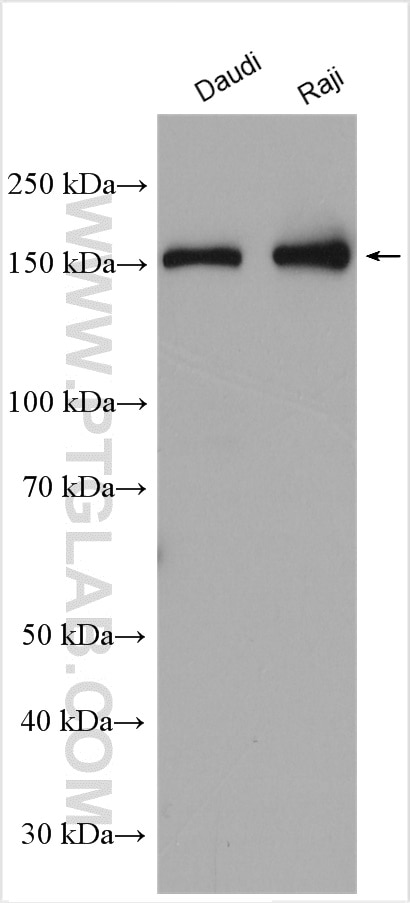
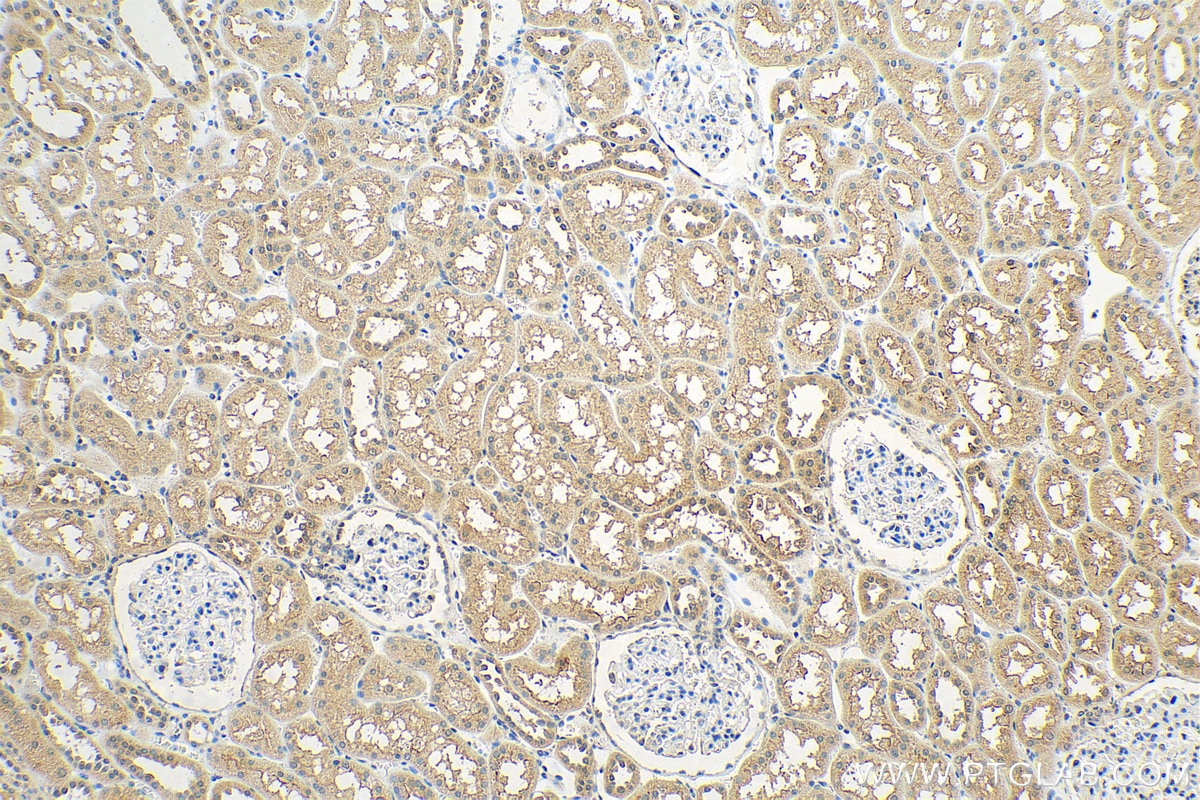
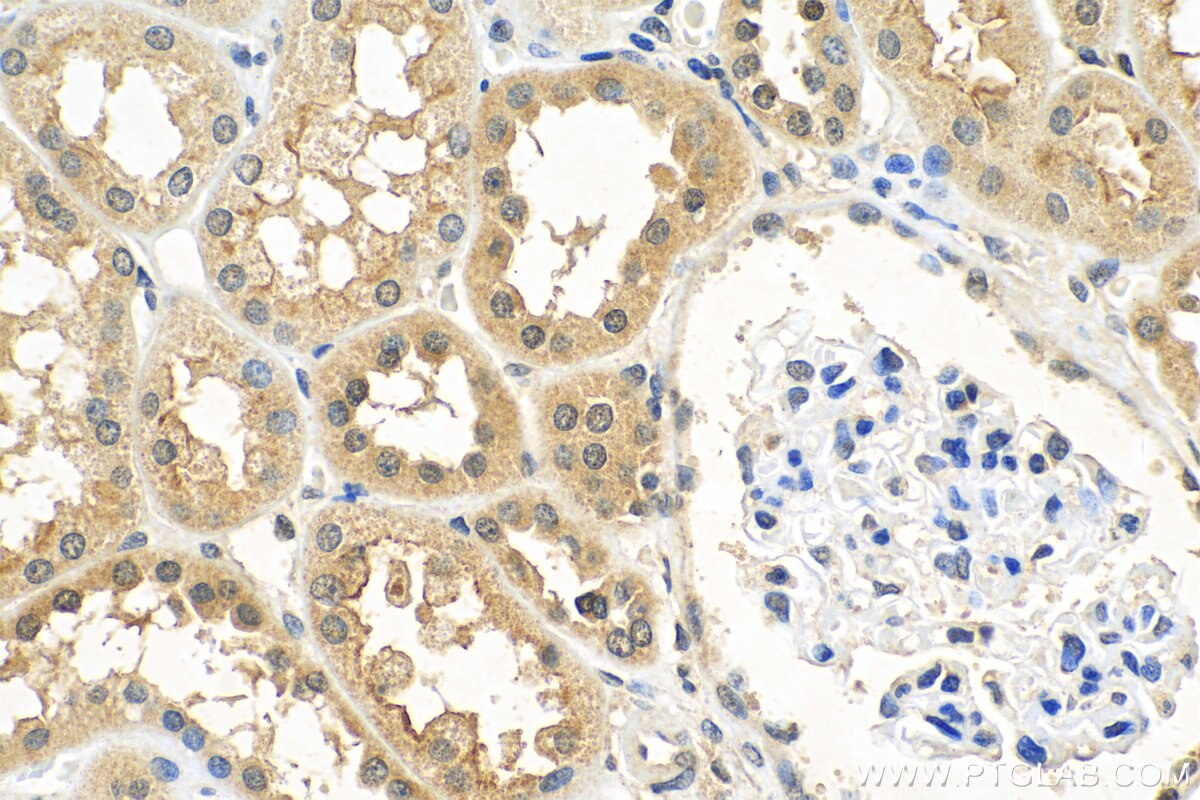

Tested Applications
| Positive WB detected in | Daudi cells, Raji cells |
| Positive IHC detected in | human kidney tissue Note: suggested antigen retrieval with TE buffer pH 9.0; (*) Alternatively, antigen retrieval may be performed with citrate buffer pH 6.0 |
Recommended dilution
| Application | Dilution |
|---|---|
| Western Blot (WB) | WB : 1:500-1:3000 |
| Immunohistochemistry (IHC) | IHC : 1:250-1:1000 |
| It is recommended that this reagent should be titrated in each testing system to obtain optimal results. | |
| Sample-dependent, Check data in validation data gallery. | |
Product Information
25070-1-AP targets OTUD4 in WB, IHC, IF, IP, CoIP, ELISA applications and shows reactivity with human, mouse samples.
| Tested Reactivity | human, mouse |
| Cited Reactivity | human, mouse, pig |
| Host / Isotype | Rabbit / IgG |
| Class | Polyclonal |
| Type | Antibody |
| Immunogen |
CatNo: Ag18401 Product name: Recombinant human OTUD4 protein Source: e coli.-derived, PGEX-4T Tag: GST Domain: 700-1049 aa of BC118653 Sequence: DAHFPMQTEASVNGQMPQPEIGPPTFSSPLVIPPSQVSESHGQLSYQADLESETPGQLLHADYEESLSGKNMFPQPSFGPNPFLGPVPIAPPFFPHVWYGYPFQGFIENPVMRQNIVLPSDEKGELDLSLENLDLSKDCGSVSTVDEFPEARGEHVHSLPEASVSSKPDEGRTEQSSQTRKADTALASIPPVAEGKAHPPTQILNRERETVPVELEPKRTIQSLKEKTEKVKDPKTAADVVSPGANSVDSRVQRPKEESSEDENEVSNILRSGRSKQFYNQTYGSRKYKSDWGYSGRGGYQHVRSEESWKGQPSRSRDEGYQYHRNVRGRPFRGDRRRSGMGDGHRGQHT Predict reactive species |
| Full Name | OTU domain containing 4 |
| Calculated Molecular Weight | 1113 aa, 124 kDa |
| Observed Molecular Weight | 140-150 kDa |
| GenBank Accession Number | BC118653 |
| Gene Symbol | OTUD4 |
| Gene ID (NCBI) | 54726 |
| RRID | AB_2879882 |
| Conjugate | Unconjugated |
| Form | Liquid |
| Purification Method | Antigen affinity purification |
| UNIPROT ID | Q01804 |
| Storage Buffer | PBS with 0.02% sodium azide and 50% glycerol, pH 7.3. |
| Storage Conditions | Store at -20°C. Stable for one year after shipment. Aliquoting is unnecessary for -20oC storage. 20ul sizes contain 0.1% BSA. |
Background Information
OTUD4, a member of the OTU family, encodes for a protein of 495 amino acids with an OTU domain and functions via their enzymatic deubiquitinating activities. OTUD4 nominally encodes a K48-specific deubiquitinase previously shown to counteract proteasomal degradation of DNA repair proteins. OTUD4 has been identified to be down-regulated in multiple human tumor types, and lower OTUD4 expression indicates a poor prognosis.(PMID: 36411454,PMID: 32184655,PMID: 29395066)
Protocols
| Product Specific Protocols | |
|---|---|
| IHC protocol for OTUD4 antibody 25070-1-AP | Download protocol |
| WB protocol for OTUD4 antibody 25070-1-AP | Download protocol |
| Standard Protocols | |
|---|---|
| Click here to view our Standard Protocols |
Publications
What published studies show
OTUD4 Polyclonal antibody (25070-1-AP) has 26 total citations across journals including Nature Communications, Advanced Science, Cell Death & Differentiation, Cell Death & Disease, Cancer Letters, Phytomedicine, Science China Life Sciences, Developmental Cell, Oncogene, Apoptosis, Cell Reports, British Journal of Pharmacology, Frontiers in Microbiology, Journal of Molecular Medicine, PLoS Pathogens, European Journal of Medical Research, Journal of Biological Chemistry, Experimental Cell Research, American Journal of Cancer Research, Biochemical and Biophysical Research Communications, International Journal of Biological Sciences, and Cellular Signalling. Research fields span cancer biology (glioblastoma, breast, pancreatic, gastric, prostate, melanoma, cholangiocarcinoma), ferroptosis, ubiquitination/deubiquitination, inflammation, viral replication, and cardiovascular disease.
| Species | Application | Title |
|---|---|---|
Nat Commun Osteocyte-derived extracellular vesicles mediate the bone-to-cartilage crosstalk and promote osteoarthritis progression | ||
Nat Commun Mutant ribosomal protein RPS15 drives B cell malignancy through oxidative stress and genomic instability. | ||
Adv Sci (Weinh) Elevated SPARC Disrupts the Intestinal Barrier Integrity in Crohn's Disease by Interacting with OTUD4 and Activating the MYD88/NF-κB Pathway | ||
Cell Death Differ N6-methyladenosine-modified USP13 induces pro-survival autophagy and imatinib resistance via regulating the stabilization of autophagy-related protein 5 in gastrointestinal stromal tumors | ||
Cell Death Dis OTUD4 promotes the progression of glioblastoma by deubiquitinating CDK1 and activating MAPK signaling pathway
|

