
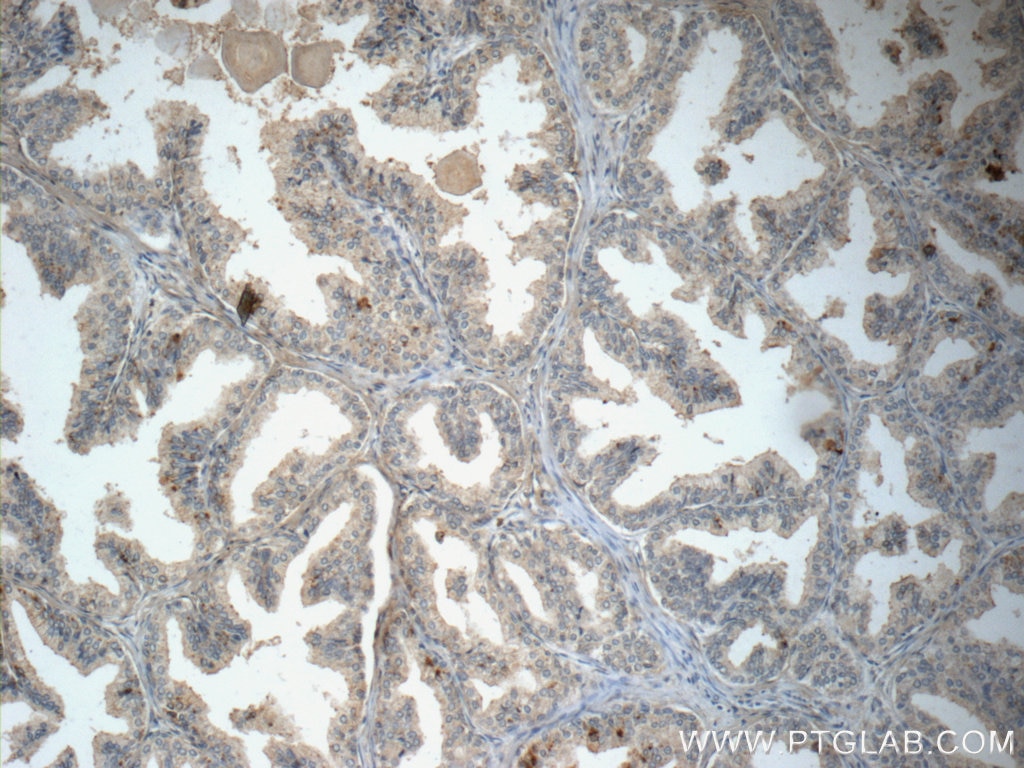
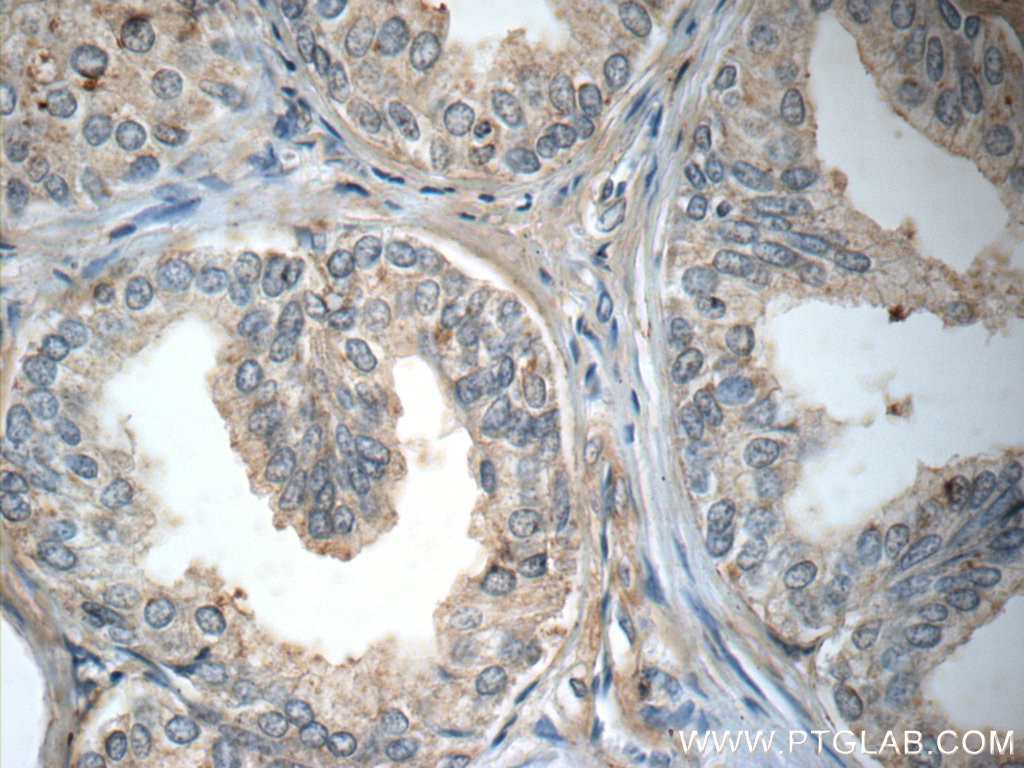

Tested Applications
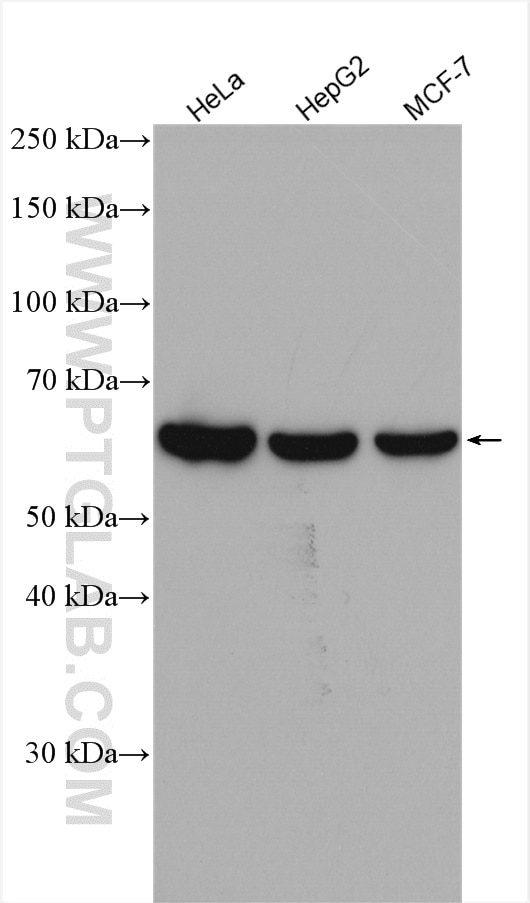
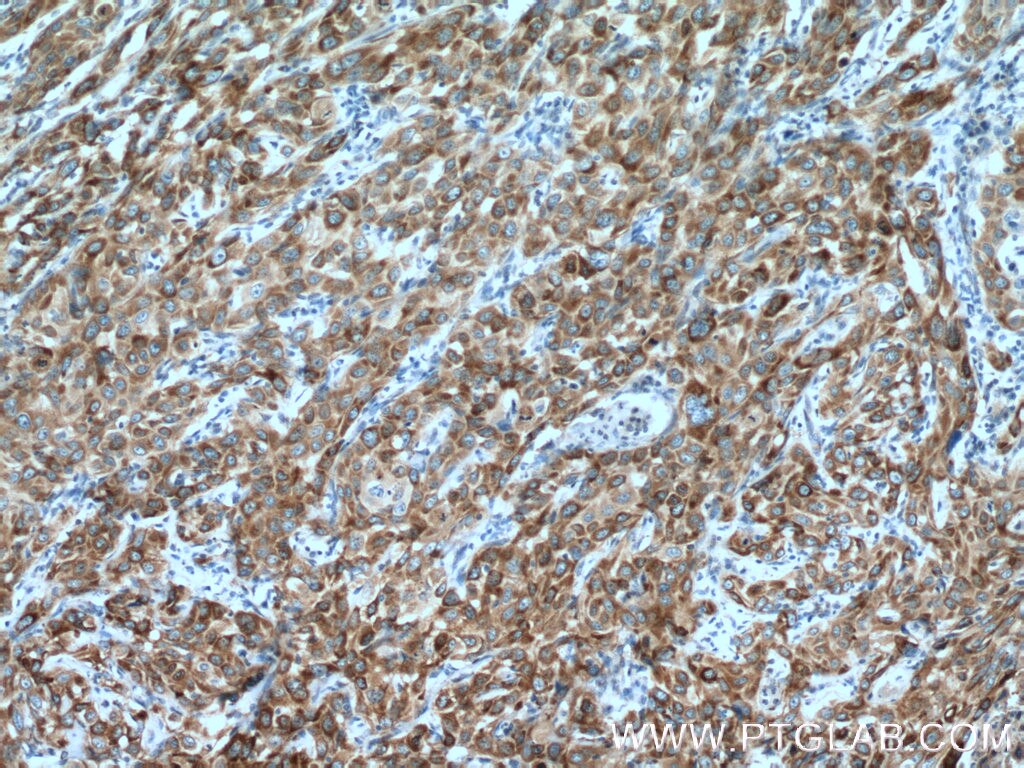
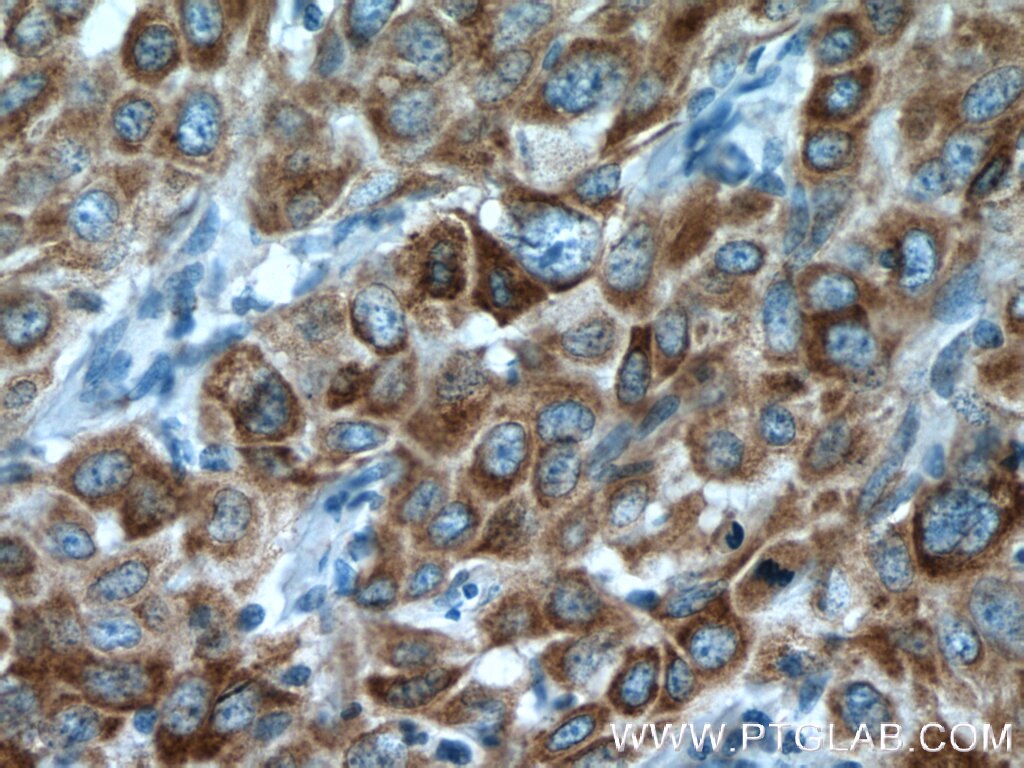
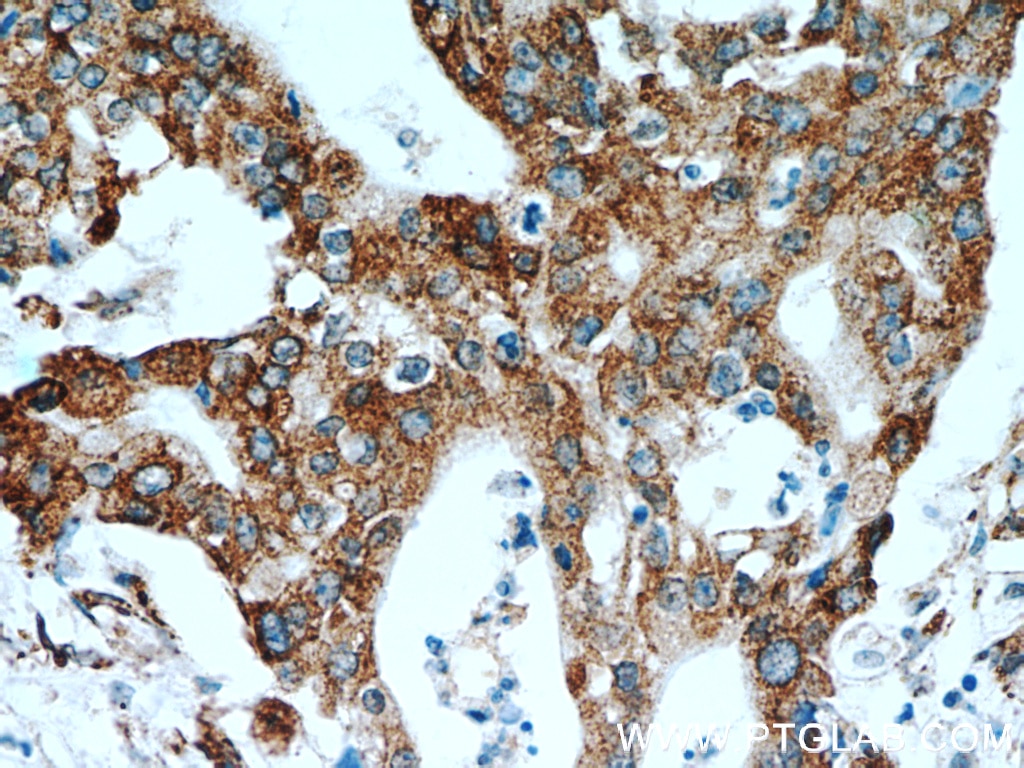
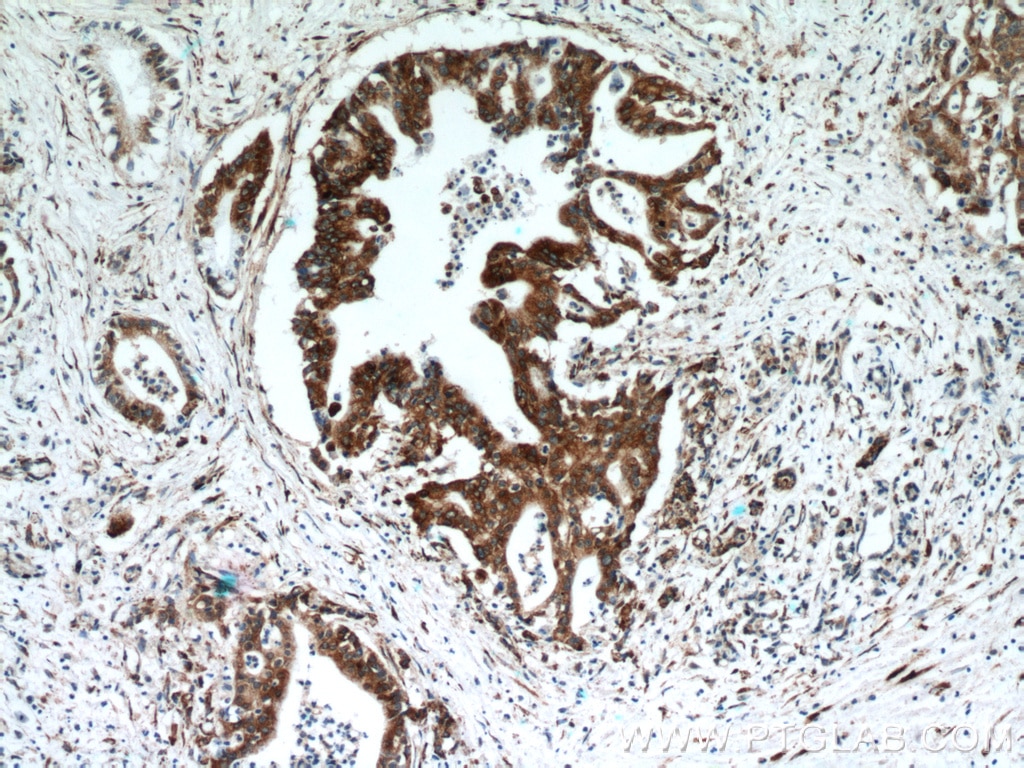
| Positive WB detected in | HeLa cells, HepG2 cells, MCF-7 cells |
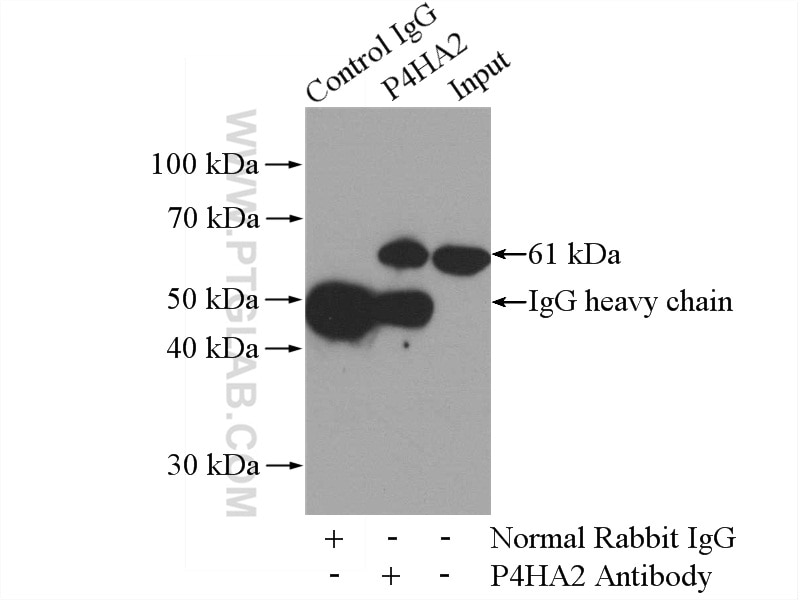
| Positive IP detected in | HeLa cells |
| Positive IHC detected in | human cervical cancer tissue, human pancreas cancer tissue Note: suggested antigen retrieval with TE buffer pH 9.0; (*) Alternatively, antigen retrieval may be performed with citrate buffer pH 6.0 |
Recommended dilution
| Application | Dilution |
|---|---|
| Western Blot (WB) | WB : 1:1000-1:4000 |
| Immunoprecipitation (IP) | IP : 0.5-4.0 ug for 1.0-3.0 mg of total protein lysate |
| Immunohistochemistry (IHC) | IHC : 1:100-1:400 |
| It is recommended that this reagent should be titrated in each testing system to obtain optimal results. | |
| Sample-dependent, Check data in validation data gallery. | |
Product Information
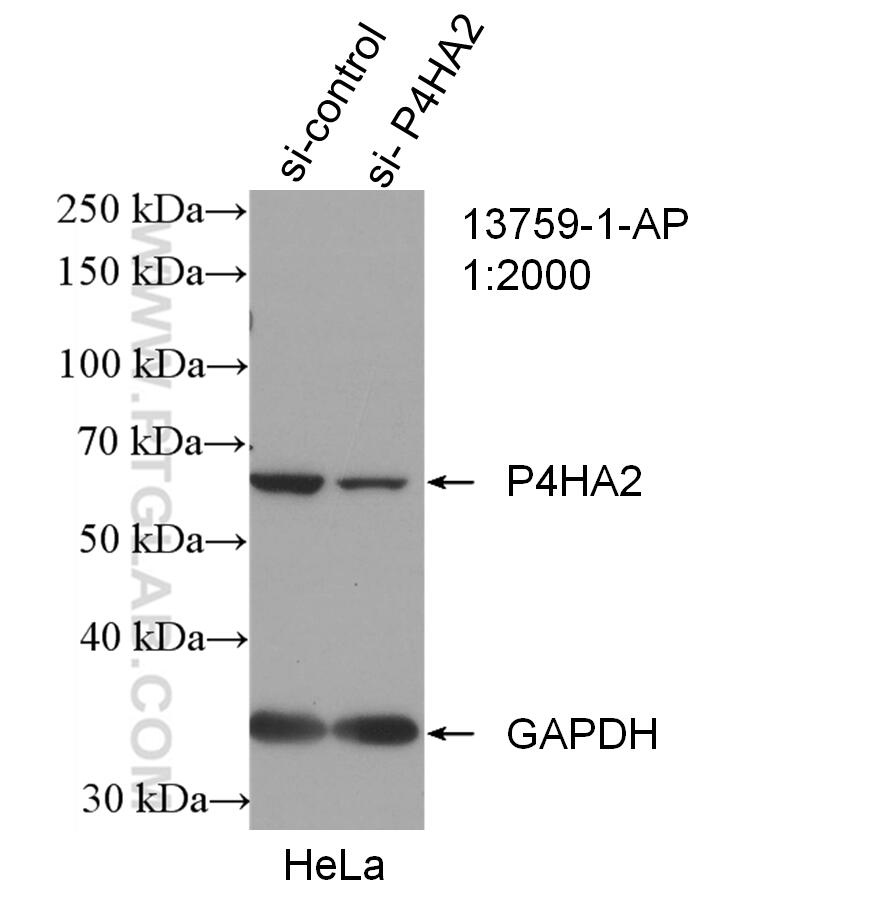
13759-1-AP targets P4HA2 in WB, IHC, IF, IP, ELISA applications and shows reactivity with human samples.
| Tested Reactivity | human |
| Cited Reactivity | human, rat |
| Host / Isotype | Rabbit / IgG |
| Class | Polyclonal |
| Type | Antibody |
| Immunogen |
CatNo: Ag4714 Product name: Recombinant human P4HA2 protein Source: e coli.-derived, PET28a Tag: 6*His Domain: 184-533 aa of BC035813 Sequence: HTVLWMEQVLKQLDAGEEATTTKSQVLDYLSYAVFQLGDLHRALELTRRLLSLDPSHERAGGNLRYFEQLLEEEREKTLTNQTEAELATPEGIYERPVDYLPERDVYESLCRGEGVKLTPRRQKRLFCRYHHGNRAPQLLIAPFKEEDEWDSPHIVRYYDVMSDEEIERIKEIAKPKLARATVRDPKTGVLTVASYRVSKSSWLEEDDDPVVARVNRRMQHITGLTVKTAELLQVANYGVGGQYEPHFDFSRRPFDSGLKTEGNRLATFLNYMSDVEAGGATVFPDLGAAIWPKKGTAVFWYNLLRSGEGDYRTRHAACPVLVGCKWVSNKWFHERGQEFLRPCGSTEVD Predict reactive species |
| Full Name | prolyl 4-hydroxylase, alpha polypeptide II |
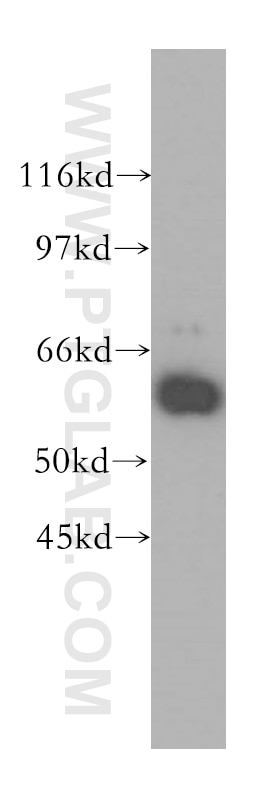
| Calculated Molecular Weight | 533 aa, 61 kDa |
| Observed Molecular Weight | 61 kDa |
| GenBank Accession Number | BC035813 |
| Gene Symbol | P4HA2 |
| Gene ID (NCBI) | 8974 |
| RRID | AB_2156286 |
| Conjugate | Unconjugated |
| Form | Liquid |
| Purification Method | Antigen affinity purification |
| UNIPROT ID | O15460 |
| Storage Buffer | PBS with 0.02% sodium azide and 50% glycerol, pH 7.3. |
| Storage Conditions | Store at -20°C. Stable for one year after shipment. Aliquoting is unnecessary for -20oC storage. 20ul sizes contain 0.1% BSA. |
Background Information
Prolyl 4-hydroxylase catalyzes the posttranslational formation of 4-hydroxyproline in collagens. The vertebrate enzyme is a tetramer of 2 alpha subunits and 2 beta subunits. P4HA2 is one of at least 2 alpha subunit isoforms. It catalyzes the post-translational formation of 4-hydroxyproline in -Xaa-Pro-Gly- sequences in collagens and other proteins. This pprotein has 2 isoforms produced by alternative splicing.
Protocols
| Product Specific Protocols | |
|---|---|
| IHC protocol for P4HA2 antibody 13759-1-AP | Download protocol |
| IP protocol for P4HA2 antibody 13759-1-AP | Download protocol |
| WB protocol for P4HA2 antibody 13759-1-AP | Download protocol |
| Standard Protocols | |
|---|---|
| Click here to view our Standard Protocols |
Publications
What published studies show
P4HA2 Polyclonal antibody (Catalog No. 13759-1-AP) has 25 total citations.
Journals include Blood, Cancer Research, Nature Communications, Hepatology, EBioMedicine, Oncogene, Leukemia, British Journal of Cancer, Cancer Cell International, Life Sciences, Scientific Reports, Journal of Molecular and Cellular Cardiology, FASEB Journal, Journal of Biological Chemistry, BMC Cancer, Journal of Proteome Research, Journal of Cancer, and others.
Research fields span B-cell lymphoma, liver fibrosis/hepatocellular carcinoma, lung adenocarcinoma and squamous cell carcinoma, cervical, oral, papillary thyroid, and bladder cancers, plus cardiac fibrosis and heart failure.
| Species | Application | Title |
|---|---|---|
Blood Prolyl 4-hydroxylase 2 promotes B-cell lymphoma progression via hydroxylation of Carabin. | ||
Cancer Res Epigenetic SMAD3 repression in tumor-associated fibroblasts impairs fibrosis and response to the antifibrotic drug nintedanib in lung squamous cell carcinoma. | ||
Nat Commun Melanoblast transcriptome analysis reveals pathways promoting melanoma metastasis. | ||
Hepatology P4HA2 induces hepatic ductular reaction and biliary fibrosis in chronic cholestatic liver diseases
| ||
EBioMedicine Aspirin targets P4HA2 through inhibiting NF-κB and LMCD1-AS1/let-7g to inhibit tumour growth and collagen deposition in hepatocellular carcinoma. | ||
Oncogene Hepatitis B virus X protein promotes the development of liver fibrosis and hepatoma through downregulation of miR-30e targeting P4HA2 mRNA. |

