
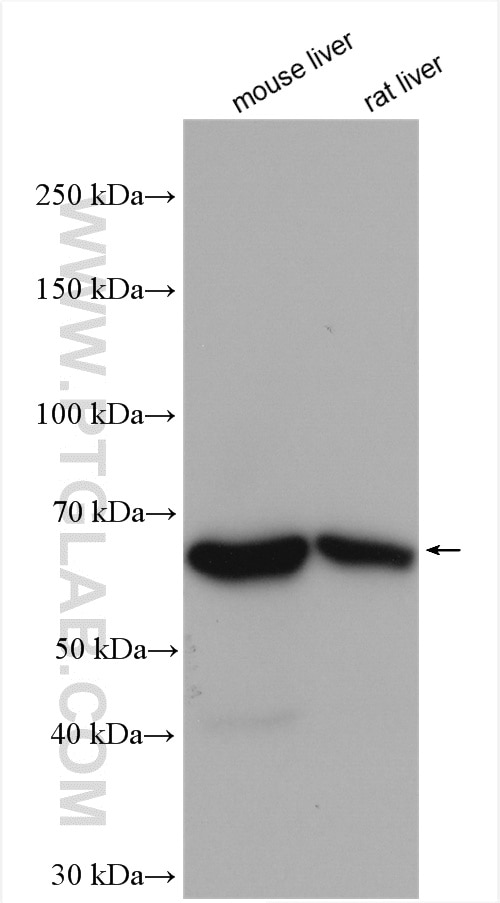
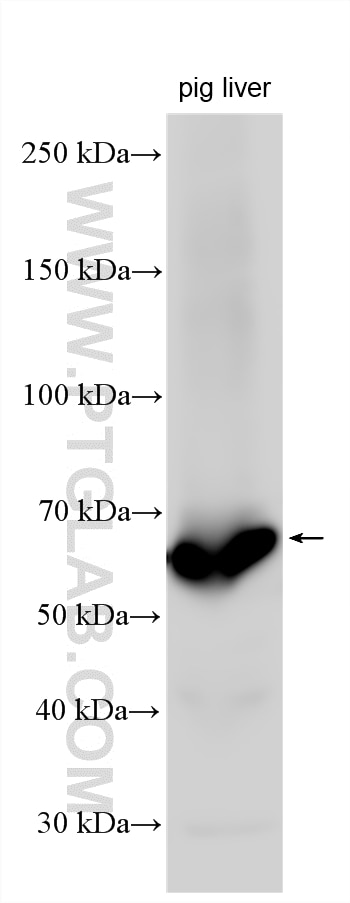
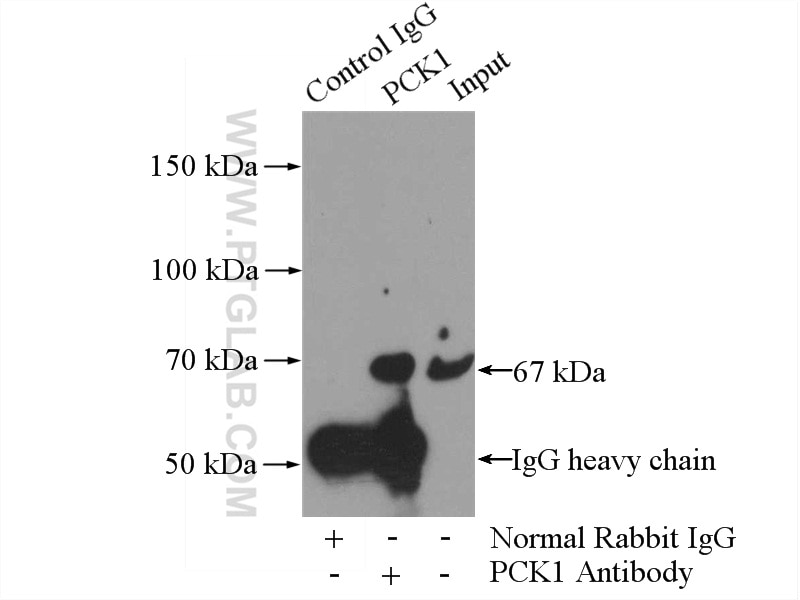
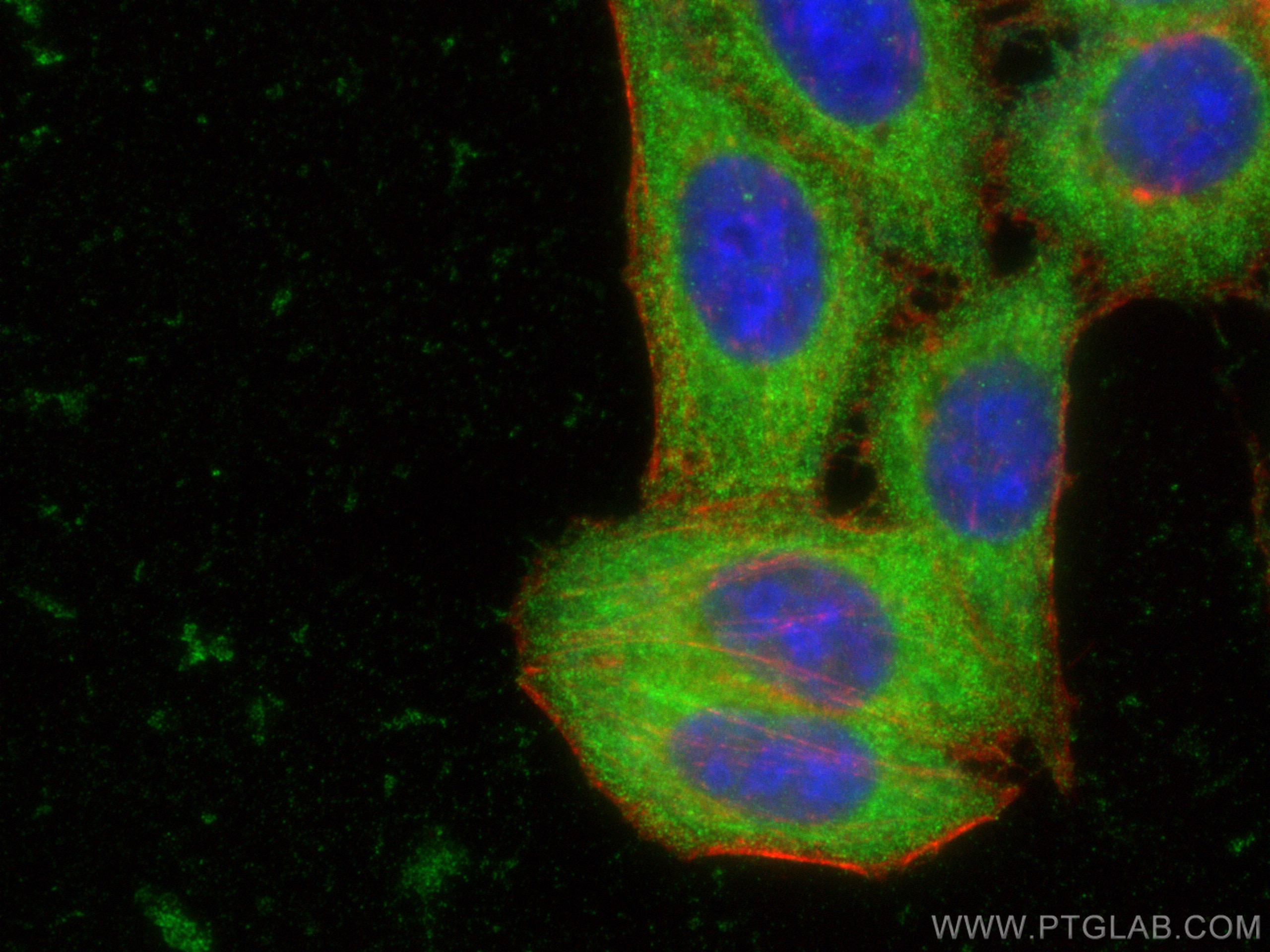

Tested Applications
| Positive WB detected in | mouse liver tissue, pig liver tissue, rat liver tissue |
| Positive IP detected in | HepG2 cells |
| Positive IF/ICC detected in | HepG2 cells |
Recommended dilution
| Application | Dilution |
|---|---|
| Western Blot (WB) | WB : 1:5000-1:50000 |
| Immunoprecipitation (IP) | IP : 0.5-4.0 ug for 1.0-3.0 mg of total protein lysate |
| Immunofluorescence (IF)/ICC | IF/ICC : 1:50-1:500 |
| It is recommended that this reagent should be titrated in each testing system to obtain optimal results. | |
| Sample-dependent, Check data in validation data gallery. | |
Product Information
16754-1-AP targets PCK1/2 in WB, IHC, IF/ICC, IP, CoIP, ELISA applications and shows reactivity with human, mouse, rat, pig samples.
| Tested Reactivity | human, mouse, rat, pig |
| Cited Reactivity | human, mouse, rat, pig, zebrafish, bovine, goat |
| Host / Isotype | Rabbit / IgG |
| Class | Polyclonal |
| Type | Antibody |
| Immunogen |
CatNo: Ag10261 Product name: Recombinant human PCK1 protein Source: e coli.-derived, PGEX-4T Tag: GST Domain: 274-622 aa of BC023978 Sequence: EGEKKYLAAAFPSACGKTNLAMMNPSLPGWKVECVGDDIAWMKFDAQGHLRAINPENGFFGVAPGTSVKTNPNAIKTIQKNTIFTNVAETSDGGVYWEGIDEPLASGVTITSWKNKEWSSEDGEPCAHPNSRFCTPASQCPIIDAAWESPEGVPIEGIIFGGRRPAGVPLVYEALSWQHGVFVGAAMRSEATAAAEHKGKIIMHDPFAMRPFFGYNFGKYLAHWLSMAQHPAAKLPKIFHVNWFRKDKEGKFLWPGFGENSRVLEWMFNRIDGKASTKLTPIGYIPKEDALNLKGLGHINMMELFSISKEFWEKEVEDIEKYLEDQVNADLPCEIEREILALKQRISQM Predict reactive species |
| Full Name | phosphoenolpyruvate carboxykinase 1 (soluble) |
| Calculated Molecular Weight | 622 aa, 69 kDa |
| Observed Molecular Weight | 66-69 kDa |
| GenBank Accession Number | BC023978 |
| Gene Symbol | PCK1 |
| Gene ID (NCBI) | 5105 |
| RRID | AB_2160031 |
| Conjugate | Unconjugated |
| Form | Liquid |
| Purification Method | Antigen affinity purification |
| UNIPROT ID | P35558 |
| Storage Buffer | PBS with 0.02% sodium azide and 50% glycerol, pH 7.3. |
| Storage Conditions | Store at -20°C. Stable for one year after shipment. Aliquoting is unnecessary for -20oC storage. 20ul sizes contain 0.1% BSA. |
Background Information
PCK1(Phosphoenolpyruvate carboxykinase, cytosolic) is also named as PEPCK1 and belongs to the phosphoenolpyruvate carboxykinase [GTP] family. It catalyzes the formation of phosphoenolpyruvate from oxaloacetate, with the release of carbon dioxide and GDP. It is also a main control point for the regulation of gluconeogenesis. In eukaryotes there are two isozymes: a cytoplasmic one and a mitochondrial one. Defects in PCK1 are the cause of cytosolic phosphoenolpyruvate carboxykinase deficiency (C-PEPCKD). This antibody has weak cross-reactivity with PCK2 protein due to high sequence homology between PCK1 and PCK2.
Protocols
| Product Specific Protocols | |
|---|---|
| IF protocol for PCK1/2 antibody 16754-1-AP | Download protocol |
| IP protocol for PCK1/2 antibody 16754-1-AP | Download protocol |
| WB protocol for PCK1/2 antibody 16754-1-AP | Download protocol |
| Standard Protocols | |
|---|---|
| Click here to view our Standard Protocols |
Publications
What published studies show
I'll search for the citations for product 16754-1-AP.Here is the citation summary for PCK1/2 Polyclonal antibody (16754-1-AP):
Total citations: 117
The antibody has been cited in high-impact journals including Nature, Cell Metabolism, Nature Communications, Cancer Communications, Nature Metabolism, Molecular Cell, Advanced Science, Science Advances, and Journal of Experimental Medicine. Additional journals include Diabetes, Diabetologia, Proceedings of the National Academy of Sciences, Metabolism, Cancer Letters, Hepatology-related publications, and many metabolism–oncology specialty journals.
Research fields: The citations predominantly focus on hepatic gluconeogenesis and glucose/lipid metabolism, type 2 diabetes and insulin resistance, NAFLD/NASH and metabolic liver disease, and cancer biology (prostate, liver, colorectal, breast, renal, cervical cancers), along with dietary/natural-product pharmacology studies across species including human, mouse, rat, pig, bovine, goat, and zebrafish.
| Species | Application | Title |
|---|---|---|
Nature The gluconeogenic enzyme PCK1 phosphorylates INSIG1/2 for lipogenesis.
| ||
Cell Metab A 5:2 intermittent fasting regimen ameliorates NASH and fibrosis and blunts HCC development via hepatic PPARα and PCK1 | ||
Cancer Commun (Lond) Simvastatin overcomes the pPCK1-pLDHA-SPRINGlac axis-mediated ferroptosis and chemo-immunotherapy resistance in AKT-hyperactivated intrahepatic cholangiocarcinoma
| ||
Nat Metab Redox-dependent liver gluconeogenesis impacts different intensity exercise in mice | ||
Nat Commun Hepatic nutrient and hormone signaling to mTORC1 instructs the postnatal metabolic zonation of the liver |
Reviews
What customers say
Able is busy answering your previous question. Please try again later.
The reviews below have been submitted by verified Proteintech customers who received an incentive for providing their feedback.
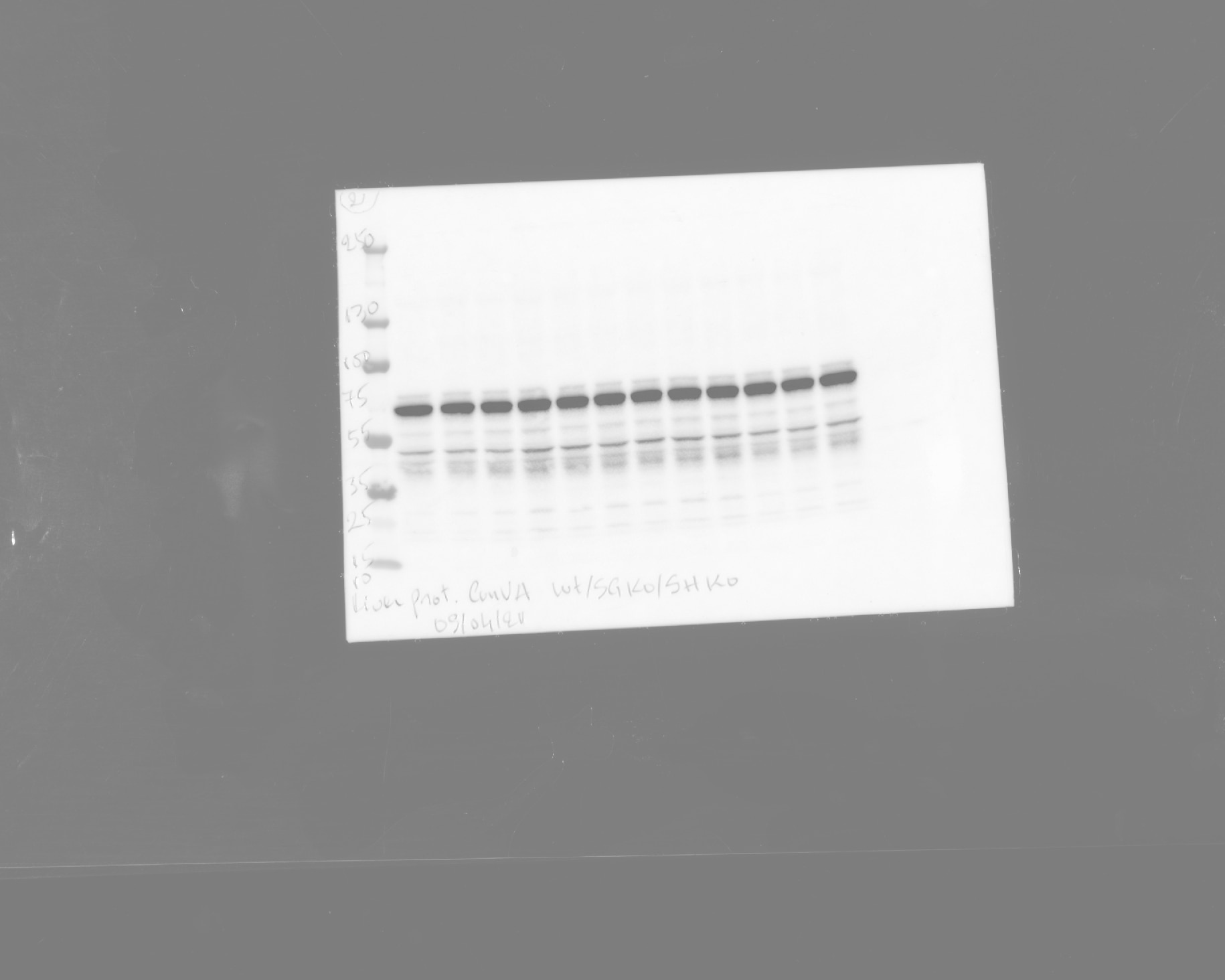
James (Verified Customer) (11-18-2022) | Detection of PCK1 in liver protein extracts
 |

