

Tested Applications
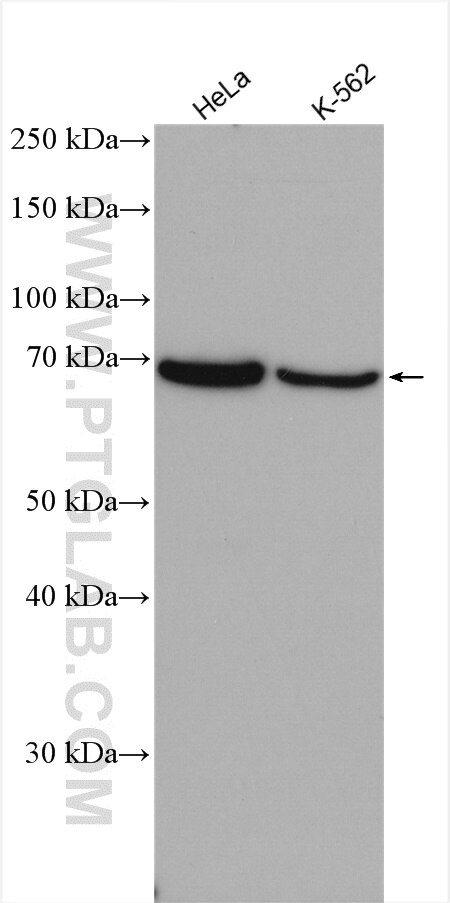
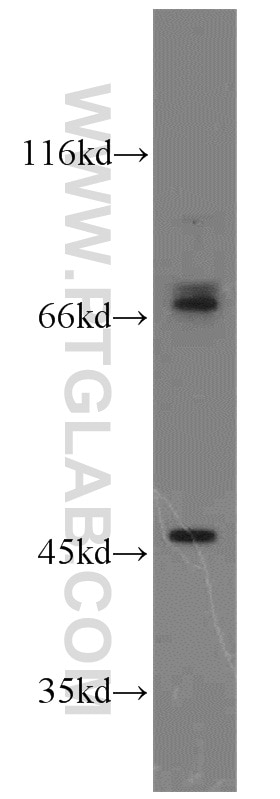
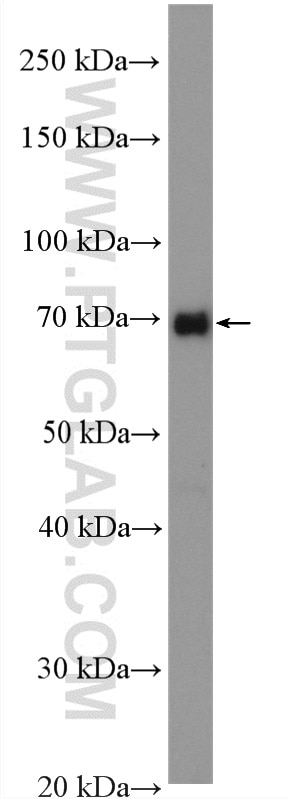
| Positive WB detected in | HeLa cells, MCF-7 cells, K-562 cells |
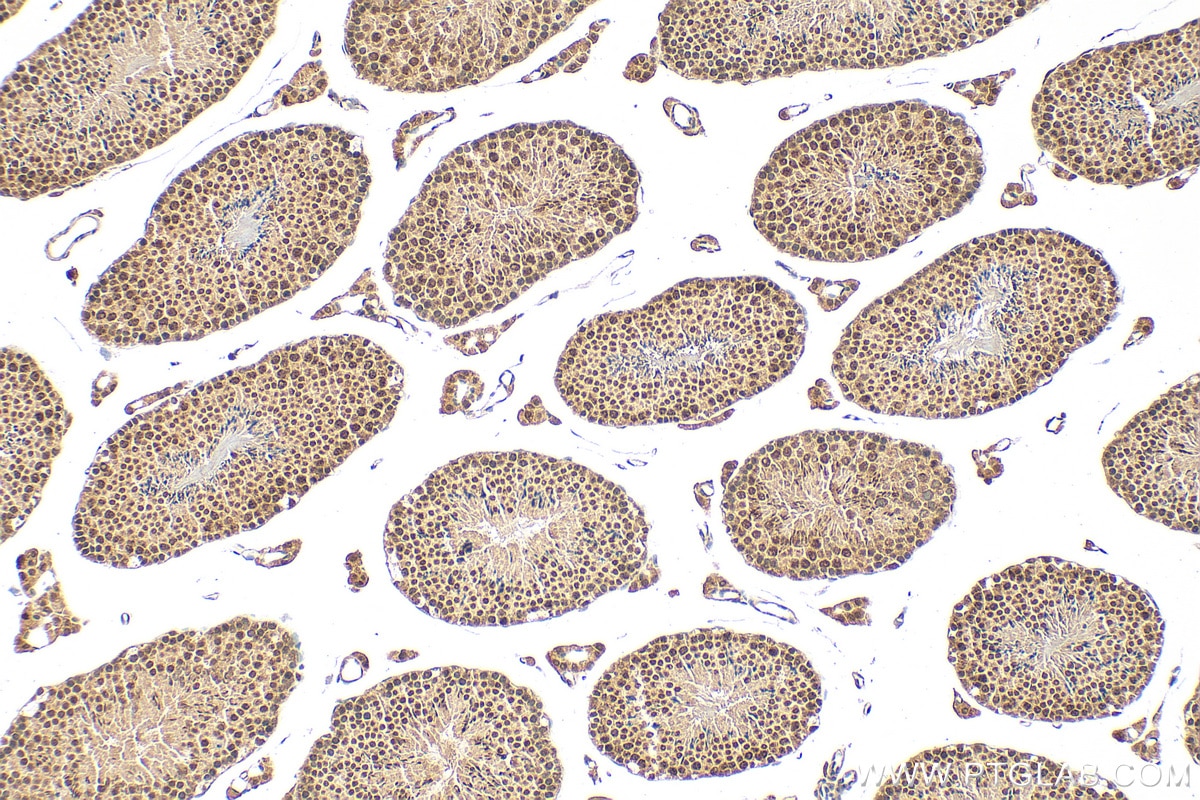
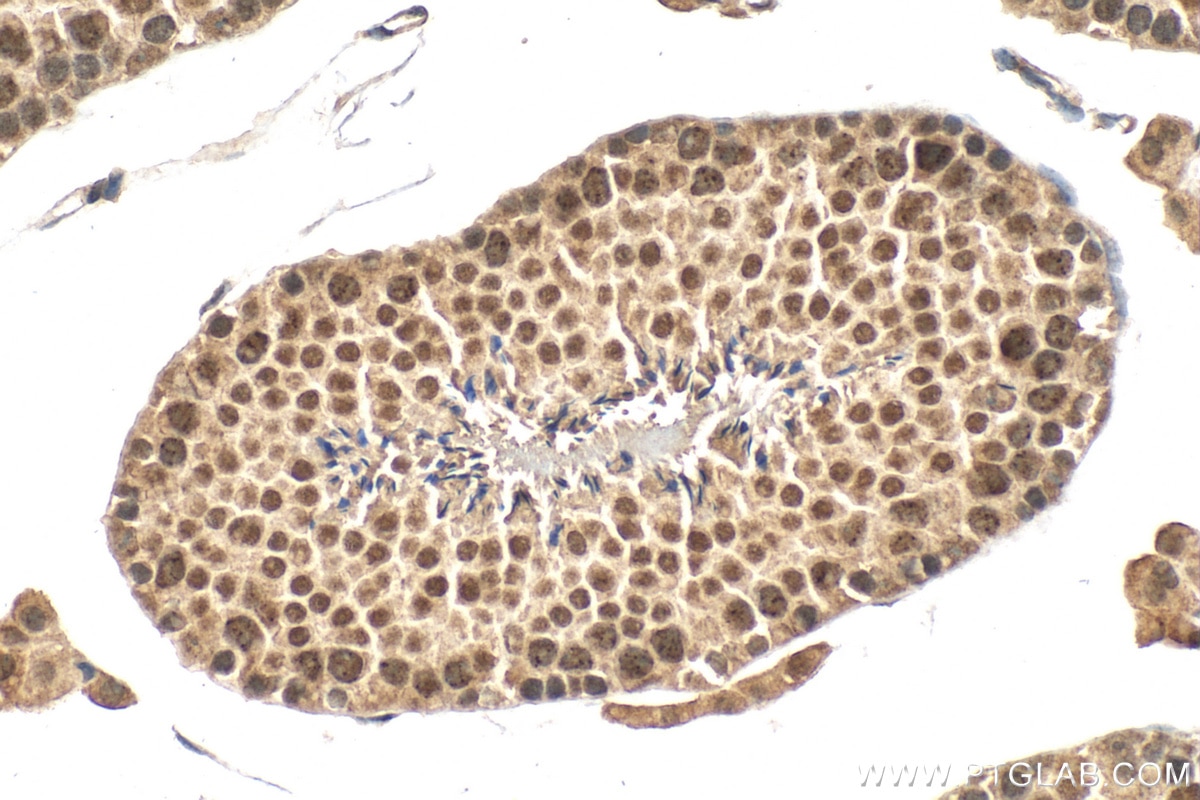
| Positive IHC detected in | mouse testis tissue Note: suggested antigen retrieval with TE buffer pH 9.0; (*) Alternatively, antigen retrieval may be performed with citrate buffer pH 6.0 |
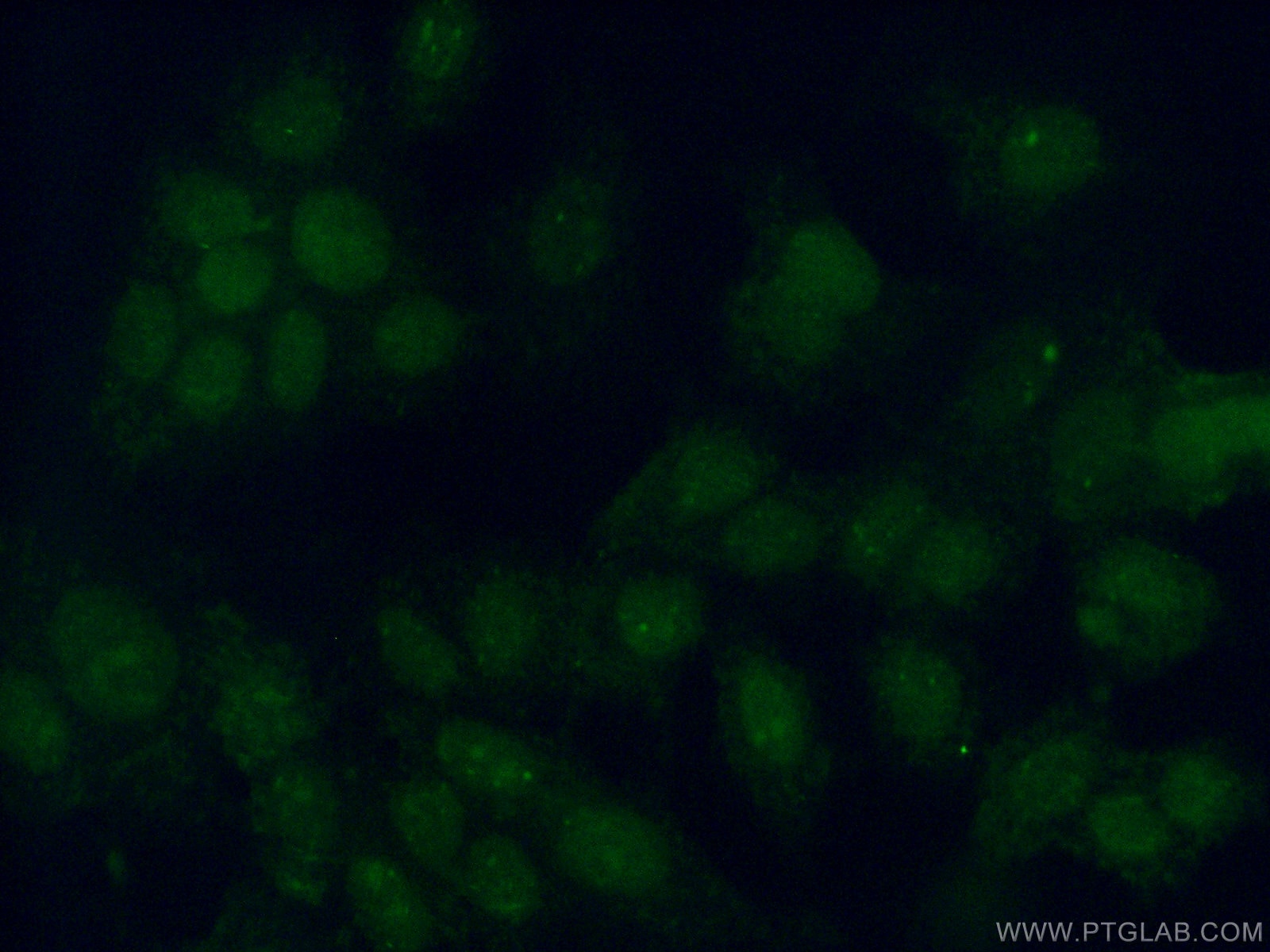
| Positive IF/ICC detected in | MCF-7 cells |
Recommended dilution
| Application | Dilution |
|---|---|
| Western Blot (WB) | WB : 1:500-1:3000 |
| Immunohistochemistry (IHC) | IHC : 1:50-1:500 |
| Immunofluorescence (IF)/ICC | IF/ICC : 1:50-1:500 |
| It is recommended that this reagent should be titrated in each testing system to obtain optimal results. | |
| Sample-dependent, Check data in validation data gallery. | |
Product Information
16074-1-AP targets PIAS2 in WB, IHC, IF/ICC, ELISA applications and shows reactivity with human, mouse samples.
| Tested Reactivity | human, mouse |
| Cited Reactivity | human |
| Host / Isotype | Rabbit / IgG |
| Class | Polyclonal |
| Type | Antibody |
| Immunogen |
CatNo: Ag9032 Product name: Recombinant human PIAS2 protein Source: e coli.-derived, PGEX-4T Tag: GST Domain: 1-346 aa of BC015190 Sequence: MADFEELRNMVSSFRVSELQVLLGFAGRNKSGRKHDLLMRALHLLKSGCSPAVQIKIRELYRRRYPRTLEGLSDLSTIKSSVFSLDGGSSPVEPDLAVAGIHSLPSTSVTPHSPSSPVGSVLLQDTKPTFEMQQPSPPIPPVHPDVQLKNLPFYDVLDVLIKPTSLVQSSIQRFQEKFFIFALTPQQVREICISRDFLPGGRRDYTVQVQLRLCLAETSCPQEDNYPNSLCIKVNGKLFPLPGYAPPPKNGIEQKRPGRPLNITSLVRLSSAVPNQISISWASEIGKNYSMSVYLVRQLTSAMLLQRLKMKGIRNPDHSRALIKEKLTADPDSEIATTSLRVSLMC Predict reactive species |
| Full Name | protein inhibitor of activated STAT, 2 |
| Calculated Molecular Weight | 63 kDa, 69 kDa |
| Observed Molecular Weight | 68 kDa |
| GenBank Accession Number | BC015190 |
| Gene Symbol | PIAS2 |
| Gene ID (NCBI) | 9063 |
| RRID | AB_2164208 |
| Conjugate | Unconjugated |
| Form | Liquid |
| Purification Method | Antigen affinity purification |
| UNIPROT ID | O75928 |
| Storage Buffer | PBS with 0.02% sodium azide and 50% glycerol, pH 7.3. |
| Storage Conditions | Store at -20°C. Stable for one year after shipment. Aliquoting is unnecessary for -20oC storage. 20ul sizes contain 0.1% BSA. |
Background Information
PIAS2 functions as an E3-type small ubiquitin-like modifier (SUMO) ligase, stabilizing the interaction between UBE2I and the substrate, and as a SUMO-tethering factor. PIAS2 also plays a crucial role as a transcriptional coregulator in various cellular pathways, including the STAT pathway, the p53 pathway and the steroid hormone signaling pathway. PIAS2 has 3 isoforms produced by alternative splicing with the MW of 68 kDa, 63 kDa and 45 kDa.
Protocols
| Product Specific Protocols | |
|---|---|
| IF protocol for PIAS2 antibody 16074-1-AP | Download protocol |
| IHC protocol for PIAS2 antibody 16074-1-AP | Download protocol |
| WB protocol for PIAS2 antibody 16074-1-AP | Download protocol |
| Standard Protocols | |
|---|---|
| Click here to view our Standard Protocols |
Publications
What published studies show
The PIAS2 Polyclonal antibody (Cat# 16074-1-AP) has 7 total citations. These appear in Signal Transduction and Targeted Therapy, Nature Communications (×2), International Journal of Molecular Sciences, Journal of Molecular Medicine, Scientific Reports, and BBA Molecular Cell Research. Research fields span acute myeloid leukemia, SUMOylation, influenza virology, amyloid precursor protein processing, spinal muscular atrophy, hepatocellular carcinoma, and melanoma signaling.
| Species | Application | Title |
|---|---|---|
Signal Transduct Target Ther Targeting ZMIZ1 induces differentiation in acute myeloid leukemia via chromatin remodeling. | ||
Nat Commun Human ANP32A/B are SUMOylated and utilized by avian influenza virus NS2 protein to overcome species-specific restriction | ||
Int J Mol Sci Genome-Wide CRISPR Screening Identifies Genetic Modulators of Amyloid Precursor Protein Processing.
| ||
J Mol Med (Berl) Hyper-SUMOylation of SMN induced by SENP2 deficiency decreases its stability and leads to spinal muscular atrophy-like pathology. | ||
Sci Rep Chromosome 8q24 amplification associated with human hepatocellular carcinoma predicts MYC/ZEB1/MIZ1 transcriptional regulation |

