
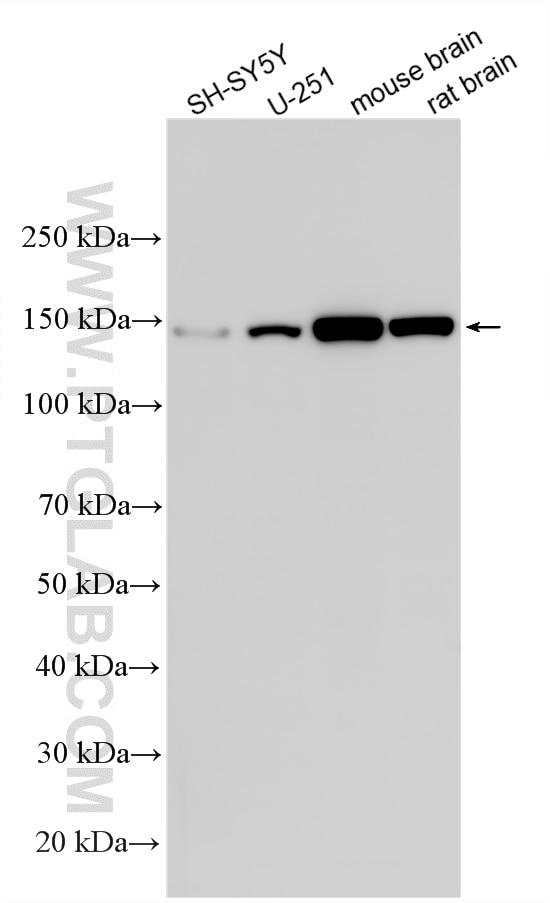
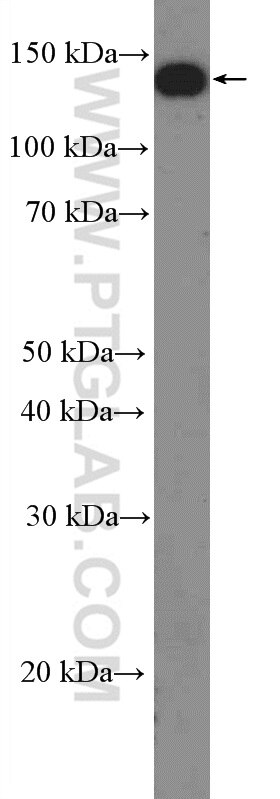
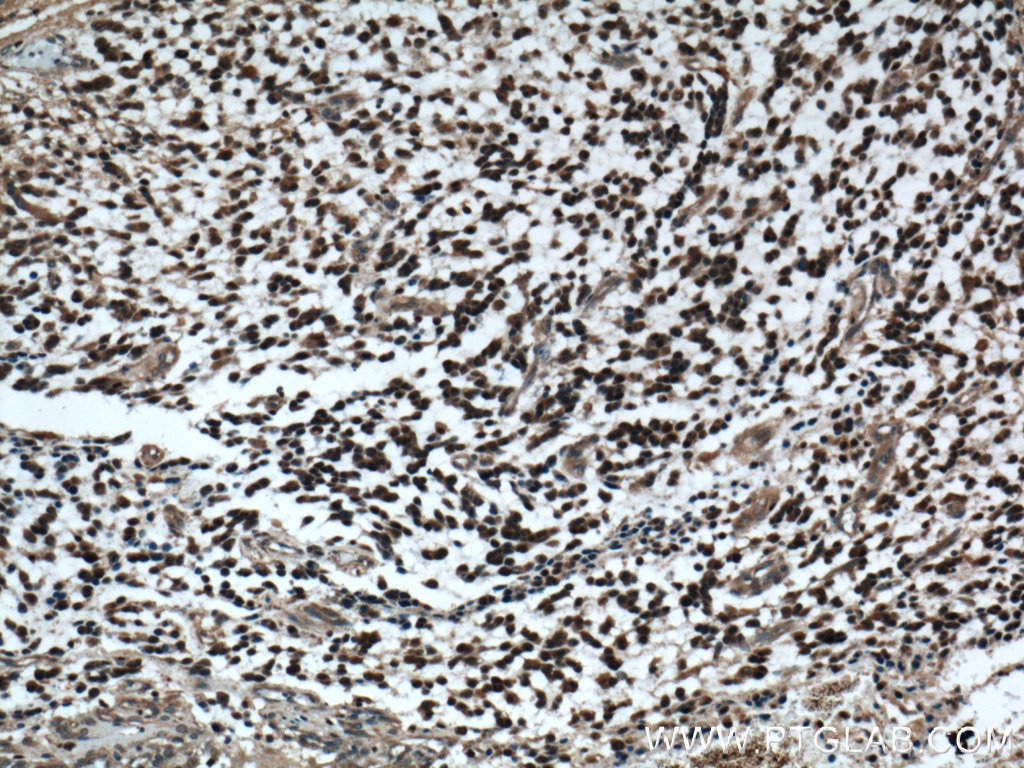
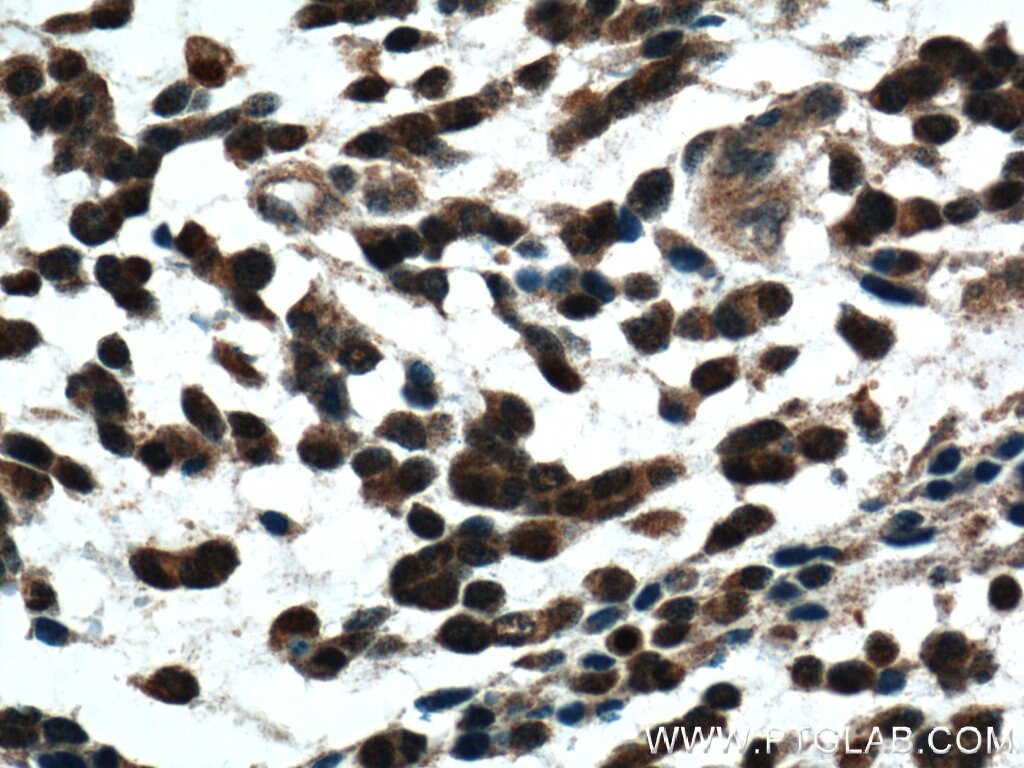
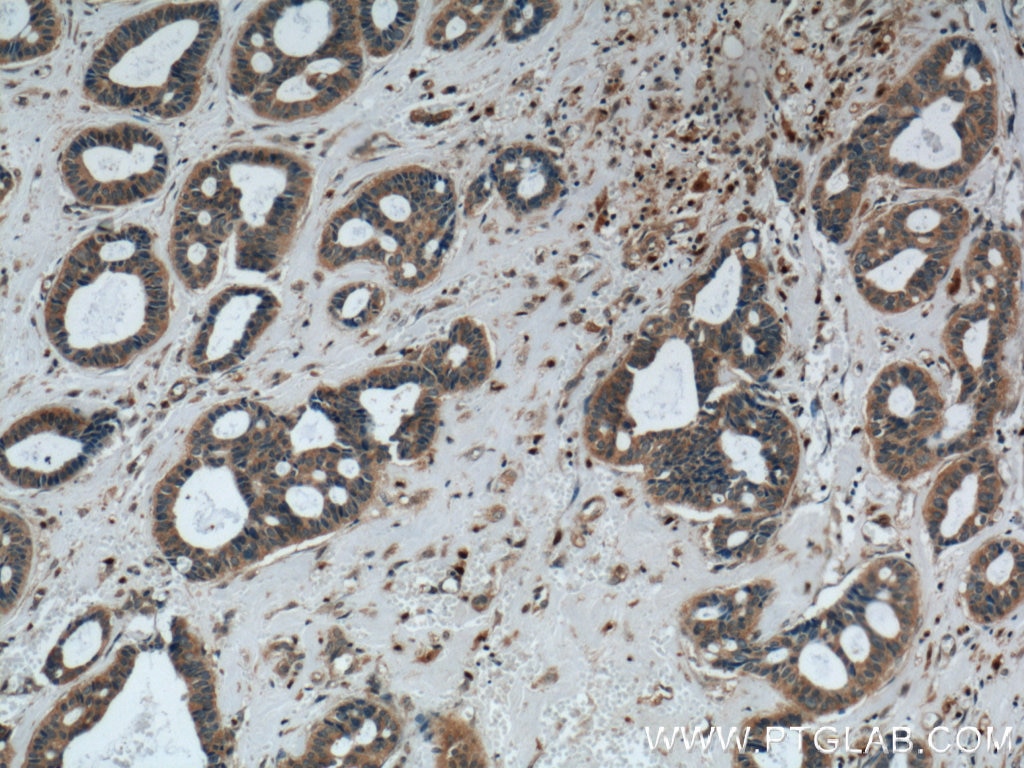
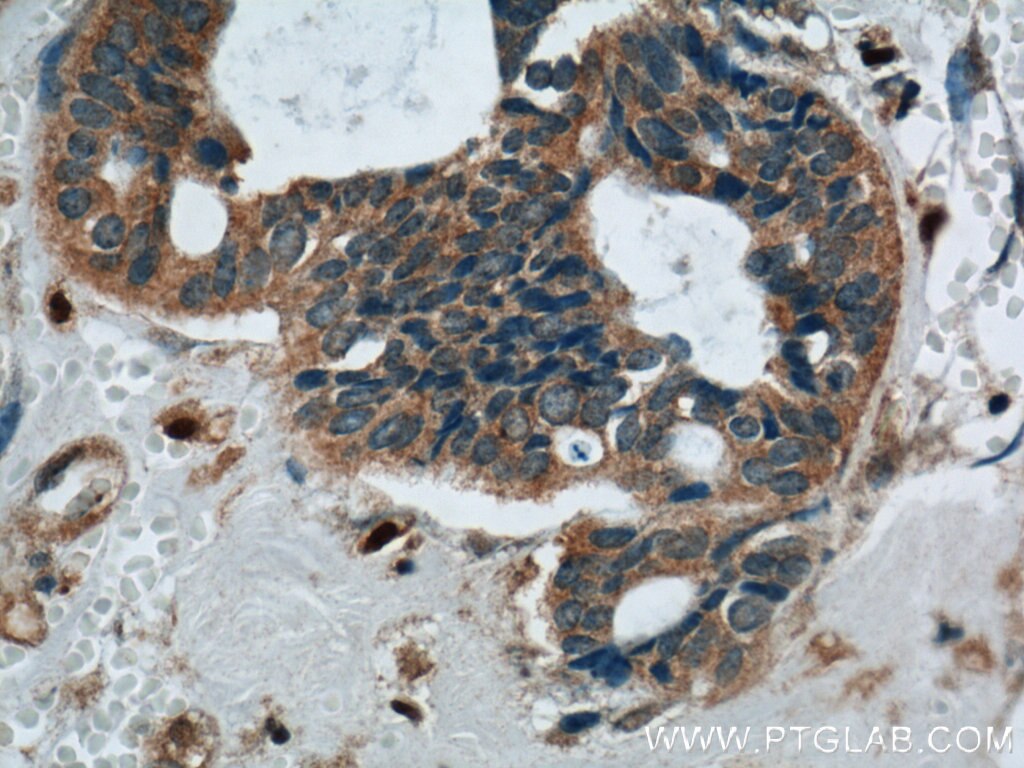

Tested Applications
| Positive WB detected in | SH-SY5Y cells, rat brain tissue, U-251 cells, mouse brain tissue, rat tissue |
| Positive IHC detected in | human gliomas tissue, human breast cancer tissue Note: suggested antigen retrieval with TE buffer pH 9.0; (*) Alternatively, antigen retrieval may be performed with citrate buffer pH 6.0 |
Recommended dilution
| Application | Dilution |
|---|---|
| Western Blot (WB) | WB : 1:500-1:2000 |
| Immunohistochemistry (IHC) | IHC : 1:50-1:500 |
| It is recommended that this reagent should be titrated in each testing system to obtain optimal results. | |
| Sample-dependent, Check data in validation data gallery. | |
Product Information
26551-1-AP targets Phospholipase C Beta 1 in WB, IHC, RIP, ELISA applications and shows reactivity with human, mouse, rat samples.
| Tested Reactivity | human, mouse, rat |
| Cited Reactivity | human, rat, sheep |
| Host / Isotype | Rabbit / IgG |
| Class | Polyclonal |
| Type | Antibody |
| Immunogen |
CatNo: Ag24750 Product name: Recombinant human PLCB1 protein Source: e coli.-derived, PGEX-4T Tag: GST Domain: 1162-1216 aa of BC069420 Sequence: LEFVQEAMKGKISEDSNHGSAPLSLSSDPGKVNHKTPSSEELGGDIPGKEFDTPL Predict reactive species |
| Full Name | phospholipase C, beta 1 (phosphoinositide-specific) |
| Calculated Molecular Weight | 1216 aa, 139 kDa |
| Observed Molecular Weight | 139 kDa |
| GenBank Accession Number | BC069420 |
| Gene Symbol | PLCB1 |
| Gene ID (NCBI) | 23236 |
| RRID | AB_2861360 |
| Conjugate | Unconjugated |
| Form | Liquid |
| Purification Method | Antigen affinity purification |
| UNIPROT ID | Q9NQ66 |
| Storage Buffer | PBS with 0.02% sodium azide and 50% glycerol, pH 7.3. |
| Storage Conditions | Store at -20°C. Stable for one year after shipment. Aliquoting is unnecessary for -20oC storage. 20ul sizes contain 0.1% BSA. |
Background Information
PLCB1 catalyzes the formation of inositol 1,4,5-trisphosphate and diacylglycerol from phosphatidylinositol 4,5-bisphosphate. This reaction uses calcium as a cofactor and plays an important role in the intracellular transduction of many extracellular signals. PLCB1 is activated by two G-protein alpha subunits, alpha-q and alpha-11.
Protocols
| Product Specific Protocols | |
|---|---|
| IHC protocol for Phospholipase C Beta 1 antibody 26551-1-AP | Download protocol |
| WB protocol for Phospholipase C Beta 1 antibody 26551-1-AP | Download protocol |
| Standard Protocols | |
|---|---|
| Click here to view our Standard Protocols |
Publications
What published studies show
The PLCB1 antibody (Cat# 26551-1-AP) has 8 total citations. These appear in journals including Nature Chemical Biology, Journal of Ethnopharmacology, Biochemical Pharmacology, Frontiers in Endocrinology, International Journal of Molecular Sciences, Thoracic Cancer, and Biochemical Genetics. Research fields span liver carcinogenesis, gastric mucosal injury, atopic dermatitis, urate reabsorption, sepsis-related inflammation, adipocyte differentiation, and lung/gastric cancer progression.
| Species | Application | Title |
|---|---|---|
Nat Chem Biol ENO1 promotes liver carcinogenesis through YAP1-dependent arachidonic acid metabolism
| ||
J Ethnopharmacol Dan-Shen-Yin against ethanol-induced chronic gastric mucosal injury in rats by inhibiting apoptosis via IP3R-controlled calcium release | ||
J Ethnopharmacol Combining metabolomics and network pharmacology to clarify the mechanism of Angelica sinensis-Sophora flavescens pills in treating atopic dermatitis through the sweet-bitter harmonization theory | ||
Biochem Pharmacol Sodium butyrate upregulates URAT1-mediated urate reabsorption in HK2 cells by activating FFAR2/p38 MAPK/ELK1/ARRB2 axis and relieving NF-κB-HNF1β competitive binding. | ||
Front Endocrinol (Lausanne) Estrogen receptor subtype mediated anti-inflammation and vasorelaxation via genomic and nongenomic actions in septic mice | ||
Int J Mol Sci Elucidating the Role of circTIAM1 in Guangling Large-Tailed Sheep Adipocyte Proliferation and Differentiation via the miR-485-3p/PLCB1 Pathway |
Reviews
What customers say
One reviewer (Matteo L.) rated this product 5 stars for Western Blot on MDA-MB-231 cells at a 1:2000 dilution. They reported very clear and specific bands, noting that even at a lower concentration than suggested, the signal remained strong with only 60 seconds of exposure. Overall, the feedback highlights excellent specificity and sensitivity in WB applications.
The reviews below have been submitted by verified Proteintech customers who received an incentive for providing their feedback.
Matteo (Verified Customer) (12-12-2025) | Very clear and specific bands. It was used at lower suggested concnetration and the bands very strong and clear after 60 seconds of exposure.
|

