
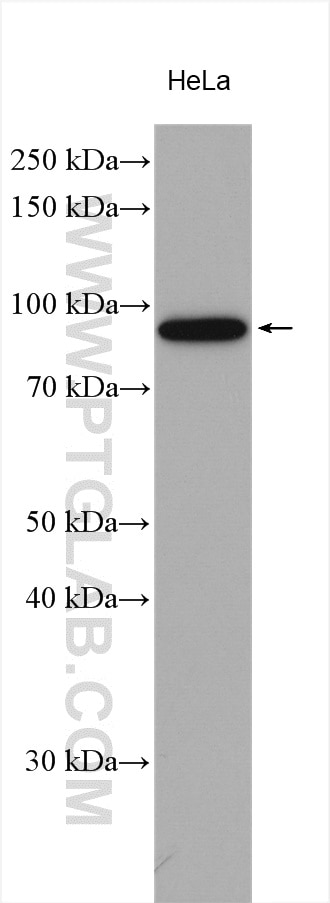
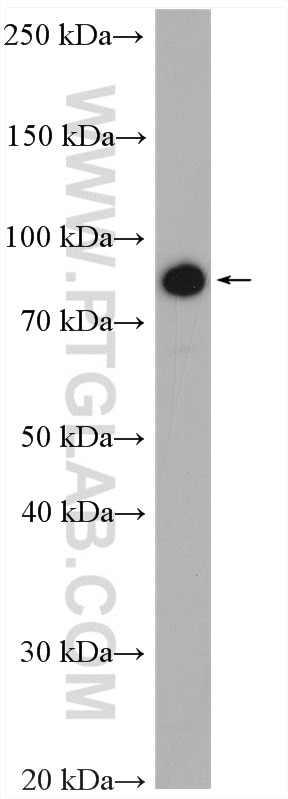
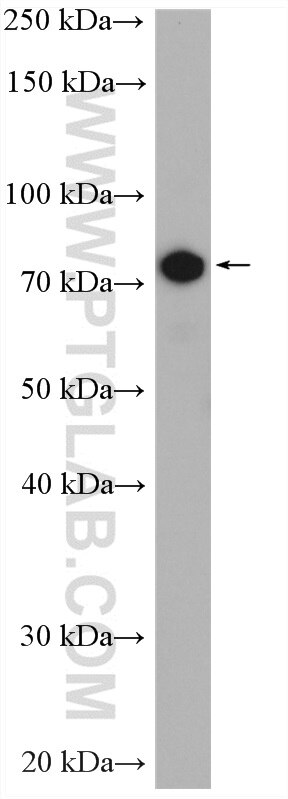
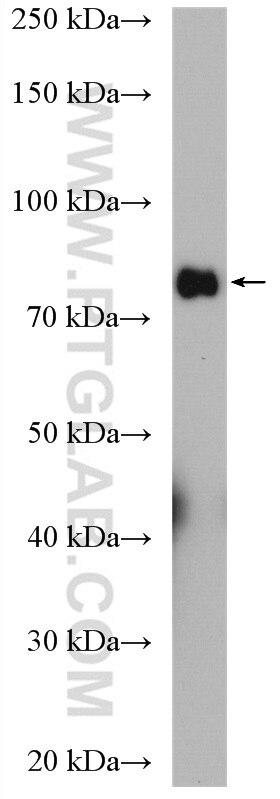

Tested Applications
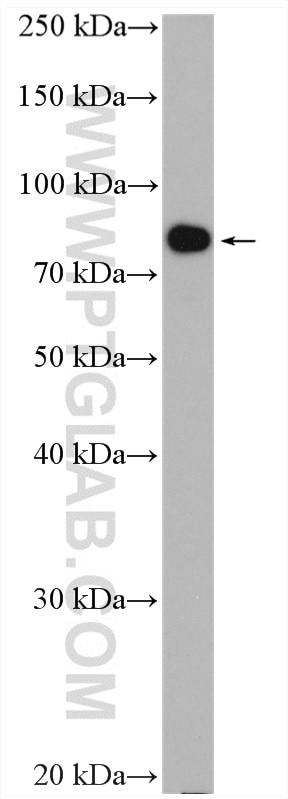
| Positive WB detected in | HeLa cells, MCF-7 cells, COLO 320 cells |
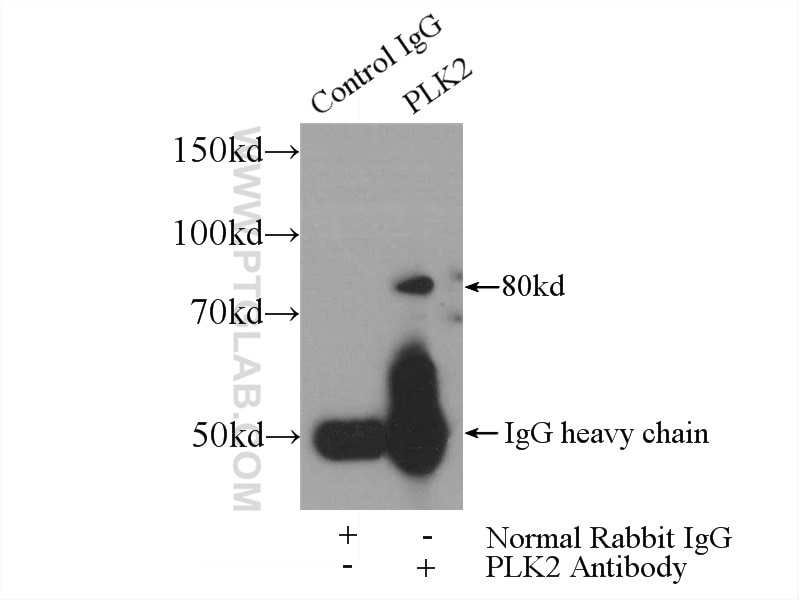
| Positive IP detected in | HeLa cells |
Recommended dilution
| Application | Dilution |
|---|---|
| Western Blot (WB) | WB : 1:1000-1:4000 |
| Immunoprecipitation (IP) | IP : 0.5-4.0 ug for 1.0-3.0 mg of total protein lysate |
| It is recommended that this reagent should be titrated in each testing system to obtain optimal results. | |
| Sample-dependent, Check data in validation data gallery. | |
Product Information
15956-1-AP targets PLK2 in WB, IP, ELISA applications and shows reactivity with human, mouse, rat samples.
| Tested Reactivity | human, mouse, rat |
| Cited Reactivity | human, mouse, rat |
| Host / Isotype | Rabbit / IgG |
| Class | Polyclonal |
| Type | Antibody |
| Immunogen |
CatNo: Ag8710 Product name: Recombinant human PLK2 protein Source: e coli.-derived, PGEX-4T Tag: GST Domain: 1-332 aa of BC013879 Sequence: MELLRTITYQPAASTKMCEQALGKGCGADSKKKRPPQPPEESQPPQSQAQVPPAAPHHHHHHSHSGPEISRIIVDPTTGKRYCRGKVLGKGGFAKCYEMTDLTNNKVYAAKIIPHSRVAKPHQREKIDKEIELHRILHHKHVVQFYHYFEDKENIYILLEYCSRRSMAHILKARKVLTEPEVRYYLRQIVSGLKYLHEQEILHRDLKLGNFFINEAMELKVGDFGLAARLEPLEHRRRTICGTPNYLSPEVLNKQGHGCESDIWALGCVMYTMLLGRPPFETTNLKETYRCIREARYTMPSSLLAPAKHLIASMLSKNPEDRPSLDDIIRHD Predict reactive species |
| Full Name | polo-like kinase 2 (Drosophila) |
| Calculated Molecular Weight | 685 aa, 78 kDa |
| Observed Molecular Weight | 75-80 kDa |
| GenBank Accession Number | BC013879 |
| Gene Symbol | PLK2 |
| Gene ID (NCBI) | 10769 |
| RRID | AB_2237367 |
| Conjugate | Unconjugated |
| Form | Liquid |
| Purification Method | Antigen affinity purification |
| UNIPROT ID | Q9NYY3 |
| Storage Buffer | PBS with 0.02% sodium azide and 50% glycerol, pH 7.3. |
| Storage Conditions | Store at -20°C. Stable for one year after shipment. Aliquoting is unnecessary for -20oC storage. 20ul sizes contain 0.1% BSA. |
Background Information
PLK2(Polo-like kinase 2) is also named as SNK and belongs to the Ser/Thr protein kinase family. It plays a role in normal cell division. Plk2 expression is detected only in G1, and endogenous Plk2 is rapidly turned over. Therefore, the expression of the three mammalian Plks during the cell cycle resembles the successive transition of the cyclins, prompting speculation that Plks may reg-ulate the cell cycle in a manner analogous to that of Cdks(PMID:12972611).
Protocols
| Product Specific Protocols | |
|---|---|
| IP protocol for PLK2 antibody 15956-1-AP | Download protocol |
| WB protocol for PLK2 antibody 15956-1-AP | Download protocol |
| Standard Protocols | |
|---|---|
| Click here to view our Standard Protocols |
Publications
What published studies show
The PLK2 Polyclonal antibody (15956-1-AP) has a total of 11 citations across journals including Theranostics, Molecular Neurobiology, Toxicology, Oncotarget, BMC Cancer, Journal of Biochemical and Molecular Toxicology, Cell Biology International, Journal of Gastroenterology and Hepatology, Acta Diabetologica, and Science Advances. Research fields span atherosclerosis, neurotoxicity and brain aging, cervical cancer, glioblastoma, retinal ganglion cell oxidative stress, colorectal cancer, hepatic ischemia-reperfusion injury, and atrial fibrillation in diabetes. Applications documented include Western blotting and immunoprecipitation across human, mouse, and rat samples.
| Species | Application | Title |
|---|---|---|
Theranostics Deciphering single-cell landscape unravels cell-type-specific functional roles of RNA m6A modification in atherosclerosis | ||
Mol Neurobiol Microcystin-LR Exposure Damages Neurons by Inducing α-Syn Aggregation via MAPK4/GATA2/SNCA and PP2A/GRKs Pathways | ||
Toxicology Chronic low-level exposure to Pb, Hg, and Cd mixture triggers brain premature aging in rat | ||
Oncotarget MicroRNA-27b up-regulated by human papillomavirus 16 E7 promotes proliferation and suppresses apoptosis by targeting polo-like kinase2 in cervical cancer. | ||
BMC Cancer Identification and validation of SUN modification-related anti-PD-1 immunotherapy-resistance signatures to predict prognosis and immune microenvironment status in glioblastoma. | ||
J Biochem Mol Toxicol PLK2 protects retinal ganglion cells from oxidative stress by potentiating Nrf2 signaling via GSK-3β.
|

