
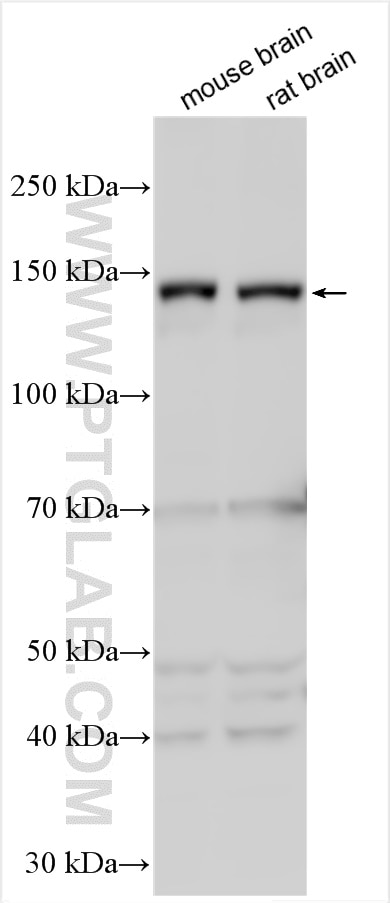
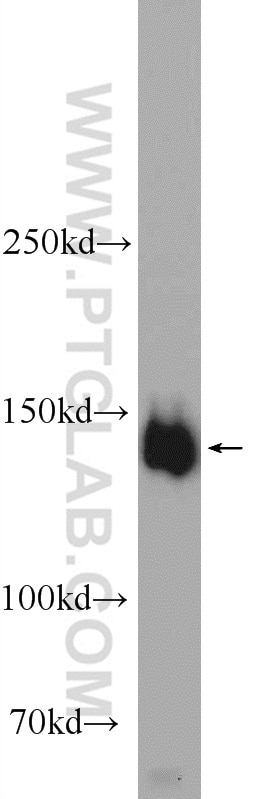
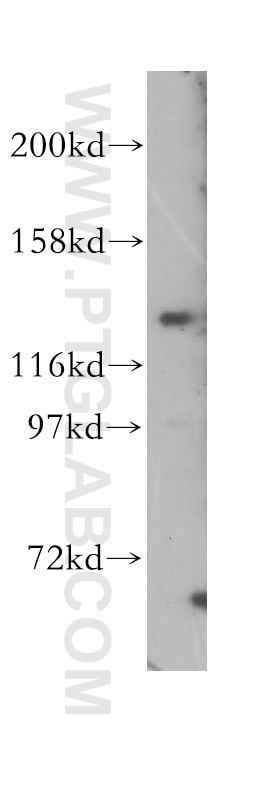
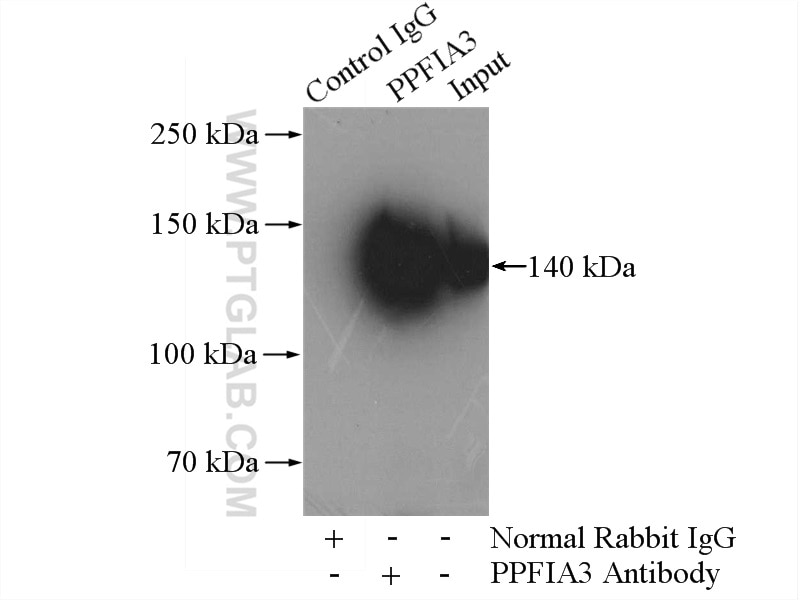

Tested Applications
| Positive WB detected in | mouse brain tissue, HEK-293 cells, rat brain tissue |
| Positive IP detected in | mouse brain tissue |
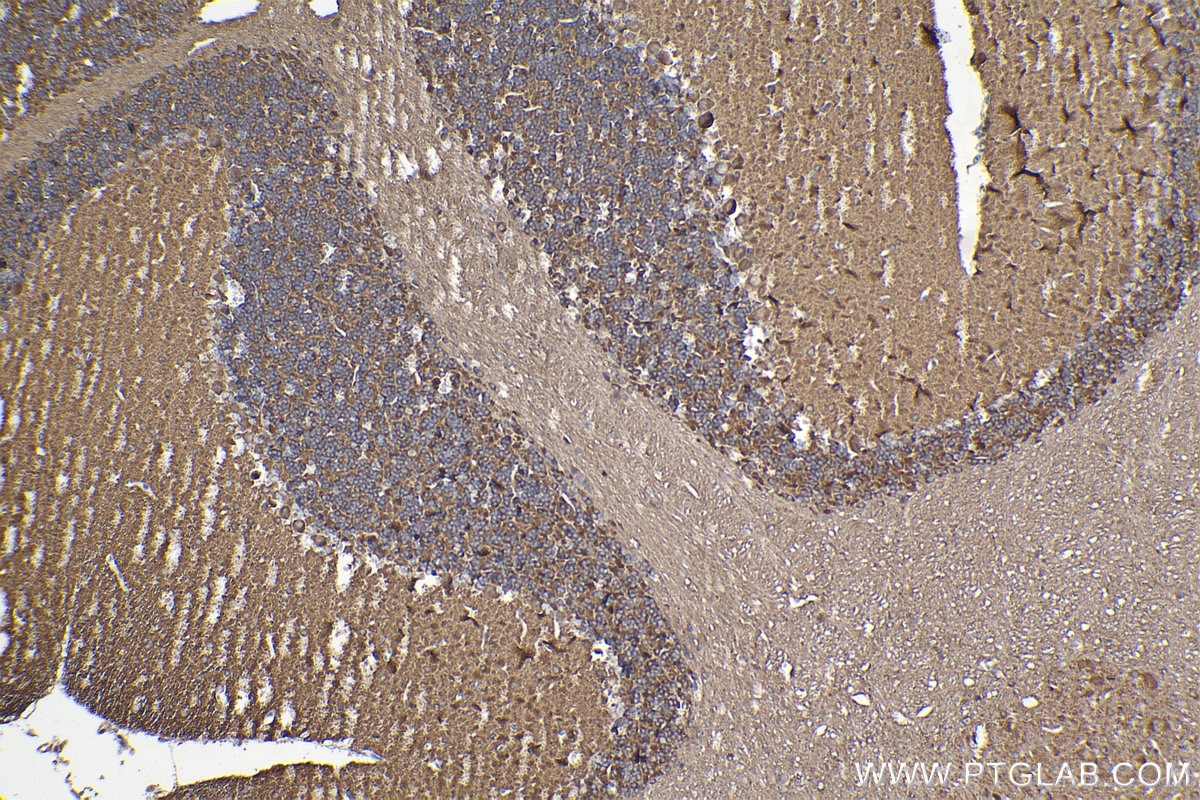
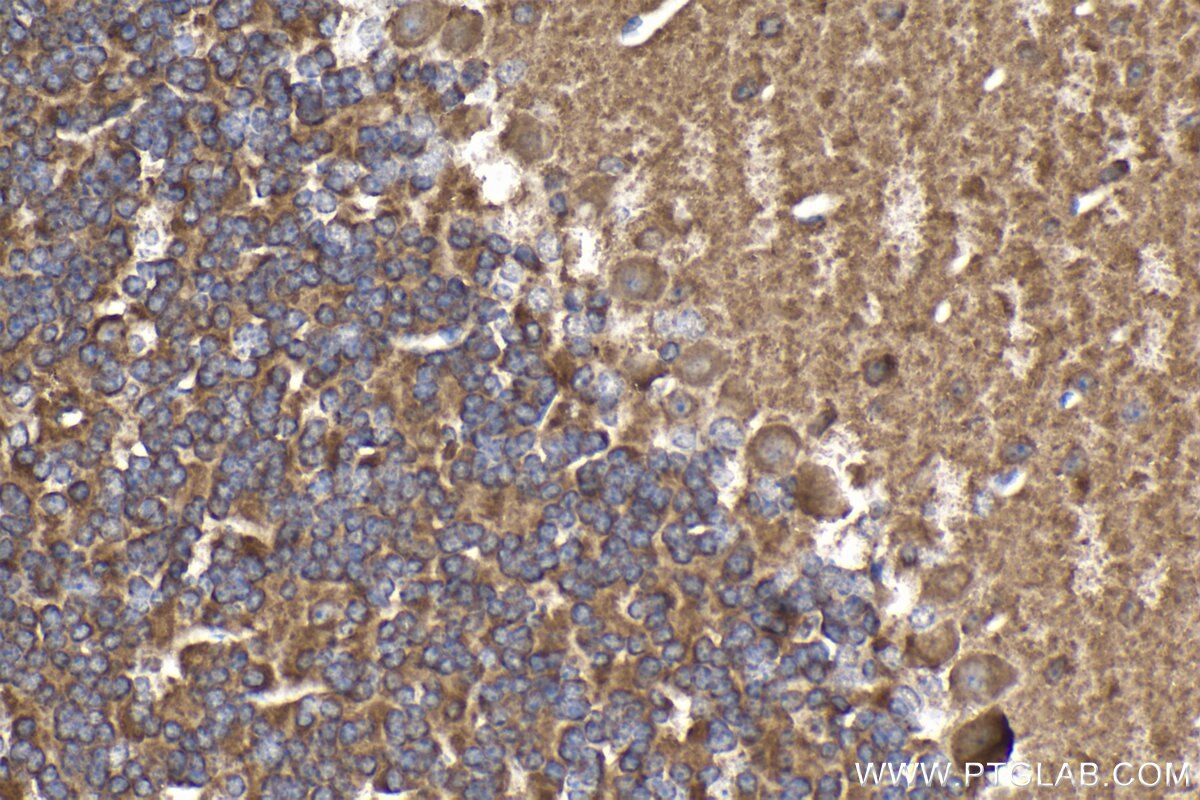
| Positive IHC detected in | mouse cerebellum tissue Note: suggested antigen retrieval with TE buffer pH 9.0; (*) Alternatively, antigen retrieval may be performed with citrate buffer pH 6.0 |
Recommended dilution
| Application | Dilution |
|---|---|
| Western Blot (WB) | WB : 1:1000-1:4000 |
| Immunoprecipitation (IP) | IP : 0.5-4.0 ug for 1.0-3.0 mg of total protein lysate |
| Immunohistochemistry (IHC) | IHC : 1:250-1:1000 |
| It is recommended that this reagent should be titrated in each testing system to obtain optimal results. | |
| Sample-dependent, Check data in validation data gallery. | |
Product Information
11492-1-AP targets PPFIA3 in WB, IHC, IP, ELISA applications and shows reactivity with human, mouse, rat samples.
| Tested Reactivity | human, mouse, rat |
| Cited Reactivity | human, mouse |
| Host / Isotype | Rabbit / IgG |
| Class | Polyclonal |
| Type | Antibody |
| Immunogen |
CatNo: Ag1971 Product name: Recombinant human PPFIA3 protein Source: e coli.-derived, PGEX-4T Tag: GST Domain: 1-277 aa of BC021255 Sequence: APASSRTSTGNVWMTHEEMESLTATTKPILAYGDMNHEWVGNDWLPSLGLPQYRSYFMESLVDARMLDHLNKKELRGQLKMVDSFHRVSLHYGIMCLKRLNYDRKDLERRREESQTQIRDVMVWSNERVMGWVSGLGLKEFATNLTESGVHGALLALDETFDYSDLALLLQIPTQNAQARQLLEKEFSNLISLGTDRRLDEDSAKSFSRSPSWRKMFREKDLRGVTPDSAEMLPPNFRSAAAGALGSPGLPLRKLQPEGQTSGSSRADGVSVRTYSC Predict reactive species |
| Full Name | protein tyrosine phosphatase, receptor type, f polypeptide (PTPRF), interacting protein (liprin), alpha 3 |
| Calculated Molecular Weight | 1194 aa, 133 kDa |
| Observed Molecular Weight | 140 kDa |
| GenBank Accession Number | BC021255 |
| Gene Symbol | PPFIA3 |
| Gene ID (NCBI) | 8541 |
| RRID | AB_2171628 |
| Conjugate | Unconjugated |
| Form | Liquid |
| Purification Method | Antigen affinity purification |
| UNIPROT ID | O75145 |
| Storage Buffer | PBS with 0.02% sodium azide and 50% glycerol, pH 7.3. |
| Storage Conditions | Store at -20°C. Stable for one year after shipment. Aliquoting is unnecessary for -20oC storage. 20ul sizes contain 0.1% BSA. |
Background Information
PPFIA3, also named as KIAA0654, belongs to the liprin family and Liprin-alpha subfamily. PPFIA3 may regulate the disassembly of focal adhesions. It may localize receptor-like tyrosine phosphatases type 2A at specific sites on the plasma membrane, possibly regulating their interaction with the extracellular environment and their association with substrates. PPFIA3 exhibites more than 5 fold accumulations in the monoribosome fraction. PPFIA3 is decreased at the protein level by the miR-99 family but not in the luciferase reporter with the 3'UTR of PPFIA3. (PMID:21212412)
Protocols
| Product Specific Protocols | |
|---|---|
| IHC protocol for PPFIA3 antibody 11492-1-AP | Download protocol |
| IP protocol for PPFIA3 antibody 11492-1-AP | Download protocol |
| WB protocol for PPFIA3 antibody 11492-1-AP | Download protocol |
| Standard Protocols | |
|---|---|
| Click here to view our Standard Protocols |
Publications
What published studies show
The PPFIA3 Polyclonal antibody (Cat# 11492-1-AP) has 4 total citations published in Cancer Research, Neuron, Cell Reports, and Open Biology. The cited research spans prostate cancer and microRNA regulation, synaptic transmission and neurotransmitter release machinery, cerebellar granule cell survival via neurotrophin signaling, and cytoskeletal organization at focal adhesions. Applications used include WB and IHC.
| Species | Application | Title |
|---|---|---|
Cancer Res miR-99 family of MicroRNAs suppresses the expression of prostate-specific antigen and prostate cancer cell proliferation. | ||
Neuron Neurexin-1γ drives synaptic transmission through structural integration of neurotransmitter release machinery and postsynaptic receptor nanodomains. | ||
Cell Rep Neurexins play a crucial role in cerebellar granule cell survival by organizing autocrine machinery for neurotrophins. | ||
Open Biol The structural basis of the talin-KANK1 interaction that coordinates the actin and microtubule cytoskeletons at focal adhesions |

