
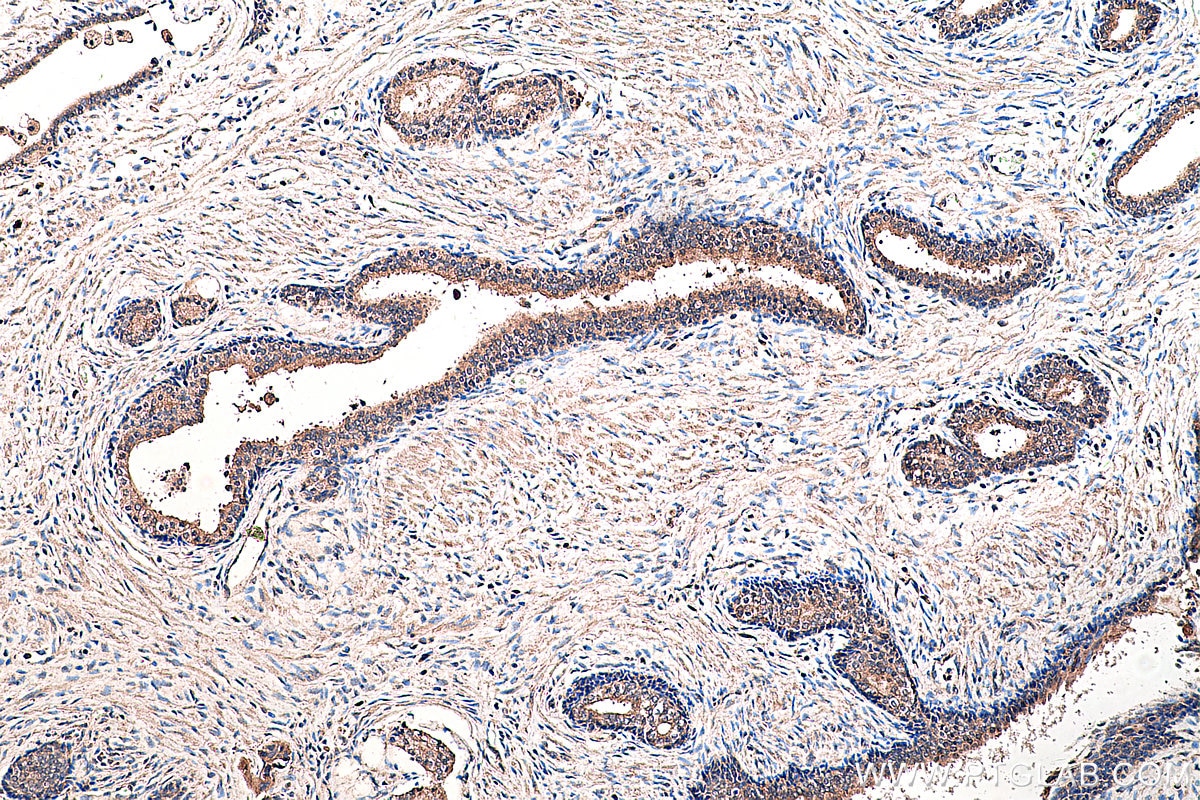

Tested Applications
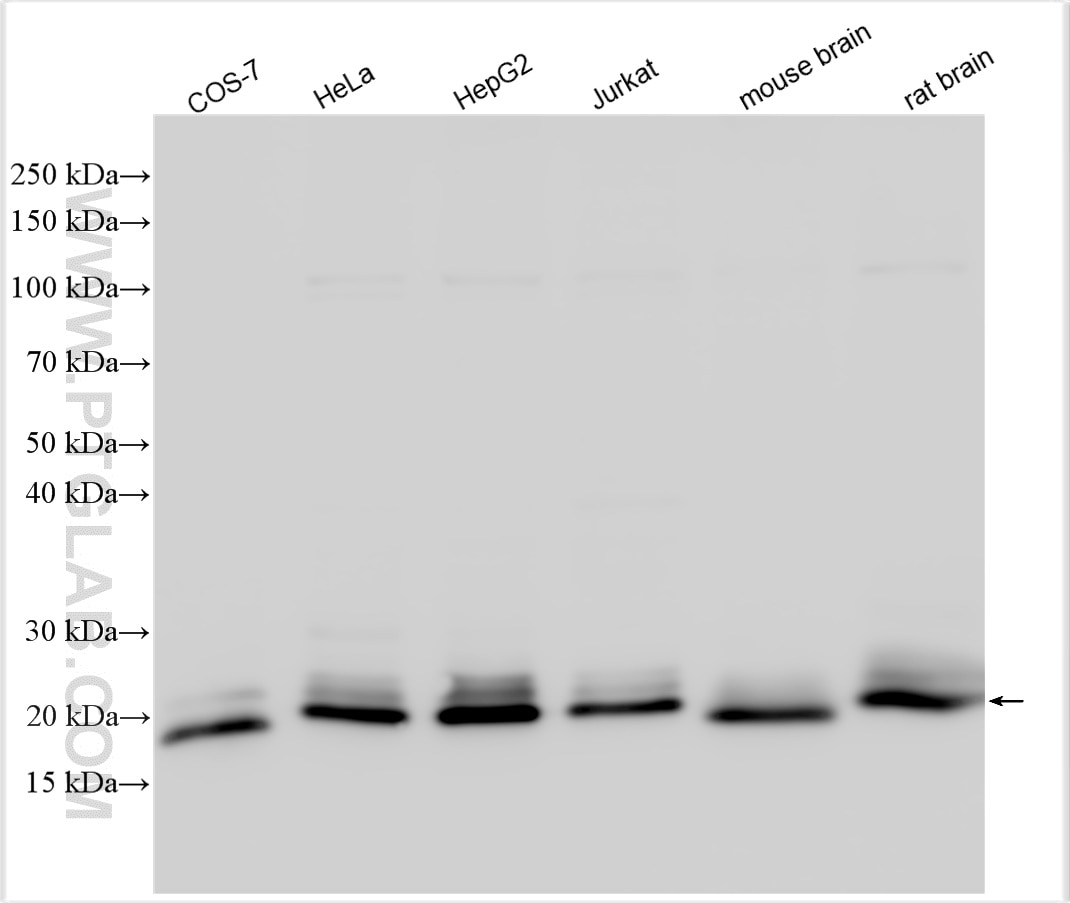
| Positive WB detected in | COS-7 cells, HeLa cells, HepG2 cells, Jurkat cells, rat brain tissue, mouse brain tissue |
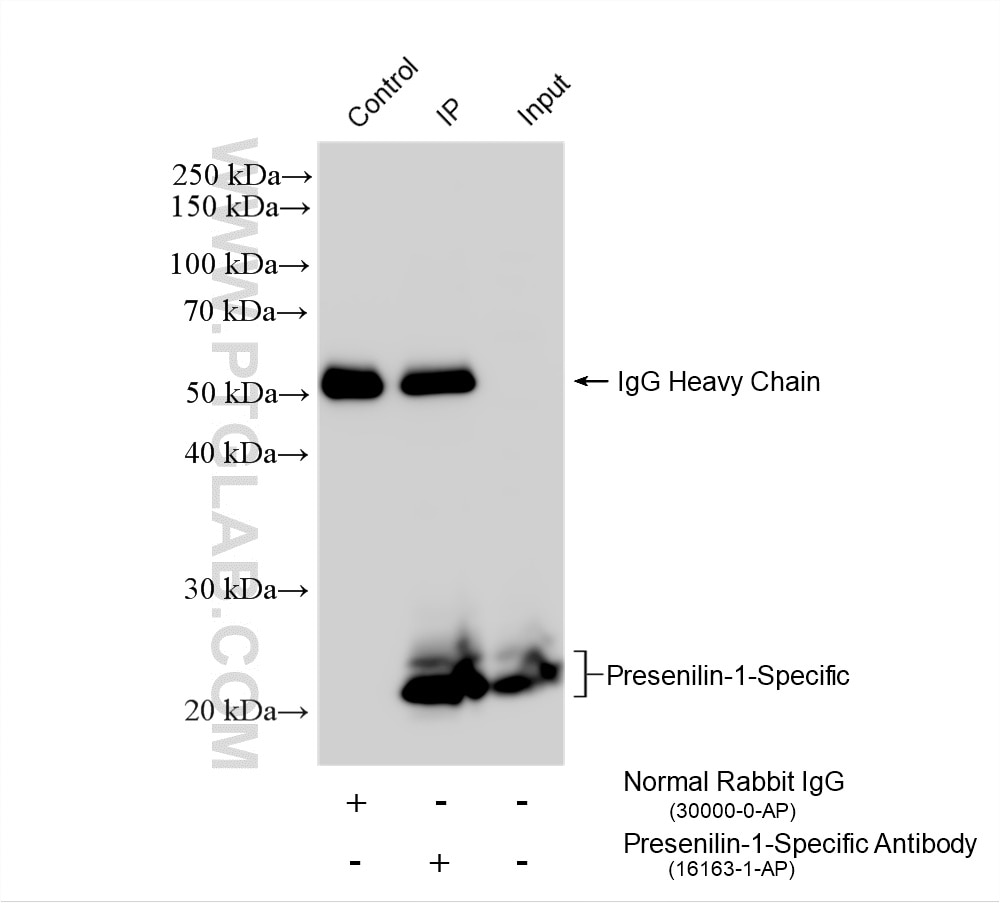
| Positive IP detected in | mouse brain tissue |
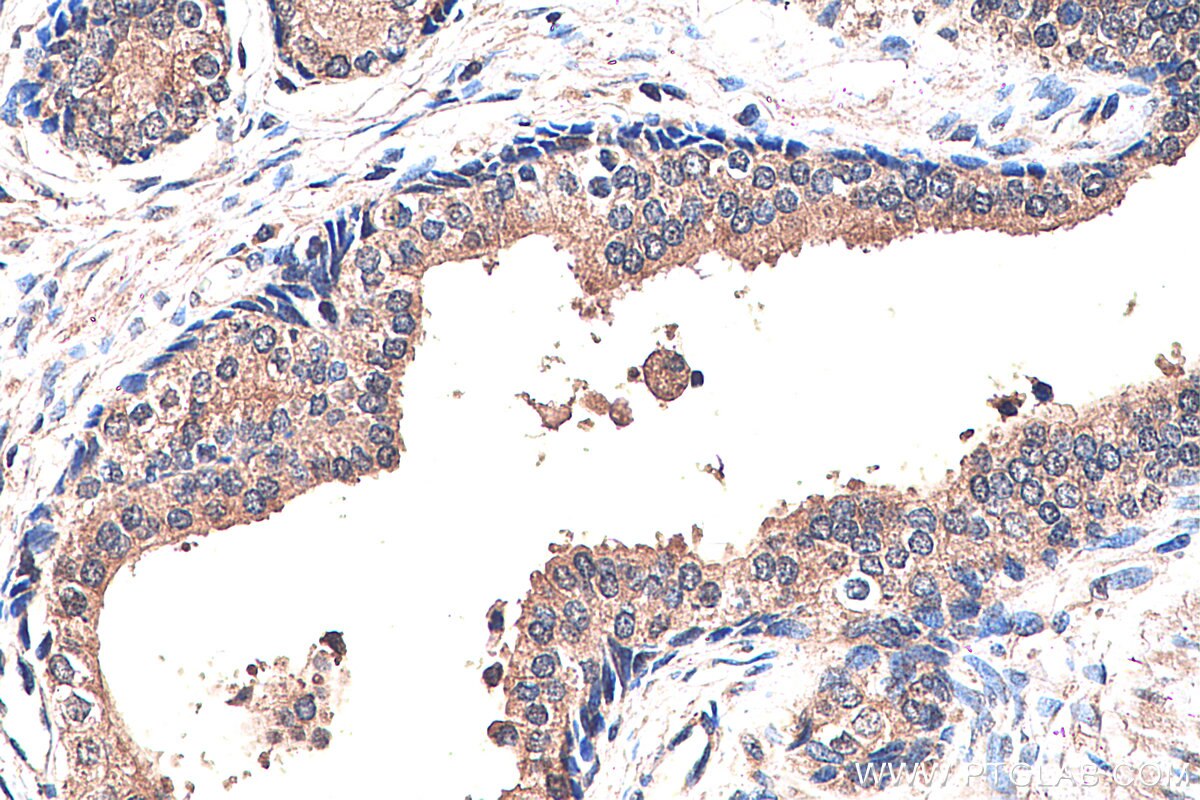
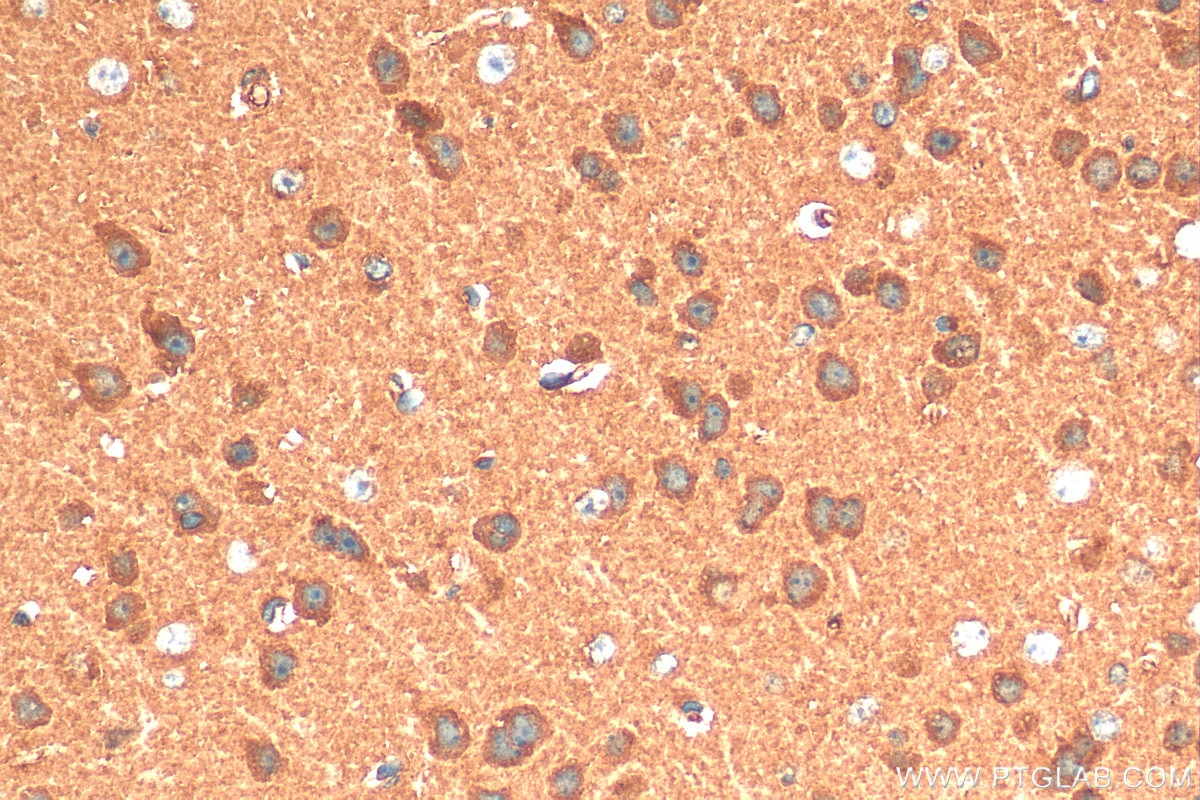
| Positive IHC detected in | human prostate cancer tissue, mouse brain tissue Note: suggested antigen retrieval with TE buffer pH 9.0; (*) Alternatively, antigen retrieval may be performed with citrate buffer pH 6.0 |
Recommended dilution
| Application | Dilution |
|---|---|
| Western Blot (WB) | WB : 1:1000-1:8000 |
| Immunoprecipitation (IP) | IP : 0.5-4.0 ug for 1.0-3.0 mg of total protein lysate |
| Immunohistochemistry (IHC) | IHC : 1:500-1:2000 |
| It is recommended that this reagent should be titrated in each testing system to obtain optimal results. | |
| Sample-dependent, Check data in validation data gallery. | |
Product Information
16163-1-AP targets Presenilin-1-Specific in WB, IHC, IF, IP, ELISA applications and shows reactivity with human, mouse, rat, monkey samples.
| Tested Reactivity | human, mouse, rat, monkey |
| Cited Reactivity | human, mouse, rat, pig |
| Host / Isotype | Rabbit / IgG |
| Class | Polyclonal |
| Type | Antibody |
| Immunogen |
Peptide Predict reactive species |
| Full Name | presenilin 1 |
| Calculated Molecular Weight | 53 kDa |
| Observed Molecular Weight | 21 kDa, 53 kDa |
| GenBank Accession Number | NM_000021 |
| Gene Symbol | PSEN1 |
| Gene ID (NCBI) | 5663 |
| RRID | AB_2237805 |
| Conjugate | Unconjugated |
| Form | Liquid |
| Purification Method | Antigen affinity purification |
| UNIPROT ID | P49768 |
| Storage Buffer | PBS with 0.02% sodium azide and 50% glycerol, pH 7.3. |
| Storage Conditions | Store at -20°C. Stable for one year after shipment. Aliquoting is unnecessary for -20oC storage. 20ul sizes contain 0.1% BSA. |
Background Information
PSEN1(presenilin-1) is also named as AD3, PS1, PSNL1 and belongs to the peptidase A22A family. It directly influences Netrin/DCC signaling with cell type precision and spatiotemporal specificity, and is a key neural circuit builder that gates the spatiotemporal pattern of guidance signaling, thereby ensuring neural projections occur with high fidelity(PMID:21215373). The 46-kDa PSEN1 holoprotein is cleaved into a D30-kDa N-terminal fragment (NTF) and a D20-kDa C-terminal fragment (CTF) by the 26S proteasome (PMID:10527805). It has 7 isoforms produced by alternative splicing. This antibody is specific to isoform1(53 kDa), isoform2(52 kDa), isoform4(21 kDa), isoform7(49 kDa) of this protein.
Protocols
| Product Specific Protocols | |
|---|---|
| IHC protocol for Presenilin-1-Specific antibody 16163-1-AP | Download protocol |
| IP protocol for Presenilin-1-Specific antibody 16163-1-AP | Download protocol |
| WB protocol for Presenilin-1-Specific antibody 16163-1-AP | Download protocol |
| Standard Protocols | |
|---|---|
| Click here to view our Standard Protocols |
Publications
What published studies show
16163-1-AP Presenilin-1-Specific Polyclonal Antibody has 26 citations. They appear in journals including Advanced Science, Alzheimer's & Dementia, Brain, Cell Communication and Signaling, Journal of Neuroinflammation, Cell Death Discovery, Cell Reports, Aging Cell, Neurotherapeutics, Frontiers in Immunology, Neuroscience Bulletin, and Molecular Neurobiology, among others. The research fields predominantly center on Alzheimer's disease and neurodegeneration (amyloid pathology, secretase activity, cognitive deficits), with additional applications in glioblastoma, epilepsy, lung adenocarcinoma, and nutrition research.
| Species | Application | Title |
|---|---|---|
Adv Sci (Weinh) Bone Marrow-Derived GCA+ Immune Cells Drive Alzheimer's Disease Progression | ||
Alzheimers Dement Air pollution amyloidogenesis is attenuated by the gamma-secretase modulator GSM-15606 | ||
Brain MMP13 inhibition rescues cognitive decline in Alzheimer transgenic mice via BACE1 regulation. | ||
Cell Commun Signal Presenilin1 exerts antiproliferative effects by repressing the Wnt/β-catenin pathway in glioblastoma.
| ||
J Neuroinflammation Far infrared light irradiation enhances Aβ clearance via increased exocytotic microglial ATP and ameliorates cognitive deficit in Alzheimer's disease-like mice. | ||
Cell Death Discov BMP4 overexpression induces the upregulation of APP/Tau and memory deficits in Alzheimer's disease. |
Reviews
What customers say
Able is busy answering your previous question. Please try again later.
The reviews below have been submitted by verified Proteintech customers who received an incentive for providing their feedback.
Xiaoyu (Verified Customer) (02-07-2024) | Good signal
 |

