

Tested Applications
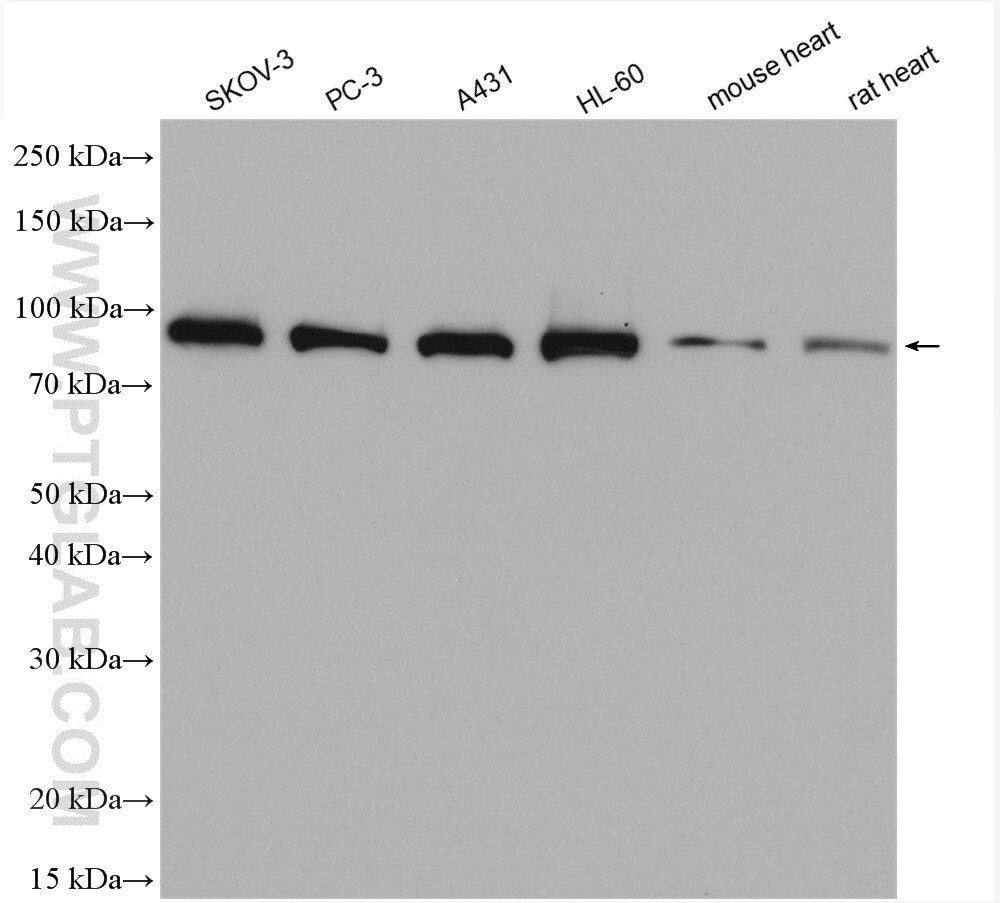
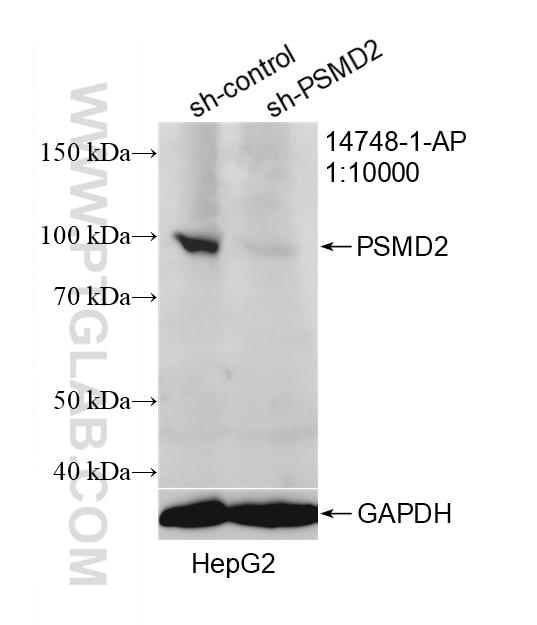
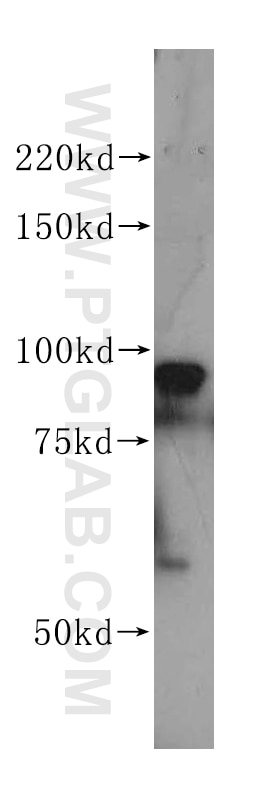
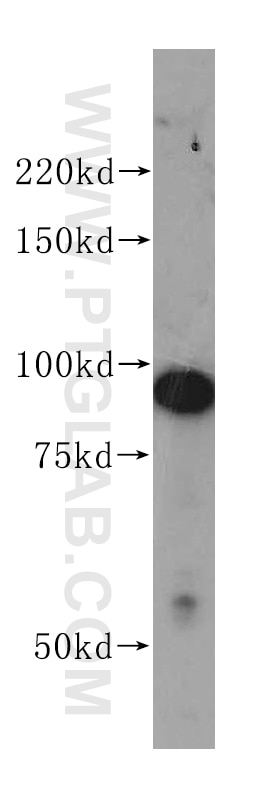
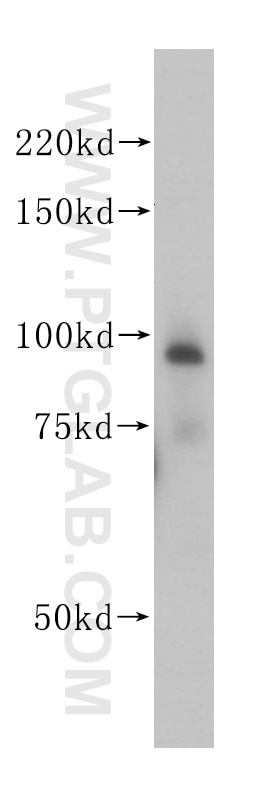
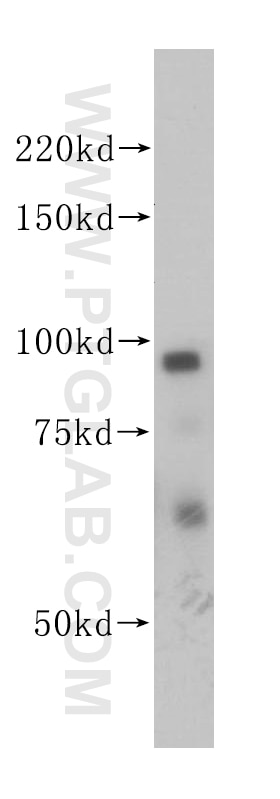
| Positive WB detected in | SKOV-3 cells, HeLa cells, K-562 cells, human heart tissue, mouse skeletal muscle tissue, HepG2 cells |
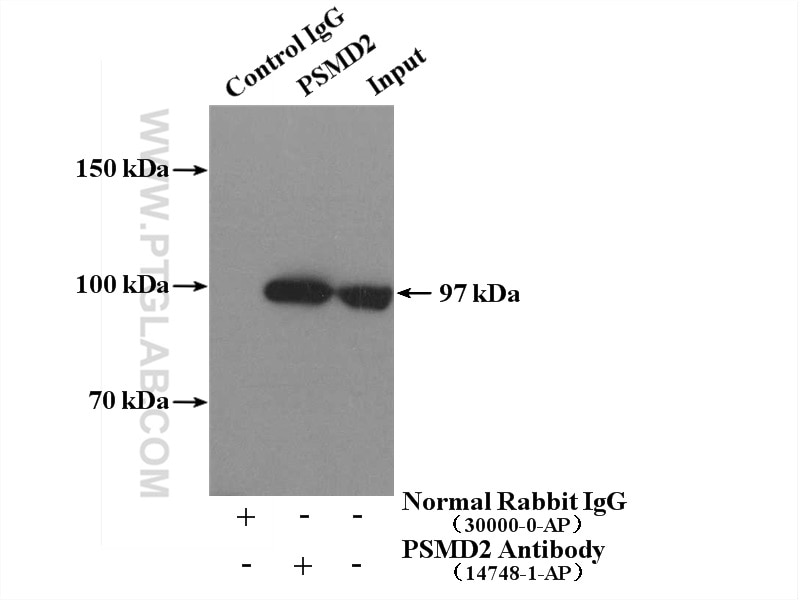
| Positive IP detected in | K-562 cells |
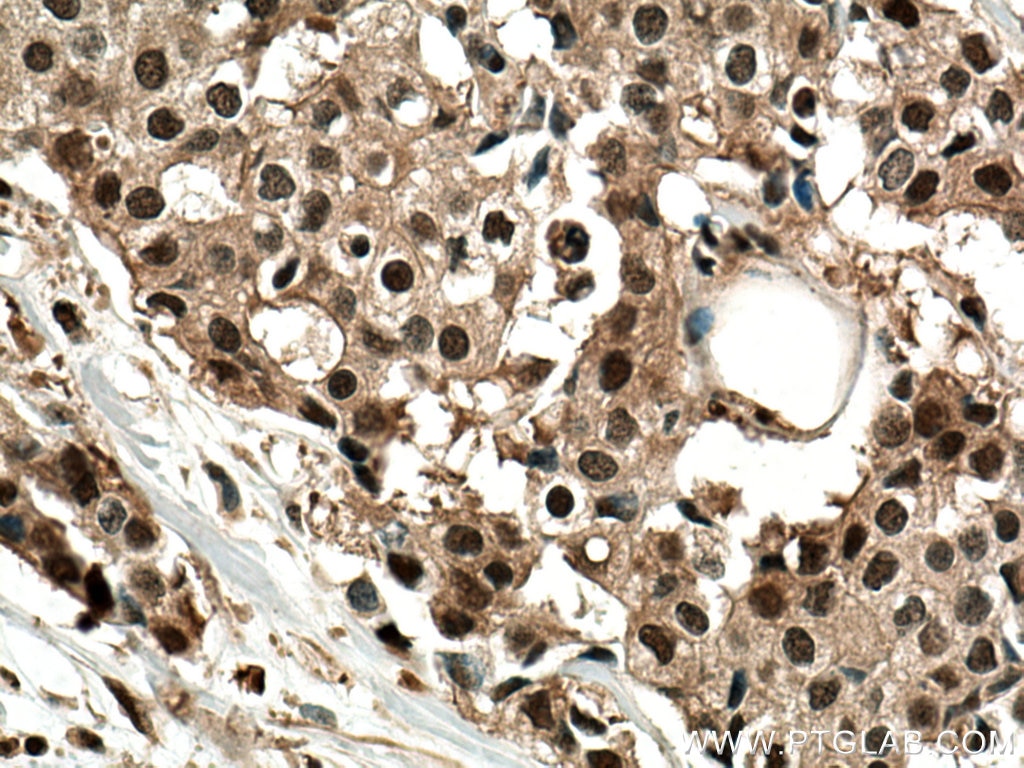
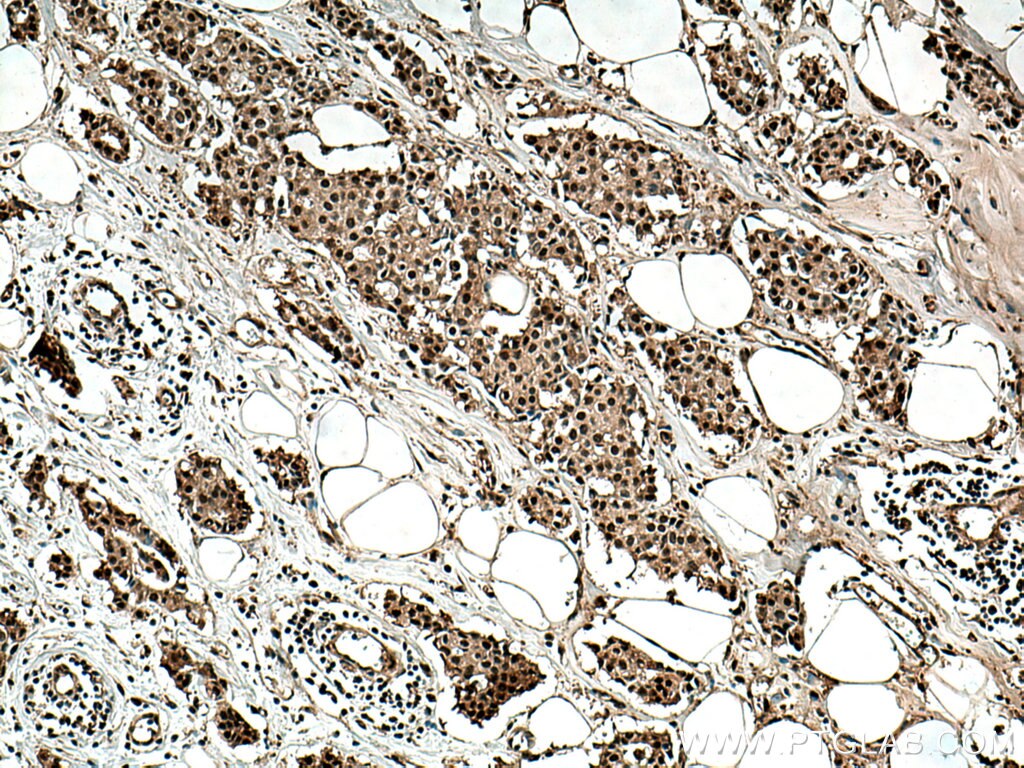
| Positive IHC detected in | human breast cancer tissue Note: suggested antigen retrieval with TE buffer pH 9.0; (*) Alternatively, antigen retrieval may be performed with citrate buffer pH 6.0 |
Recommended dilution
| Application | Dilution |
|---|---|
| Western Blot (WB) | WB : 1:1000-1:4000 |
| Immunoprecipitation (IP) | IP : 0.5-4.0 ug for 1.0-3.0 mg of total protein lysate |
| Immunohistochemistry (IHC) | IHC : 1:50-1:500 |
| It is recommended that this reagent should be titrated in each testing system to obtain optimal results. | |
| Sample-dependent, Check data in validation data gallery. | |
Product Information
14748-1-AP targets PSMD2 in WB, IHC, IF, IP, CoIP, ELISA applications and shows reactivity with human, mouse, rat samples.
| Tested Reactivity | human, mouse, rat |
| Cited Reactivity | human, mouse, pig |
| Host / Isotype | Rabbit / IgG |
| Class | Polyclonal |
| Type | Antibody |
| Immunogen |
CatNo: Ag6484 Product name: Recombinant human PSMD2 protein Source: e coli.-derived, PGEX-4T Tag: GST Domain: 561-908 aa of BC002368 Sequence: GLGLNHLGKGEAIEAILAALEVVSEPFRSFANTLVDVCAYAGSGNVLKVQQLLHICSEHFDSKEKEEDKDKKEKKDKDKKEAPADMGAHQGVAVLGIALIAMGEEIGAEMALRTFGHLLRYGEPTLRRAVPLALALISVSNPRLNILDTLSKFSHDADPEVSYNSIFAMGMVGSGTNNARLAAMLRQLAQYHAKDPNNLFMVRLAQGLTHLGKGTLTLCPYHSDRQLMSQVAVAGLLTVLVSFLDVRNIILGKSHYVLYGLVAAMQPRMLVTFDEELRPLPVSVRVGQAVDVVGQAGKPKTITGFQTHTTPVLLAHGERAELATEEFLPVTPILEGFVILRKNPNYDL Predict reactive species |
| Full Name | proteasome (prosome, macropain) 26S subunit, non-ATPase, 2 |
| Calculated Molecular Weight | 100 kDa |
| Observed Molecular Weight | 100 kDa |
| GenBank Accession Number | BC002368 |
| Gene Symbol | PSMD2 |
| Gene ID (NCBI) | 5708 |
| RRID | AB_2170472 |
| Conjugate | Unconjugated |
| Form | Liquid |
| Purification Method | Antigen affinity purification |
| UNIPROT ID | Q13200 |
| Storage Buffer | PBS with 0.02% sodium azide and 50% glycerol, pH 7.3. |
| Storage Conditions | Store at -20°C. Stable for one year after shipment. Aliquoting is unnecessary for -20oC storage. 20ul sizes contain 0.1% BSA. |
Background Information
Tumor necrosis factor type 1 receptor-associated protein 2 (TRAP2), encoded by PSMD2 gene, is a non-ATPase regulatory subunit of the 26 proteasome which is involved in the ATP-dependent degradation of ubiquitinated proteins. The 26S proteasome is a multicatalytic proteinase complex with a highly ordered structure composed of 2 complexes, a 20S core and a 19S regulator. The 19S regulator is composed of a base, which contains 6 ATPase subunits and 2 non-ATPase subunits, and a lid, which contains up to 10 non-ATPase subunits. TRAP2 may also participate in the TNF signalling pathway since it interacts with the tumor necrosis factor type 1 receptor.
Protocols
| Product Specific Protocols | |
|---|---|
| IHC protocol for PSMD2 antibody 14748-1-AP | Download protocol |
| IP protocol for PSMD2 antibody 14748-1-AP | Download protocol |
| WB protocol for PSMD2 antibody 14748-1-AP | Download protocol |
| Standard Protocols | |
|---|---|
| Click here to view our Standard Protocols |
Publications
What published studies show
Anti-PSMD2 antibody (Cat# 14748-1-AP) has 23 citations published in journals including Cell, Oncogene, Signal Transduction and Targeted Therapy, Journal of Experimental & Clinical Cancer Research, Pharmacological Research, Cell Death & Disease, Cell Communication & Signaling, Biomaterials Research, Journal of Translational Medicine, International Journal of Biological Macromolecules, Environmental Pollution, Cellular and Molecular Life Sciences, Cells, Frontiers in Microbiology, Cell Oncology, Journal of Biological Chemistry, Journal of Virology, Human Molecular Genetics, BMC Molecular Biology, Genes & Diseases, and Heliyon. Research fields span cancer biology, virology, proteasome function, protein degradation, autophagy, and environmental toxicology.
| Species | Application | Title |
|---|---|---|
Signal Transduct Target Ther Glucosidase alpha neutral C promotes influenza virus replication by inhibiting proteosome-dependent degradation of hemagglutinin | ||
Genes Dis The proteasome activator subunit PSME1 promotes HBV replication by inhibiting the degradation of HBV core protein | ||
J Exp Clin Cancer Res AHSA1 is a promising therapeutic target for cellular proliferation and proteasome inhibitor resistance in multiple myeloma. | ||
Pharmacol Res Curcumin modulates β-catenin stabilization via targeting proteasomal deubiquitinating enzyme USP14 | ||
Cell Death Dis DNAJA4 suppresses epithelial-mesenchymal transition and metastasis in nasopharyngeal carcinoma via PSMD2-mediated MYH9 degradation |

