
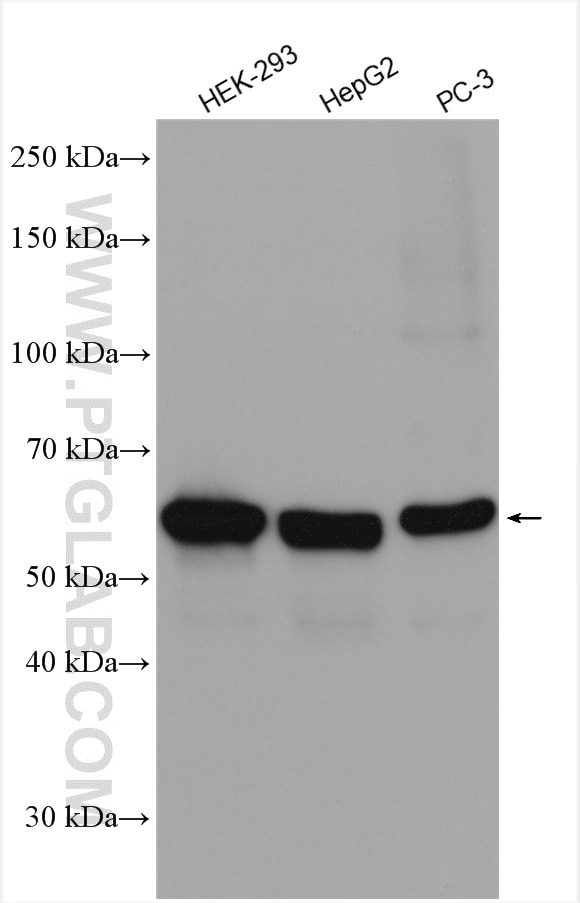
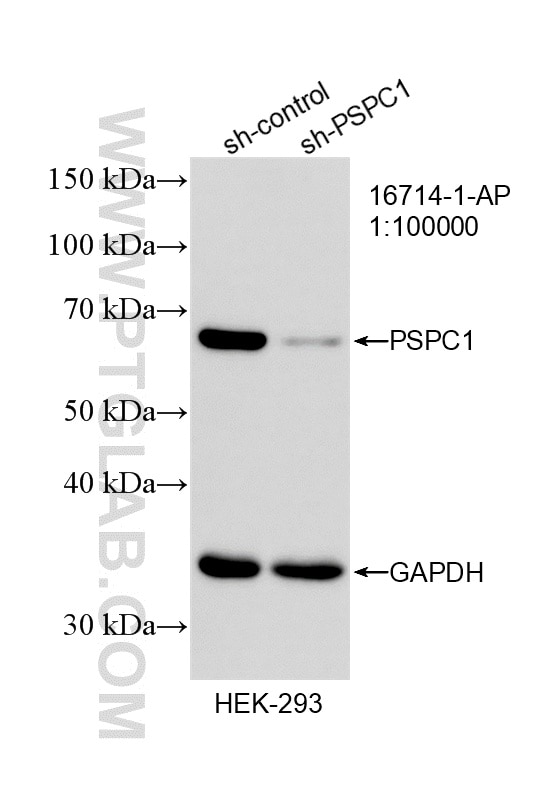

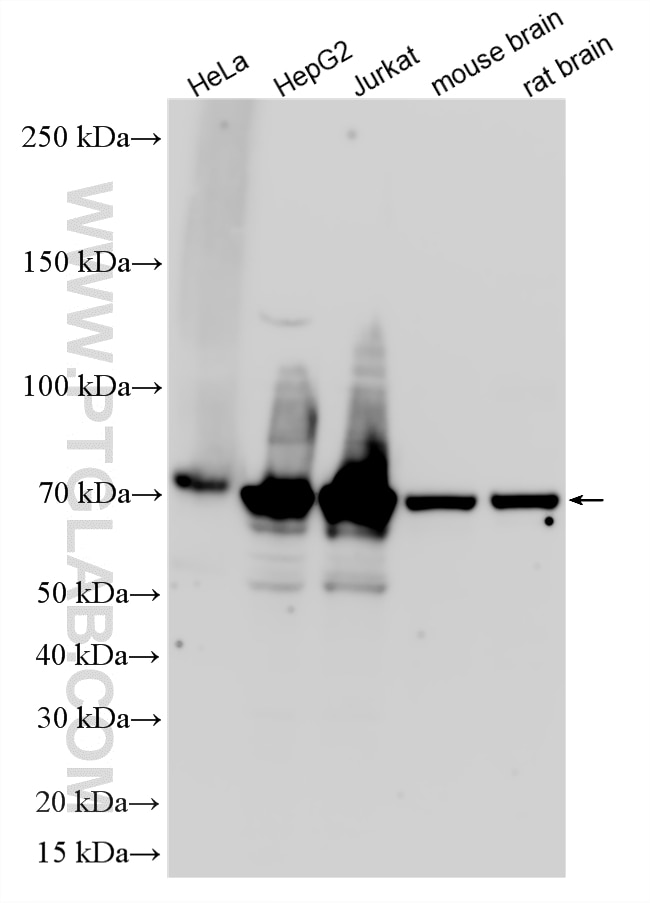
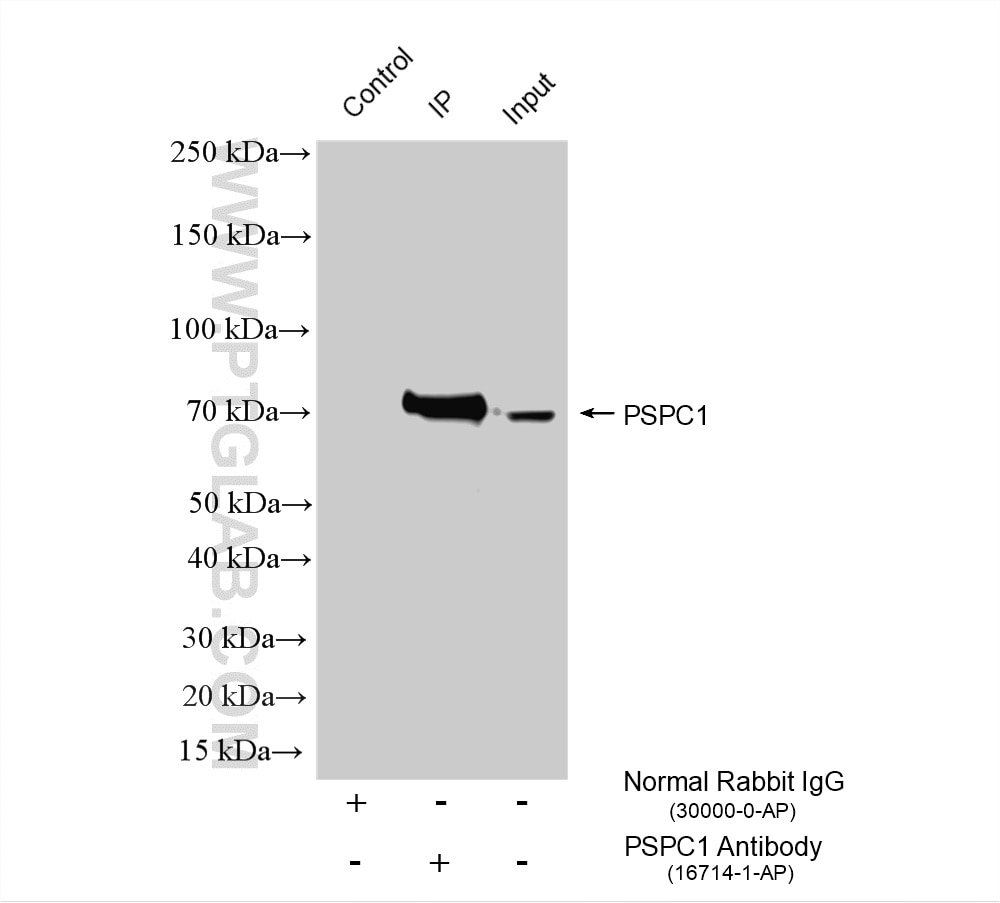



Tested Applications
| Positive WB detected in | HeLa cells, HEK-293 cells, HepG2 cells, PC-3 cells, Jurkat cells, L02 cells, MCF-7 cells, mouse brain tissue, rat brain tissue |
| Positive IP detected in | PC-3 cells |
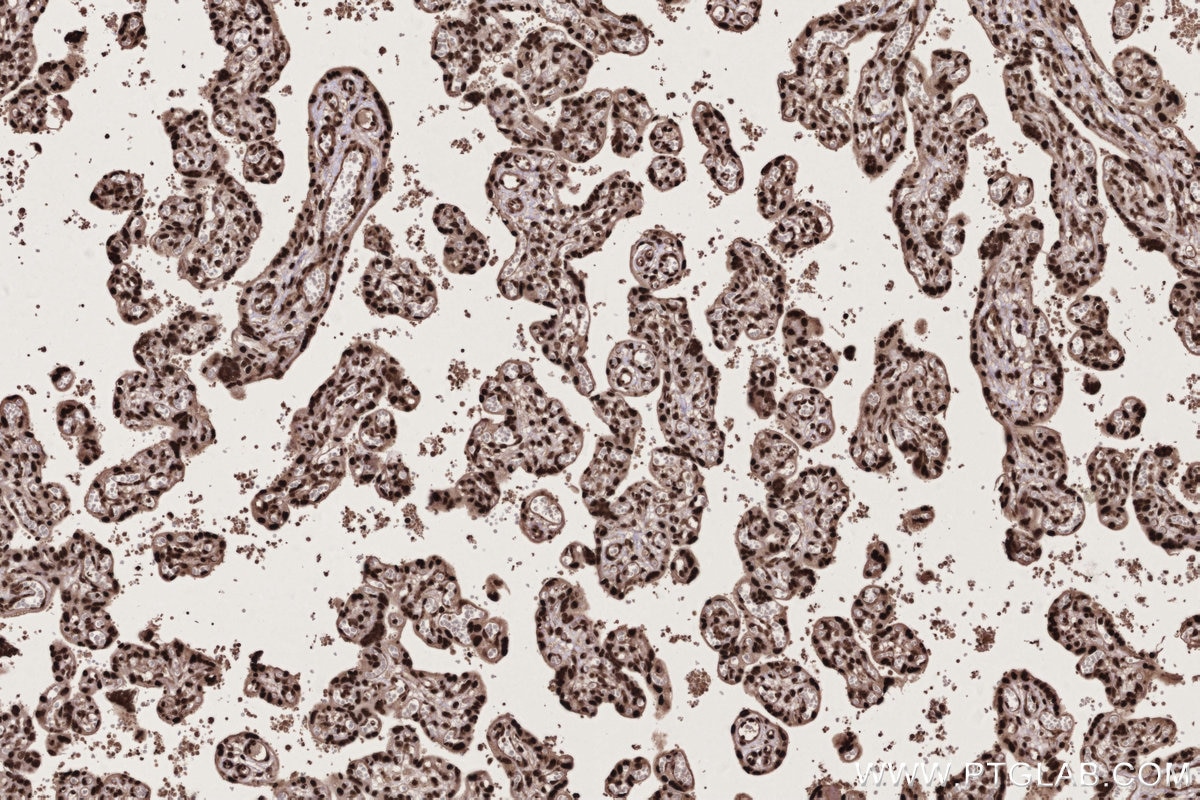
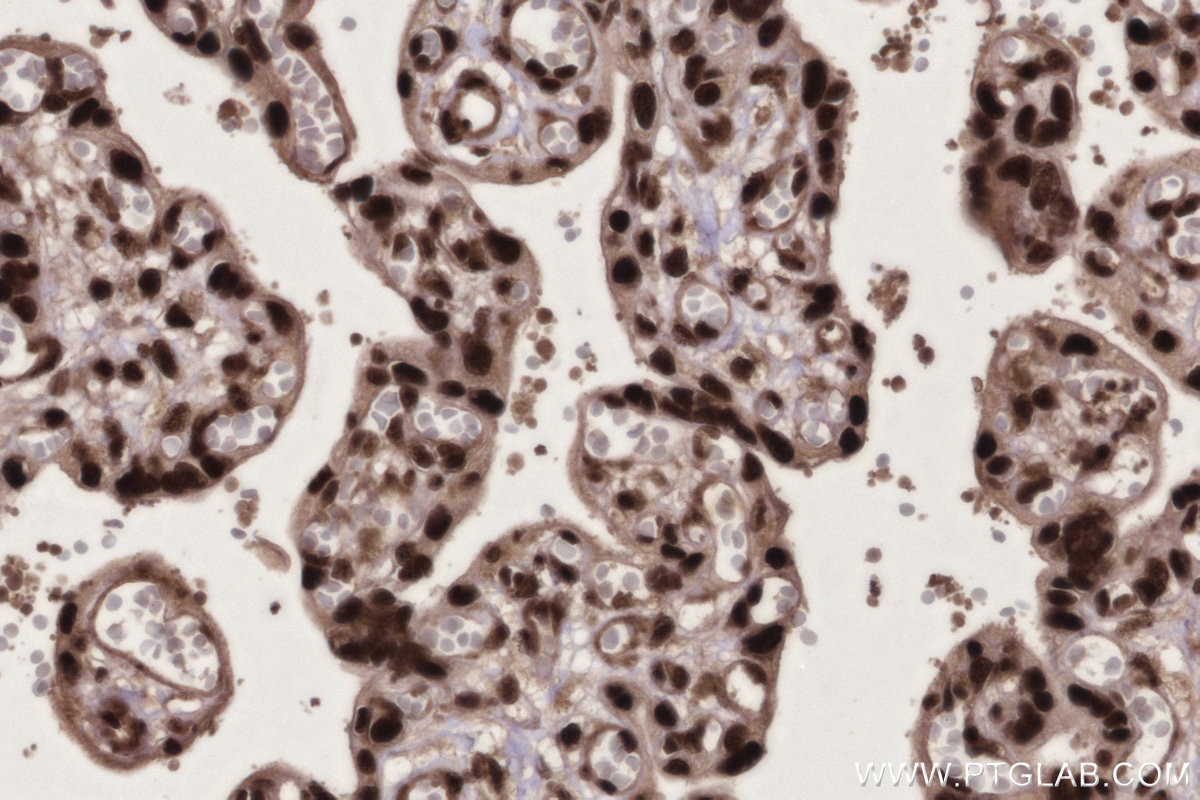
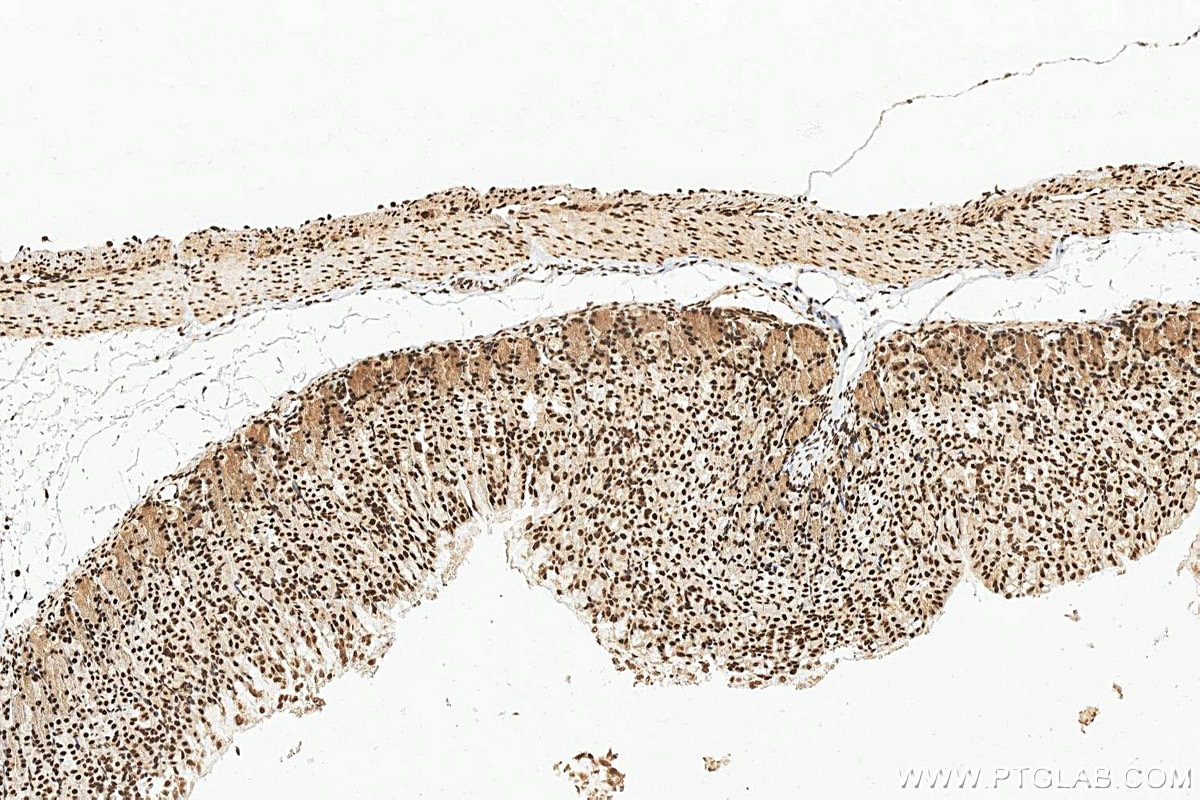
| Positive IHC detected in | human placenta tissue, rat pancreas tissue, mouse kidney tissue, human appendicitis tissue, rat kidney tissue, human rectal cancer tissue, mouse stomach tissue Note: suggested antigen retrieval with TE buffer pH 9.0; (*) Alternatively, antigen retrieval may be performed with citrate buffer pH 6.0 |
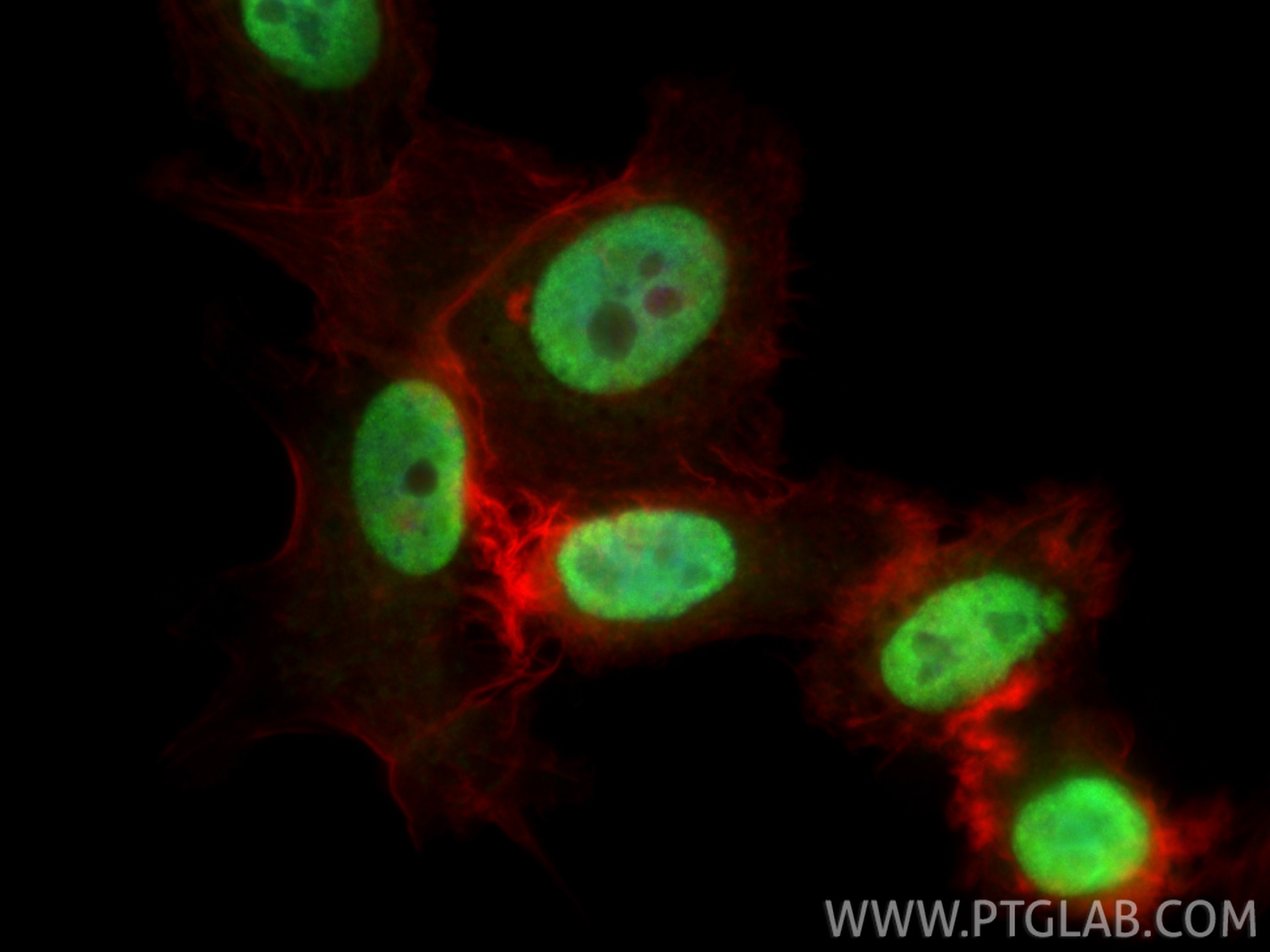
| Positive IF/ICC detected in | PC-3 cells |
Recommended dilution
| Application | Dilution |
|---|---|
| Western Blot (WB) | WB : 1:5000-1:50000 |
| Immunoprecipitation (IP) | IP : 0.5-4.0 ug for 1.0-3.0 mg of total protein lysate |
| Immunohistochemistry (IHC) | IHC : 1:250-1:1000 |
| Immunofluorescence (IF)/ICC | IF/ICC : 1:50-1:500 |
| It is recommended that this reagent should be titrated in each testing system to obtain optimal results. | |
| Sample-dependent, Check data in validation data gallery. | |
Product Information
16714-1-AP targets PSPC1 in WB, IHC, IF/ICC, IP, RIP, ELISA applications and shows reactivity with human, mouse, rat samples.
| Tested Reactivity | human, mouse, rat |
| Cited Reactivity | human, mouse |
| Host / Isotype | Rabbit / IgG |
| Class | Polyclonal |
| Type | Antibody |
| Immunogen |
CatNo: Ag10136 Product name: Recombinant human PSPC1 protein Source: e coli.-derived, PGEX-4T Tag: GST Domain: 1-351 aa of BC014184 Sequence: MMLRGNLKQVRIEKNPARLRALESAVGESEPAAAAAMALALAGEPAPPAPAPPEDHPDEEMGFTIDIKSFLKPGEKTYTQRCRLFVGNLPTDITEEDFKRLFERYGEPSEVFINRDRGFGFIRLESRTLAEIAKAELDGTILKSRPLRIRFATHGAALTVKNLSPVVSNELLEQAFSQFGPVEKAVVVVDDRGRATGKGFVEFAAKPPARKALERCGDGAFLLTTTPRPVIVEPMEQFDDEDGLPEKLMQKTQQYHKEREQPPRFAQPGTFEFEYASRWKALDEMEKQQREQVDRNIREAKEKLEAEMEAARHEHQLMLMRQDLMRRQEELRRLEELRNQELQKRKQIQLR Predict reactive species |
| Full Name | paraspeckle component 1 |
| Calculated Molecular Weight | 523 aa, 59 kDa |
| Observed Molecular Weight | 66 kDa |
| GenBank Accession Number | BC014184 |
| Gene Symbol | PSPC1 |
| Gene ID (NCBI) | 55269 |
| RRID | AB_2878302 |
| Conjugate | Unconjugated |
| Form | Liquid |
| Purification Method | Antigen affinity purification |
| UNIPROT ID | Q8WXF1 |
| Storage Buffer | PBS with 0.02% sodium azide and 50% glycerol, pH 7.3. |
| Storage Conditions | Store at -20°C. Stable for one year after shipment. Aliquoting is unnecessary for -20oC storage. 20ul sizes contain 0.1% BSA. |
Background Information
PSPC1 (paraspeckle component 1), a known paraspeckle biomarker, is a putative transcription factor that belongs to the Drosophila behavior/human splicing (DBHS) family. PSPC1 was recently identified as a contextual determinant of tumor progression in multiple cancer types involving oncogenic reprogramming to switch proapoptotic TGF-β to prometastatic TGF-β via hijacking of Smad2/3 targeting. Upregulated PSPC1 is correlated with advanced tumor stages and poor survival of patients with breast, lung, and liver cancers. Upregulated PSPC1 potentiates expression of mesenchymal markers, EMT transcription factors (EMT-TF), cancer stem-like cell transcription factors (CSC-TF), and c-Myc-related proliferation genes, thus promoting migration, invasion, spheroid formation, tumor formation, and metastasis.
Protocols
| Product Specific Protocols | |
|---|---|
| IF protocol for PSPC1 antibody 16714-1-AP | Download protocol |
| IHC protocol for PSPC1 antibody 16714-1-AP | Download protocol |
| IP protocol for PSPC1 antibody 16714-1-AP | Download protocol |
| WB protocol for PSPC1 antibody 16714-1-AP | Download protocol |
| Standard Protocols | |
|---|---|
| Click here to view our Standard Protocols |
Publications
What published studies show
The PSPC1 Polyclonal antibody (Cat# 16714-1-AP) has 13 citations. They appear in Nature Metabolism, Nature Microbiology, Nature Communications, Drug Resistance Updates, Nucleic Acids Research, Cell Death & Disease, Cancer Letters, Cell Communication and Signaling, International Journal of Molecular Sciences, and Journal of Biological Chemistry. Research fields span paraspeckle biology, RNA metabolism and m6A modification, cancer (pancreatic, colorectal), viral infection, and neuronal function.
| Species | Application | Title |
|---|---|---|
Nat Metab Proline exacerbates hepatic gluconeogenesis via paraspeckle-dependent mRNA retention | ||
Drug Resist Updat Cell membrane-camouflaged bufalin targets NOD2 and overcomes multidrug resistance in pancreatic cancer | ||
Nat Microbiol Mapping in-cell protein contact sites reveals hijacking of paraspeckles during influenza A virus infection. | ||
Nat Commun Virus-modified paraspeckle-like condensates are hubs for viral RNA processing and their formation drives genomic instability | ||
Nat Commun K235 acetylation couples with PSPC1 to regulate the m6A demethylation activity of ALKBH5 and tumorigenesis |


