


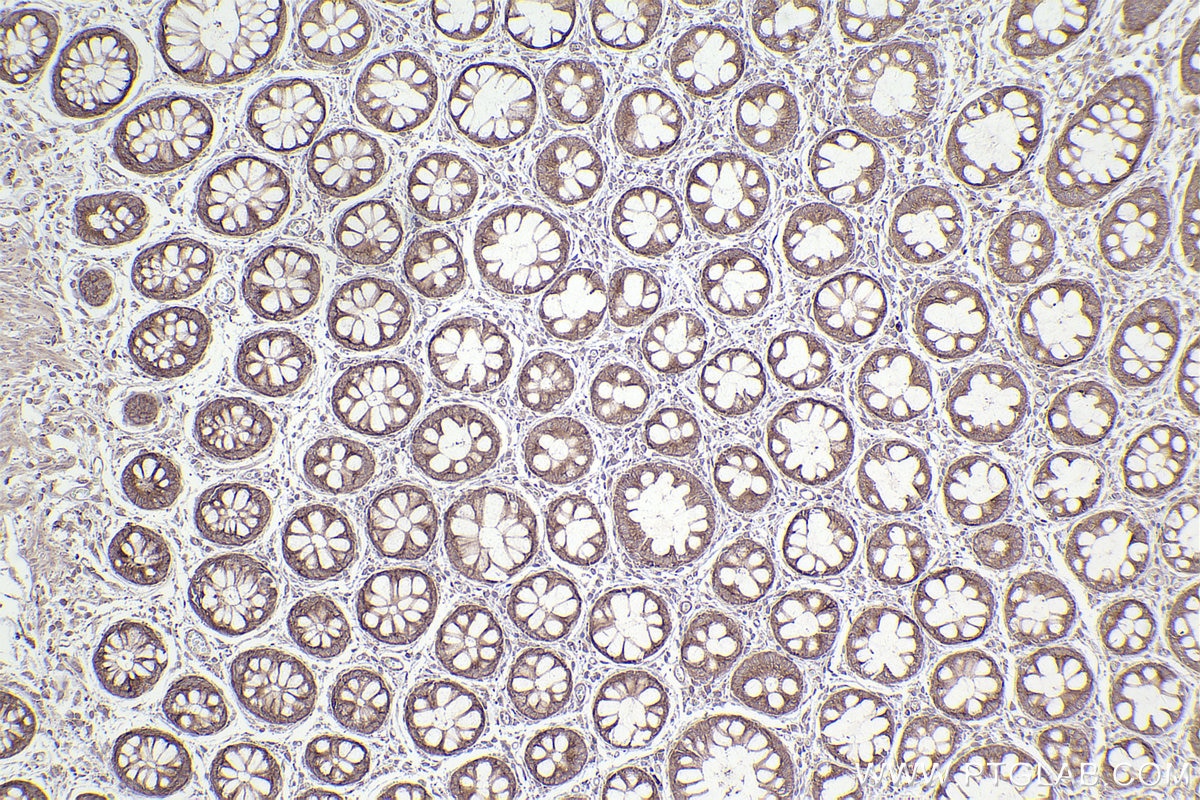
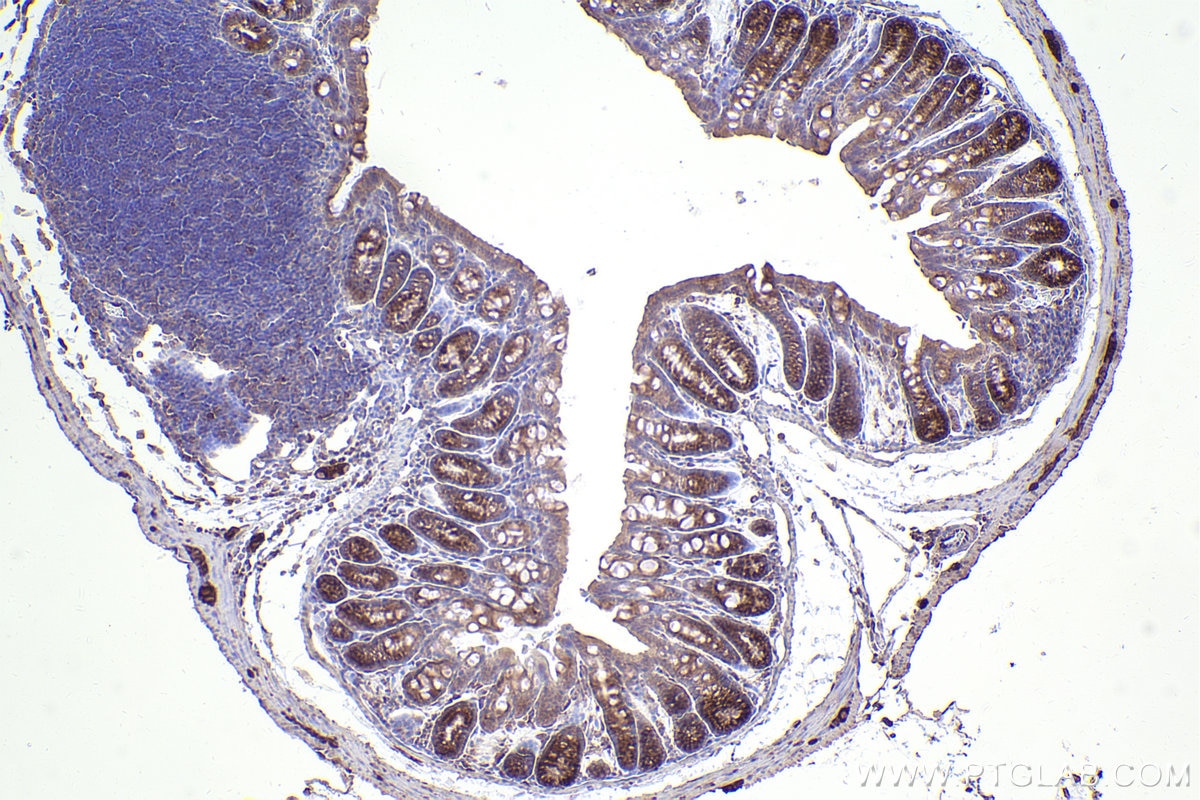
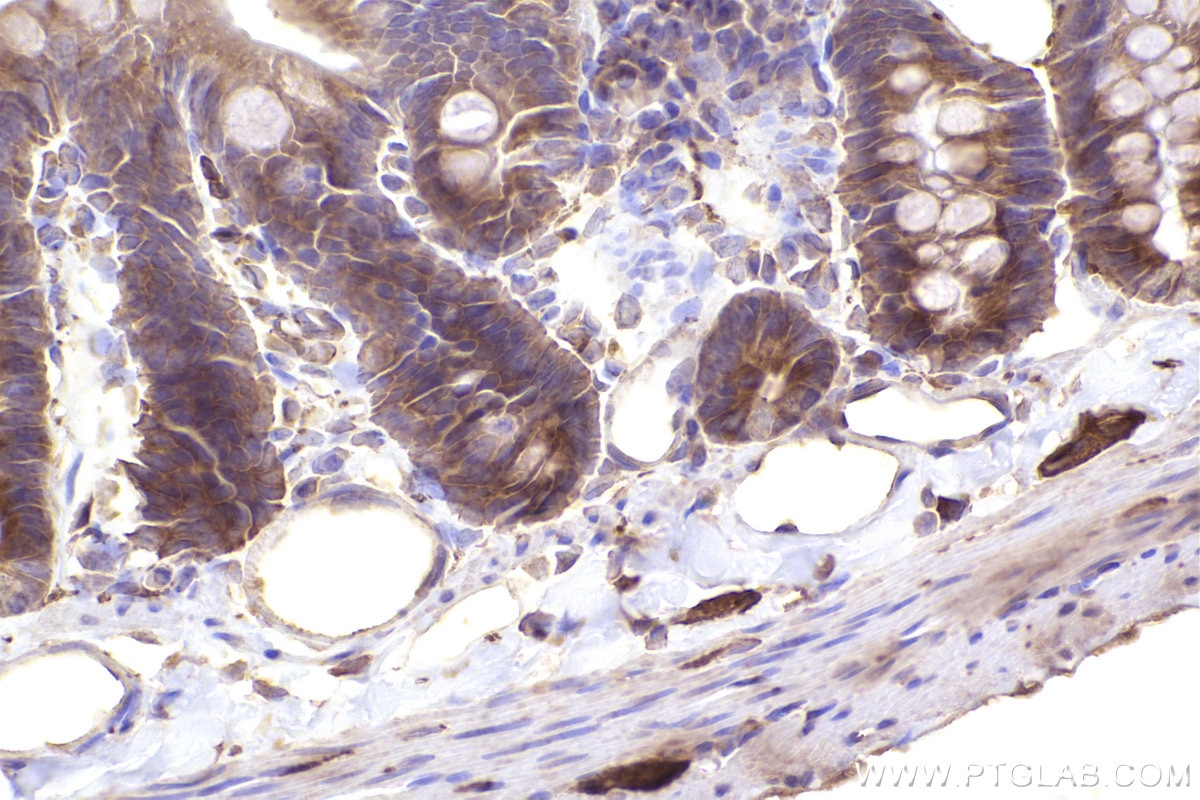


Tested Applications
| Positive WB detected in | MCF-7 cells |
| Positive IP detected in | MCF-7 cells |
| Positive IHC detected in | human rectal cancer tissue, mouse colon tissue, rat small intestine tissue Note: suggested antigen retrieval with TE buffer pH 9.0; (*) Alternatively, antigen retrieval may be performed with citrate buffer pH 6.0 |
| Positive IF/ICC detected in | MCF-7 cells |
Recommended dilution
| Application | Dilution |
|---|---|
| Western Blot (WB) | WB : 1:1000-1:4000 |
| Immunoprecipitation (IP) | IP : 0.5-4.0 ug for 1.0-3.0 mg of total protein lysate |
| Immunohistochemistry (IHC) | IHC : 1:500-1:2000 |
| Immunofluorescence (IF)/ICC | IF/ICC : 1:50-1:500 |
| It is recommended that this reagent should be titrated in each testing system to obtain optimal results. | |
| Sample-dependent, Check data in validation data gallery. | |
Product Information
26256-1-AP targets PUM1 in WB, IHC, IF/ICC, IP, ELISA applications and shows reactivity with human, mouse, rat samples.
| Tested Reactivity | human, mouse, rat |
| Cited Reactivity | human, pig |
| Host / Isotype | Rabbit / IgG |
| Class | Polyclonal |
| Type | Antibody |
| Immunogen |
CatNo: Ag24651 Product name: Recombinant human PUM1 protein Source: e coli.-derived, PGEX-4T Tag: GST Domain: 1-128 aa of BC013398 Sequence: MSVACVLKRKAVLWQDSFSPHLKHHPQEPANPNMPVVLTSGTGSQAQPQPAANQALAAGTHSSPVPGSIGVAGRSQDDAMVDYFFQRQHGEQLGGGGSGGGGYNNSKHRWPTGDNIHAEHQVRSMDEL Predict reactive species |
| Full Name | pumilio homolog 1 (Drosophila) |
| Calculated Molecular Weight | 1186 aa, 126 kDa |
| Observed Molecular Weight | 130-140 kDa |
| GenBank Accession Number | BC013398 |
| Gene Symbol | PUM1 |
| Gene ID (NCBI) | 9698 |
| RRID | AB_2880448 |
| Conjugate | Unconjugated |
| Form | Liquid |
| Purification Method | Antigen affinity purification |
| UNIPROT ID | Q14671 |
| Storage Buffer | PBS with 0.02% sodium azide and 50% glycerol, pH 7.3. |
| Storage Conditions | Store at -20°C. Stable for one year after shipment. Aliquoting is unnecessary for -20oC storage. 20ul sizes contain 0.1% BSA. |
Background Information
PUM1, also named as Pumilio homolog 1, is a 1186 amino acid protein, which is expressed in brain, heart, kidney, muscle, intestine and stomach. PUM1 as sequence-specific RNA-binding protein that acts as a post-transcriptional repressor by binding the 3'-UTR of mRNA targets. PUM1 binds to an RNA consensus sequence, the Pumilio Response Element (PRE), 5'-UGUANAUA-3', that is related to the Nanos Response Element (NRE). The calculated molecular weight of PUM1 is 126 kDa, but the modified PUM1 is about 130-140 kDa.
Protocols
| Product Specific Protocols | |
|---|---|
| IF protocol for PUM1 antibody 26256-1-AP | Download protocol |
| IHC protocol for PUM1 antibody 26256-1-AP | Download protocol |
| IP protocol for PUM1 antibody 26256-1-AP | Download protocol |
| WB protocol for PUM1 antibody 26256-1-AP | Download protocol |
| Standard Protocols | |
|---|---|
| Click here to view our Standard Protocols |
Publications
What published studies show
The PUM1 Polyclonal antibody (Cat# 26256-1-AP) has 4 citations. These appear in Cell Mol Life Sci, Carcinogenesis, Biochem Biophys Res Commun, and bioRxiv. Research fields span virology (FMDV infection and viral noncoding RNA regulation), oncology (colorectal cancer progression via Wnt/β-catenin signaling, and ovarian cancer proliferation, migration, and invasion), and molecular biology. Applications include WB and IHC, with studies in pig and human samples.
| Species | Application | Title |
|---|---|---|
Cell Mol Life Sci Prolyl endopeptidase is a multifunctional host factor required for FMDV infection.
| ||
Carcinogenesis PAUF/ZG16B promotes colorectal cancer progression through alterations of the mitotic functions and the Wnt/β-catenin pathway. | ||
Biochem Biophys Res Commun PUM1 promotes ovarian cancer proliferation, migration and invasion.
| ||


