

Tested Applications
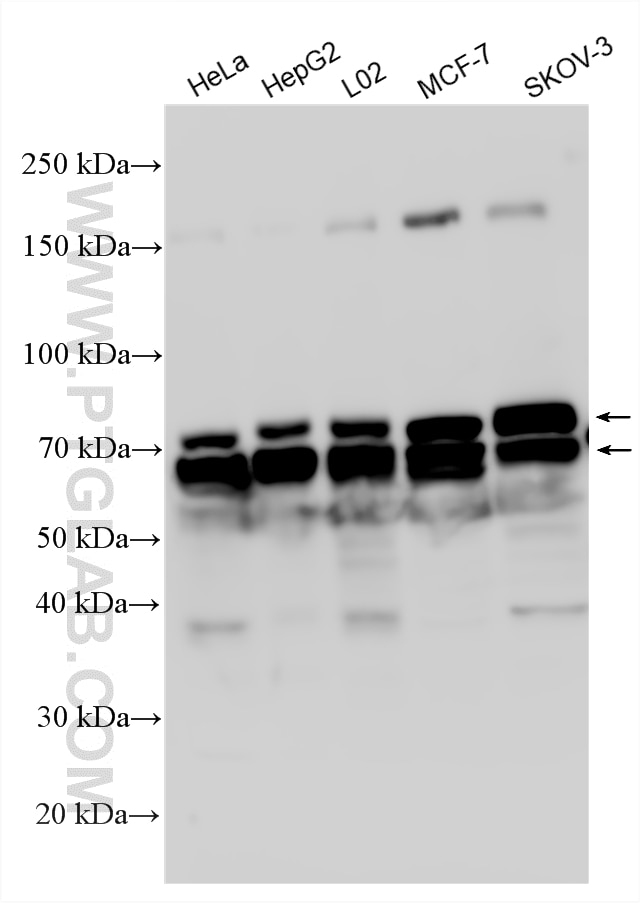
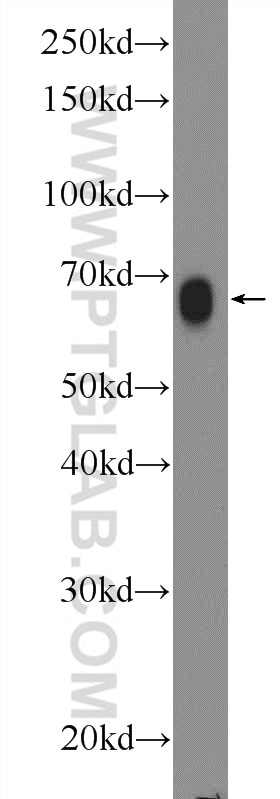
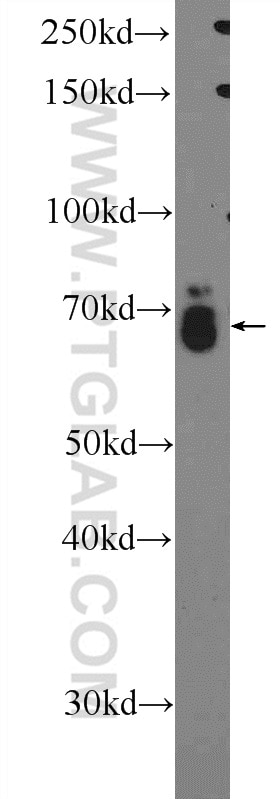
| Positive WB detected in | HeLa cells, COS-7 cells, SKOV-3 cells, HepG2 cells, L02 cells, MCF-7 cells |
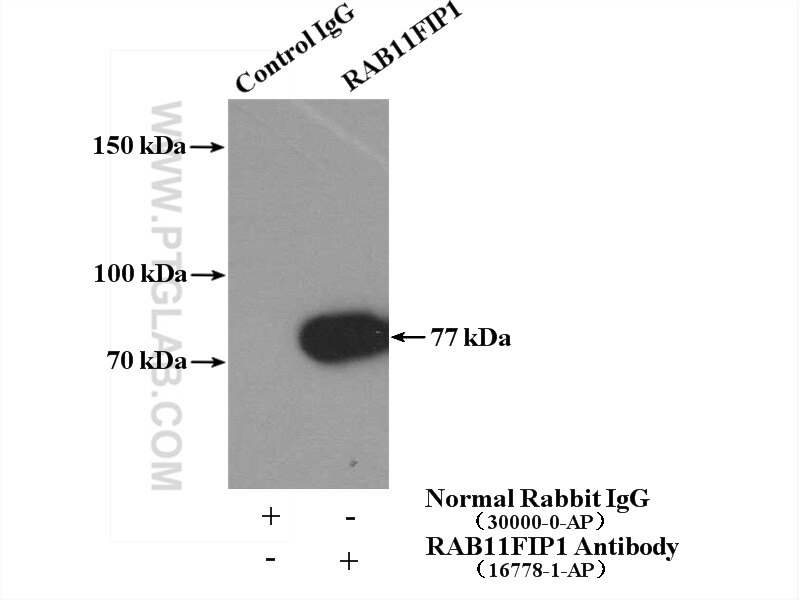
| Positive IP detected in | HepG2 cells |
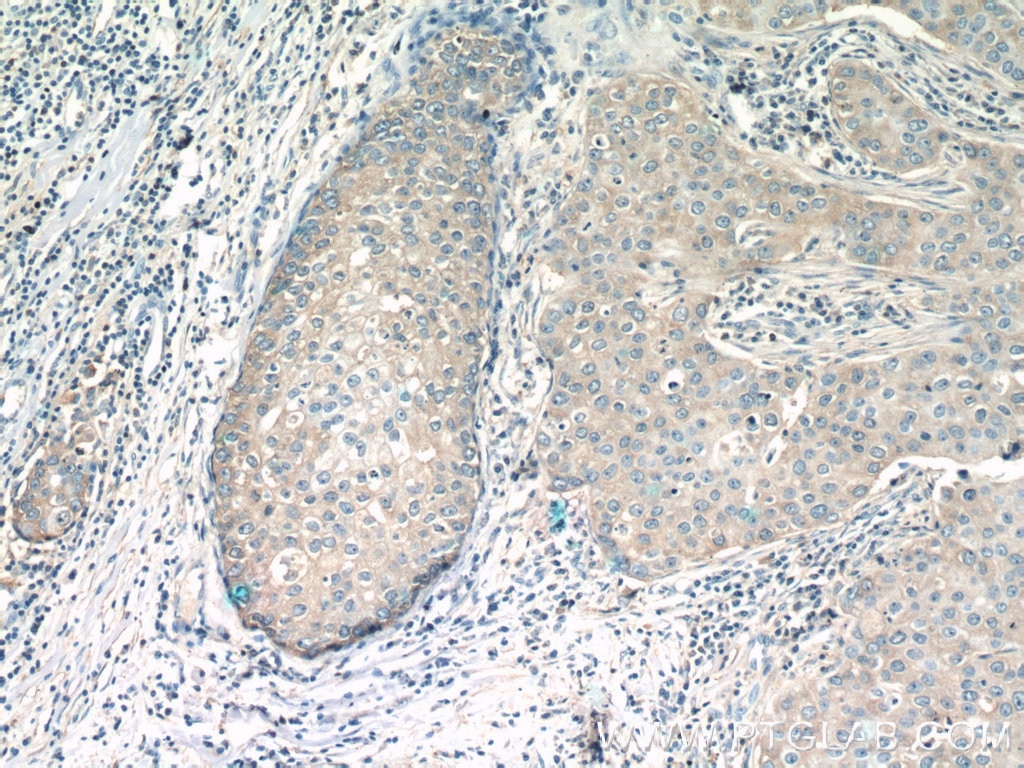
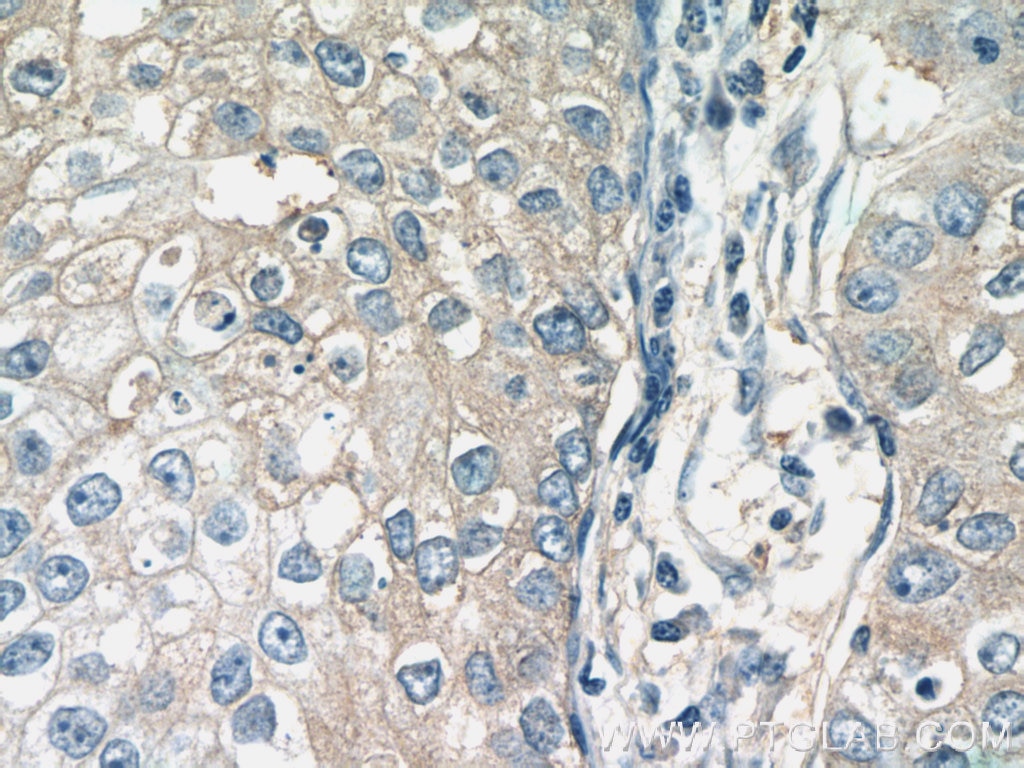
| Positive IHC detected in | human breast cancer tissue Note: suggested antigen retrieval with TE buffer pH 9.0; (*) Alternatively, antigen retrieval may be performed with citrate buffer pH 6.0 |
Recommended dilution
| Application | Dilution |
|---|---|
| Western Blot (WB) | WB : 1:500-1:1000 |
| Immunoprecipitation (IP) | IP : 0.5-4.0 ug for 1.0-3.0 mg of total protein lysate |
| Immunohistochemistry (IHC) | IHC : 1:20-1:200 |
| It is recommended that this reagent should be titrated in each testing system to obtain optimal results. | |
| Sample-dependent, Check data in validation data gallery. | |
Product Information
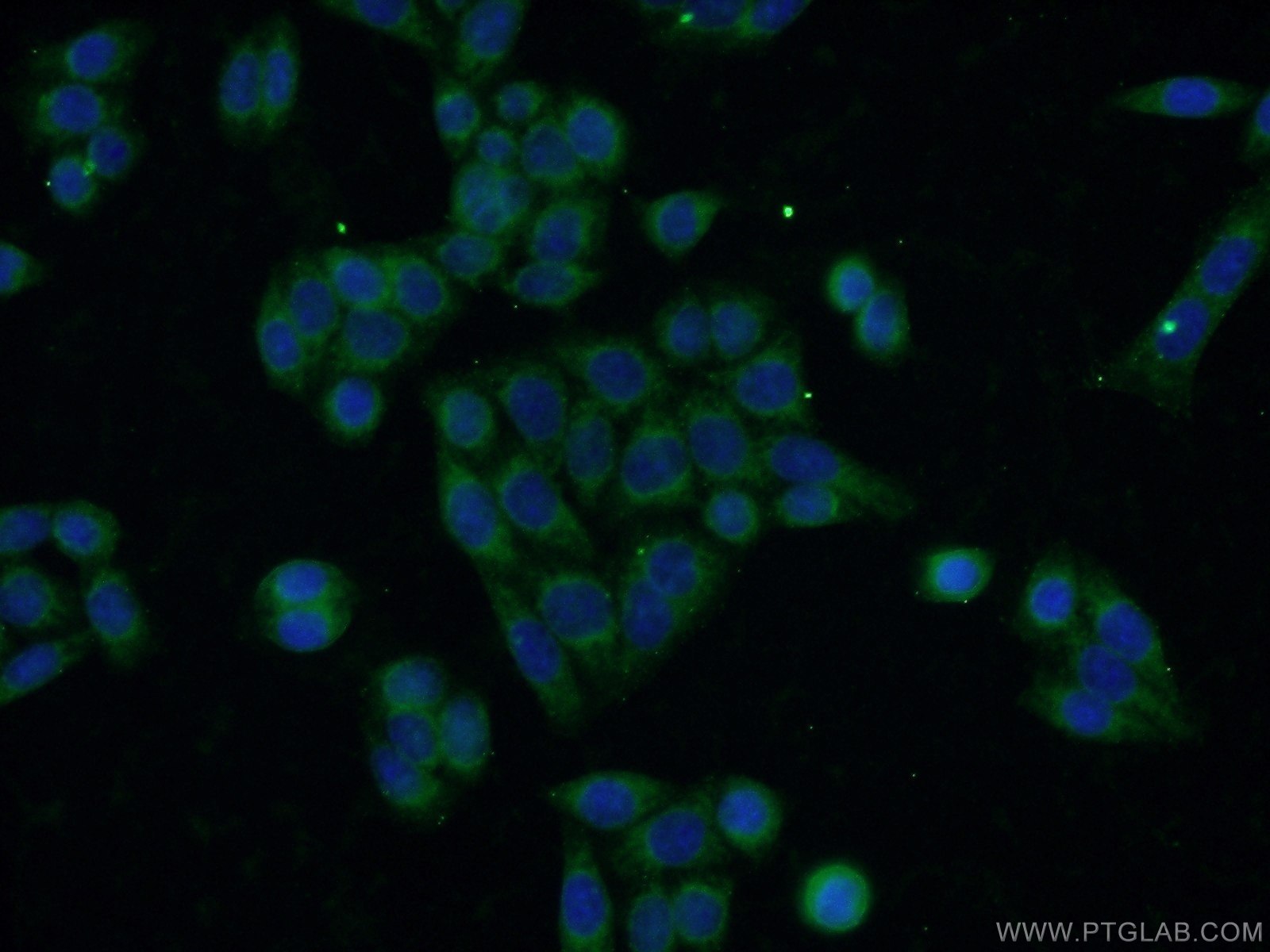
16778-1-AP targets RAB11FIP1 in WB, IHC, IF, IP, RIP, ELISA applications and shows reactivity with human, mouse, rat, monkey samples.
| Tested Reactivity | human, mouse, rat, monkey |
| Cited Reactivity | human, mouse, rat |
| Host / Isotype | Rabbit / IgG |
| Class | Polyclonal |
| Type | Antibody |
| Immunogen |
CatNo: Ag10179 Product name: Recombinant human RAB11FIP1 protein Source: e coli.-derived, PGEX-4T Tag: GST Domain: 300-650 aa of BC077720 Sequence: SFLGGLRSKNDVLSRSNVCINGNHVYLEQPEAKGEIKDSSPSSSPSPKGFRKKHLFSSTENLAAGSWKEPAEGGGLSSDRQLSESSTKDSLKSMTLPSYRPAPLVSGDLRENMAPANSEATKEAKESKKPESRRSSLLSLMTGKKDVAKGSEGENPLTVPGREKEGMLMGVKPGEDASGPAEDLVRRSEKDTAAVVSRQGSSLNLFEDVQITEPEAEPESKSEPRPPISSPRAPQTRAVKPRLHPVKPMNAMATKVANCSLGTATIISENLNNEVMMKKYSPSDPAFAYAQLTHDELIQLVLKQKETISKKEFQVRELEDYIDNLLVRVMEETPNILRIPTQVGKKAGKM Predict reactive species |
| Full Name | RAB11 family interacting protein 1 (class I) |
| Calculated Molecular Weight | 649aa,71 kDa; 1283aa,137 kDa |
| Observed Molecular Weight | 71 kDa |
| GenBank Accession Number | BC077720 |
| Gene Symbol | RAB11FIP1 |
| Gene ID (NCBI) | 80223 |
| RRID | AB_2878315 |
| Conjugate | Unconjugated |
| Form | Liquid |
| Purification Method | Antigen affinity purification |
| UNIPROT ID | Q6WKZ4 |
| Storage Buffer | PBS with 0.02% sodium azide and 50% glycerol, pH 7.3. |
| Storage Conditions | Store at -20°C. Stable for one year after shipment. Aliquoting is unnecessary for -20oC storage. 20ul sizes contain 0.1% BSA. |
Protocols
| Product Specific Protocols | |
|---|---|
| IF protocol for RAB11FIP1 antibody 16778-1-AP | Download protocol |
| IHC protocol for RAB11FIP1 antibody 16778-1-AP | Download protocol |
| IP protocol for RAB11FIP1 antibody 16778-1-AP | Download protocol |
| WB protocol for RAB11FIP1 antibody 16778-1-AP | Download protocol |
| Standard Protocols | |
|---|---|
| Click here to view our Standard Protocols |
Publications
What published studies show
The RAB11FIP1 Polyclonal antibody (Cat# 16778-1-AP) has 7 total citations. These appear in journals including Molecular Cancer, Cancer Research, Cancer Letters, ACS Applied Materials & Interfaces, Cell Reports, Briefings in Bioinformatics, and American Journal of Cancer Research. The associated research fields span cancer biology—covering pancreatic, bladder, head and neck, and colon cancers—along with ferroptosis, osteogenesis, exosomal Wnt signaling, and circRNA/miRNA regulatory networks. Applications include Western blot, immunofluorescence, RIP, and IHC across human, mouse, and rat species.
| Species | Application | Title |
|---|---|---|
Mol Cancer CircRTN4 promotes pancreatic cancer progression through a novel CircRNA-miRNA-lncRNA pathway and stabilizing epithelial-mesenchymal transition protein | ||
Cancer Res CircFOXK2 Promotes Growth and Metastasis of Pancreatic Ductal Adenocarcinoma by Complexing with RNA Binding Proteins and Sponging MiR-942. | ||
Cancer Lett Mitochondria-located circRCP regulates redox homeostasis via stabilizing LRPPRC/SLIRP complex to promote bladder urothelial carcinoma tumorigenesis. | ||
ACS Appl Mater Interfaces Lithium Promotes Osteogenesis via Rab11a-Facilitated Exosomal Wnt10a Secretion and β-Catenin Signaling Activation | ||
Cell Rep USP52-RAB11FIP5 axis suppresses ferroptosis by repressing transferrin receptor recycling in head and neck squamous cell carcinoma
| ||
Brief Bioinform mi-IsoNet: systems-scale microRNA landscape reveals rampant isoform-mediated gain of target interaction diversity and signaling specificity. |

