

Tested Applications
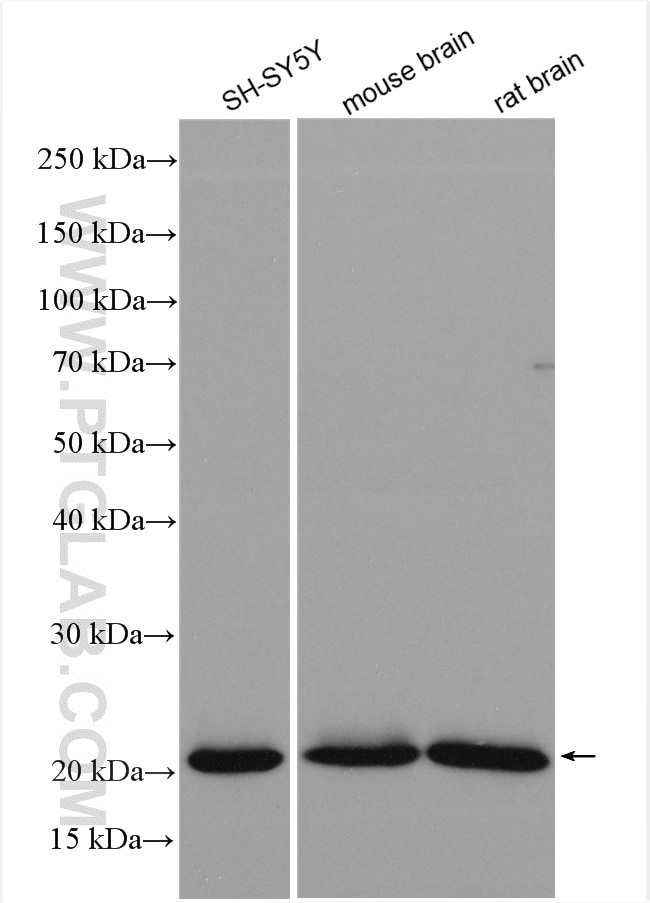
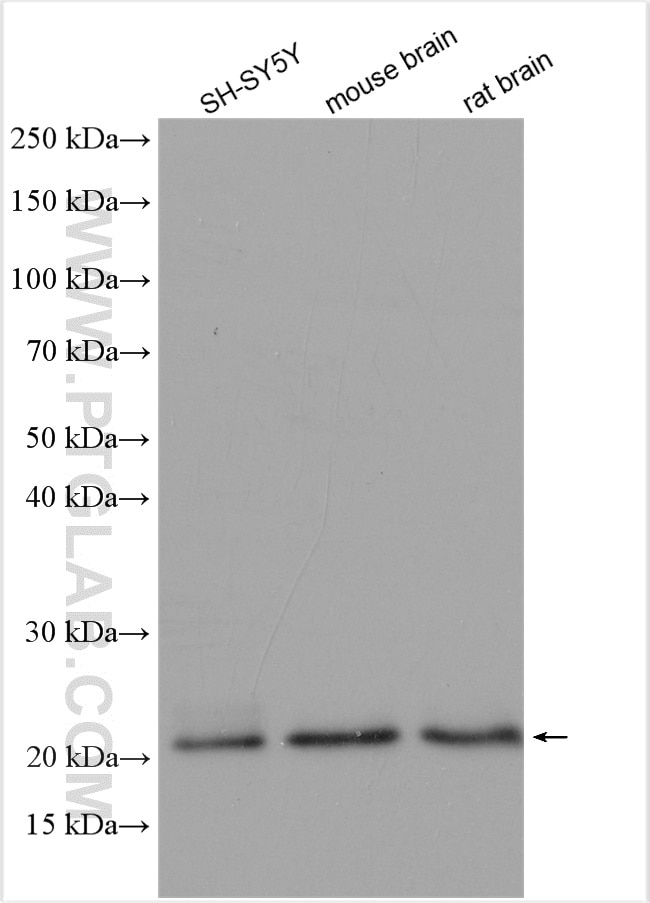
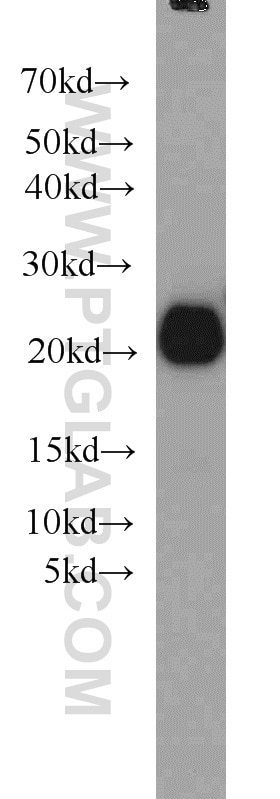
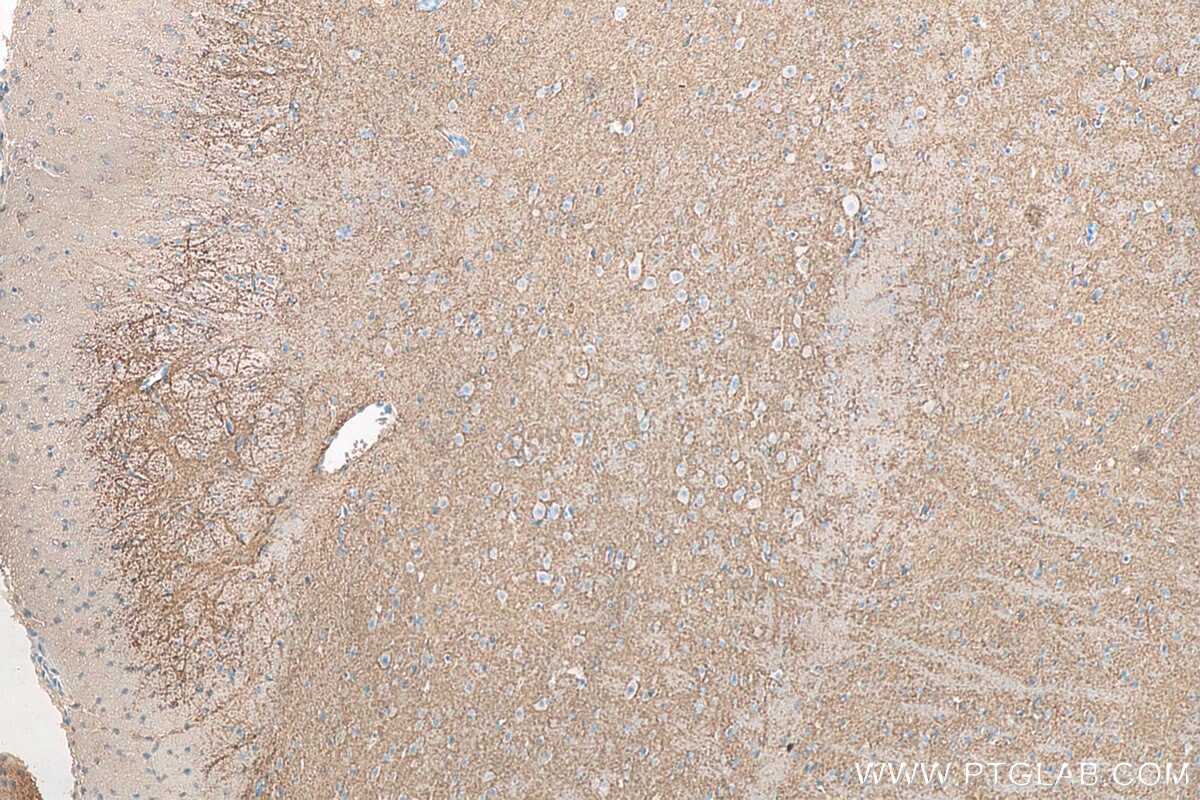
| Positive WB detected in | SH-SY5Y cells, human brain tissue, mouse brain tissue, rat brain tissue |
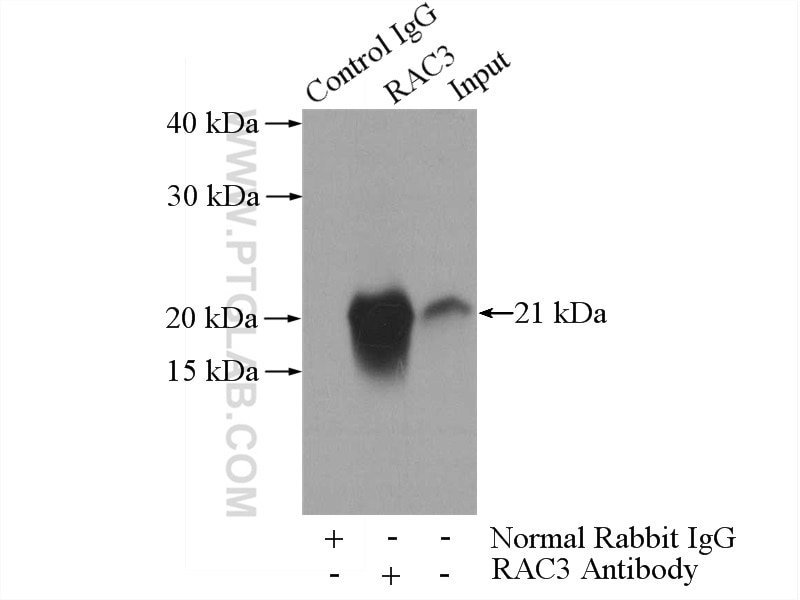
| Positive IP detected in | mouse brain tissue |
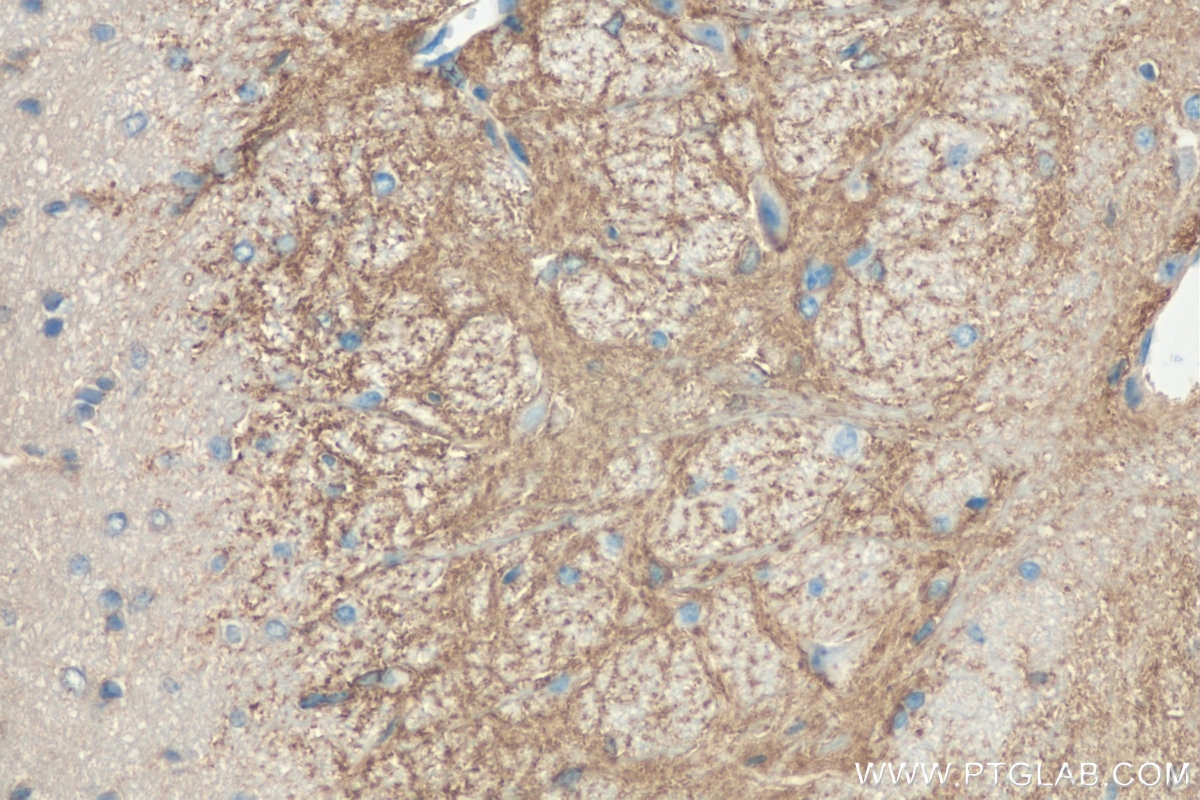
| Positive IHC detected in | mouse brain tissue Note: suggested antigen retrieval with TE buffer pH 9.0; (*) Alternatively, antigen retrieval may be performed with citrate buffer pH 6.0 |
Recommended dilution
| Application | Dilution |
|---|---|
| Western Blot (WB) | WB : 1:2000-1:10000 |
| Immunoprecipitation (IP) | IP : 0.5-4.0 ug for 1.0-3.0 mg of total protein lysate |
| Immunohistochemistry (IHC) | IHC : 1:50-1:500 |
| It is recommended that this reagent should be titrated in each testing system to obtain optimal results. | |
| Sample-dependent, Check data in validation data gallery. | |
Product Information
16117-1-AP targets RAC1/2/3 in WB, IHC, IP, ELISA applications and shows reactivity with human, mouse, rat samples.
| Tested Reactivity | human, mouse, rat |
| Cited Reactivity | human, mouse |
| Host / Isotype | Rabbit / IgG |
| Class | Polyclonal |
| Type | Antibody |
| Immunogen |
CatNo: Ag9045 Product name: Recombinant human RAC1/2/3 protein Source: e coli.-derived, PGEX-4T Tag: GST Domain: 1-192 aa of BC015197 Sequence: MQAIKCVVVGDGAVGKTCLLISYTTNAFPGEYIPTVFDNYSANVMVDGKPVNLGLWDTAGQEDYDRLRPLSYPQTDVFLICFSLVSPASFENVRAKWYPEVRHHCPHTPILLVGTKLDLRDDKDTIERLRDKKLAPITYPQGLAMAREIGSVKYLECSALTQRGLKTVFDEAIRAVLCPPPVKKPGKKCTVF Predict reactive species |
| Full Name | ras-related C3 botulinum toxin substrate 3 (rho family, small GTP binding protein Rac3) |
| Calculated Molecular Weight | 192 aa, 21 kDa |
| Observed Molecular Weight | 21 kDa |
| GenBank Accession Number | BC015197 |
| Gene Symbol | RAC3 |
| Gene ID (NCBI) | 5881 |
| RRID | AB_2176154 |
| Conjugate | Unconjugated |
| Form | Liquid |
| Purification Method | Antigen affinity purification |
| UNIPROT ID | P60763 |
| Storage Buffer | PBS with 0.02% sodium azide and 50% glycerol, pH 7.3. |
| Storage Conditions | Store at -20°C. Stable for one year after shipment. Aliquoting is unnecessary for -20oC storage. 20ul sizes contain 0.1% BSA. |
Background Information
Rac3 is a GTPase that belongs to the RAS superfamily of small GTP-binding proteins. Members of this superfamily appear to regulate a diverse array of cellular events, including the control of cell growth, cytoskeletal reorganization, and the activation of protein kinases. There are three Rac genes in mammals, which share over 90% protein identity but differ for their pattern of expression. Rac1 is ubiquitous, Rac2 is specific for hematopoietic cells, while Rac3 is prevalent in the developing nervous system. This antibody can recognize Rac1, Rac2, and Rac3.
Protocols
| Product Specific Protocols | |
|---|---|
| IHC protocol for RAC1/2/3 antibody 16117-1-AP | Download protocol |
| IP protocol for RAC1/2/3 antibody 16117-1-AP | Download protocol |
| WB protocol for RAC1/2/3 antibody 16117-1-AP | Download protocol |
| Standard Protocols | |
|---|---|
| Click here to view our Standard Protocols |
Publications
What published studies show
Rac3 antibody (Cat# 16117-1-AP) has 9 published citations across journals including Molecular Cancer, Cell Death & Disease, International Journal of Biological Sciences, Frontiers in Cellular Neuroscience, BMC Cancer, Molecular Biology of the Cell, Glycoconjugate Journal, and Asian Pacific Journal of Cancer Prevention. Research fields span oncology (breast, lung, and hepatocellular carcinoma), neuroscience (GABAergic interneuron development), and Rac3-mediated signaling pathways involving cytoskeleton regulation, cell migration, and invasion.
| Species | Application | Title |
|---|---|---|
Mol Cancer F-box protein complex FBXL19 regulates TGFβ1-induced E-cadherin down-regulation by mediating Rac3 ubiquitination and degradation. | ||
Cell Death Dis Septin11 promotes hepatocellular carcinoma cell motility by activating RhoA to regulate cytoskeleton and cell adhesion | ||
Int J Biol Sci Cancer-associated fibroblasts promote migration and invasion of non-small cell lung cancer cells via METTL3-mediated RAC3 m6A modification | ||
Front Cell Neurosci A Method to Culture GABAergic Interneurons Derived from the Medial Ganglionic Eminence.
| ||
Front Cell Neurosci Identification of a Protein Network Driving Neuritogenesis of MGE-Derived GABAergic Interneurons. | ||
BMC Cancer Rac3 induces a molecular pathway triggering breast cancer cell aggressiveness: differences in MDA-MB-231 and MCF-7 breast cancer cell lines. |

