

Tested Applications
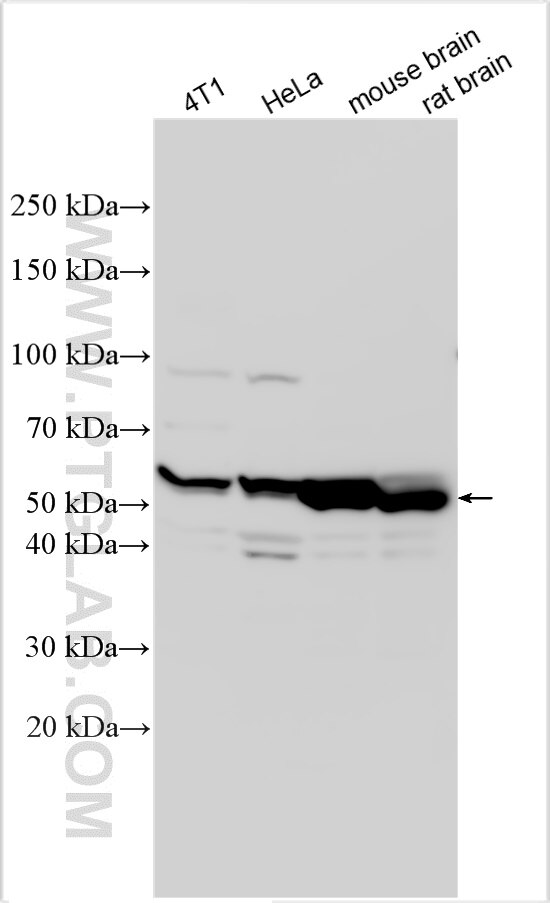
| Positive WB detected in | 4T1 cells, HeLa cells, mouse brain tissue, rat brain tissue |
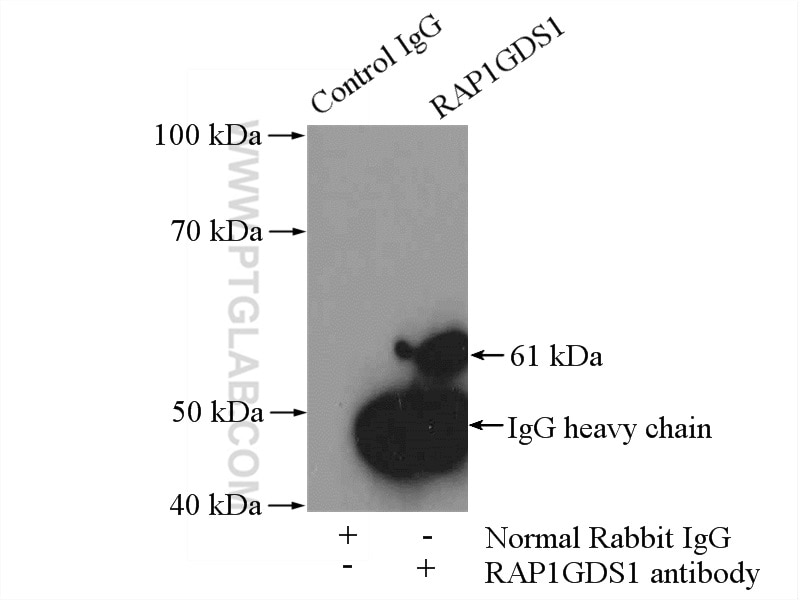
| Positive IP detected in | mouse brain tissue |
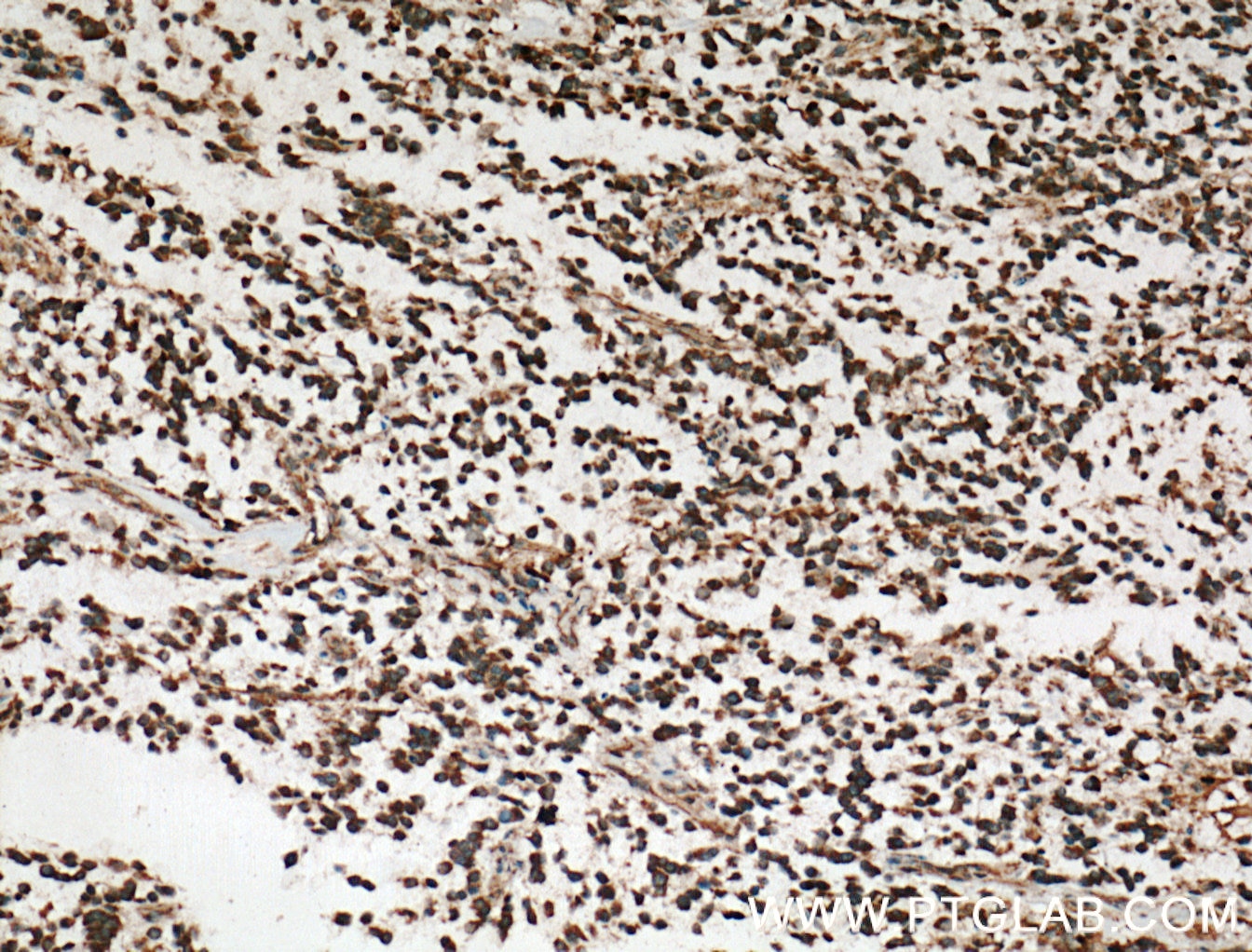
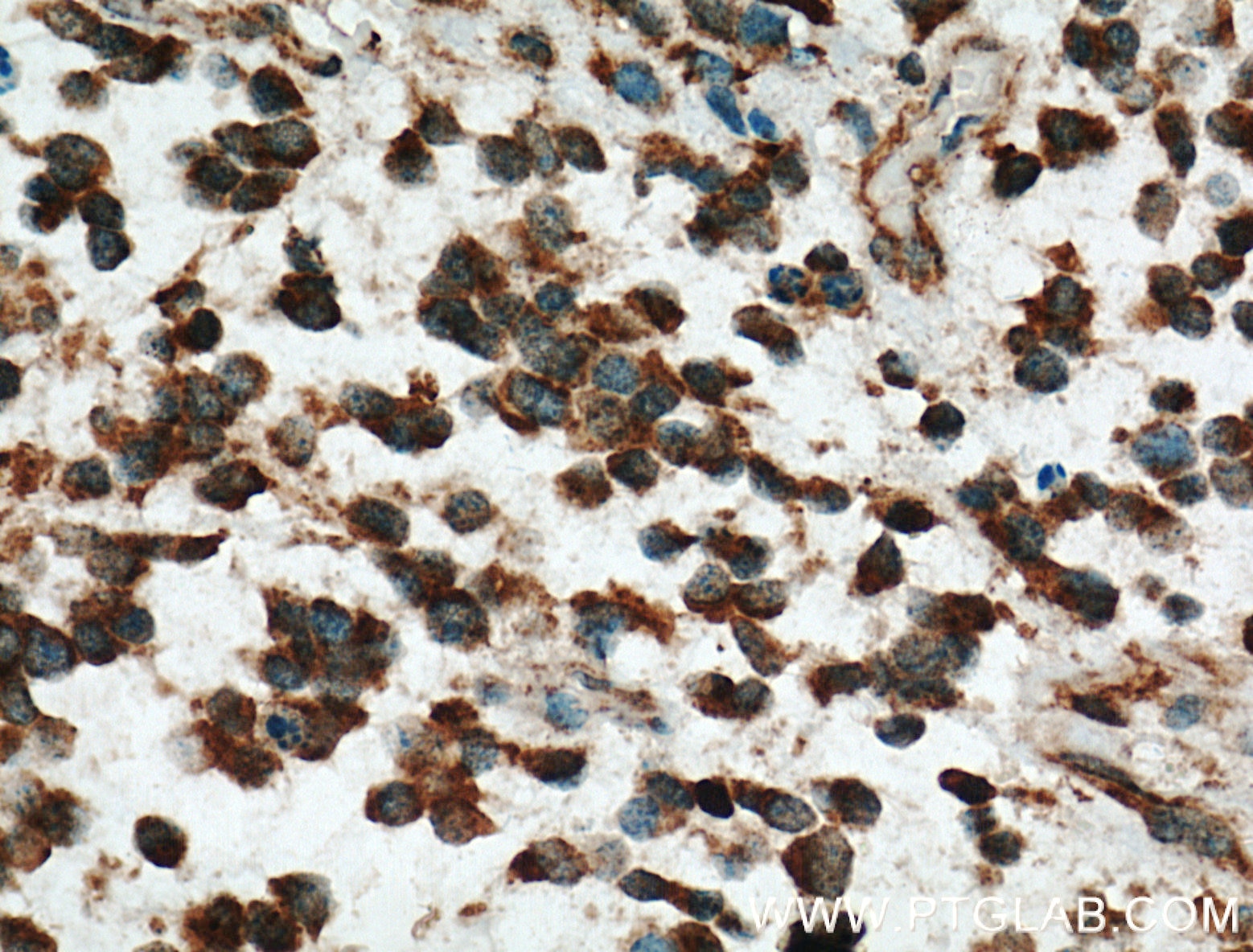
| Positive IHC detected in | human gliomas tissue Note: suggested antigen retrieval with TE buffer pH 9.0; (*) Alternatively, antigen retrieval may be performed with citrate buffer pH 6.0 |
Recommended dilution
| Application | Dilution |
|---|---|
| Western Blot (WB) | WB : 1:500-1:3000 |
| Immunoprecipitation (IP) | IP : 0.5-4.0 ug for 1.0-3.0 mg of total protein lysate |
| Immunohistochemistry (IHC) | IHC : 1:50-1:500 |
| It is recommended that this reagent should be titrated in each testing system to obtain optimal results. | |
| Sample-dependent, Check data in validation data gallery. | |
Product Information
10377-1-AP targets RAP1GDS1 in WB, IHC, IF, IP, ELISA applications and shows reactivity with human, mouse, rat samples.
| Tested Reactivity | human, mouse, rat |
| Cited Reactivity | human, mouse, chicken |
| Host / Isotype | Rabbit / IgG |
| Class | Polyclonal |
| Type | Antibody |
| Immunogen |
CatNo: Ag0230 Product name: Recombinant human RAP1GDS1 protein Source: e coli.-derived, PGEX-4T Tag: GST Domain: 176-406 aa of BC001851 Sequence: QLINMGVIPTLVKLLGIHCQNAALTEMCLVAFGNLAELESSKEQFASTNIAEELVKLFKKQIEHDKREMIFEVLAPLAENDAIKLQLVEAGLVECLLEIVQQKVDSDKEDDITELKTGSDLMVLLLLGDESMQKLFEGGKGSVFQRVLSWIPSNNHQLQLAGALAIANFARNDANCIHMVDNGIVEKLMDLLDRHVEDGNVTVQHAALSALRNLAIPVINKAKMLSAGVTE Predict reactive species |
| Full Name | RAP1, GTP-GDP dissociation stimulator 1 |
| Calculated Molecular Weight | 66 kDa |
| Observed Molecular Weight | 55-66 kDa |
| GenBank Accession Number | BC001851 |
| Gene Symbol | RAP1GDS1 |
| Gene ID (NCBI) | 5910 |
| RRID | AB_2284927 |
| Conjugate | Unconjugated |
| Form | Liquid |
| Purification Method | Antigen affinity purification |
| UNIPROT ID | P52306 |
| Storage Buffer | PBS with 0.02% sodium azide and 50% glycerol, pH 7.3. |
| Storage Conditions | Store at -20°C. Stable for one year after shipment. Aliquoting is unnecessary for -20oC storage. 20ul sizes contain 0.1% BSA. |
Background Information
GDS stimulates the GDP/GTP exchange reaction of a group of small GTP-binding proteins (G proteins), including at least c-Ki-ras p21, smg p21A, smg p21B, rhoA p21 and rhoB p21, by stimulating the dissociation of GDP from and the subsequent binding of GTP to each small G protein. The small GTPase Rap1, which is activated by a large variety of stimuli, functions in the control of integrin-mediated cell adhesion. RAP1GDS1 (synonym: GDS1)is one of RAP1 GTP-GDP dissociation stimulators.
Protocols
| Product Specific Protocols | |
|---|---|
| IHC protocol for RAP1GDS1 antibody 10377-1-AP | Download protocol |
| IP protocol for RAP1GDS1 antibody 10377-1-AP | Download protocol |
| WB protocol for RAP1GDS1 antibody 10377-1-AP | Download protocol |
| Standard Protocols | |
|---|---|
| Click here to view our Standard Protocols |
Publications
What published studies show
The RAP1GDS1 Polyclonal antibody (Cat# 10377-1-AP) has 5 citations published in Nature Genetics, Advanced Science, Communications Biology, Microbiology Spectrum, and Oncology Letters. Research fields span hereditary pancreatic cancer (KRAS prenylation), lung cancer tumorigenesis (RAC1 splicing), brain aging, avian hepatitis E virus cytoskeleton rearrangement, and non-small cell lung cancer invasion via the JAK2/STAT3 pathway. Applications include IP, WB, and IF across human, mouse, and chicken species.
| Species | Application | Title |
|---|---|---|
Nat Genet Mutations in RABL3 alter KRAS prenylation and are associated with hereditary pancreatic cancer. | ||
Adv Sci (Weinh) Splicing Shift of RAC1 Accelerates Tumorigenesis and Defines a Potent Therapeutic Target in Lung Cancer | ||
Commun Biol Vimar/RAP1GDS1 promotes acceleration of brain aging after flies and mice reach middle age | ||
Microbiol Spectr Avian Hepatitis E Virus ORF2 Protein Interacts with Rap1b to Induce Cytoskeleton Rearrangement That Facilitates Virus Internalization. | ||
Oncol Lett SUMO4 small interfering RNA attenuates invasion and migration via the JAK2/STAT3 pathway in non-small cell lung cancer cells. |

