





Tested Applications
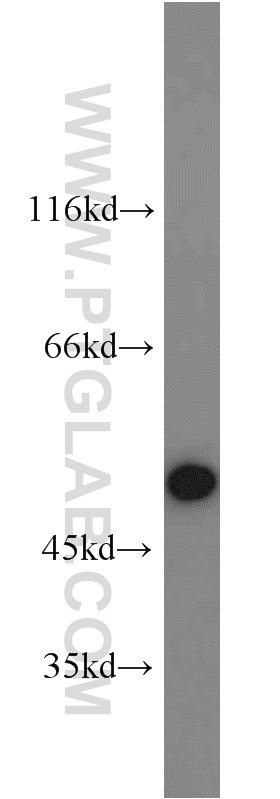
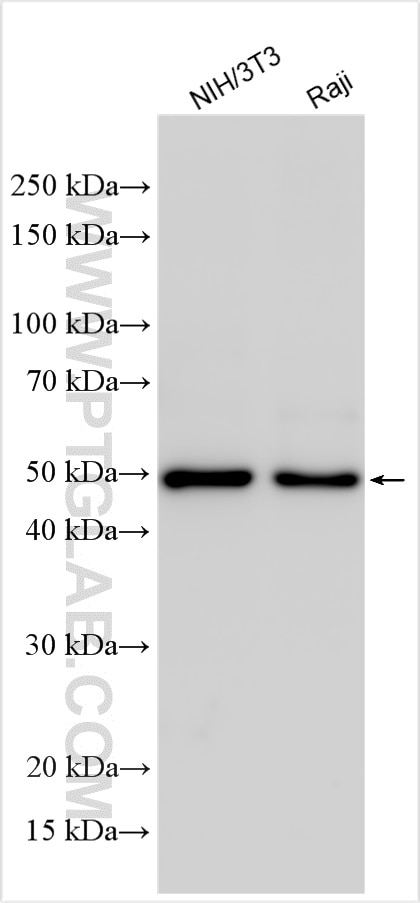
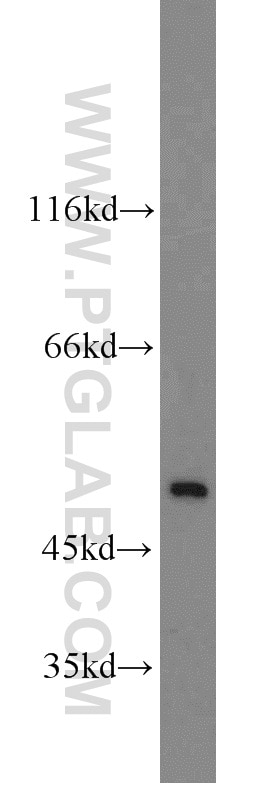
| Positive WB detected in | NIH/3T3 cells, Raji cells |
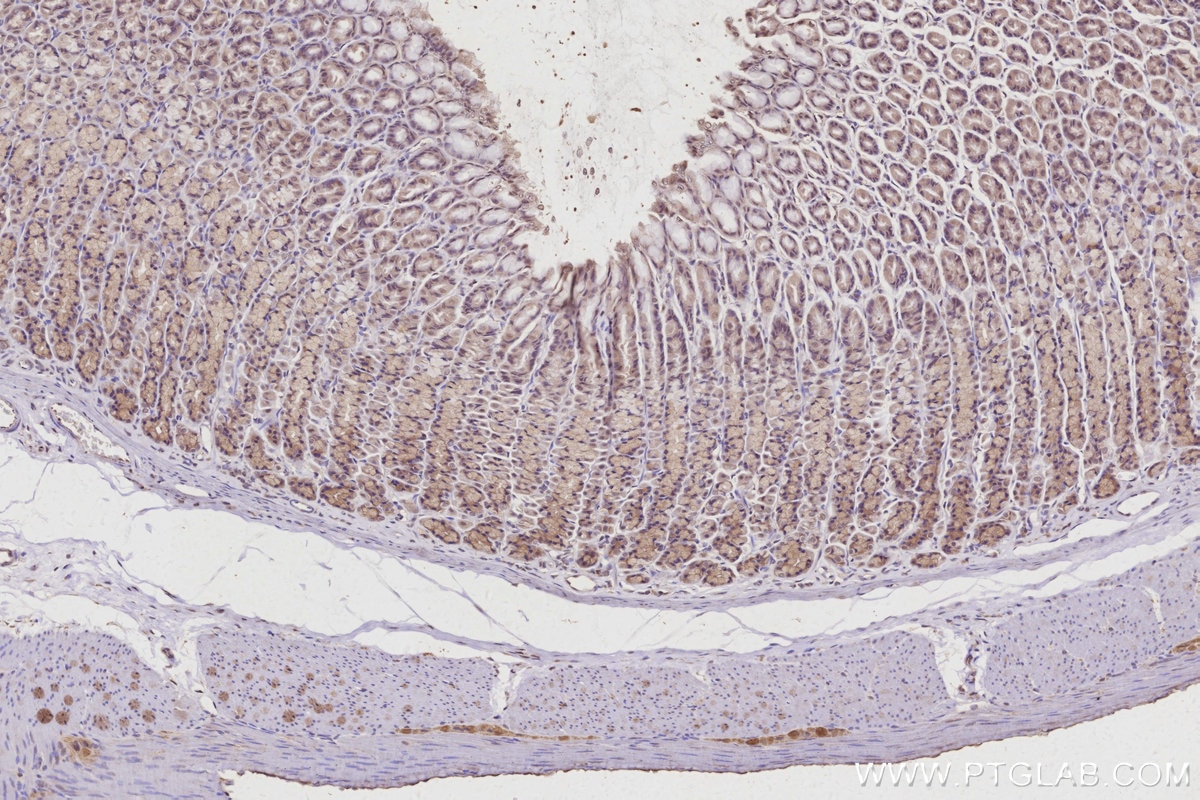
| Positive IHC detected in | rat stomach tissue, mouse stomach tissue, rat heart tissue, human placenta tissue, mouse colon tissue, mouse heart tissue, rat colon tissue Note: suggested antigen retrieval with TE buffer pH 9.0; (*) Alternatively, antigen retrieval may be performed with citrate buffer pH 6.0 |
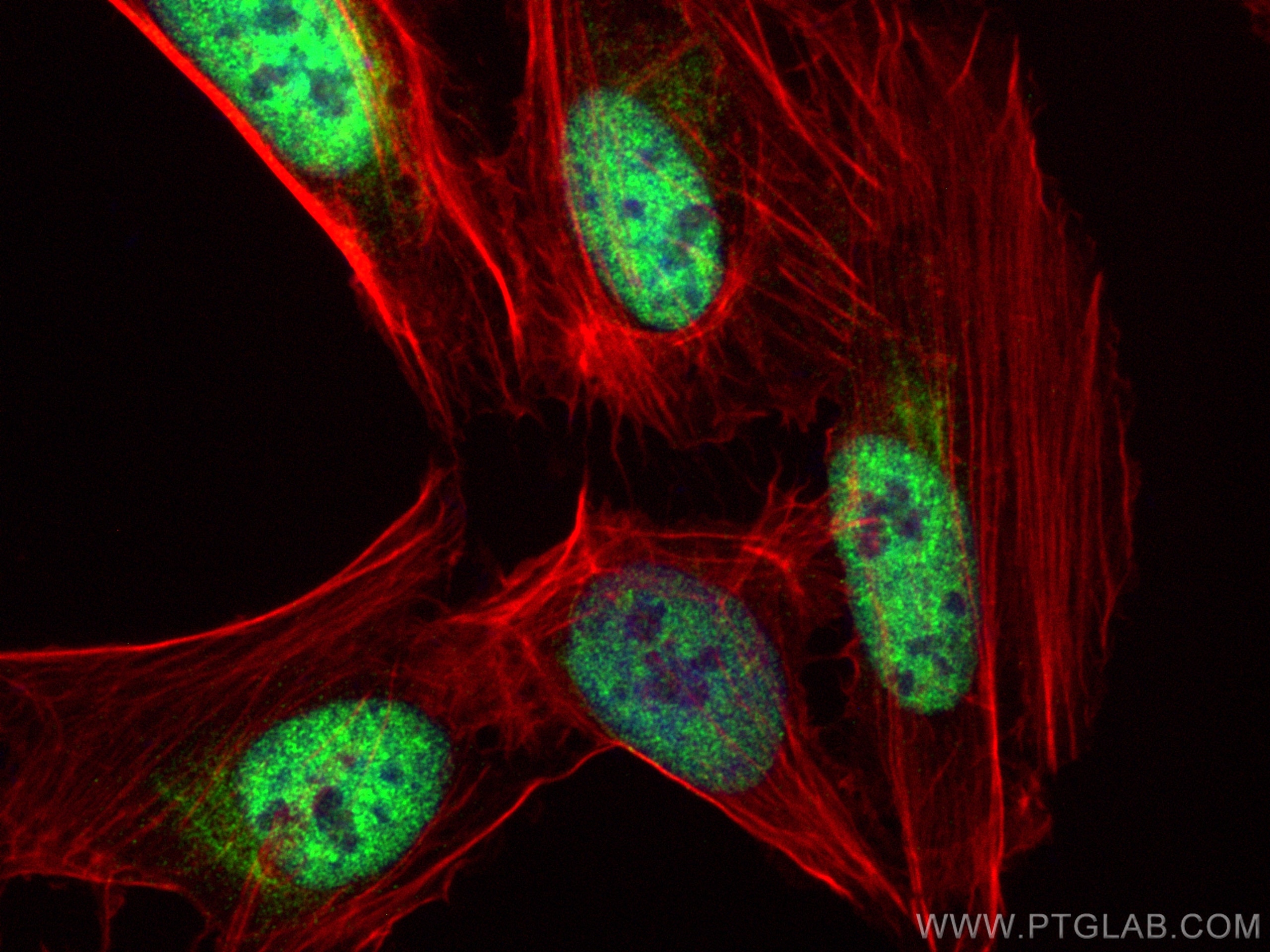
| Positive IF/ICC detected in | U2OS cells |
Recommended dilution
| Application | Dilution |
|---|---|
| Western Blot (WB) | WB : 1:2000-1:10000 |
| Immunohistochemistry (IHC) | IHC : 1:250-1:1000 |
| Immunofluorescence (IF)/ICC | IF/ICC : 1:50-1:500 |
| It is recommended that this reagent should be titrated in each testing system to obtain optimal results. | |
| Sample-dependent, Check data in validation data gallery. | |
Product Information
22103-1-AP targets RBM22 in WB, IHC, IF/ICC, ELISA applications and shows reactivity with human, mouse, rat samples.
| Tested Reactivity | human, mouse, rat |
| Cited Reactivity | human |
| Host / Isotype | Rabbit / IgG |
| Class | Polyclonal |
| Type | Antibody |
| Immunogen |
CatNo: Ag17315 Product name: Recombinant human RBM22 protein Source: e coli.-derived, PGEX-4T Tag: GST Domain: 1-420 aa of BC003402 Sequence: MATSLGSNTYNRQNWEDADFPILCQTCLGENPYIRMTKEKYGKECKICARPFTVFRWCPGVRMRFKKTEVCQTCSKLKNVCQTCLLDLEYGLPIQVRDAGLSFKDDMPKSDVNKEYYTQNMEREISNSDGTRPVGMLGKATSTSDMLLKLARTTPYYKRNRPHICSFWVKGECKRGEECPYRHEKPTDPDDPLADQNIKDRYYGINDPVADKLLKRASTMPRLDPPEDKTITTLYVGGLGDTITETDLRNHFYQFGEIRTITVVQRQQCAFIQFATRQAAEVAAEKSFNKLIVNGRRLNVKWGRSQAARGKEKEKDGTTDSGIKLEPVPGLPGALPPPPAAEEEASANYFNLPPSGPPAVVNIALPPPPGIAPPPPPGFGPHMFHPMGPPPPFMRAPGPIHYPSQDPQRMGAHAGKHSSP Predict reactive species |
| Full Name | RNA binding motif protein 22 |
| Calculated Molecular Weight | 420 aa, 47 kDa |
| Observed Molecular Weight | 47-50 kDa |
| GenBank Accession Number | BC003402 |
| Gene Symbol | RBM22 |
| Gene ID (NCBI) | 55696 |
| RRID | AB_2878996 |
| Conjugate | Unconjugated |
| Form | Liquid |
| Purification Method | Antigen affinity purification |
| UNIPROT ID | Q9NW64 |
| Storage Buffer | PBS with 0.02% sodium azide and 50% glycerol, pH 7.3. |
| Storage Conditions | Store at -20°C. Stable for one year after shipment. Aliquoting is unnecessary for -20oC storage. 20ul sizes contain 0.1% BSA. |
Background Information
RBM22 is mainly involved in pre-mRNA splicing, playing the essential role of maintaining the conformation of the catalytic core of the spliceosome and acting as a bridge between the catalytic core and other essential protein components of the spliceosome. RBM22 is also involved in gene regulation, and is able to bind DNA, acting as a bona fide transcription factor on a large number of target genes. Due to its wide scope in the regulation of gene expression, RBM22 has been associated with several pathologies and, notably, with the aggressiveness of cancer cells and with the phenotype of a myelodysplastic syndrome. (PMID: 35158909)
Protocols
| Product Specific Protocols | |
|---|---|
| IF protocol for RBM22 antibody 22103-1-AP | Download protocol |
| IHC protocol for RBM22 antibody 22103-1-AP | Download protocol |
| WB protocol for RBM22 antibody 22103-1-AP | Download protocol |
| Standard Protocols | |
|---|---|
| Click here to view our Standard Protocols |
Publications
What published studies show
The RBM22 Polyclonal antibody (Cat# 22103-1-AP) has 2 citations. One appears in J Adv Res (IF 17.1), studying annotation network-driven discovery of novel active compounds and mechanisms in traditional Chinese medicine. The other is in Molecules (IF 5.1), investigating how RNA-Binding Motif Protein 22 induces apoptosis via the c-Myc pathway in colon cancer cells. Both studies utilized the antibody for Western blot (WB) applications. The associated research fields span traditional Chinese medicine pharmacology and cancer biology (colon cancer apoptosis).
| Species | Application | Title |
|---|---|---|
J Adv Res AnnoNet-TCMs: An annotation network-driven discovery of novel active compounds and mechanisms in traditional Chinese medicine. | ||
Molecules RNA-Binding Motif Protein 22 Induces Apoptosis via c-Myc Pathway in Colon Cancer Cells |
Reviews
What customers say
Able is busy answering your previous question. Please try again later.
The reviews below have been submitted by verified Proteintech customers who received an incentive for providing their feedback.
Zhongwen (Verified Customer) (09-25-2023) | Good quality
|


