

Tested Applications
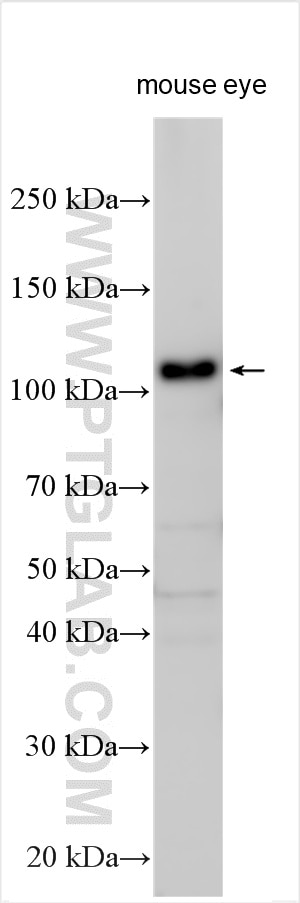
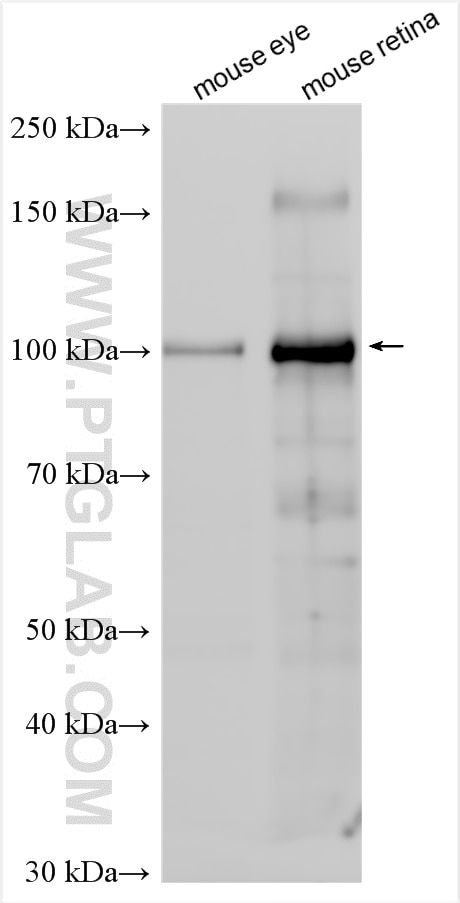
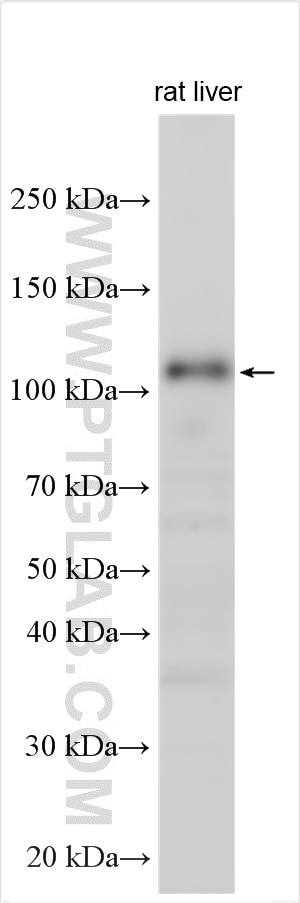
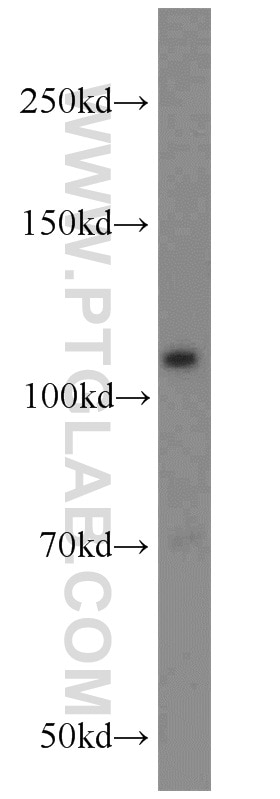
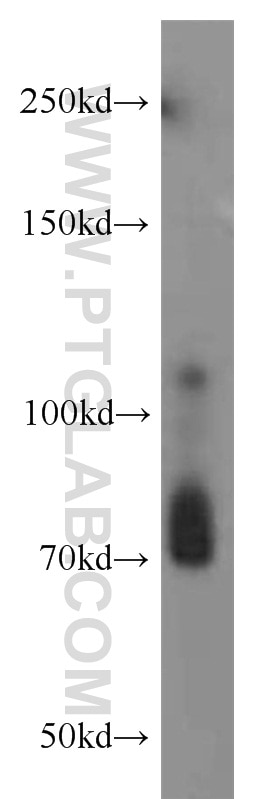
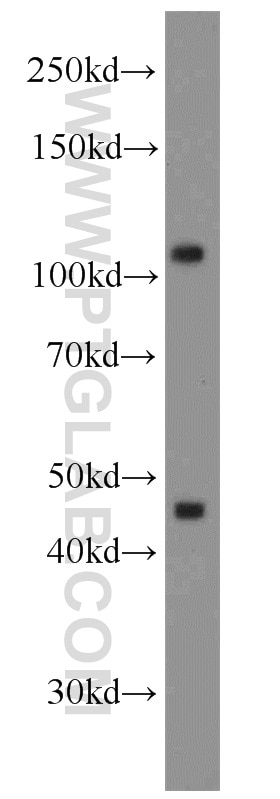
| Positive WB detected in | mouse eye tissue, mouse liver tissue, rat liver tissue, SH-SY5Y cells, Y79 cells, mouse retina tissue |
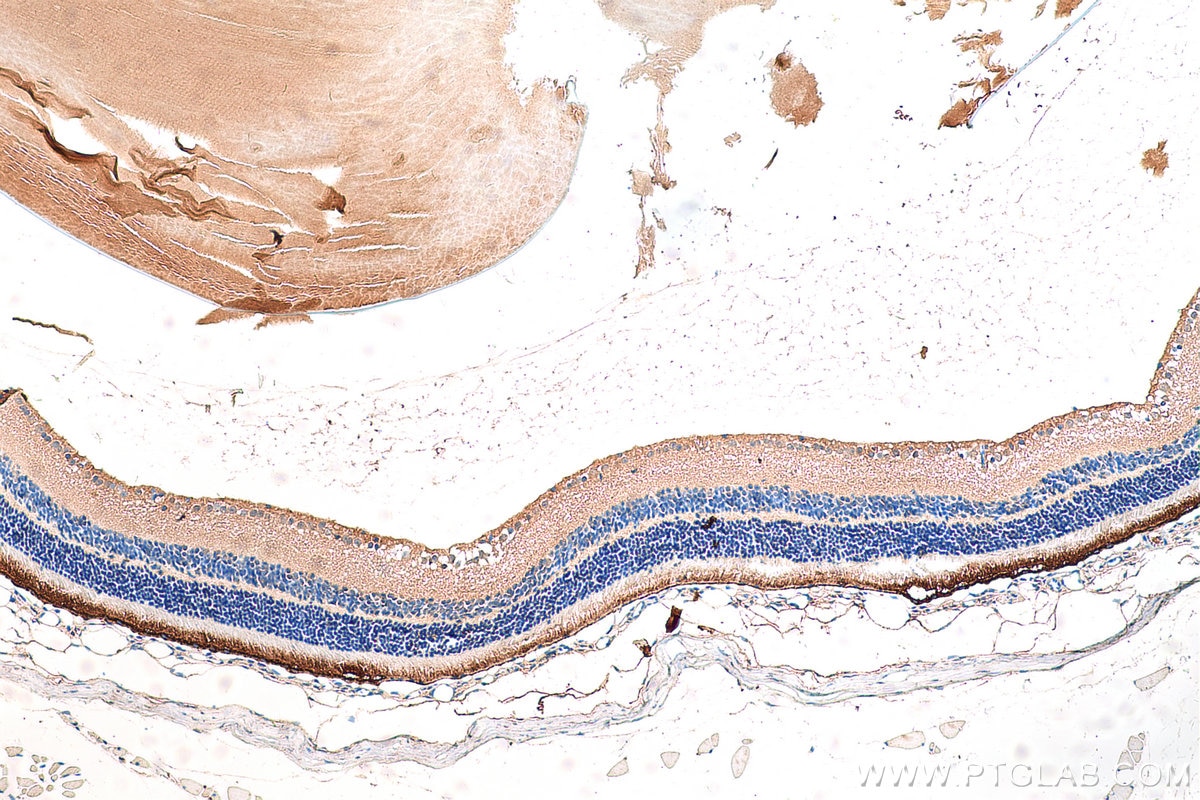
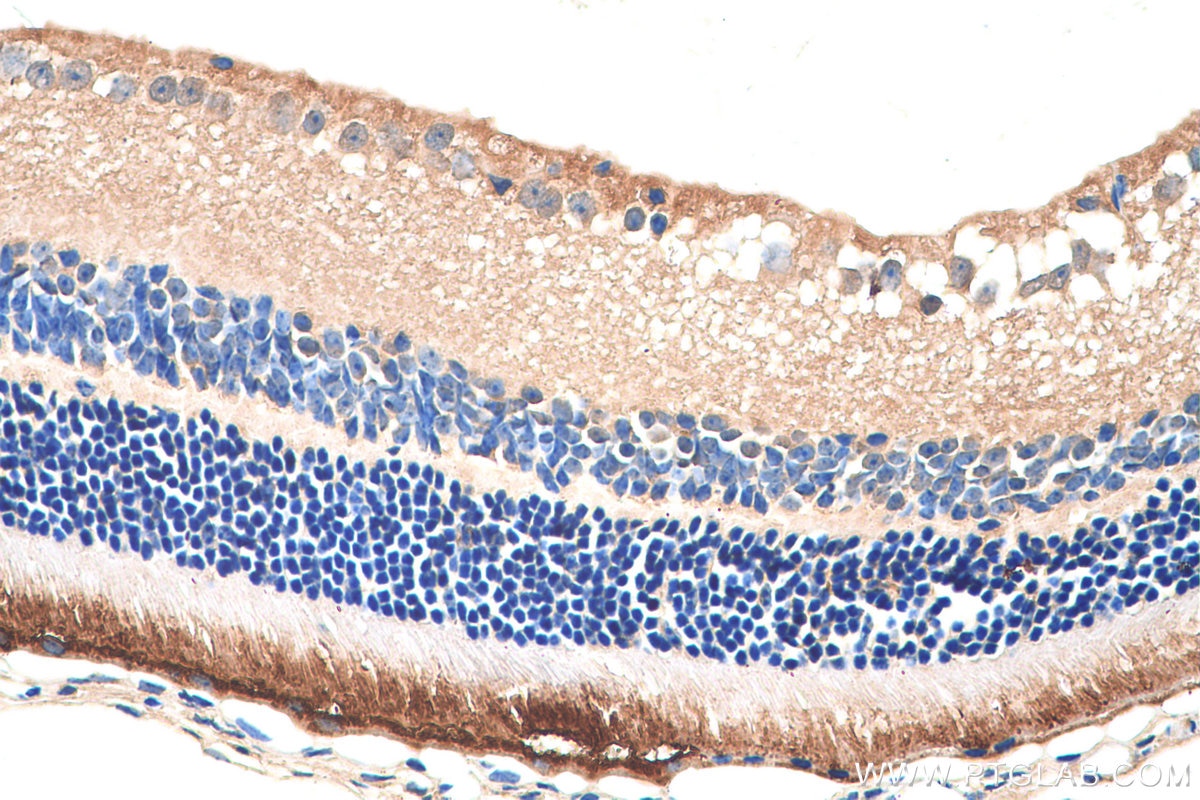
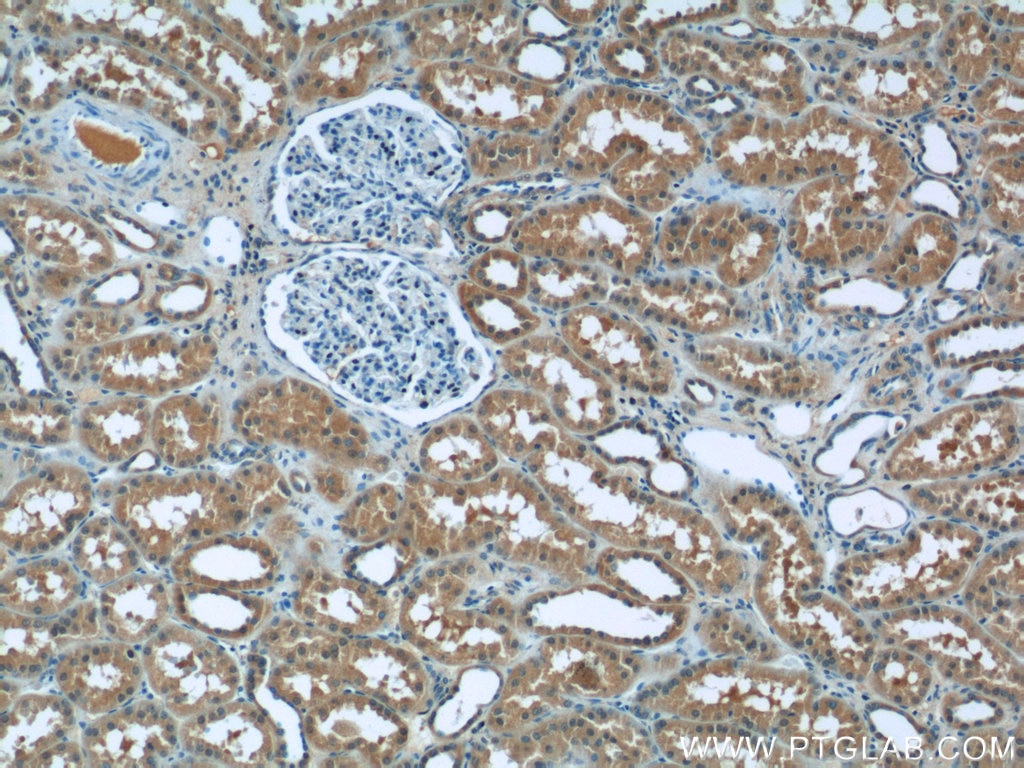
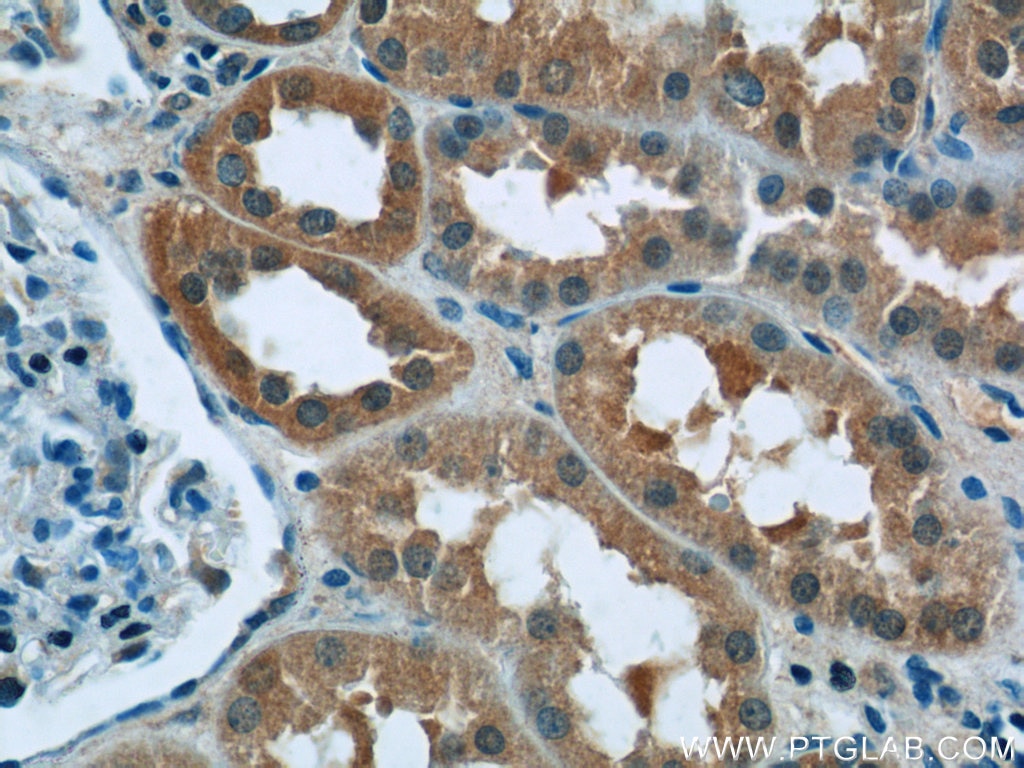
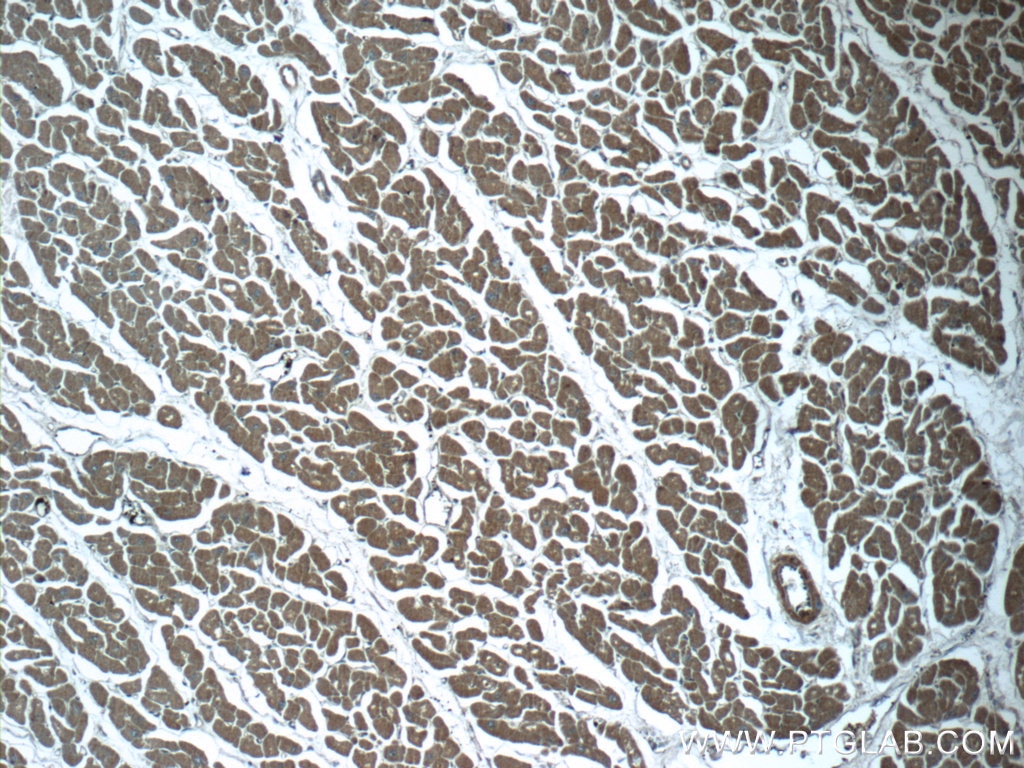
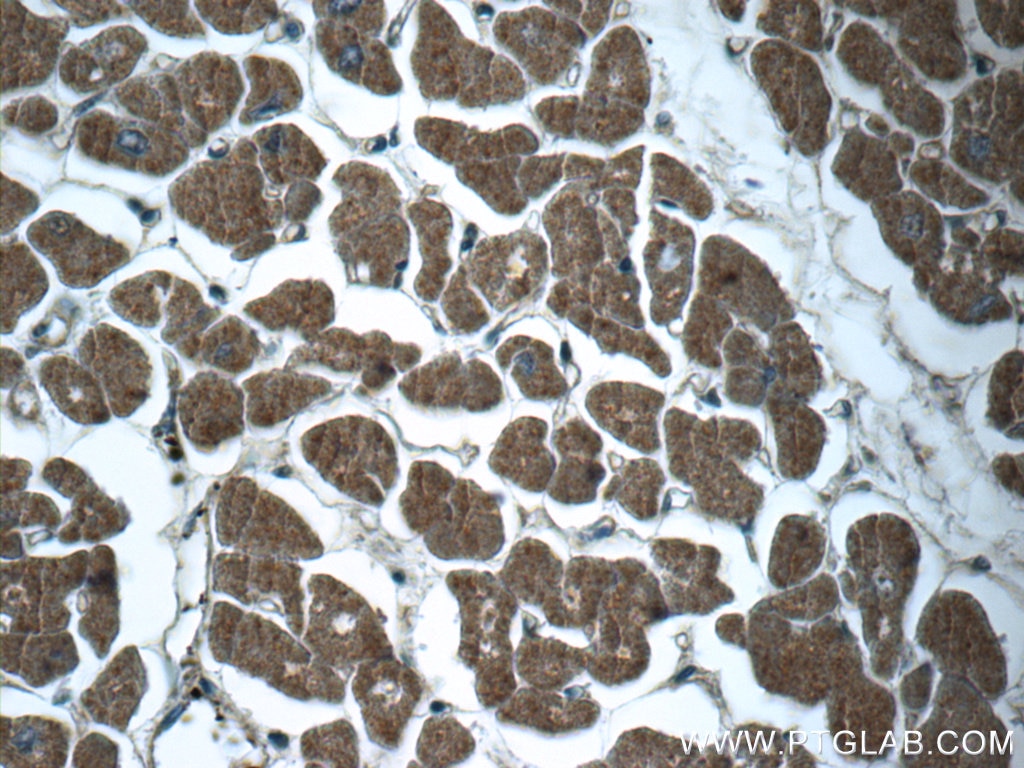
| Positive IHC detected in | mouse eye tissue, human heart tissue, human kidney tissue Note: suggested antigen retrieval with TE buffer pH 9.0; (*) Alternatively, antigen retrieval may be performed with citrate buffer pH 6.0 |
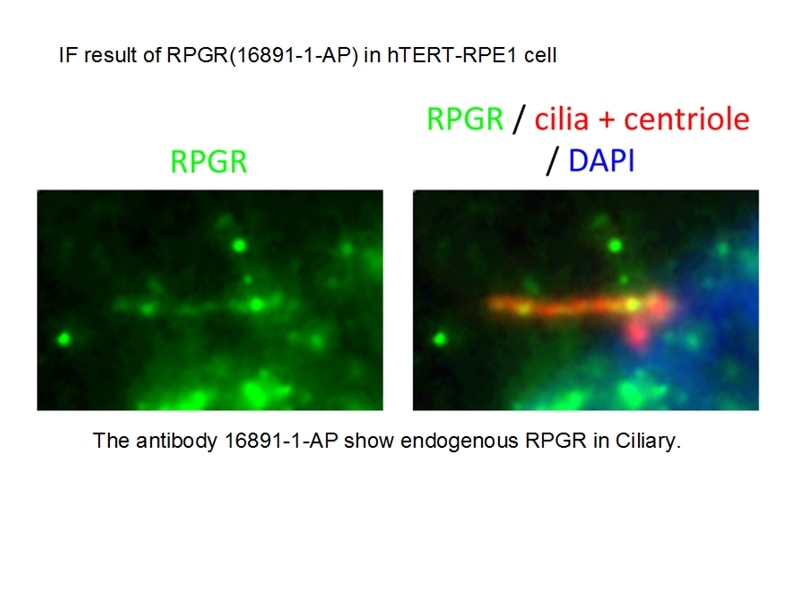
| Positive IF/ICC detected in | hTERT-RPE1 cells |
Recommended dilution
| Application | Dilution |
|---|---|
| Western Blot (WB) | WB : 1:500-1:1000 |
| Immunohistochemistry (IHC) | IHC : 1:50-1:500 |
| Immunofluorescence (IF)/ICC | IF/ICC : 1:10-1:100 |
| It is recommended that this reagent should be titrated in each testing system to obtain optimal results. | |
| Sample-dependent, Check data in validation data gallery. | |
Product Information
16891-1-AP targets RPGR in WB, IHC, IF/ICC, ELISA applications and shows reactivity with human, mouse, rat samples.
| Tested Reactivity | human, mouse, rat |
| Cited Reactivity | human, mouse |
| Host / Isotype | Rabbit / IgG |
| Class | Polyclonal |
| Type | Antibody |
| Immunogen |
CatNo: Ag10405 Product name: Recombinant human RPGR protein Source: e coli.-derived, PGEX-4T Tag: GST Domain: 1-359 aa of BC031624 Sequence: MREPEELMPDSGAVFTFGKSKFAENNPGKFWFKNDVPVHLSCGDEHSAVVTGNNKLYMFGSNNWGQLGLGSKSAISKPTCVKALKPEKVKLAACGRNHTLVSTEGGNVYATGGNNEGQLGLGDTEERNTFHVISFFTSEHKIKQLSAGSNTSAALTEDGRLFMWGDNSEGQIGLKNVSNVCVPQQVTIGKPVSWISCGYYHSAFVTTDGELYVFGEPENGKLGLPNQLLGNHRTPQLVSEIPEKVIQVACGGEHTVVLTENAVYTFGLGQFGQLGLGTFLFETSEPKVIENIRDQTISYISCGENHTALITDIGLMYTFGDGRHGKLGLGLENFTNHFIPTLCSNFLRFIVKLVACGGC Predict reactive species |
| Full Name | retinitis pigmentosa GTPase regulator |
| Calculated Molecular Weight | 113 kDa |
| Observed Molecular Weight | 100-105 kDa, 70 kDa |
| GenBank Accession Number | BC031624 |
| Gene Symbol | RPGR |
| Gene ID (NCBI) | 6103 |
| RRID | AB_2181130 |
| Conjugate | Unconjugated |
| Form | Liquid |
| Purification Method | Antigen affinity purification |
| UNIPROT ID | Q92834 |
| Storage Buffer | PBS with 0.02% sodium azide and 50% glycerol, pH 7.3. |
| Storage Conditions | Store at -20°C. Stable for one year after shipment. Aliquoting is unnecessary for -20oC storage. 20ul sizes contain 0.1% BSA. |
Background Information
RPGR is a protein with a series of six RCC1-like domains (RLDs), characteristic of the highly conserved guanine nucleotide exchange factors. The encoded protein is found in the Golgi body and interacts with RPGRIP1. This protein localizes to the outer segment of rod photoreceptors and is essential for their viability. Mutations in this gene have been associated with X-linked retinitis pigmentosa (XLRP). Multiple alternatively spliced transcript variants that encode different isoforms of this gene have been reported, but the full-length natures of only some have been determined. This antibody can recognize all the isoforms of RPGR.
Protocols
| Product Specific Protocols | |
|---|---|
| IHC protocol for RPGR antibody 16891-1-AP | Download protocol |
| WB protocol for RPGR antibody 16891-1-AP | Download protocol |
| Standard Protocols | |
|---|---|
| Click here to view our Standard Protocols |
Publications
What published studies show
The RPGR Polyclonal antibody (Cat# 16891-1-AP) has 4 total citations. These appear in EMBO Journal, Cell Reports, Journal of Personalized Medicine, and eLife. The research fields span retinal biology and photoreceptor cilia, including RPGR's role as a guanine nucleotide exchange factor for RAB37 in autophagy regulation, iPSC-derived retinal organoids for RPGR variant assessment, glutamylation of the photoreceptor cilium, and ciliary targeting signals. Applications cited include immunofluorescence and Western blot in mouse and human samples.
| Species | Application | Title |
|---|---|---|
EMBO J Glutamylation imbalance impairs the molecular architecture of the photoreceptor cilium | ||
Cell Rep RPGR is a guanine nucleotide exchange factor for the small GTPase RAB37 required for retinal function via autophagy regulation | ||
J Pers Med Human iPSC-Derived Retinal Organoids and Retinal Pigment Epithelium for Novel Intronic RPGR Variant Assessment for Therapy Suitability. | ||

