
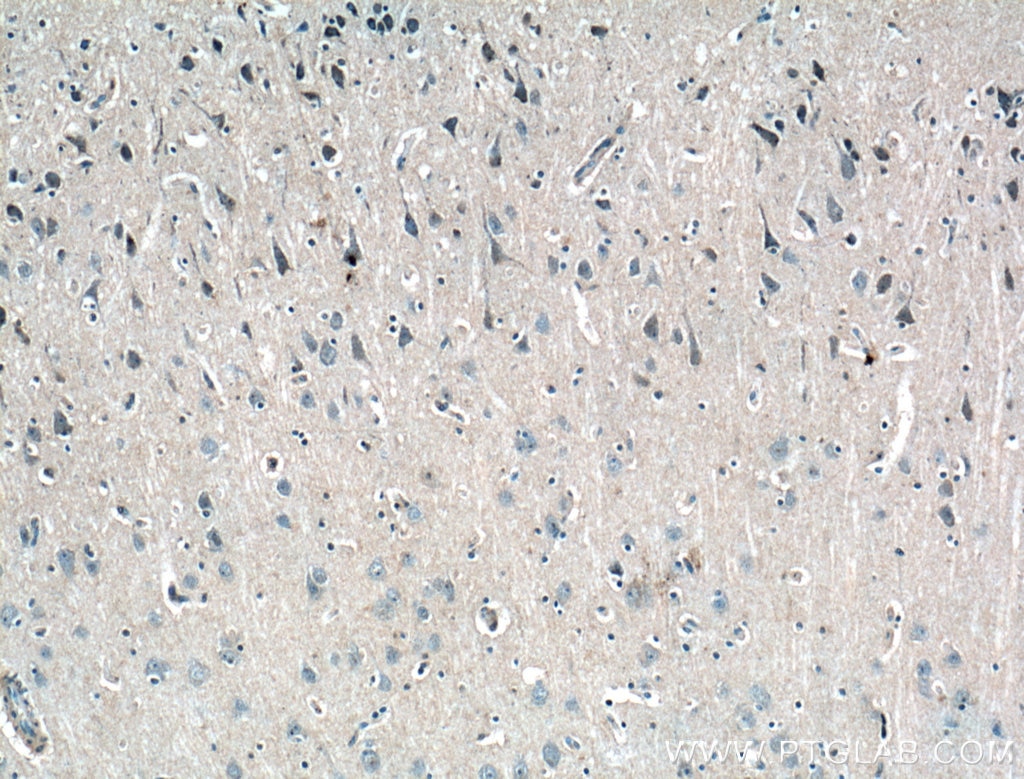
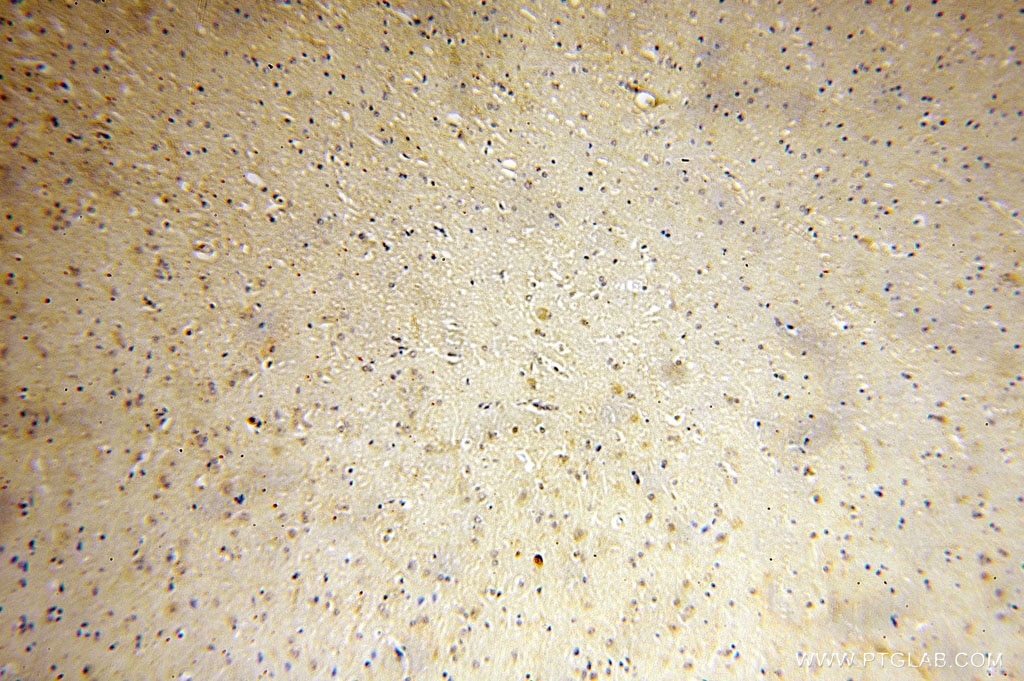
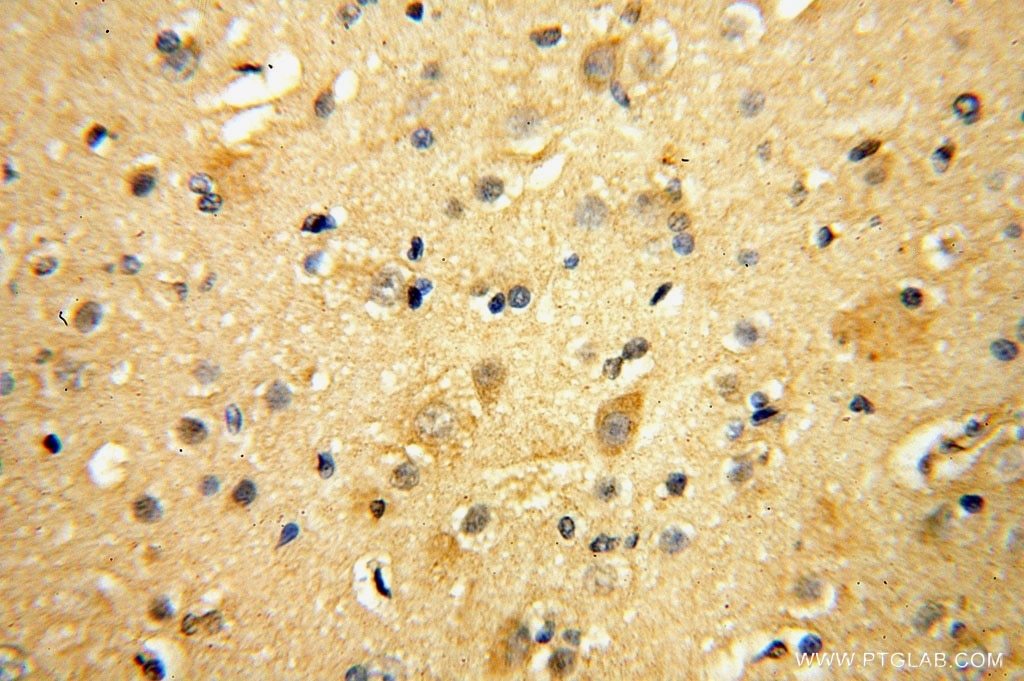

Tested Applications
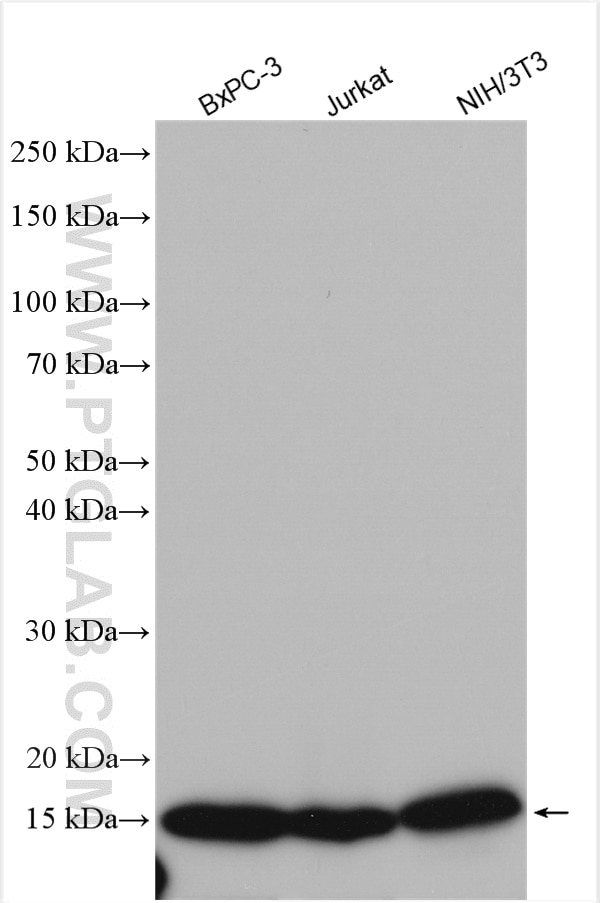
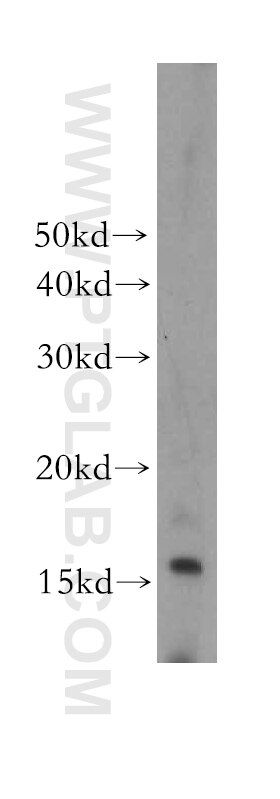
| Positive WB detected in | BxPC-3 cells, PC-3 cells, Jurkat cells, NIH/3T3 cells |
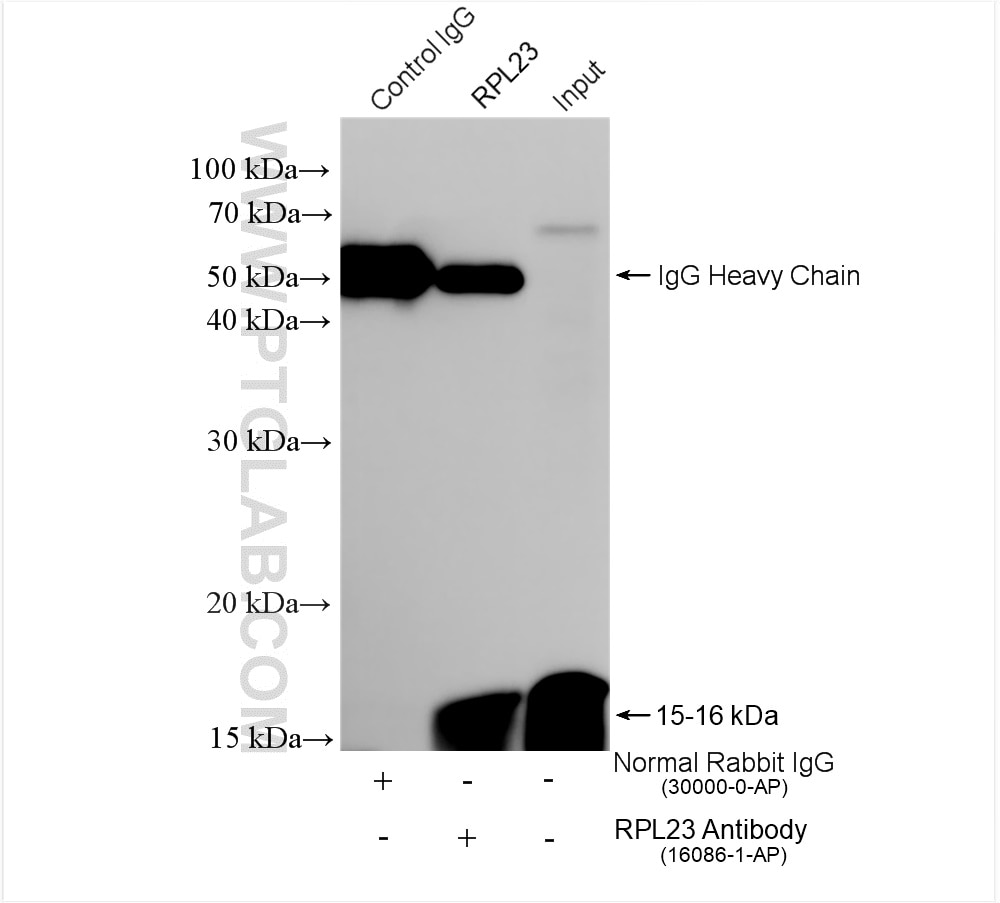
| Positive IP detected in | mouse brain tissue |
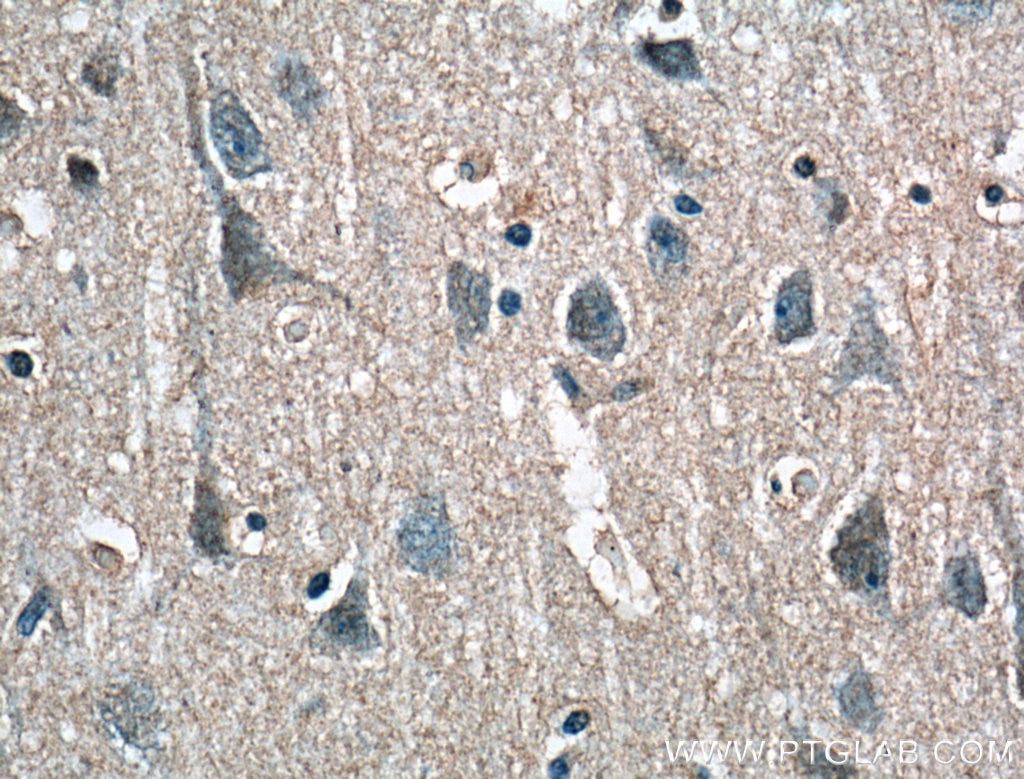
| Positive IHC detected in | human brain tissue Note: suggested antigen retrieval with TE buffer pH 9.0; (*) Alternatively, antigen retrieval may be performed with citrate buffer pH 6.0 |
Recommended dilution
| Application | Dilution |
|---|---|
| Western Blot (WB) | WB : 1:500-1:2000 |
| Immunoprecipitation (IP) | IP : 0.5-4.0 ug for 1.0-3.0 mg of total protein lysate |
| Immunohistochemistry (IHC) | IHC : 1:50-1:500 |
| It is recommended that this reagent should be titrated in each testing system to obtain optimal results. | |
| Sample-dependent, Check data in validation data gallery. | |
Product Information
16086-1-AP targets RPL23 in WB, IHC, IF, IP, RIP, ELISA applications and shows reactivity with human, mouse, rat samples.
| Tested Reactivity | human, mouse, rat |
| Cited Reactivity | human, mouse, rat |
| Host / Isotype | Rabbit / IgG |
| Class | Polyclonal |
| Type | Antibody |
| Immunogen |
CatNo: Ag9120 Product name: Recombinant human RPL23 protein Source: e coli.-derived, PGEX-4T Tag: GST Domain: 1-140 aa of BC010114 Sequence: MSKRGRGGSSGAKFRISLGLPVGAVINCADNTGAKNLYIISVKGIKGRLNRLPAAGVGDMVMATVKKGKPELRKKVHPAVVIRQRKSYRRKDGVFLYFEDNAGVIVNNKGEMKGSAITGPVAKECADLWPRIASNAGSIA Predict reactive species |
| Full Name | ribosomal protein L23 |
| Calculated Molecular Weight | 140 aa, 15 kDa |
| Observed Molecular Weight | 15 kDa |
| GenBank Accession Number | BC010114 |
| Gene Symbol | RPL23 |
| Gene ID (NCBI) | 9349 |
| RRID | AB_2181432 |
| Conjugate | Unconjugated |
| Form | Liquid |
| Purification Method | Antigen affinity purification |
| UNIPROT ID | P62829 |
| Storage Buffer | PBS with 0.02% sodium azide and 50% glycerol, pH 7.3. |
| Storage Conditions | Store at -20°C. Stable for one year after shipment. Aliquoting is unnecessary for -20oC storage. 20ul sizes contain 0.1% BSA. |
Background Information
Ribosomes, the organelles that catalyze protein synthesis, consist of a small 40S subunit and a large 60S subunit. Together these subunits are composed of 4 RNA species and approximately 80 structurally distinct proteins [PMID:9582194]. RPL23 is a component of the 60 S large ribosomal subunit that interacts functionally with murine double minute 2 protein (MDM2 or HDM2 in humans). Upon binding to MDM2, RPL23 inhibits MDM2-mediated p53 degradation, thus activating p53 and inducing cellular apoptosis [PMID:15314174]. Intriguingly, RPL23 has also been suggested to be a negative regulator of apoptosis by suppressing the Miz1-induced transcription of the cell cycle inhibitors p15INK4B and p21CIP1[PMID:19160485].
Protocols
| Product Specific Protocols | |
|---|---|
| IHC protocol for RPL23 antibody 16086-1-AP | Download protocol |
| IP protocol for RPL23 antibody 16086-1-AP | Download protocol |
| WB protocol for RPL23 antibody 16086-1-AP | Download protocol |
| Standard Protocols | |
|---|---|
| Click here to view our Standard Protocols |
Publications
What published studies show
The anti-RPL23 antibody (Cat# 16086-1-AP) has 22 citations published in journals including Nature, Cell, Blood, Nature Cell Biology, Nature Communications, EMBO Journal, Aging Cell, Breast Cancer Research, Scientific Reports, Frontiers in Oncology, and Journal of Alzheimer's Disease. Research fields span ribosome biogenesis, ferroptosis, Shwachman-Diamond syndrome, pluripotency regulation, colorectal/lung/hepatocellular/ovarian/breast cancers, myelodysplastic syndrome, tauopathy, Alzheimer's disease, oocyte aging, and mitochondrial proteostasis.
| Species | Application | Title |
|---|---|---|
Nat Cell Biol LIN28 phosphorylation by MAPK/ERK couples signalling to the post-transcriptional control of pluripotency. | ||
Nat Commun Ribosome biogenesis as a potential therapeutic target in KRAS mutant colorectal cancer. |

