

Tested Applications
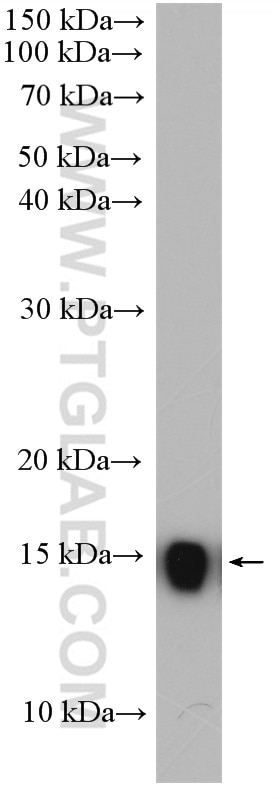
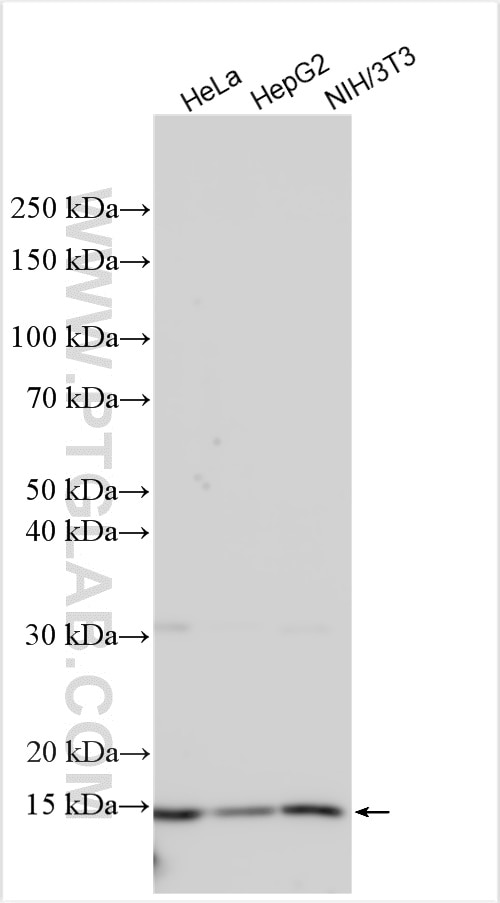
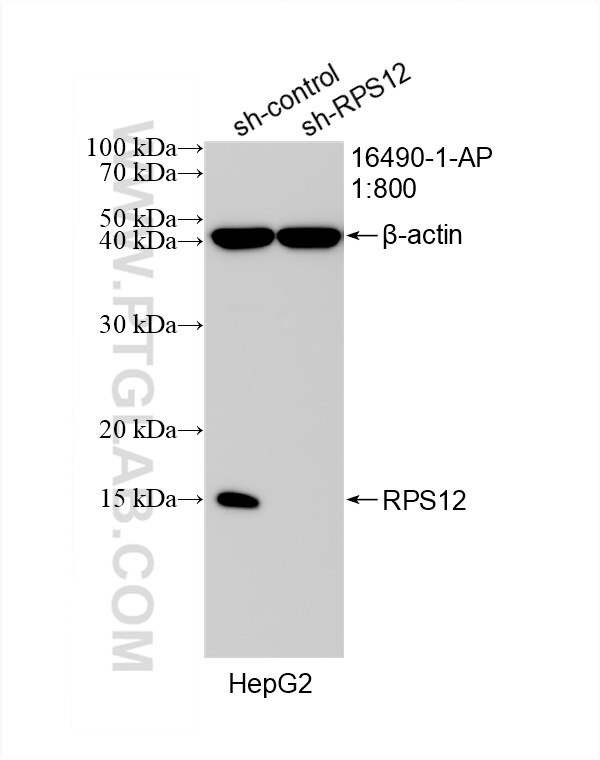
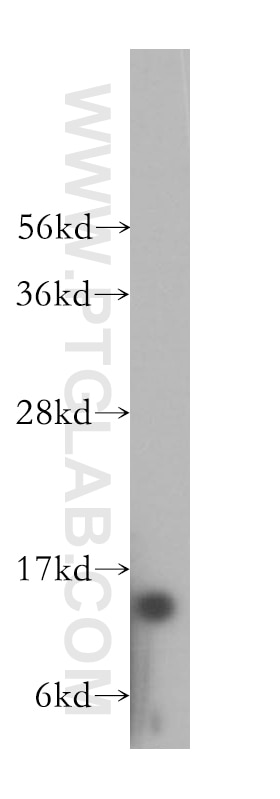
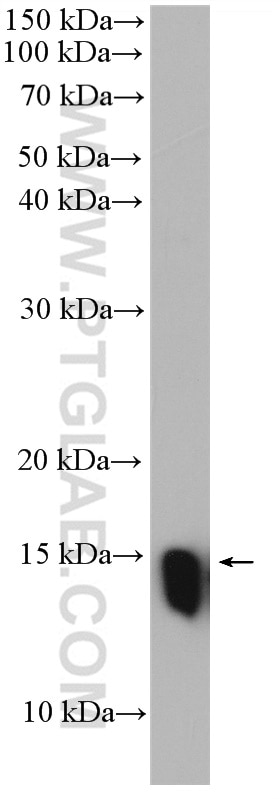
| Positive WB detected in | NIH/3T3 cells, HeLa cells, HepG2 cells, MCF-7 cells |
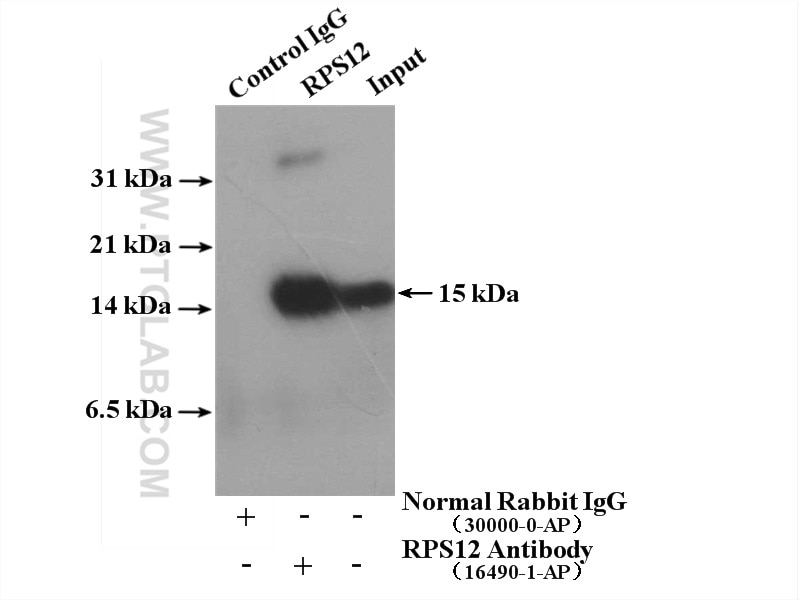
| Positive IP detected in | HeLa cells |
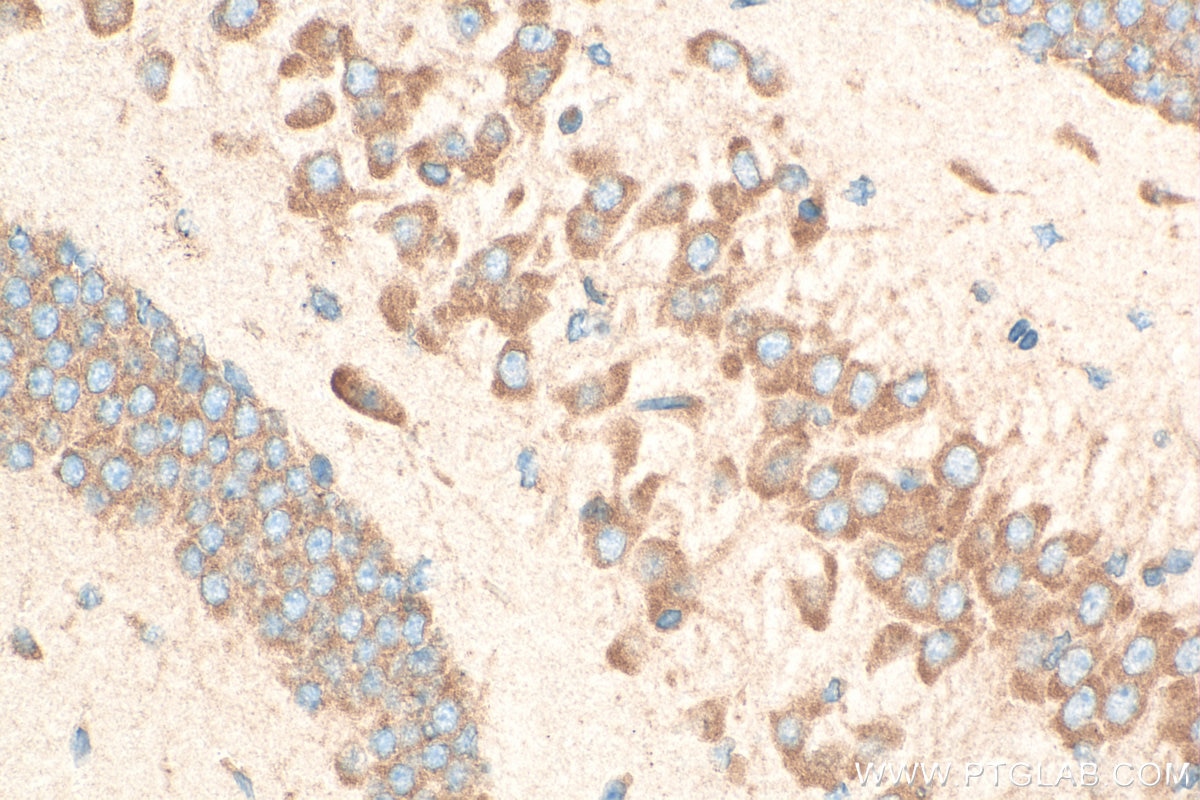
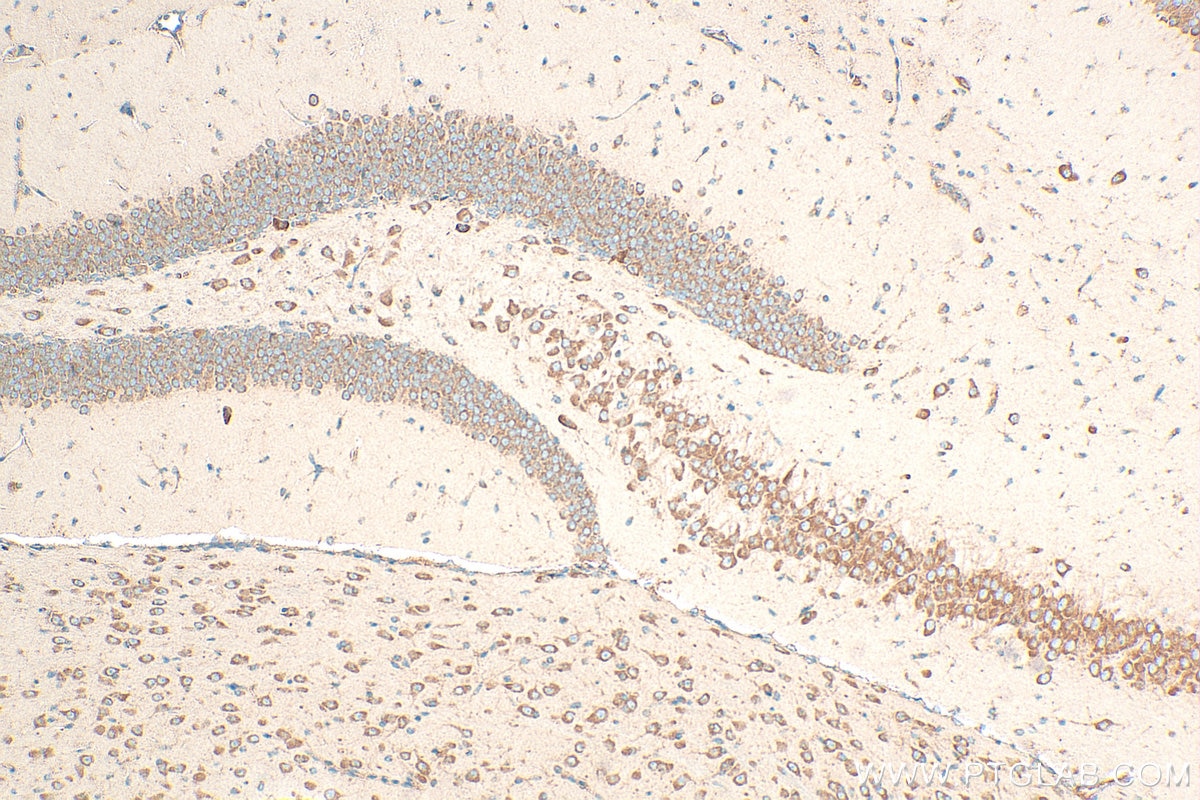
| Positive IHC detected in | mouse brain tissue Note: suggested antigen retrieval with TE buffer pH 9.0; (*) Alternatively, antigen retrieval may be performed with citrate buffer pH 6.0 |
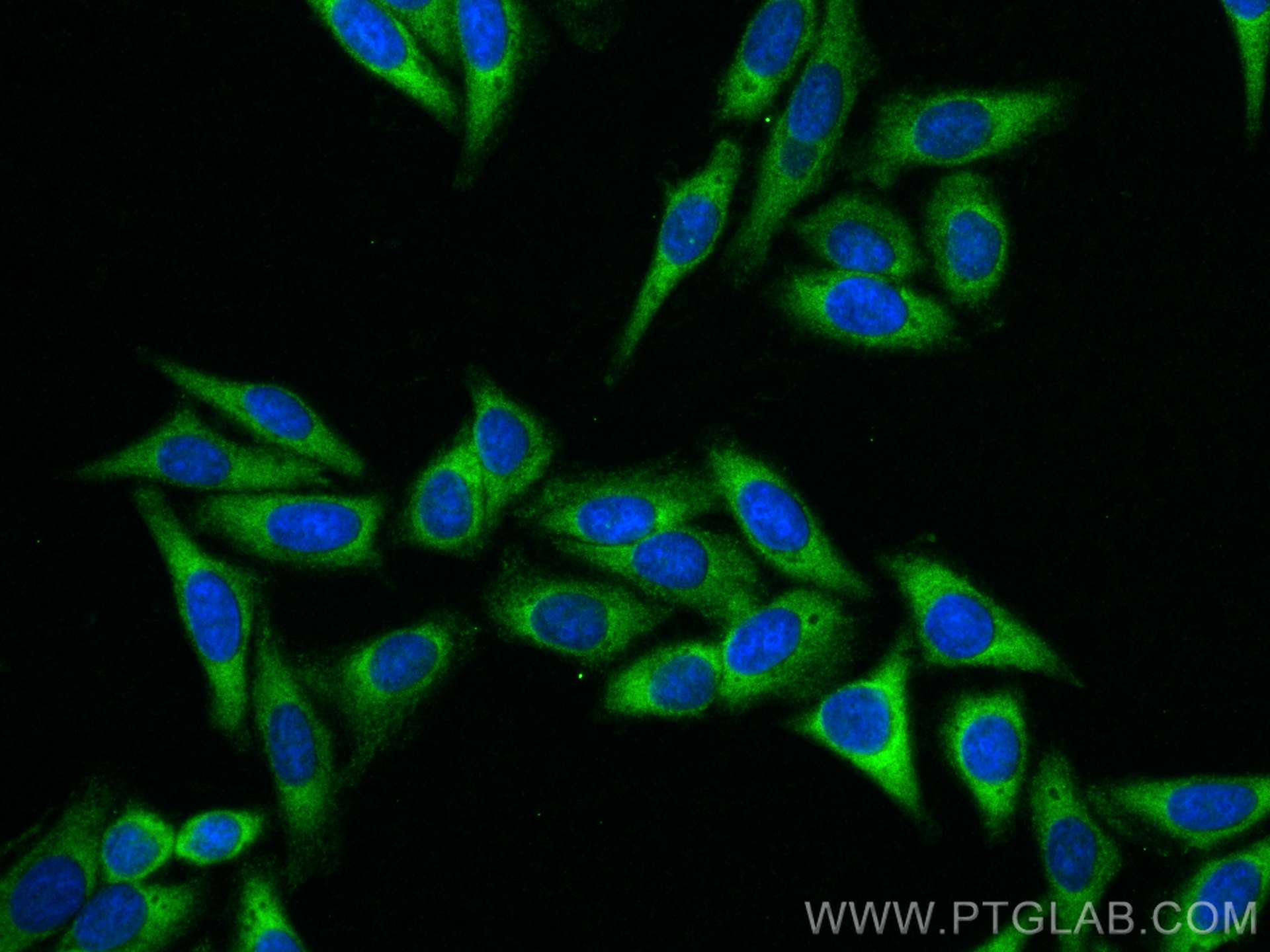
| Positive IF/ICC detected in | HepG2 cells |
Recommended dilution
| Application | Dilution |
|---|---|
| Western Blot (WB) | WB : 1:1000-1:4000 |
| Immunoprecipitation (IP) | IP : 0.5-4.0 ug for 1.0-3.0 mg of total protein lysate |
| Immunohistochemistry (IHC) | IHC : 1:200-1:800 |
| Immunofluorescence (IF)/ICC | IF/ICC : 1:200-1:800 |
| It is recommended that this reagent should be titrated in each testing system to obtain optimal results. | |
| Sample-dependent, Check data in validation data gallery. | |
Product Information
16490-1-AP targets RPS12 in WB, IHC, IF/ICC, IP, ELISA applications and shows reactivity with human, mouse, rat samples.
| Tested Reactivity | human, mouse, rat |
| Cited Reactivity | human, mouse, drosophila |
| Host / Isotype | Rabbit / IgG |
| Class | Polyclonal |
| Type | Antibody |
| Immunogen |
CatNo: Ag9615 Product name: Recombinant human RPS12 protein Source: e coli.-derived, PGEX-4T Tag: GST Domain: 1-132 aa of BC017321 Sequence: MAEEGIAAGGVMDVNTALQEVLKTALIHDGLARGIREAAKALDKRQAHLCVLASNCDEPMYVKLVEALCAEHQINLIKVDDNKKLGEWVGLCKIDREGKPRKVVGCSCVVVKDYGKESQAKDVIEEYFKCKK Predict reactive species |
| Full Name | ribosomal protein S12 |
| Calculated Molecular Weight | 132 aa, 15 kDa |
| Observed Molecular Weight | 15 kDa |
| GenBank Accession Number | BC017321 |
| Gene Symbol | RPS12 |
| Gene ID (NCBI) | 6206 |
| RRID | AB_2146233 |
| Conjugate | Unconjugated |
| Form | Liquid |
| Purification Method | Antigen affinity purification |
| UNIPROT ID | P25398 |
| Storage Buffer | PBS with 0.02% sodium azide and 50% glycerol, pH 7.3. |
| Storage Conditions | Store at -20°C. Stable for one year after shipment. Aliquoting is unnecessary for -20oC storage. 20ul sizes contain 0.1% BSA. |
Background Information
RPS12 (ribosomal protein S12) is a plastid ribosomal protein which is a part of the 30S ribosomal subunit. Together with S4 and S5 plays an important role in translational accuracy.This antibody specifically recognizes the 15kd RPS12 protein.
Protocols
| Product Specific Protocols | |
|---|---|
| IF protocol for RPS12 antibody 16490-1-AP | Download protocol |
| IHC protocol for RPS12 antibody 16490-1-AP | Download protocol |
| IP protocol for RPS12 antibody 16490-1-AP | Download protocol |
| WB protocol for RPS12 antibody 16490-1-AP | Download protocol |
| Standard Protocols | |
|---|---|
| Click here to view our Standard Protocols |
Publications
What published studies show
The RPS12 Polyclonal antibody (catalog no. 16490-1-AP) has 22 citations. These appear in journals including Nature Cell Biology, Molecular Cell, Science Advances, PNAS, Developmental Cell, Cell Reports, Science Reports, eLife, Development, Journal of Pineal Research, International Journal of Oncology, Science Signaling, Molecular Biology Reports, Gastro Hep Advances, and bioRxiv. Research fields span ribosome biology and translation, cancer (gastric, ovarian, breast), neurodevelopment, hematopoiesis, viral infection, and cellular stress responses.
| Species | Application | Title |
|---|---|---|
Nat Cell Biol Functional screen identifies RBM42 as a mediator of oncogenic mRNA translation specificity | ||
Mol Cell RAPIDASH: Tag-free enrichment of ribosome-associated proteins reveals composition dynamics in embryonic tissue, cancer cells, and macrophages | ||
Sci Adv Neurons with granulovacuolar degeneration bodies are resilient to tau-induced protein synthesis impairment. | ||
Proc Natl Acad Sci U S A Cryoelectron tomography reveals an age-related decline in mitoribosomes that contributes to T cell dysfunction in older individuals | ||
Dev Cell Progressive Differentiation and Instructive Capacities of Amniotic Fluid and Cerebrospinal Fluid Proteomes following Neural Tube Closure. | ||
Dev Cell Axonal endoplasmic reticulum tubules control local translation via P180/RRBP1-mediated ribosome interactions |

