

Tested Applications
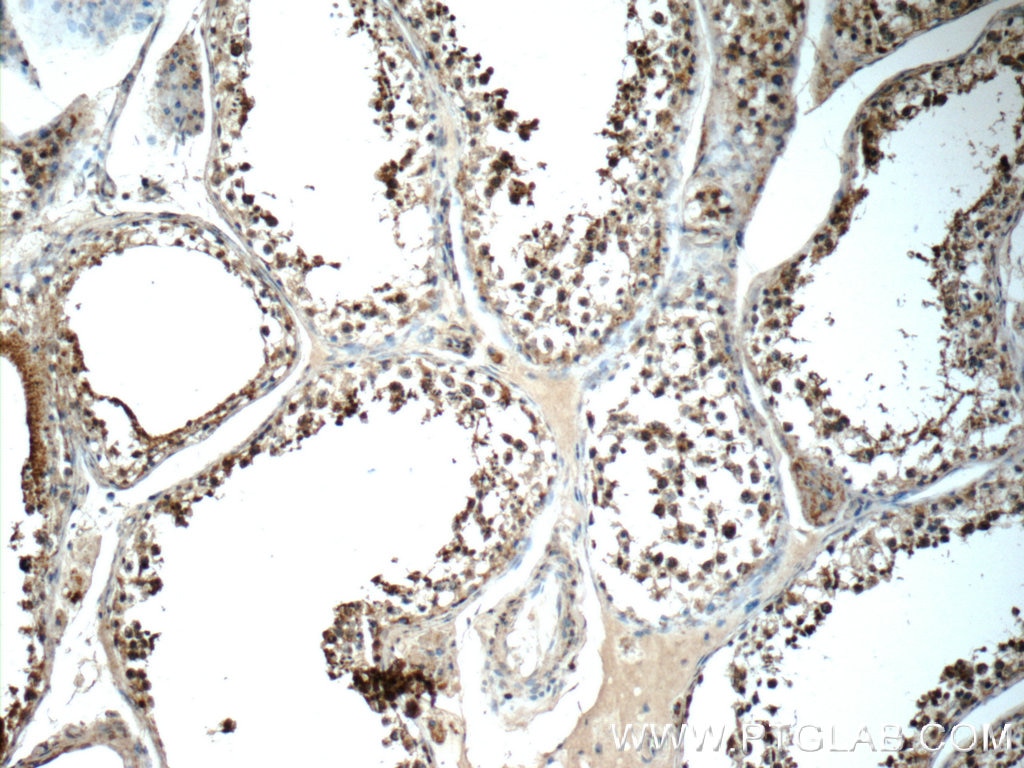
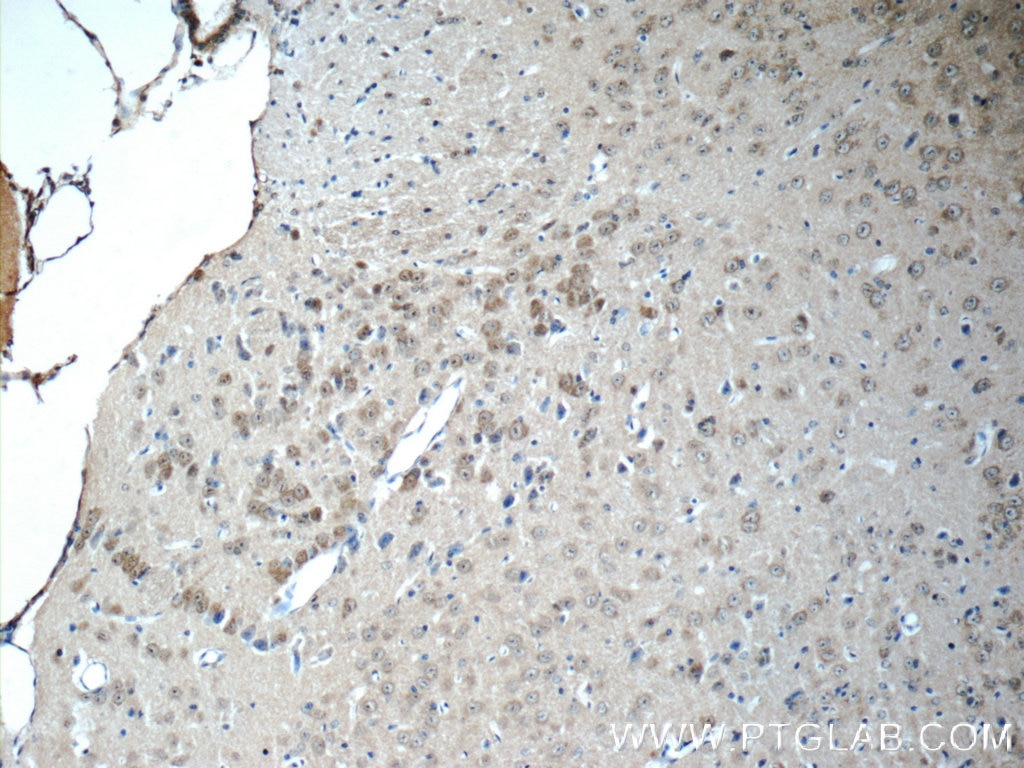
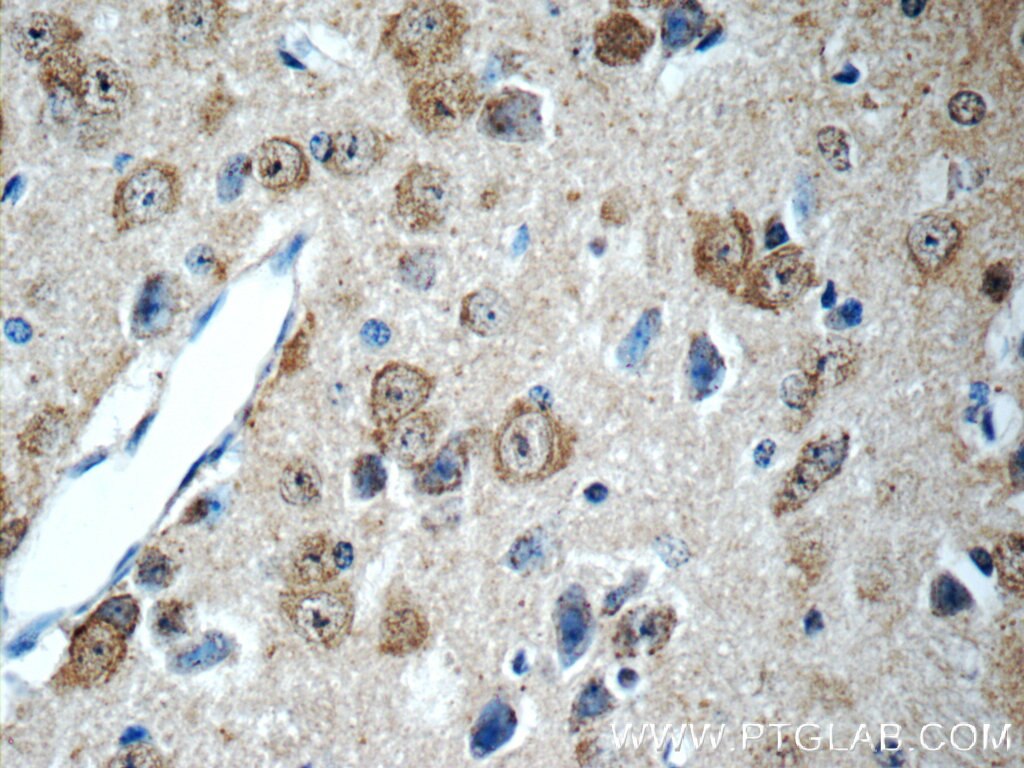
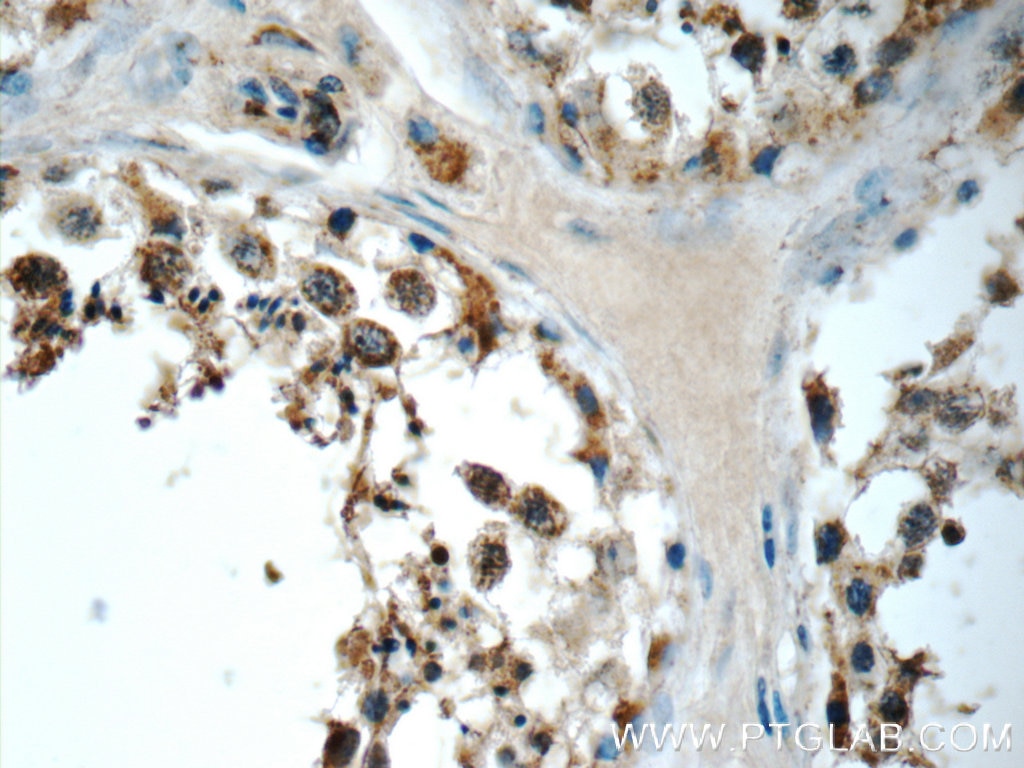
| Positive IHC detected in | mouse brain tissue, human testis tissue Note: suggested antigen retrieval with TE buffer pH 9.0; (*) Alternatively, antigen retrieval may be performed with citrate buffer pH 6.0 |
Recommended dilution
| Application | Dilution |
|---|---|
| Immunohistochemistry (IHC) | IHC : 1:20-1:200 |
| It is recommended that this reagent should be titrated in each testing system to obtain optimal results. | |
| Sample-dependent, Check data in validation data gallery. | |
Product Information
14038-1-AP targets SCRG1 in IHC, ELISA applications and shows reactivity with human, mouse, rat samples.
| Tested Reactivity | human, mouse, rat |
| Cited Reactivity | human, mouse |
| Host / Isotype | Rabbit / IgG |
| Class | Polyclonal |
| Type | Antibody |
| Immunogen |
CatNo: Ag5104 Product name: Recombinant human SCRG1 protein Source: e coli.-derived, PGEX-4T Tag: GST Domain: 1-59 aa of BC017583 Sequence: MKLMVLVFTIGLTLLLGVQAMPANRLSCYRKILKDHNCHNLPEGVADLTQIDVNVQDHF Predict reactive species |
| Full Name | scrapie responsive protein 1 |
| Calculated Molecular Weight | 11 kDa |
| GenBank Accession Number | BC017583 |
| Gene Symbol | SCRG1 |
| Gene ID (NCBI) | 11341 |
| RRID | AB_2878003 |
| Conjugate | Unconjugated |
| Form | Liquid |
| Purification Method | Antigen affinity purification |
| UNIPROT ID | O75711 |
| Storage Buffer | PBS with 0.02% sodium azide and 50% glycerol, pH 7.3. |
| Storage Conditions | Store at -20°C. Stable for one year after shipment. Aliquoting is unnecessary for -20oC storage. 20ul sizes contain 0.1% BSA. |
Protocols
| Product Specific Protocols | |
|---|---|
| IHC protocol for SCRG1 antibody 14038-1-AP | Download protocol |
| Standard Protocols | |
|---|---|
| Click here to view our Standard Protocols |
Publications
What published studies show
The SCRG1 Polyclonal antibody (catalog number 14038-1-AP) has 3 total citations. These appear in Nature Aging, Biomaterials, and Stem Cells International. The research fields span aging neuroscience (astrocyte subtypes in the aging mouse brain), tissue engineering and osteochondral regeneration (SCRG1+ progenitor cell differentiation), and stem cell biology (SCRG1's role in chondrogenic differentiation of human umbilical cord mesenchymal stem cells via Wnt5a).
| Species | Application | Title |
|---|---|---|
Nat Aging A distinct astrocyte subtype in the aging mouse brain characterized by impaired protein homeostasis | ||
Biomaterials Gradient intrafibrillar mineralized collagen scaffold promotes osteochondral regeneration by enhancing differentiation of SCRG1(+) progenitor cells. | ||
Stem Cells Int Scrapie-Responsive Gene 1 Promotes Chondrogenic Differentiation of Umbilical Cord Mesenchymal Stem Cells via Wnt5a.
|

