

Tested Applications
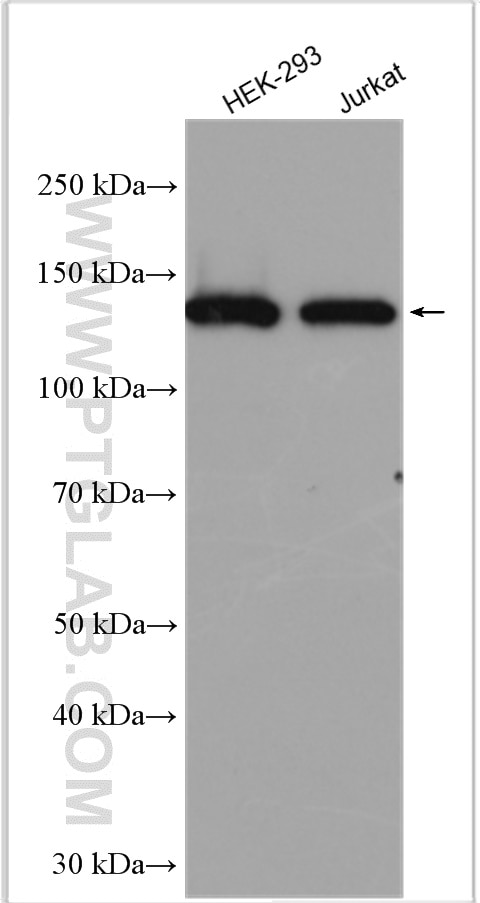
| Positive WB detected in | HEK-293 cells, Jurkat cells |
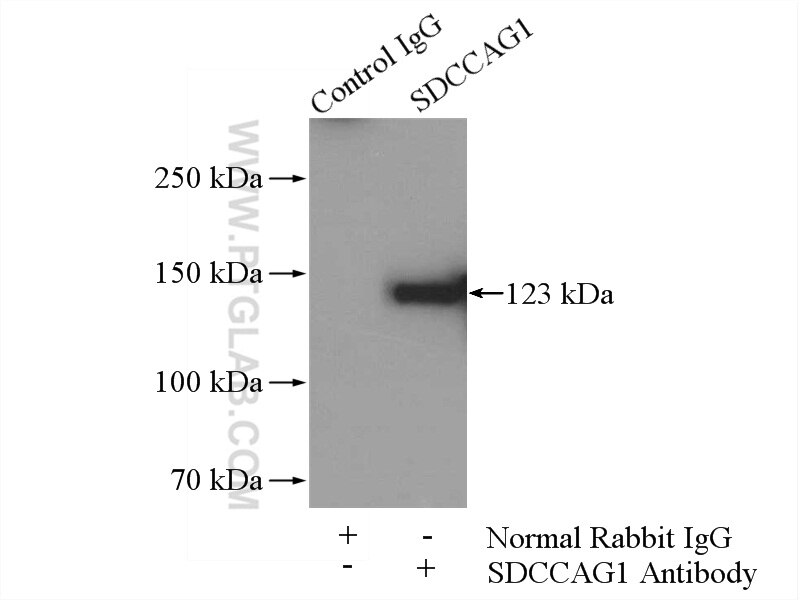
| Positive IP detected in | A549 cells |
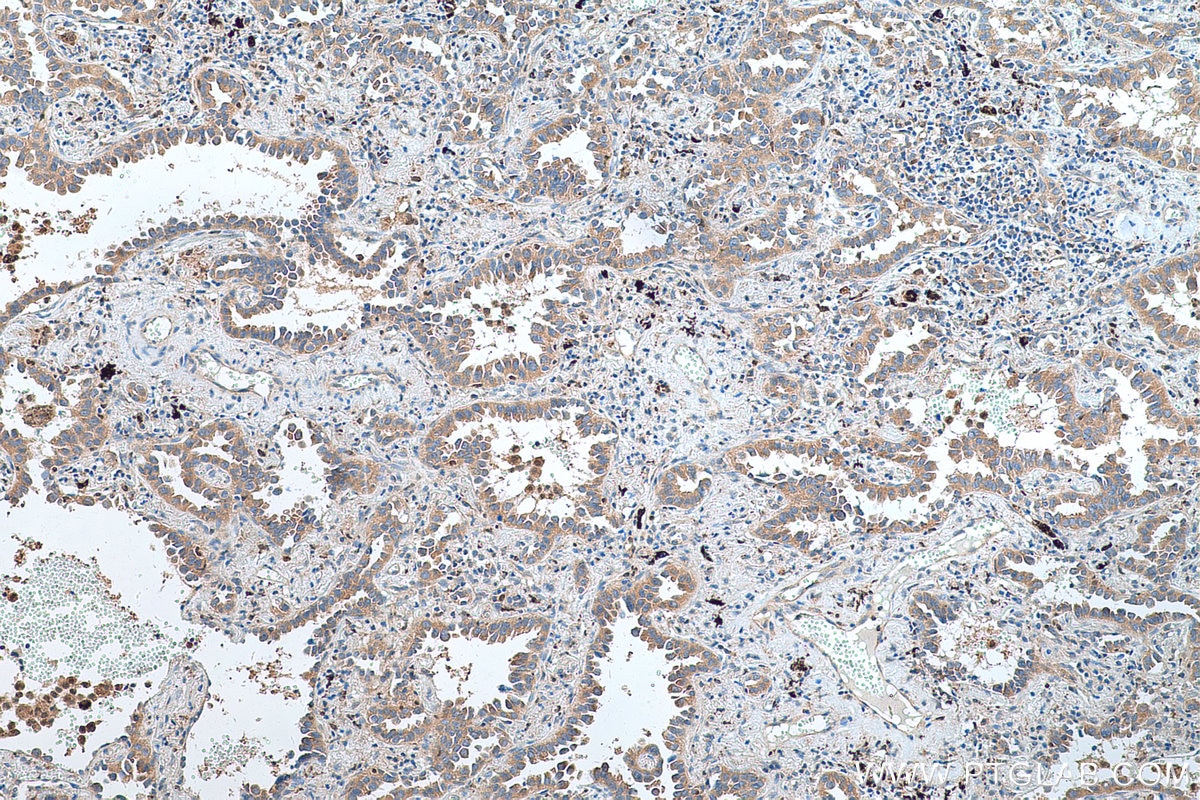
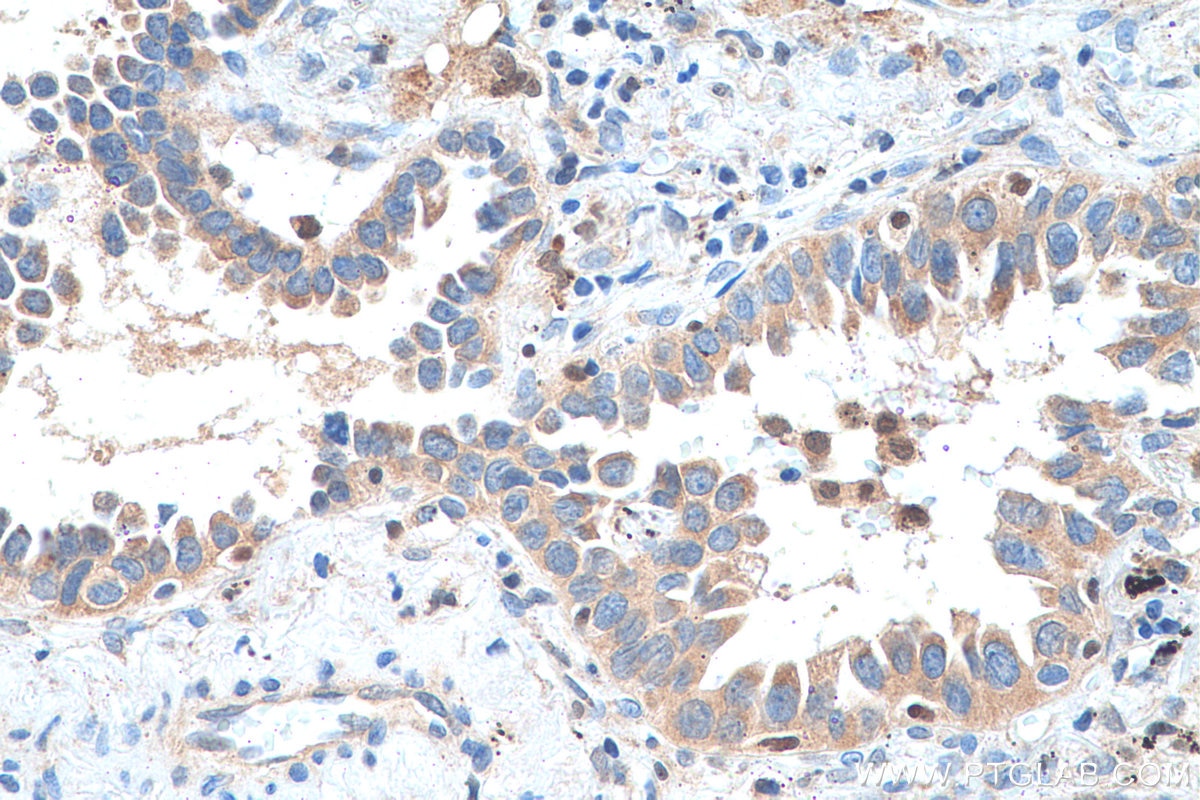
| Positive IHC detected in | human lung cancer tissue Note: suggested antigen retrieval with TE buffer pH 9.0; (*) Alternatively, antigen retrieval may be performed with citrate buffer pH 6.0 |
Recommended dilution
| Application | Dilution |
|---|---|
| Western Blot (WB) | WB : 1:1000-1:6000 |
| Immunoprecipitation (IP) | IP : 0.5-4.0 ug for 1.0-3.0 mg of total protein lysate |
| Immunohistochemistry (IHC) | IHC : 1:250-1:1000 |
| It is recommended that this reagent should be titrated in each testing system to obtain optimal results. | |
| Sample-dependent, Check data in validation data gallery. | |
Product Information
11840-1-AP targets SDCCAG1 in WB, IHC, IF, IP, ELISA applications and shows reactivity with human, mouse, rat samples.
| Tested Reactivity | human, mouse, rat |
| Cited Reactivity | human, mouse |
| Host / Isotype | Rabbit / IgG |
| Class | Polyclonal |
| Type | Antibody |
| Immunogen |
CatNo: Ag2467 Product name: Recombinant human SDCCAG1 protein Source: e coli.-derived, PGEX-4T Tag: GST Domain: 48-397 aa of BC020794 Sequence: EDITLQSGRDELNEELIQEESSEDEGEYEEVRKDQDSVGEMKDEGEETLNYPDTTIDLSHLQPQRSIQKLASKEESSNSSDSKSQSRRHLSAKERREMKKKKLPSDSGDLEALEGKDKEKESTVHIETHQNTSKNVAAVQPMKRGQKSKMKKMKEKYKDQDEEDRELIMKLLGSAGSNKEEKGKKGKKGKTKDEPVKKQPQKPRGGQRVSDNIKKETPFLEVITHELQDFAVDDPHDDKEEQDLDQQGNEENLFDSLTGQPHPEDVLLFAIPICAPYTTMTNYKYKVKLTPGVQKKGKAAKTALNSFMHSKEATAREKDLFRSVKDTDLSRNIPGKVKVSAPNLLNVKRK Predict reactive species |
| Full Name | serologically defined colon cancer antigen 1 |
| Calculated Molecular Weight | 1076 aa, 123 kDa |
| Observed Molecular Weight | 130-140 kDa |
| GenBank Accession Number | BC020794 |
| Gene Symbol | SDCCAG1 |
| Gene ID (NCBI) | 9147 |
| RRID | AB_2183413 |
| Conjugate | Unconjugated |
| Form | Liquid |
| Purification Method | Antigen affinity purification |
| UNIPROT ID | O60524 |
| Storage Buffer | PBS with 0.02% sodium azide and 50% glycerol, pH 7.3. |
| Storage Conditions | Store at -20°C. Stable for one year after shipment. Aliquoting is unnecessary for -20oC storage. 20ul sizes contain 0.1% BSA. |
Background Information
SDCCAG1, also named as NEMF, is a nuclear export mediator. It can be bound to translocon-engaged 60S subunits on native ER membranes. Human SDCCAG1 has been implicated in lung cancers and it may function as a tumor suppressor gene. SDCCAG1 inactivation contributes to the transformed state of human lung cancer cells (PMID:16103875, 10575219). NEMF is also regarded as a potential biomarker for the detection of active and latent TB infections (PMID: 26818387).
Protocols
| Product Specific Protocols | |
|---|---|
| IHC protocol for SDCCAG1 antibody 11840-1-AP | Download protocol |
| IP protocol for SDCCAG1 antibody 11840-1-AP | Download protocol |
| WB protocol for SDCCAG1 antibody 11840-1-AP | Download protocol |
| Standard Protocols | |
|---|---|
| Click here to view our Standard Protocols |
Publications
What published studies show
Antibody: NEMF (catalog #11840-1-AP), with 20 total citations. Journals include Nature, Autophagy, Nature Communications, Molecular Cell, Nucleic Acids Research, Leukemia, EMBO Journal, Cell Reports, Acta Neuropathologica Communications, Cancer Gene Therapy, Journal of Cell Biology, FEBS Letters, Discovery Oncology, STAR Protocols, Research Square, eLife, and bioRxiv. Research fields span ribosome-associated quality control (RQC), UFMylation, protein translocation surveillance, neurodegeneration, and oncology (leukemia, glioblastoma, ovarian cancer).
| Species | Application | Title |
|---|---|---|
Autophagy LTN1 promotes RLR degradation to inhibit immune response to RNA virus through the ESCRT pathway | ||
Nat Commun NEMF mutations that impair ribosome-associated quality control are associated with neuromuscular disease.
| ||
Mol Cell Convergence of mammalian RQC and C-end rule proteolytic pathways via alanine tailing.
| ||
Nucleic Acids Res Ribosomal quality control factors inhibit repeat-associated non-AUG translation from GC-rich repeats | ||
Leukemia BCR::ABL1 tyrosine kinase inhibitors induce ribosome collisions to activate ZAK-dependent ribotoxic stress and apoptosis in chronic myeloid leukemia. |

