

Tested Applications
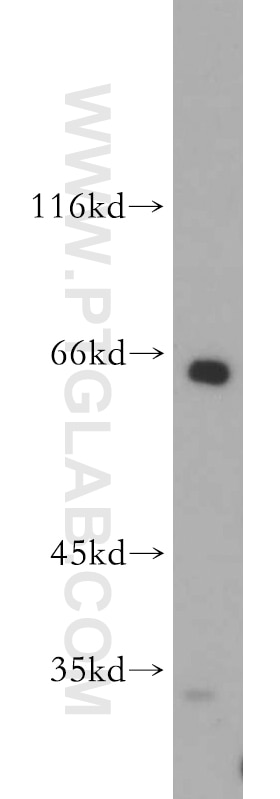
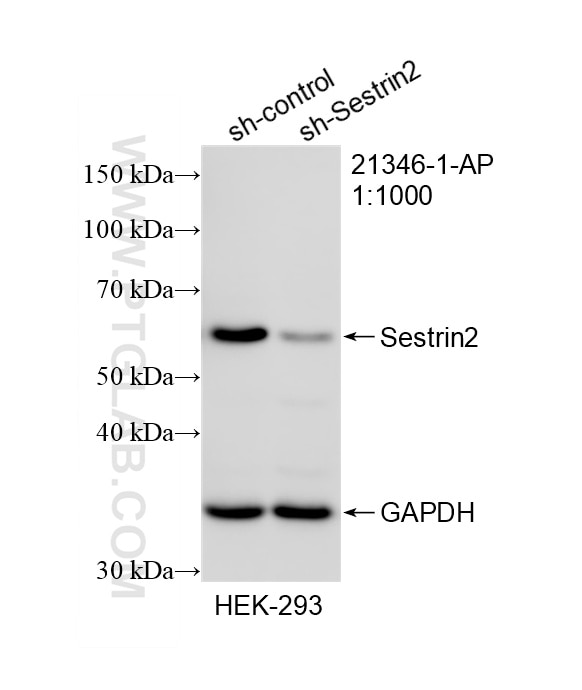
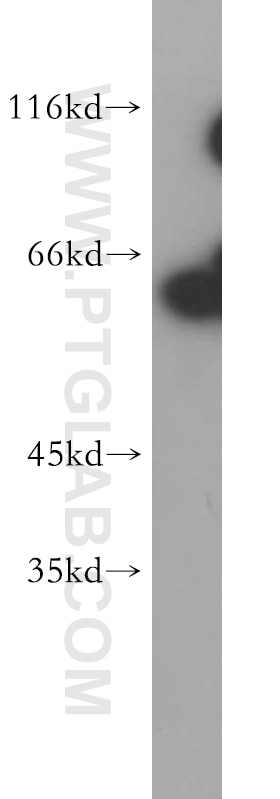
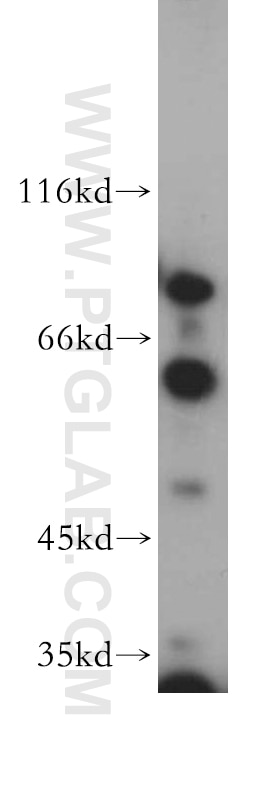
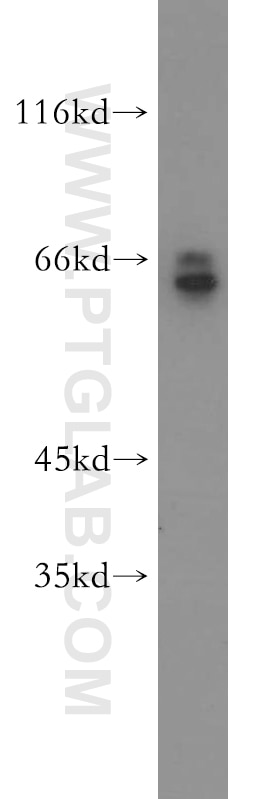
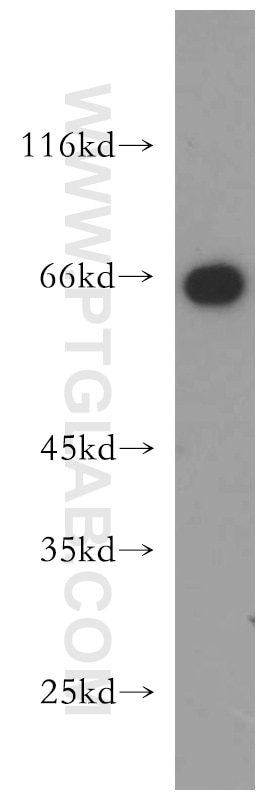
| Positive WB detected in | mouse thymus tissue, HEK-293 cells, HeLa cells, K-562 cells, mouse lung tissue, NIH/3T3 cells |
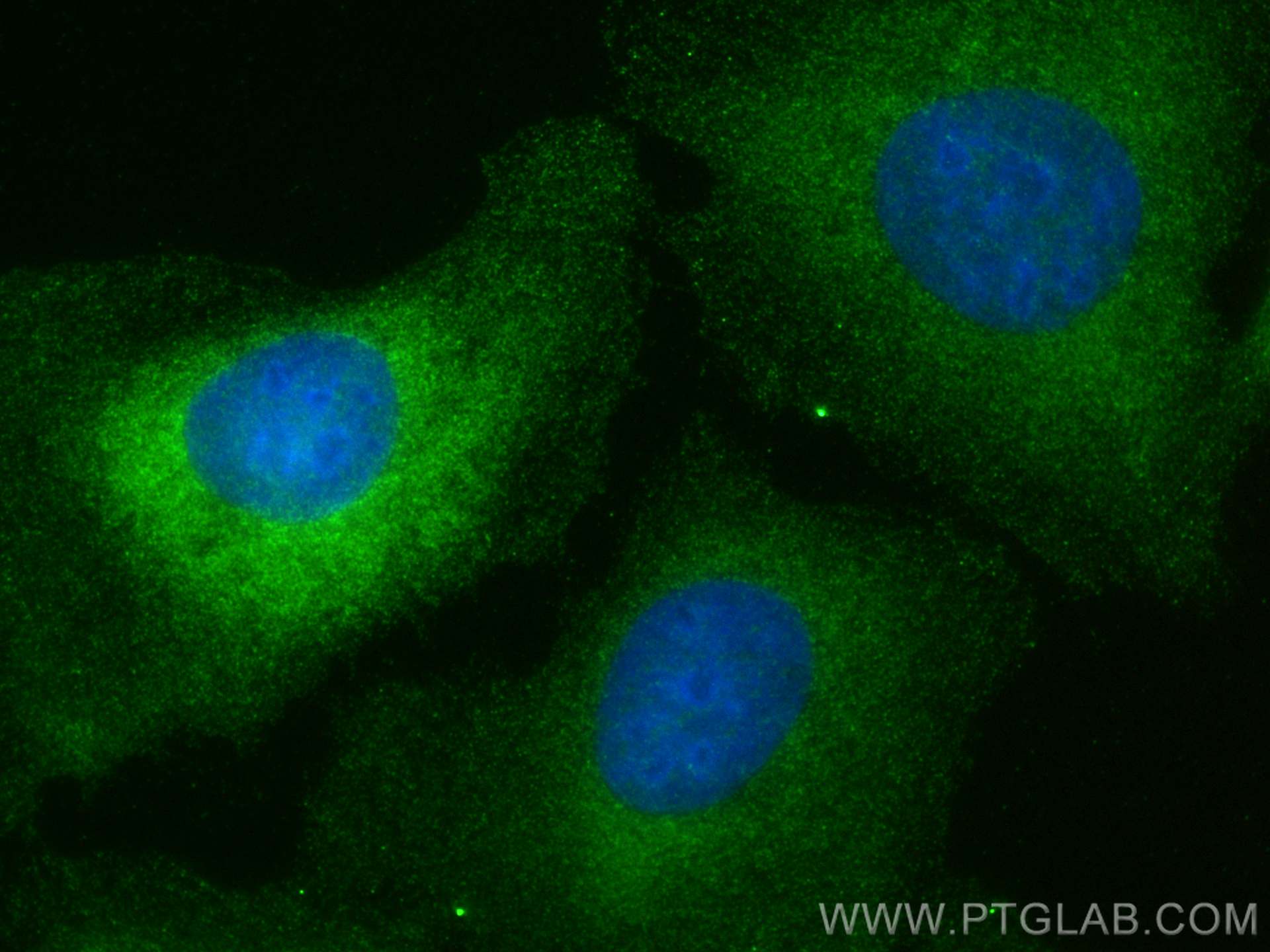
| Positive IF/ICC detected in | U2OS cells |
Recommended dilution
| Application | Dilution |
|---|---|
| Western Blot (WB) | WB : 1:1000-1:4000 |
| Immunofluorescence (IF)/ICC | IF/ICC : 1:200-1:800 |
| It is recommended that this reagent should be titrated in each testing system to obtain optimal results. | |
| Sample-dependent, Check data in validation data gallery. | |
Product Information
21346-1-AP targets Sestrin 2 in WB, IF/ICC, ELISA applications and shows reactivity with human, mouse samples.
| Tested Reactivity | human, mouse |
| Cited Reactivity | human, mouse, rat |
| Host / Isotype | Rabbit / IgG |
| Class | Polyclonal |
| Type | Antibody |
| Immunogen |
CatNo: Ag15669 Product name: Recombinant human SESN2 protein Source: e coli.-derived, PGEX-4T Tag: GST Domain: 1-117 aa of NM_031459 Sequence: MIVADSECRAELKDYLRFAPGGVGDSGPGEEQRESRARRGPRGPSAFIPVEEVLREGAESLEQHLGLEALMSSGRVDNLAVVMGLHPDYFTSFWRLHYLLLHTDGPLASSWRHYIAI Predict reactive species |
| Full Name | sestrin 2 |
| Calculated Molecular Weight | 480 aa, 54 kDa |
| Observed Molecular Weight | 60-66 kDa |
| GenBank Accession Number | NM_031459 |
| Gene Symbol | SESN2/Sestrin 2 |
| Gene ID (NCBI) | 83667 |
| RRID | AB_10733238 |
| Conjugate | Unconjugated |
| Form | Liquid |
| Purification Method | Antigen affinity purification |
| UNIPROT ID | P58004 |
| Storage Buffer | PBS with 0.02% sodium azide and 50% glycerol, pH 7.3. |
| Storage Conditions | Store at -20°C. Stable for one year after shipment. Aliquoting is unnecessary for -20oC storage. 20ul sizes contain 0.1% BSA. |
Background Information
Sestrins, including sestrin-1 (PA26), sestrin-2 (Hi95), and sestrin-3, are 48 to 65 kDa cystein sulfinyl reductases and they modulate peroxide signaling and antioxidant defense. These proteins selectively reduce or repair hyperoxidized forms of typical 2-Cys peroxiredoxins within eukaryotes. Expression of these proteins is regulated by p53, a tumor suppressor protein. Sestrin 2 is implicated in the regulation of cell growth and survival, in cellular responses to different stress conditions, and also acts as a positive regulator of autophagy. Sestrin 2 is approximately a 57.6kDa protein (480 amino acids).
Protocols
| Product Specific Protocols | |
|---|---|
| IF protocol for Sestrin 2 antibody 21346-1-AP | Download protocol |
| WB protocol for Sestrin 2 antibody 21346-1-AP | Download protocol |
| Standard Protocols | |
|---|---|
| Click here to view our Standard Protocols |
Publications
What published studies show
The Sestrin 2 Polyclonal antibody (Cat# 21346-1-AP) has 16 citations. These appear in journals including Cancer Cell, Phytomedicine, Frontiers in Immunology, Journal of Investigative Dermatology, Cells, Neurobiology of Disease, International Journal of Molecular Sciences, Journal of Cerebral Blood Flow & Metabolism, Journal of Neurochemistry, Journal of Dermatological Science, Journal of Cellular Physiology, Frontiers in Neuroscience, Journal of Integrative Neuroscience, Molecular and Cellular Biology, Journal of Cardiothoracic Surgery, and eLife. Research fields span oncology, neurology, cardiology, dermatology, nephrology, and mTOR/metabolic signaling.
| Species | Application | Title |
|---|---|---|
Cancer Cell p53 Is a Master Regulator of Proteostasis in SMARCB1-Deficient Malignant Rhabdoid Tumors. | ||
Phytomedicine Rhoifolin prevents herpes simplex virus encephalitis by modulating SESN2 to regulate the Keap1/Nrf2 and AMPK/Nox pathways to inhibit neuro-oxidative damage in mice. | ||
Front Immunol Sestrin2 provides cerebral protection through activation of Nrf2 signaling in microglia following subarachnoid hemorrhage | ||
J Invest Dermatol Metastatic melanoma cells rely on Sestrin2 to acquire anoikis resistance via detoxifying intracellular ROS.
| ||
Cells Sestrin2 Mediates Metformin Rescued the Age-Related Cardiac Dysfunctions of Cardiorenal Syndrome Type 3 | ||
Neurobiol Dis Sestrin2 induced by hypoxia inducible factor1 alpha protects the blood-brain barrier via inhibiting VEGF after severe hypoxic-ischemic injury in neonatal rats. |

