

Tested Applications
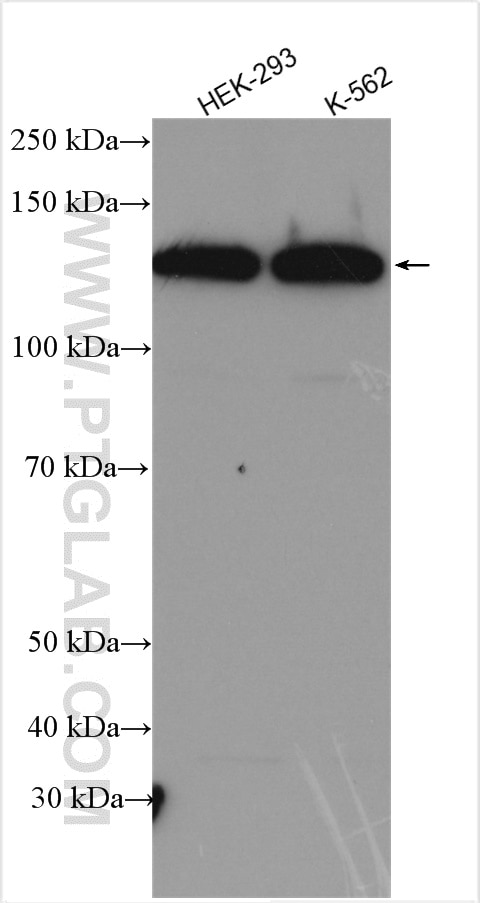
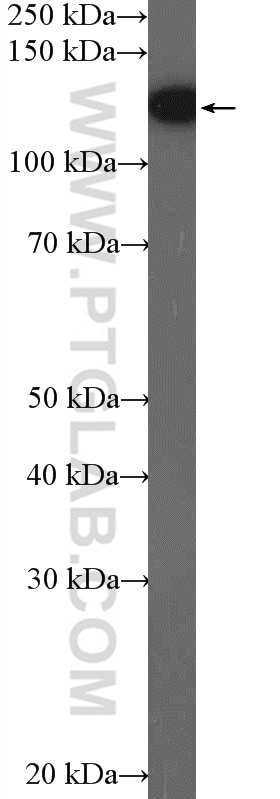
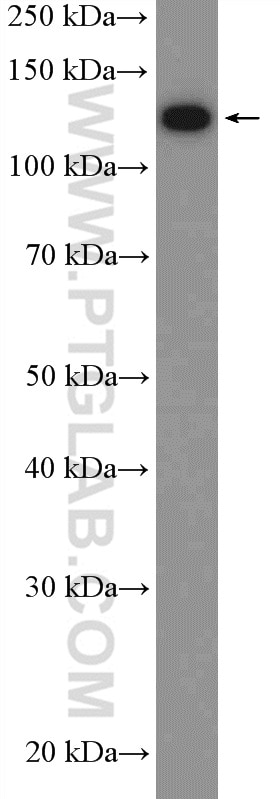
| Positive WB detected in | HEK-293 cells, K-562 cells |
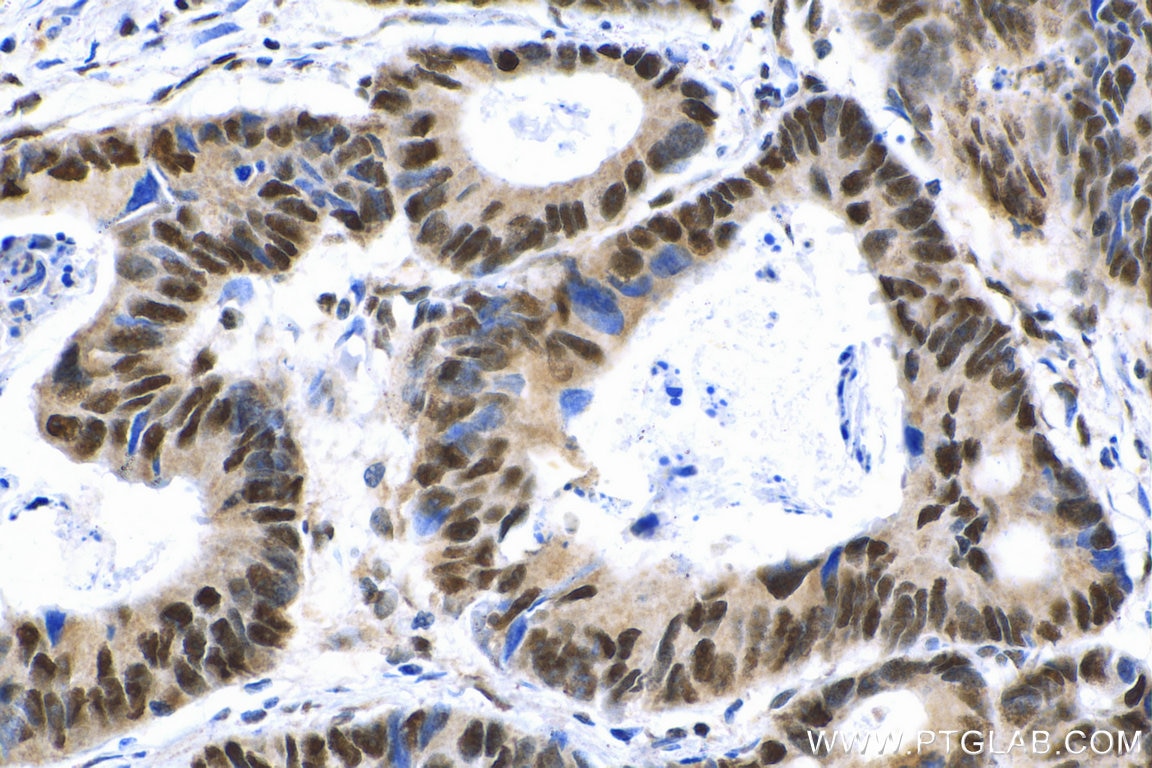
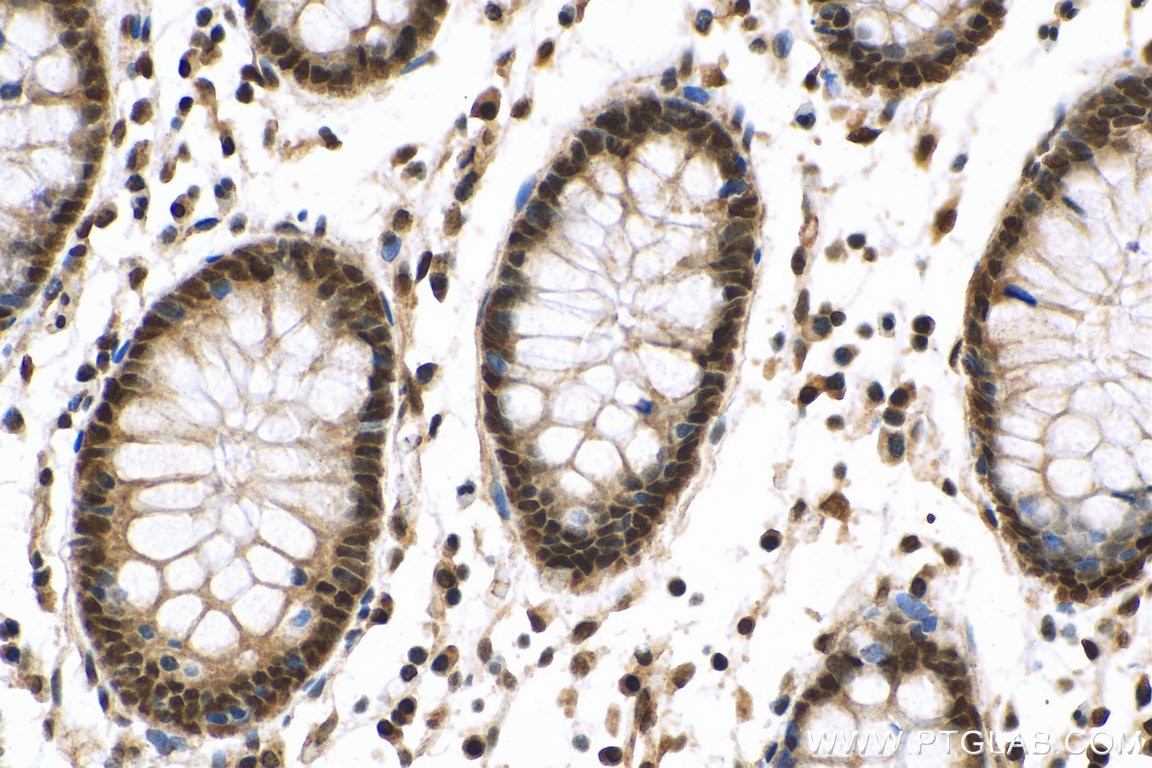
| Positive IHC detected in | human colon cancer tissue Note: suggested antigen retrieval with TE buffer pH 9.0; (*) Alternatively, antigen retrieval may be performed with citrate buffer pH 6.0 |
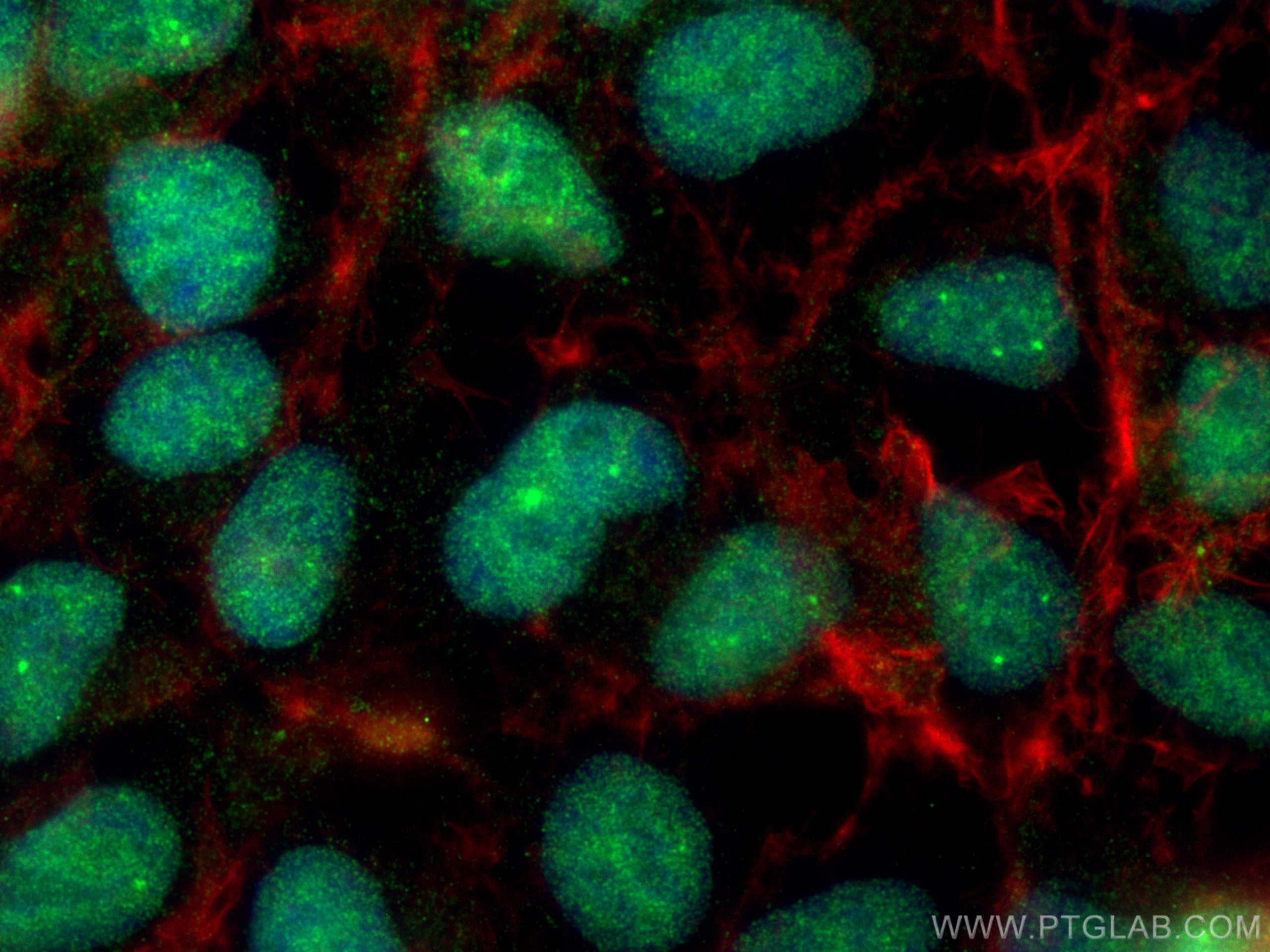
| Positive IF/ICC detected in | HEK-293 cells |
Recommended dilution
| Application | Dilution |
|---|---|
| Western Blot (WB) | WB : 1:500-1:3000 |
| Immunohistochemistry (IHC) | IHC : 1:50-1:500 |
| Immunofluorescence (IF)/ICC | IF/ICC : 1:500-1:2000 |
| It is recommended that this reagent should be titrated in each testing system to obtain optimal results. | |
| Sample-dependent, Check data in validation data gallery. | |
Product Information
10919-1-AP targets SF3B2 in WB, IHC, IF/ICC, CoIP, ELISA applications and shows reactivity with human samples.
| Tested Reactivity | human |
| Cited Reactivity | human, mouse |
| Host / Isotype | Rabbit / IgG |
| Class | Polyclonal |
| Type | Antibody |
| Immunogen |
CatNo: Ag1009 Product name: Recombinant human SF3B2 protein Source: e coli.-derived, PGEX-4T Tag: GST Domain: 331-636 aa of BC007610 Sequence: LYYEGKEFETRLKEKKPGDLSDELRISLGMPVGPNAHKVPPPWLIAMQRYGPPPSYPNLKIPG LNSPIPESCSFGYHAGGWGKPPVDETGKPLYGDVFGTNAAEFQTKTEEEEIDRTPWGELEPSD EESSEEEEEEESDEDKPDETGFITPADSGLITPGGFSSVPAGMETPELIELRKKKIEEAMDGSETPQ LFTVLPEKRTATVGGAMMGSTHIYDMSTVMSRKGPAPELQGVEVALAPEELELDPMAMTQKY EEHVREQQAQVEKEDFSDMVAEHAAKQKQKKRKAQPQDSRGGSKKYKEFKF Predict reactive species |
| Full Name | splicing factor 3b, subunit 2, 145kDa |
| Calculated Molecular Weight | 100 kDa |
| Observed Molecular Weight | 130-140 kDa |
| GenBank Accession Number | BC007610 |
| Gene Symbol | SF3B2 |
| Gene ID (NCBI) | 10992 |
| RRID | AB_2285782 |
| Conjugate | Unconjugated |
| Form | Liquid |
| Purification Method | Antigen affinity purification |
| UNIPROT ID | Q13435 |
| Storage Buffer | PBS with 0.02% sodium azide and 50% glycerol, pH 7.3. |
| Storage Conditions | Store at -20°C. Stable for one year after shipment. Aliquoting is unnecessary for -20oC storage. 20ul sizes contain 0.1% BSA. |
Background Information
SF3B (splicing factor 3B) is a U2 snRNP-associated protein complex essential for spliceosome assembly. SF3B complex contains the spliceosome-associated protein (SAP) 49, 130, 145, and 155 has been demonstrated. And this complex is essential for U2 snRNP to anchor to the pre-mRNA. Splicing factor 3B subunit 2 (SF3B2), known as SAP145, forms complex with SAP49 which plays a role in cell cycle progression. SAP145, with predicated MW of 100 kDa, appears with MW of about 145 kDa which may be due to the post-translational modification.
Protocols
| Product Specific Protocols | |
|---|---|
| IF protocol for SF3B2 antibody 10919-1-AP | Download protocol |
| IHC protocol for SF3B2 antibody 10919-1-AP | Download protocol |
| WB protocol for SF3B2 antibody 10919-1-AP | Download protocol |
| Standard Protocols | |
|---|---|
| Click here to view our Standard Protocols |
Publications
What published studies show
The SF3B2 Polyclonal antibody (Cat# 10919-1-AP) has 12 citations published in journals including Gastroenterology, Nucleic Acids Research, Science Advances, Cell Reports, PLoS Biology, Genome Medicine, J Exp Clin Cancer Res, Cancer Gene Ther, APL Bioengineering, Orphanet Journal of Rare Disease, and Frontiers in Oncology. Research fields span alternative splicing, spliceosomal biology, cancer (lung, breast, bladder, dermatofibrosarcoma), intestinal inflammation, genome instability, COVID-19-associated heart injury, atherosclerosis, and ferroptosis.
| Species | Application | Title |
|---|---|---|
Gastroenterology Enterotoxigenic Bacteroides fragilis promotes intestinal inflammation and malignancy by inhibiting exosomes-packaged miR-149-3p. | ||
Nucleic Acids Res MEN1 is a regulator of alternative splicing and prevents R-loop-induced genome instability through suppression of RNA polymerase II elongation | ||
Nucleic Acids Res CUGBP2 directly interacts with U2 17S snRNP components and promotes U2 snRNA binding to cardiac troponin T pre-mRNA. | ||
J Exp Clin Cancer Res CircSCAP interacts with SF3A3 to inhibit the malignance of non-small cell lung cancer by activating p53 signaling. | ||
Sci Adv SF3A2 promotes progression and cisplatin resistance in triple-negative breast cancer via alternative splicing of MKRN1 | ||

