
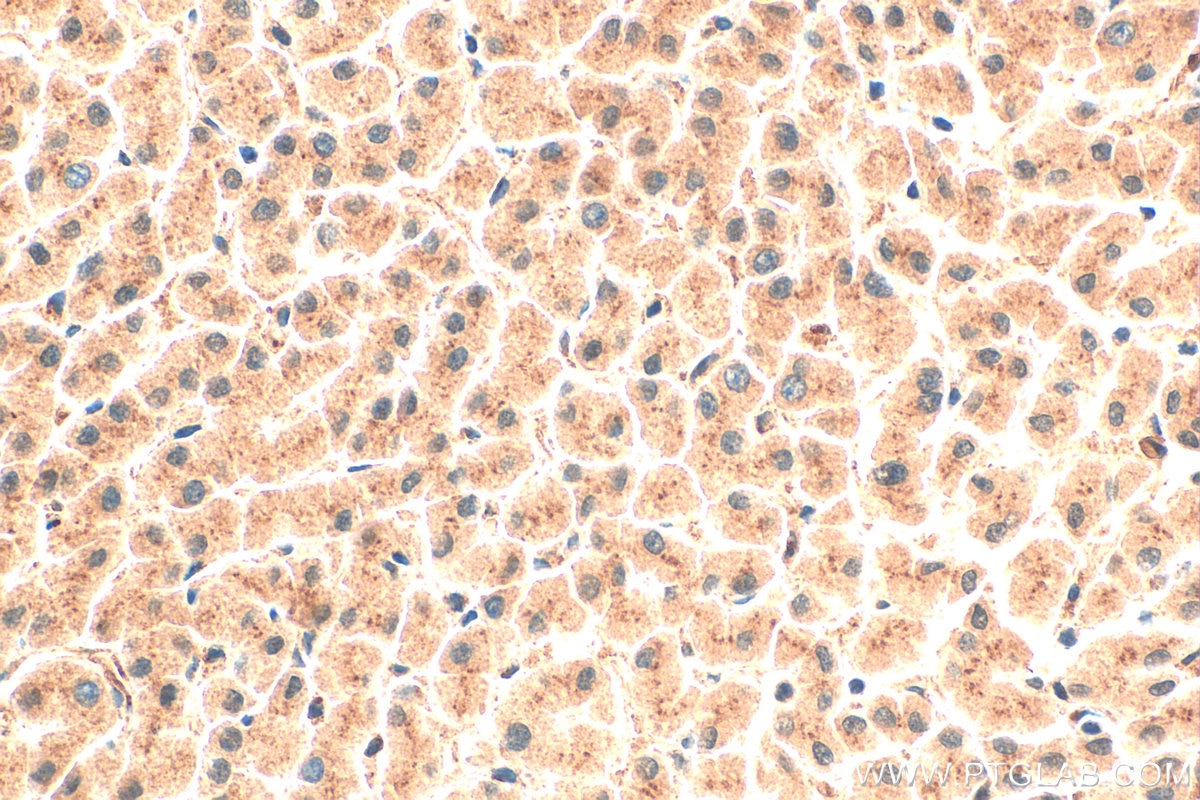
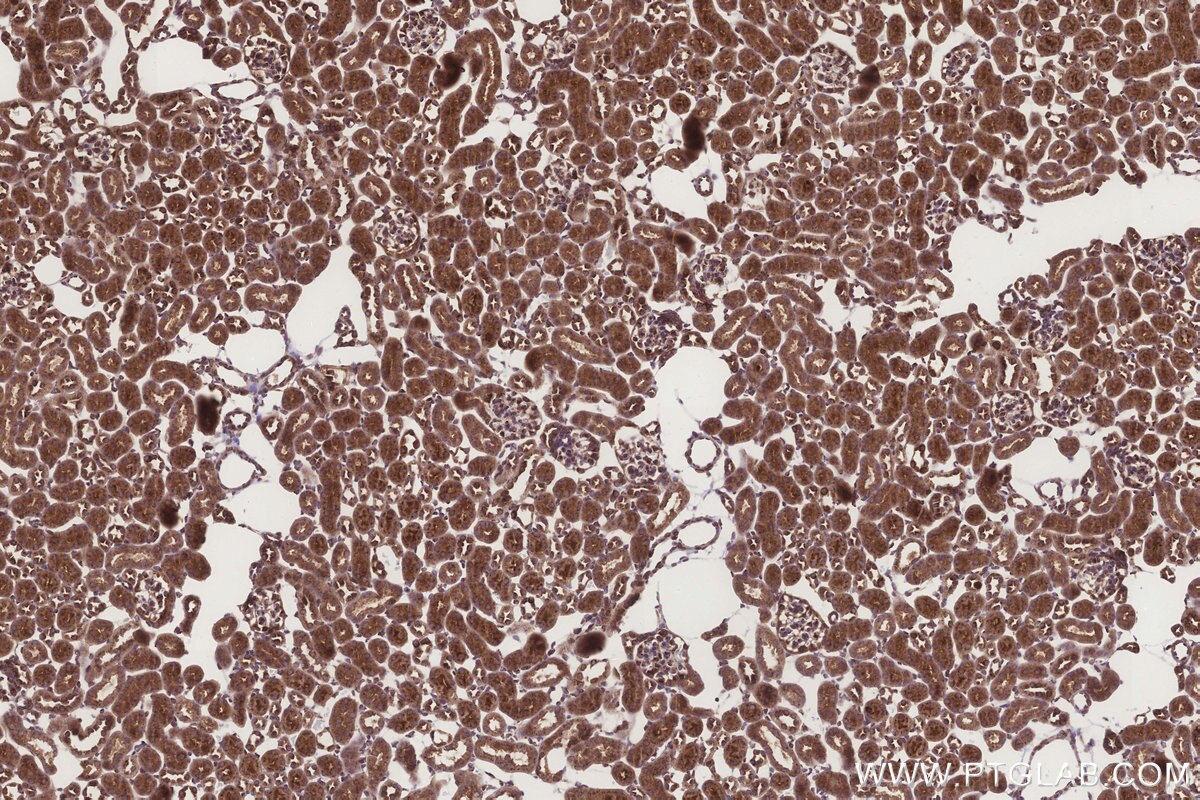

Tested Applications
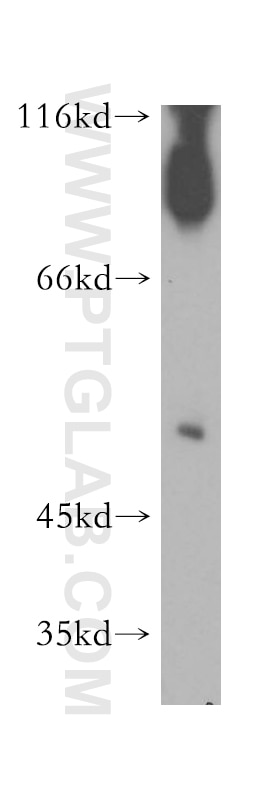
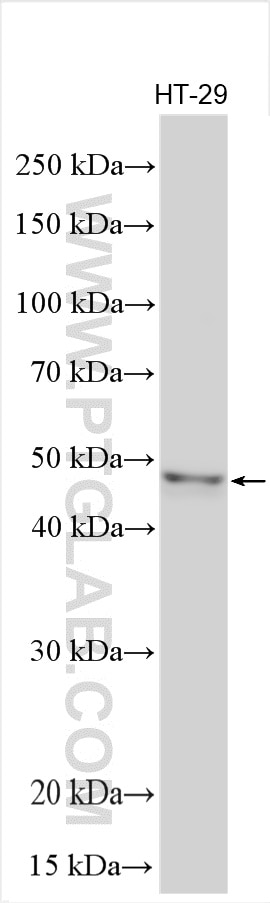
| Positive WB detected in | HT-29 cells, human heart tissue |
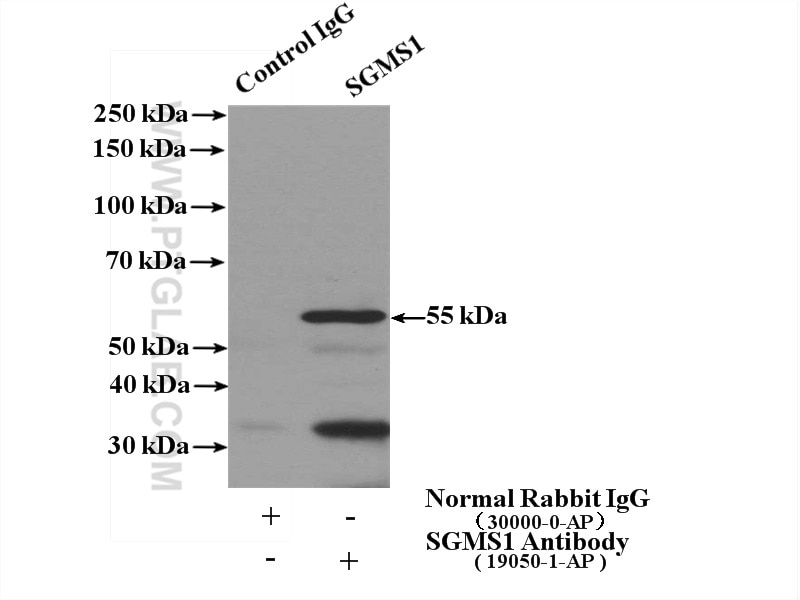
| Positive IP detected in | mouse heart tissue |
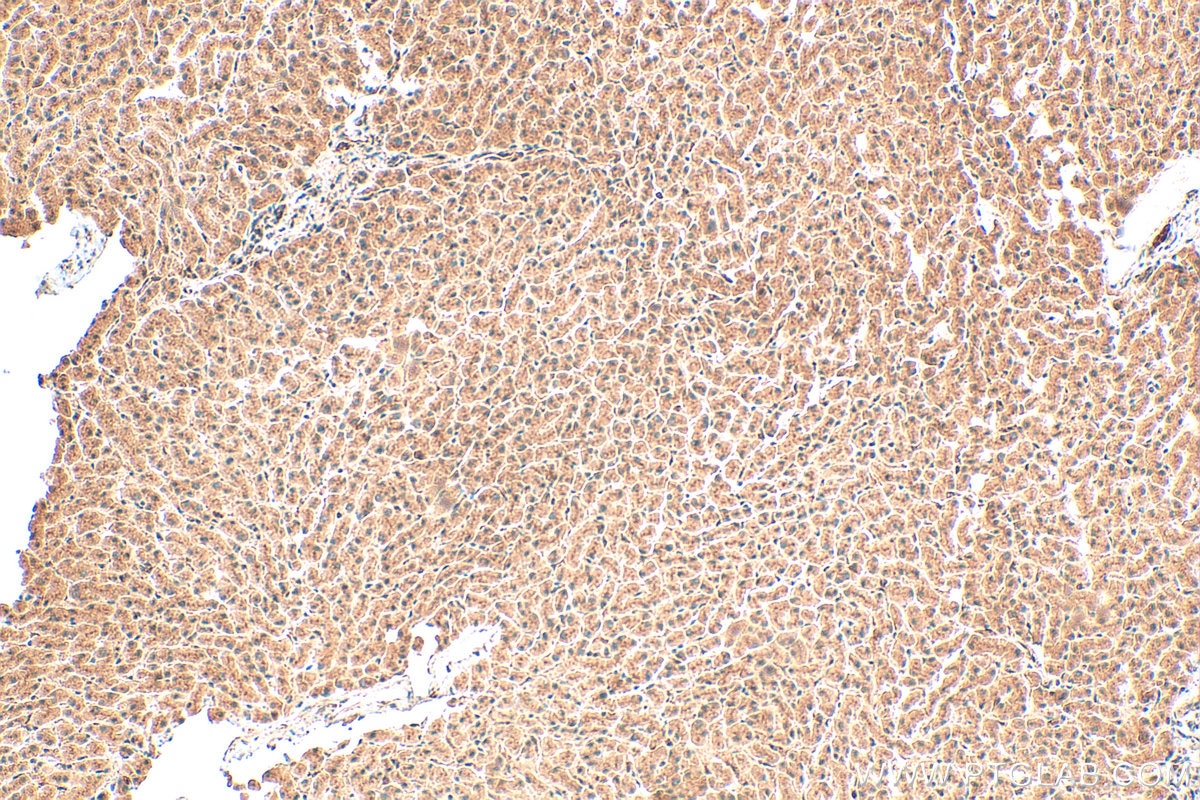
| Positive IHC detected in | human liver tissue, mouse kidney tissue Note: suggested antigen retrieval with TE buffer pH 9.0; (*) Alternatively, antigen retrieval may be performed with citrate buffer pH 6.0 |
Recommended dilution
| Application | Dilution |
|---|---|
| Western Blot (WB) | WB : 1:500-1:1000 |
| Immunoprecipitation (IP) | IP : 0.5-4.0 ug for 1.0-3.0 mg of total protein lysate |
| Immunohistochemistry (IHC) | IHC : 1:50-1:500 |
| It is recommended that this reagent should be titrated in each testing system to obtain optimal results. | |
| Sample-dependent, Check data in validation data gallery. | |
Product Information
19050-1-AP targets SGMS1 in WB, IHC, IF, IP, ELISA applications and shows reactivity with human, mouse, rat samples.
| Tested Reactivity | human, mouse, rat |
| Cited Reactivity | human, mouse, rat |
| Host / Isotype | Rabbit / IgG |
| Class | Polyclonal |
| Type | Antibody |
| Immunogen |
CatNo: Ag5246 Product name: Recombinant human SGMS1 protein Source: e coli.-derived, PET28a Tag: 6*His Domain: 1-145 aa of BC042899 Sequence: MKEVVYWSPKKVADWLLENAMPEYCEPLEHFTGQDLINLTQEDFKKPPLCRVSSDNGQRLLDMIETLKMEHHLEAHKNGHANGHLNIGVDIPTPDGSFSIKIKPNGMPNGYRKEMIKIPMPELERSQYPMEWGKTFLAFLYALSC Predict reactive species |
| Full Name | sphingomyelin synthase 1 |
| Calculated Molecular Weight | 49 kDa |
| Observed Molecular Weight | 25 kDa, 49 kDa |
| GenBank Accession Number | BC042899 |
| Gene Symbol | SGMS1 |
| Gene ID (NCBI) | 259230 |
| RRID | AB_2188417 |
| Conjugate | Unconjugated |
| Form | Liquid |
| Purification Method | Antigen affinity purification |
| UNIPROT ID | Q86VZ5 |
| Storage Buffer | PBS with 0.02% sodium azide and 50% glycerol, pH 7.3. |
| Storage Conditions | Store at -20°C. Stable for one year after shipment. Aliquoting is unnecessary for -20oC storage. 20ul sizes contain 0.1% BSA. |
Background Information
Sphingomyelin synthase (SMS), with two isoforms, SMS1 (SGMS1) and SMS2, is a key enzyme involved in the generation and development of SM. SMS can participate in inflammation, atherosclerosis, proliferation, apoptosis, differentiation and other functions(PMID:30535436). SMS1 is frequently downregulated in various solid cancers, more particularly in melanoma(PMID:31114500). SGMS1 has two isoforms.
Protocols
| Product Specific Protocols | |
|---|---|
| IHC protocol for SGMS1 antibody 19050-1-AP | Download protocol |
| IP protocol for SGMS1 antibody 19050-1-AP | Download protocol |
| WB protocol for SGMS1 antibody 19050-1-AP | Download protocol |
| Standard Protocols | |
|---|---|
| Click here to view our Standard Protocols |
Publications
What published studies show
The SGMS1 Polyclonal antibody (Catalog No. 19050-1-AP) has 17 total citations. These appear in journals including Cancer Research, Nature Communications, Advanced Science, Oncogene, Cell Chemical Biology, Oncogenesis, Journal of Clinical Endocrinology & Metabolism, Experimental Neurology, iScience, FASEB Journal, FEBS Journal, Journal of Virology, eLife, and others. The research fields span oncology/tumor biology (aneuploidy, esophageal squamous cell carcinoma, hepatocellular carcinoma), neurobiology (Parkinson's disease, Alzheimer's disease), sphingolipid/sphingomyelin metabolism, cardiovascular and skeletal muscle function, retinal biology, virology (RNA virus replication), dermatology, and drug research. Common applications include Western blot, immunofluorescence, and immunohistochemistry across human, mouse, and rat samples.
| Species | Application | Title |
|---|---|---|
Nat Commun Prosaposin maintains lipid homeostasis in dopamine neurons and counteracts experimental parkinsonism in rodents | ||
Adv Sci (Weinh) Nicotine Reprograms Aging-Related Metabolism and Protects Against Motor Decline in Mice | ||
Oncogene TMSB4Y restrains sphingomyelin synthesis via de novo purine synthesis to exert a tumor suppressor function in male esophageal squamous cell carcinoma | ||
Cell Chem Biol Host specific sphingomyelin is critical for replication of diverse RNA viruses
| ||
Drug Des Devel Ther Involvement of Huanglian Jiedu Decoction on Microglia with Abnormal Sphingolipid Metabolism in Alzheimer's Disease. |

