

Tested Applications
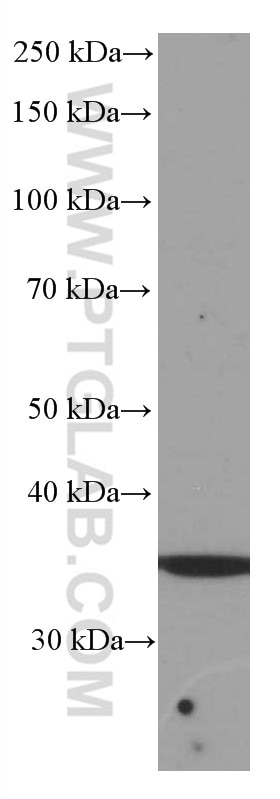
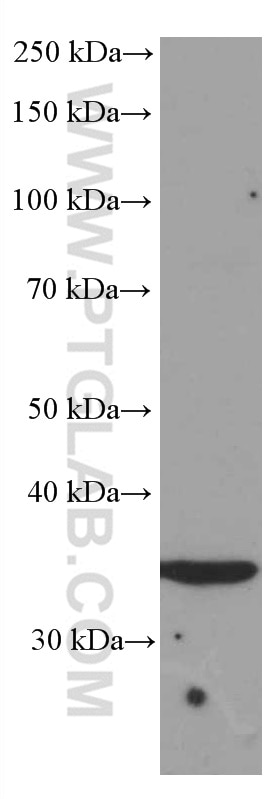
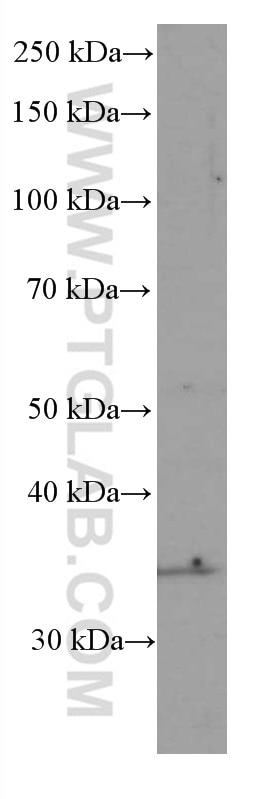
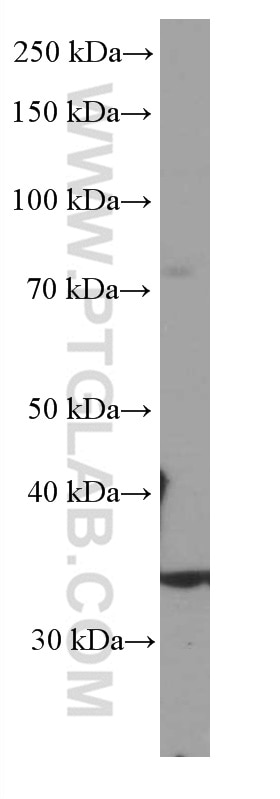
| Positive WB detected in | HeLa cells, NCCIT cell, PC-3 cells, L02 cells |
Recommended dilution
| Application | Dilution |
|---|---|
| Western Blot (WB) | WB : 1:20000-1:80000 |
| It is recommended that this reagent should be titrated in each testing system to obtain optimal results. | |
| Sample-dependent, Check data in validation data gallery. | |
Product Information
66543-1-Ig targets SIRT4 in WB, IHC, IF, IP, ELISA applications and shows reactivity with human samples.
| Tested Reactivity | human |
| Cited Reactivity | human |
| Host / Isotype | Mouse / IgG1 |
| Class | Monoclonal |
| Type | Antibody |
| Immunogen |
CatNo: Ag17347 Product name: Recombinant human SIRT4 protein Source: e coli.-derived, PET28a Tag: 6*His Domain: 1-314 aa of BC109319 Sequence: MKMSFALTFRSAKGRWIANPSQPCSKASIGLFVPASPPLDPEKVKELQRFITLSKRLLVMTGAGISTESGIPDYRSEKVGLYARTDRRPIQHGDFVRSAPIRQRYWARNFVGWPQFSSHQPNPAHWALSTWEKLGKLYWLVTQNVDALHTKAGSRRLTELHGCMDRVLCLDCGEQTPRGVLQERFQVLNPTWSAEAHGLAPDGDVFLSEEQVRSFQVPTCVQCGGHLKPDVVFFGDTVNPDKVDFVHKRVKEADSLLVVGSSLQVYSGYRFILTAWEKKLPIAILNIGPTRSDDLACLKLNSRCGELLPLIDPC Predict reactive species |
| Full Name | sirtuin (silent mating type information regulation 2 homolog) 4 (S. cerevisiae) |
| Calculated Molecular Weight | 314 aa, 35 kDa |
| Observed Molecular Weight | 35 kDa |
| GenBank Accession Number | BC109319 |
| Gene Symbol | SIRT4 |
| Gene ID (NCBI) | 23409 |
| RRID | AB_2881905 |
| Conjugate | Unconjugated |
| Form | Liquid |
| Purification Method | Protein G purification |
| UNIPROT ID | Q9Y6E7 |
| Storage Buffer | PBS with 0.02% sodium azide and 50% glycerol, pH 7.3. |
| Storage Conditions | Store at -20°C. Stable for one year after shipment. Aliquoting is unnecessary for -20oC storage. 20ul sizes contain 0.1% BSA. |
Background Information
SIRT4, also named as NAD-dependent protein lipoamidase sirtuin-4, mitochondria, is a 314 amino acid protein, which belongs to the sirtuin family. Class II subfamily. SIRT4 is detected in vascular smooth muscle and striated muscle. SIRT4 is detected in insulin-producing beta-cells in pancreas islets of Langerhans. SIRT4 Acts as NAD-dependent protein lipoamidase, ADP-ribosyl transferase and deacetylase. It catalyzes more efficiently removal of lipoyl- and biotinyl- than acetyl-lysine modifications and inhibits the pyruvate dehydrogenase complex (PDH) activity via the enzymatic hydrolysis of the lipoamide cofactor from the E2 component, DLAT, in a phosphorylation-independent manner. SIRT4 expression is down-regulated in a number of cancers, while overexpression reduces cell proliferation, transformation, and tumor development.
Protocols
| Product Specific Protocols | |
|---|---|
| WB protocol for SIRT4 antibody 66543-1-Ig | Download protocol |
| Standard Protocols | |
|---|---|
| Click here to view our Standard Protocols |
Publications
What published studies show
The SIRT4 Monoclonal antibody (66543-1-Ig) has 30 citations published in a range of journals including Nature Metabolism, ACS Nano, Acta Pharmaceutica Sinica B, Advanced Science, Cell Death & Differentiation, Cancer Letters, International Journal of Biological Macromolecules, EMBO Reports, Journal of Biological Chemistry, iScience, Cells, and others. The research spans metabolism (urea cycle, mitochondrial function, bioenergetics), cancer biology (pancreatic, breast, colorectal, esophageal cancer), sirtuin signaling, cell pyroptosis/ferroptosis, and renal, lung, cardiovascular, and inflammatory disease models.
| Species | Application | Title |
|---|---|---|
ACS Nano Biomimetic Nanomedicine Targeting Orchestrated Metabolism Coupled with Regulatory Factors to Disrupt the Metabolic Plasticity of Breast Cancer | ||
Acta Pharm Sin B Rhynchophylline rewires DLAT lipoylation via conformational control to reverse mitochondrial bioenergetic collapse against dopaminergic neuronal injury. | ||
Adv Sci (Weinh) Biodegradable Zn-5Dy Alloy with Enhanced Osteo/Angio-Genic Activity and Osteointegration Effect via Regulation of SIRT4-Dependent Mitochondrial Function | ||
Cell Death Differ SIRT1 coordinates with the CRL4B complex to regulate pancreatic cancer stem cells to promote tumorigenesis.
| ||
Cancer Lett SETD8 potentiates constitutive ERK1/2 activation via epigenetically silencing DUSP10 expression in pancreatic cancer. |

