

Tested Applications
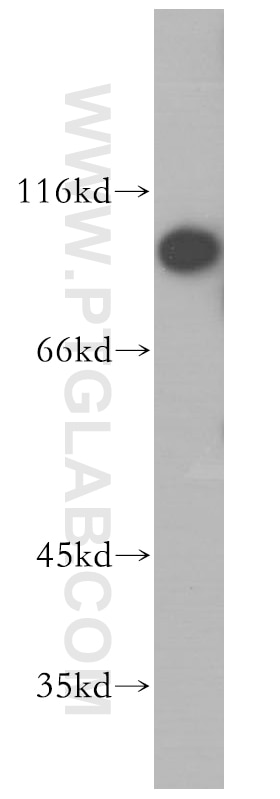
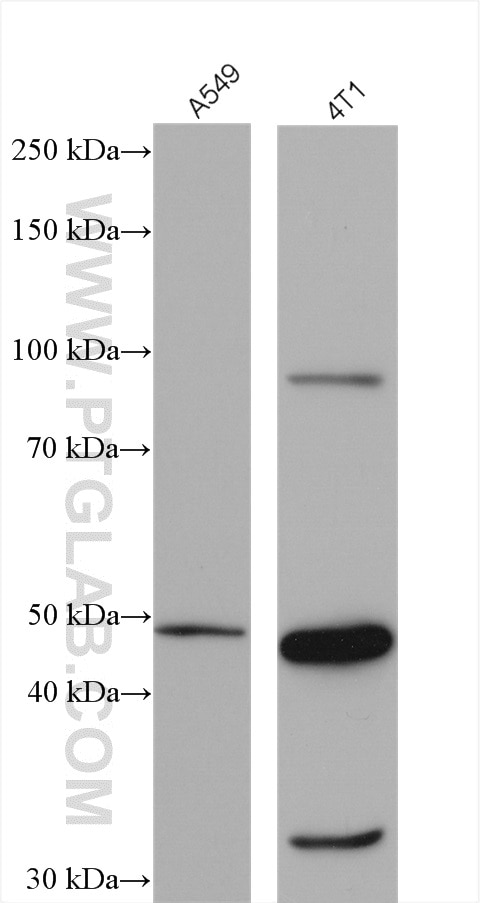
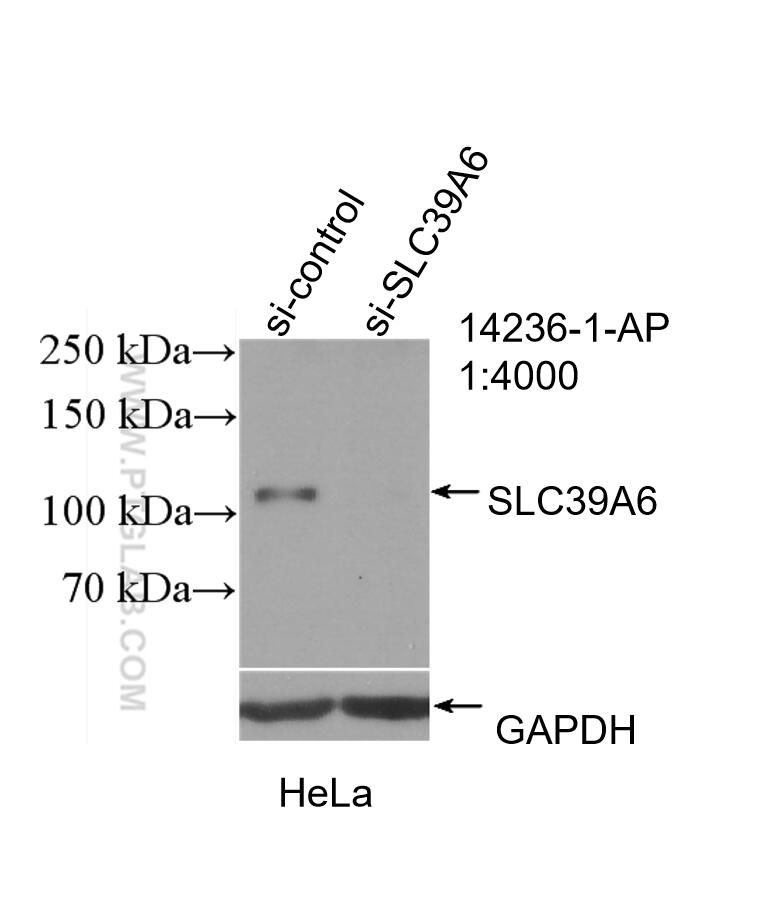
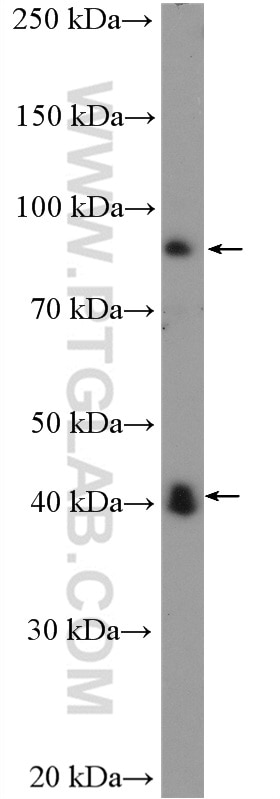
| Positive WB detected in | HeLa cells, MCF-7 cells, A549 cells, 4T1 cells |
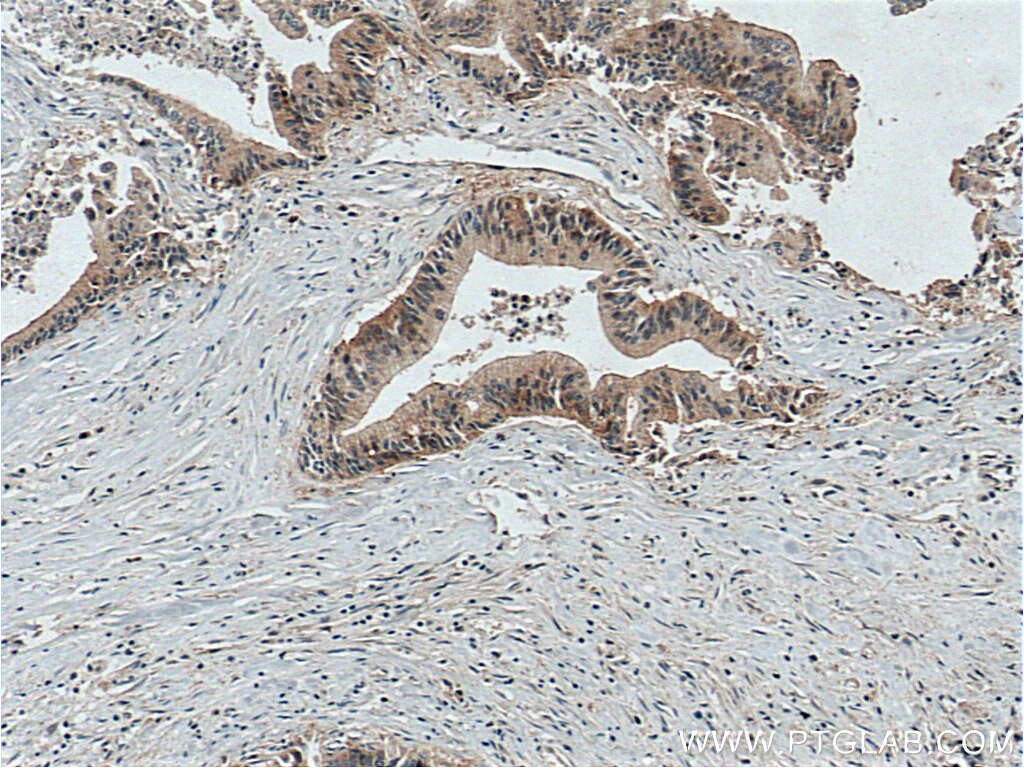
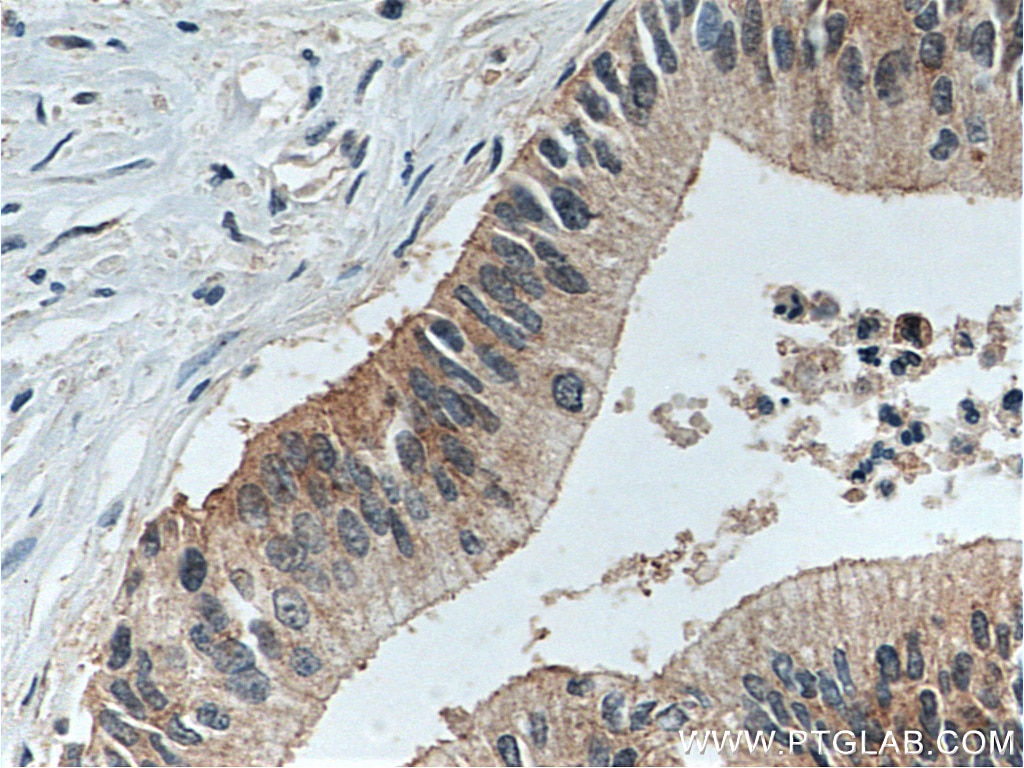
| Positive IHC detected in | human pancreas cancer tissue Note: suggested antigen retrieval with TE buffer pH 9.0; (*) Alternatively, antigen retrieval may be performed with citrate buffer pH 6.0 |
Recommended dilution
| Application | Dilution |
|---|---|
| Western Blot (WB) | WB : 1:500-1:2000 |
| Immunohistochemistry (IHC) | IHC : 1:50-1:500 |
| It is recommended that this reagent should be titrated in each testing system to obtain optimal results. | |
| Sample-dependent, Check data in validation data gallery. | |
Product Information
14236-1-AP targets SLC39A6/ZIP6 in WB, IHC, IF, ELISA applications and shows reactivity with human, mouse, rat samples.
| Tested Reactivity | human, mouse, rat |
| Cited Reactivity | human, mouse, rat, zebrafish |
| Host / Isotype | Rabbit / IgG |
| Class | Polyclonal |
| Type | Antibody |
| Immunogen |
CatNo: Ag5478 Product name: Recombinant human SLC39A6 protein Source: e coli.-derived, PGEX-4T Tag: GST Domain: 101-283 aa of BC039498 Sequence: HLLPHSHASHHHSHSHEEPAMEMKRGPLFSHLSSQNIEESAYFDSTWKGLTALGGLYFMFLVEHVLTLIKQFKDKKKKNQKKPENDDDVEIKKQLSKYESQLSTNEEKVDTDDRTEGYLRADSQEPSHFDSQQPAVLEEEEVMIAHAHPQEVYNEYVPRGCKNKCHSHFHDTLGQSDDLIHHH Predict reactive species |
| Full Name | solute carrier family 39 (zinc transporter), member 6 |
| Calculated Molecular Weight | 85 kDa |
| Observed Molecular Weight | 85-103 kDa, 48 and 32 kDa |
| GenBank Accession Number | BC039498 |
| Gene Symbol | SLC39A6/ZIP6 |
| Gene ID (NCBI) | 25800 |
| RRID | AB_10596924 |
| Conjugate | Unconjugated |
| Form | Liquid |
| Purification Method | Antigen affinity purification |
| UNIPROT ID | Q13433 |
| Storage Buffer | PBS with 0.02% sodium azide and 50% glycerol, pH 7.3. |
| Storage Conditions | Store at -20°C. Stable for one year after shipment. Aliquoting is unnecessary for -20oC storage. 20ul sizes contain 0.1% BSA. |
Background Information
The zinc transporter LIV-1 (also known as SLC39A6 or ZIP6) was originally identified as an estrogen-induced gene in breast cancer cells. Elevated LIV-1 expression is reportedly related to cancer progression in various types of cancer, including breast, prostate, pancreatic, cervical and liver cancers. While correlation of LIV-1 and prognosis may vary. LIV 1 has 3 isoforms with MW of 85-100 (glycosylation and phosphorylation), 48 and 32 kDa while migrates as different bands in different lysates in SDS-PAGE. Furthermore, it has been reported in the papers that full-length SLC39A6/ZIP6, as the pro-protein, is predicted to be 85 kDa and produces a 103 kDa band, the N-terminal fragment after cleavage is 35 kDa, and the cleaved ZIP6 is 68 kDa (PMID: 23919497, PMID: 26444413).
Protocols
| Product Specific Protocols | |
|---|---|
| IHC protocol for SLC39A6/ZIP6 antibody 14236-1-AP | Download protocol |
| WB protocol for SLC39A6/ZIP6 antibody 14236-1-AP | Download protocol |
| Standard Protocols | |
|---|---|
| Click here to view our Standard Protocols |
Publications
What published studies show
Able is busy answering your previous question. Please try again later.
| Species | Application | Title |
|---|---|---|
Nat Mater Zinc nanoparticles from oral supplements accumulate in renal tumours and stimulate antitumour immune responses | ||
Gastroenterology Solute Carrier Family 39 Member 6 Gene Promotes Aggressiveness of Esophageal Carcinoma Cells by Increasing Intracellular Levels of Zinc, Activating Phosphatidylinositol 3-Kinase Signaling, and Up-regulating Genes That Regulate Metastasis.
| ||
Nat Genet Genome-wide association study identifies common variants in SLC39A6 associated with length of survival in esophageal squamous-cell carcinoma.
| ||
Bioact Mater Mechanism and regulatory strategy study on promoting vascularized bone regeneration via intracellular zinc ion transport | ||
J Transl Med SLC39A6: a potential target for diagnosis and therapy of esophageal carcinoma. | ||
Reviews
What customers say
The single review for this product reports a 5-star rating from a Western Blot application. Using a 1:1000 dilution, the reviewer observed a clear band at the expected molecular weight of the target protein, indicating reliable performance and specificity. Overall, the feedback is positive, with no issues or concerns raised about the reagent.
The reviews below have been submitted by verified Proteintech customers who received an incentive for providing their feedback.
Mujtaba (Verified Customer) (01-09-2026) | A clear band is seen at the expected molecular weight of the protein
|

