

Tested Applications
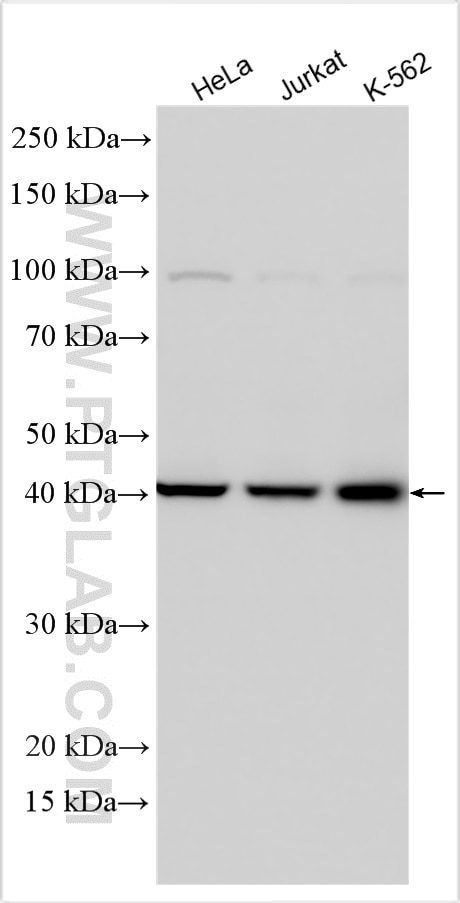
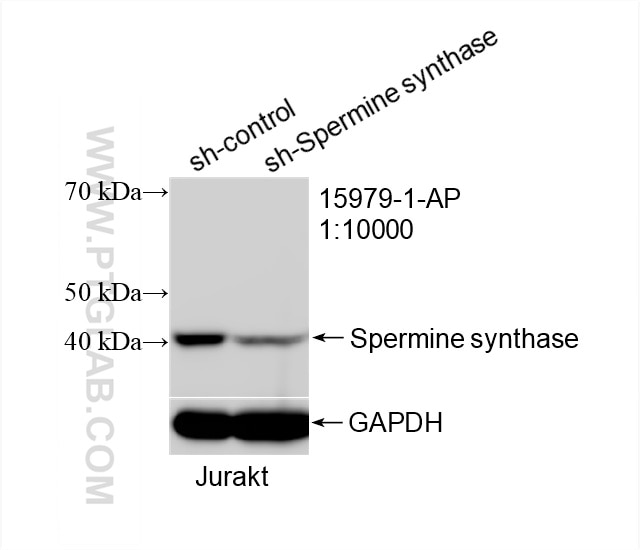
| Positive WB detected in | K-562 cells, human heart tissue, Jurkat cells |
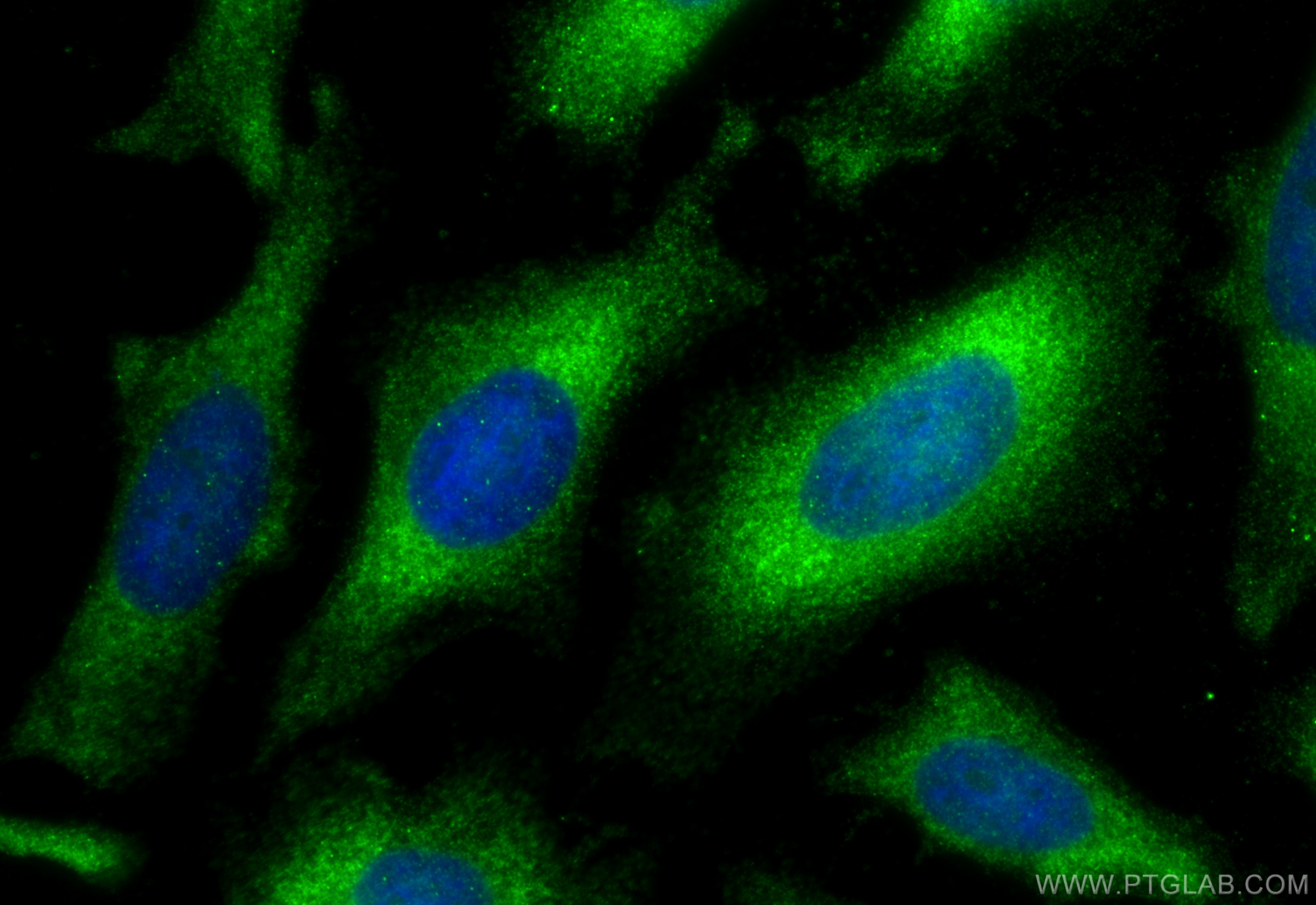
| Positive IF/ICC detected in | HeLa cells |
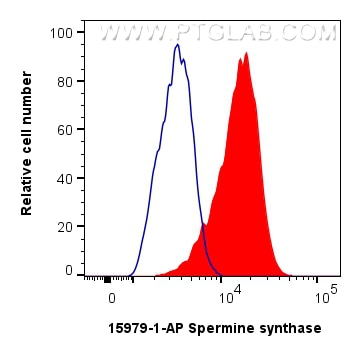
| Positive FC (Intra) detected in | HeLa cells |
Recommended dilution
| Application | Dilution |
|---|---|
| Western Blot (WB) | WB : 1:500-1:3000 |
| Immunofluorescence (IF)/ICC | IF/ICC : 1:50-1:500 |
| Flow Cytometry (FC) (INTRA) | FC (INTRA) : 0.25 ug per 10^6 cells in a 100 ul suspension |
| It is recommended that this reagent should be titrated in each testing system to obtain optimal results. | |
| Sample-dependent, Check data in validation data gallery. | |
Product Information
15979-1-AP targets Spermine synthase in WB, IHC, IF/ICC, FC (Intra), ELISA applications and shows reactivity with human samples.
| Tested Reactivity | human |
| Cited Reactivity | human, mouse |
| Host / Isotype | Rabbit / IgG |
| Class | Polyclonal |
| Type | Antibody |
| Immunogen |
CatNo: Ag8767 Product name: Recombinant human SMS protein Source: e coli.-derived, PGEX-4T Tag: GST Domain: 1-366 aa of BC009898 Sequence: MAAARHSTLDFMLGAKADGETILKGLQSIFQEQGMAESVHTWQDHGYLATYTNKNGSFANLRIYPHGLVLLDLQSYDGDAQGKEEIDSILNKVEERMKELSQDSTGRVKRLPPIVRGGAIDRYWPTADGRLVEYDIDEVVYDEDSPYQNIKILHSKQFGNILILSGDVNLAESDLAYTRAIMGSGKEDYTGKDVLILGGGDGGILCEIVKLKPKMVTMVEIDQMVIDGCKKYMRKTCGDVLDNLKGDCYQVLIEDCIPVLKRYAKEGREFDYVINDLTAVPISTSPEEDSTWEFLRLILDLSMKVLKQDGKYFTQGNCVNLTEALSLYEEQLGRLYCPVEFSKEIVCVPSYLELWVFYTVWKKAKP Predict reactive species |
| Full Name | spermine synthase |
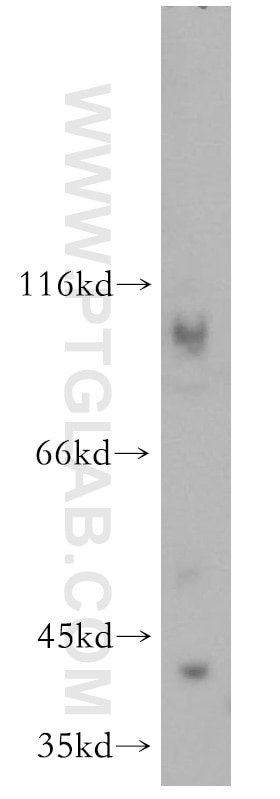
| Calculated Molecular Weight | 366 aa, 41 kDa |
| Observed Molecular Weight | 41 kDa, 60 kDa |
| GenBank Accession Number | BC009898 |
| Gene Symbol | SMS |
| Gene ID (NCBI) | 6611 |
| RRID | AB_2270820 |
| Conjugate | Unconjugated |
| Form | Liquid |
| Purification Method | Antigen affinity purification |
| UNIPROT ID | P52788 |
| Storage Buffer | PBS with 0.02% sodium azide and 50% glycerol, pH 7.3. |
| Storage Conditions | Store at -20°C. Stable for one year after shipment. Aliquoting is unnecessary for -20oC storage. 20ul sizes contain 0.1% BSA. |
Protocols
| Product Specific Protocols | |
|---|---|
| FC protocol for Spermine synthase antibody 15979-1-AP | Download protocol |
| IF protocol for Spermine synthase antibody 15979-1-AP | Download protocol |
| WB protocol for Spermine synthase antibody 15979-1-AP | Download protocol |
| Standard Protocols | |
|---|---|
| Click here to view our Standard Protocols |
Publications
What published studies show
The Spermine synthase Polyclonal antibody (Cat# 15979-1-AP) has 14 citations across journals including Cancer Letters, Phytomedicine, Alzheimer's Research & Therapy, Cells, International Journal of Molecular Sciences, Frontiers in Pharmacology, Scientific Reports, Proteomics, Bone, International Journal of Medical Sciences, Amino Acids, Biology of Reproduction, Journal of Proteomics, and Heliyon. Research fields span pancreatic cancer, ulcerative colitis, tauopathy, UV-induced skin damage, cellular senescence, glioma, lung adenocarcinoma, macrophage polarization, osteoblast biology, colorectal cancer, and polyamine metabolism.
| Species | Application | Title |
|---|---|---|
Cancer Lett Multi-omics analysis of polyamine metabolism implicates NT5E/CD73 in the progression of pancreatic cancer | ||
Phytomedicine Oleanolic acid alleviates ulcerative colitis by remodeling Th17 cells via targeting HSP90β-ODC1 pathway-mediated polyamine synthesis. | ||
Alzheimers Res Ther Spermidine/spermine-N1-acetyltransferase ablation impacts tauopathy-induced polyamine stress response. | ||
Cells Magnesium Supplementation Attenuates Ultraviolet-B-Induced Damage Mediated through Elevation of Polyamine Production in Human HaCaT Keratinocytes. | ||
Front Pharmacol The RET inhibitor pralsetinib suppresses TMZ-resistant glioma growth by regulating spermine production. |
Reviews
What customers say
Able is busy answering your previous question. Please try again later.
The reviews below have been submitted by verified Proteintech customers who received an incentive for providing their feedback.
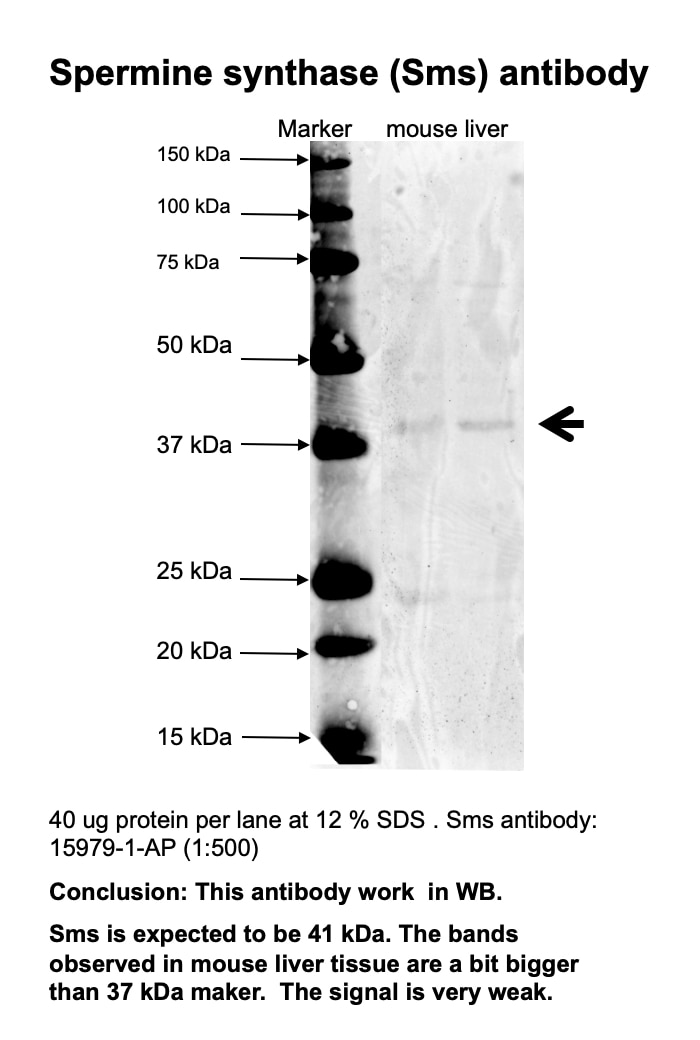
Hua (Verified Customer) (03-28-2025) | This antibody is working in WB with mouse liver lysate. However the signal is very weak.
 |

