
Tested Applications
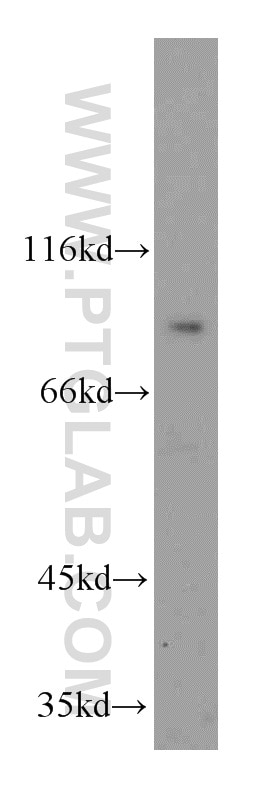
| Positive WB detected in | HepG2 cells |
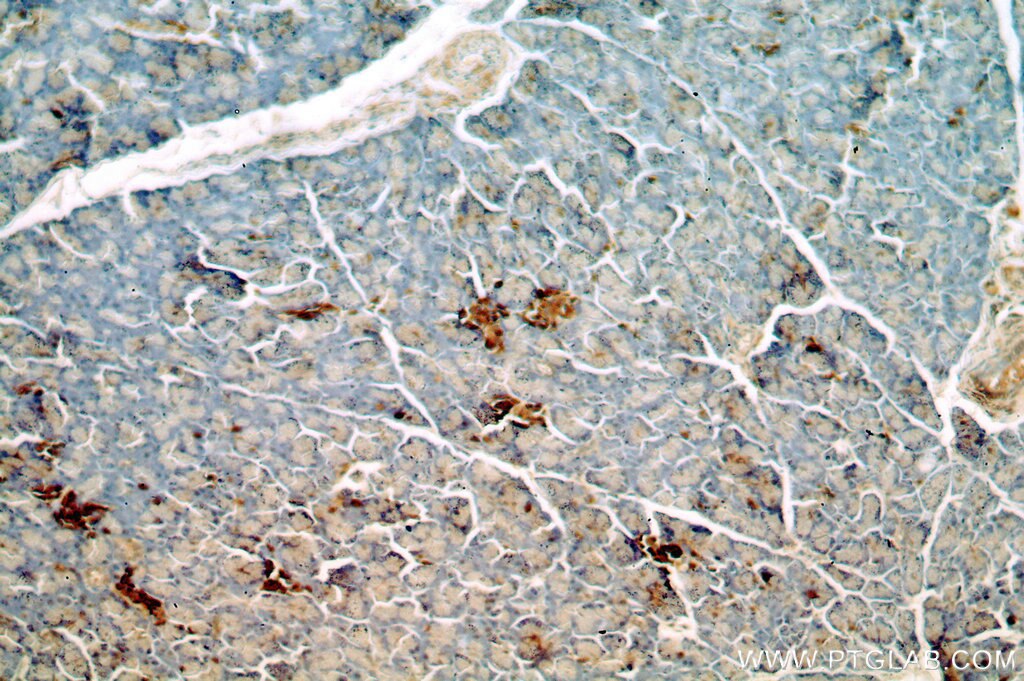
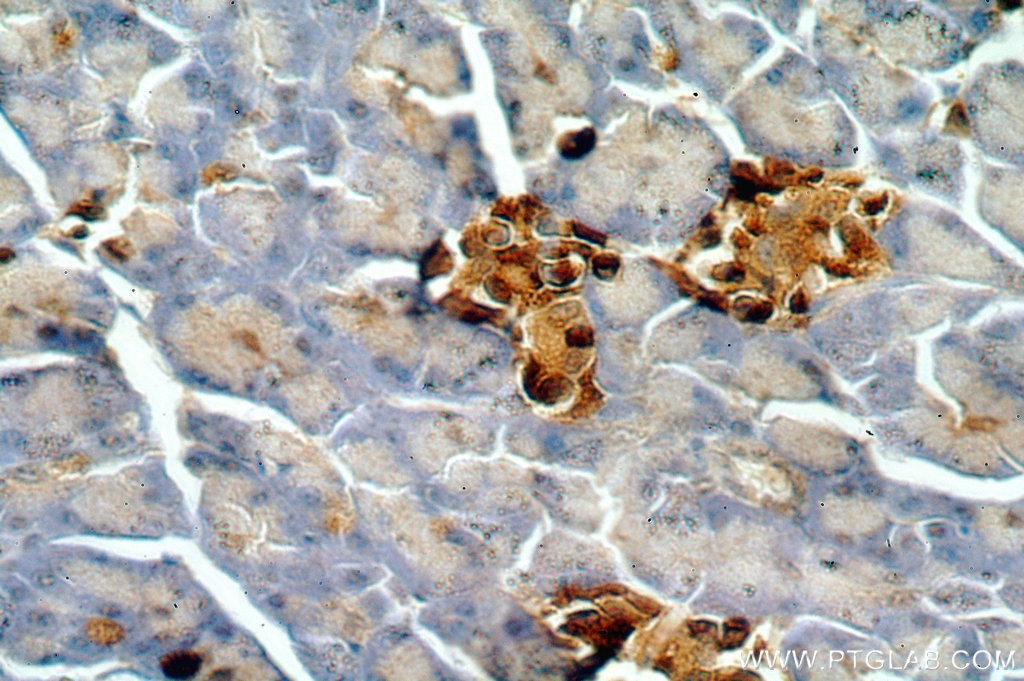
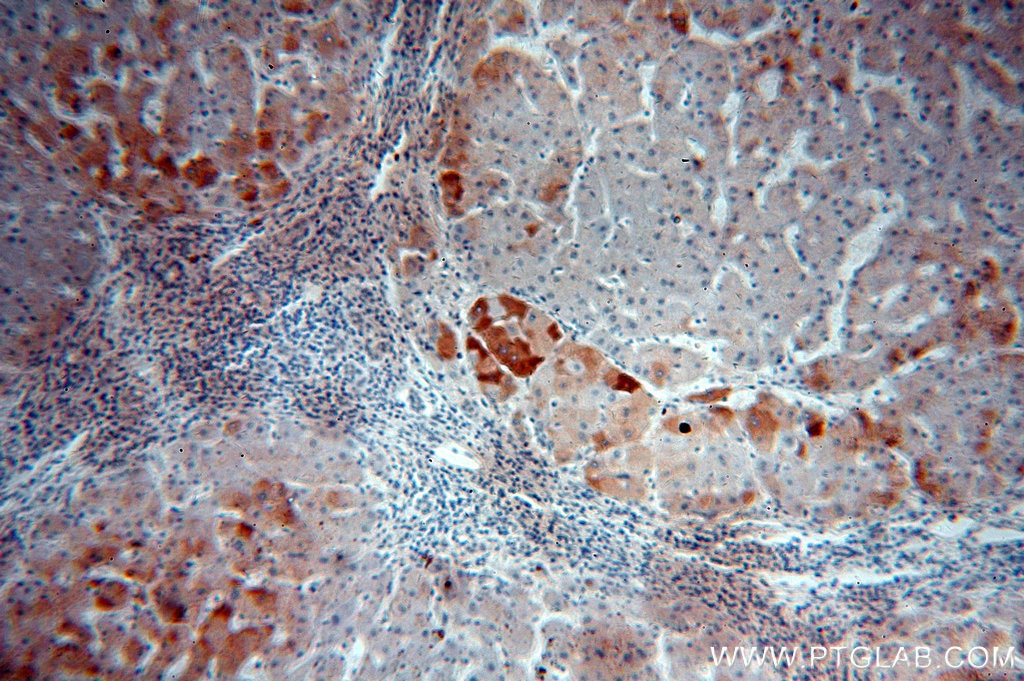
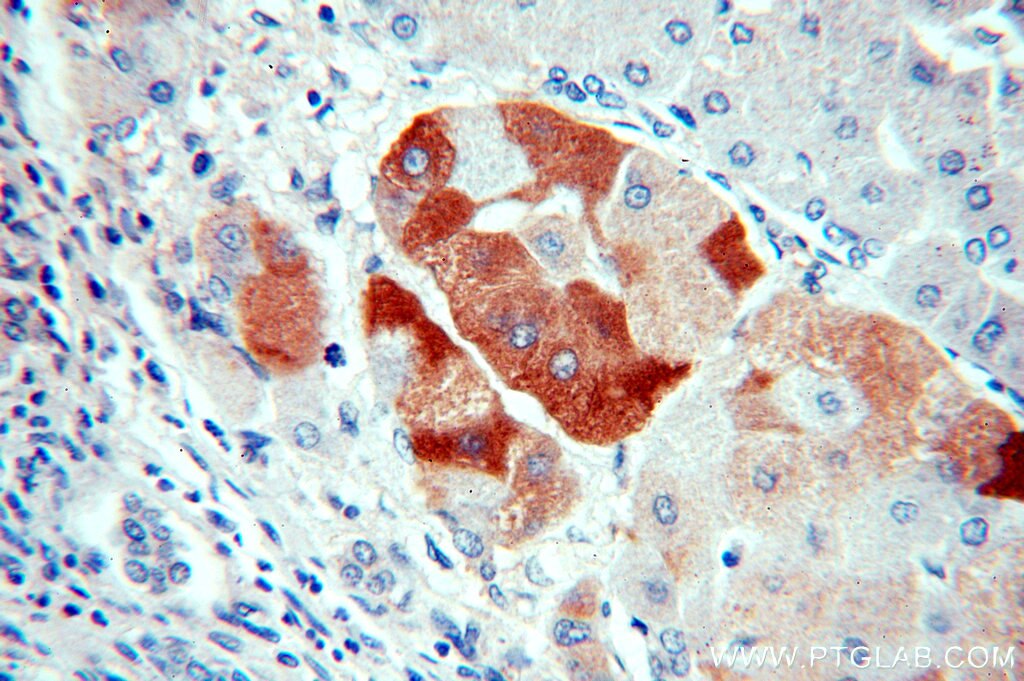
| Positive IHC detected in | human pancreas tissue, human hepatocirrhosis tissue Note: suggested antigen retrieval with TE buffer pH 9.0; (*) Alternatively, antigen retrieval may be performed with citrate buffer pH 6.0 |
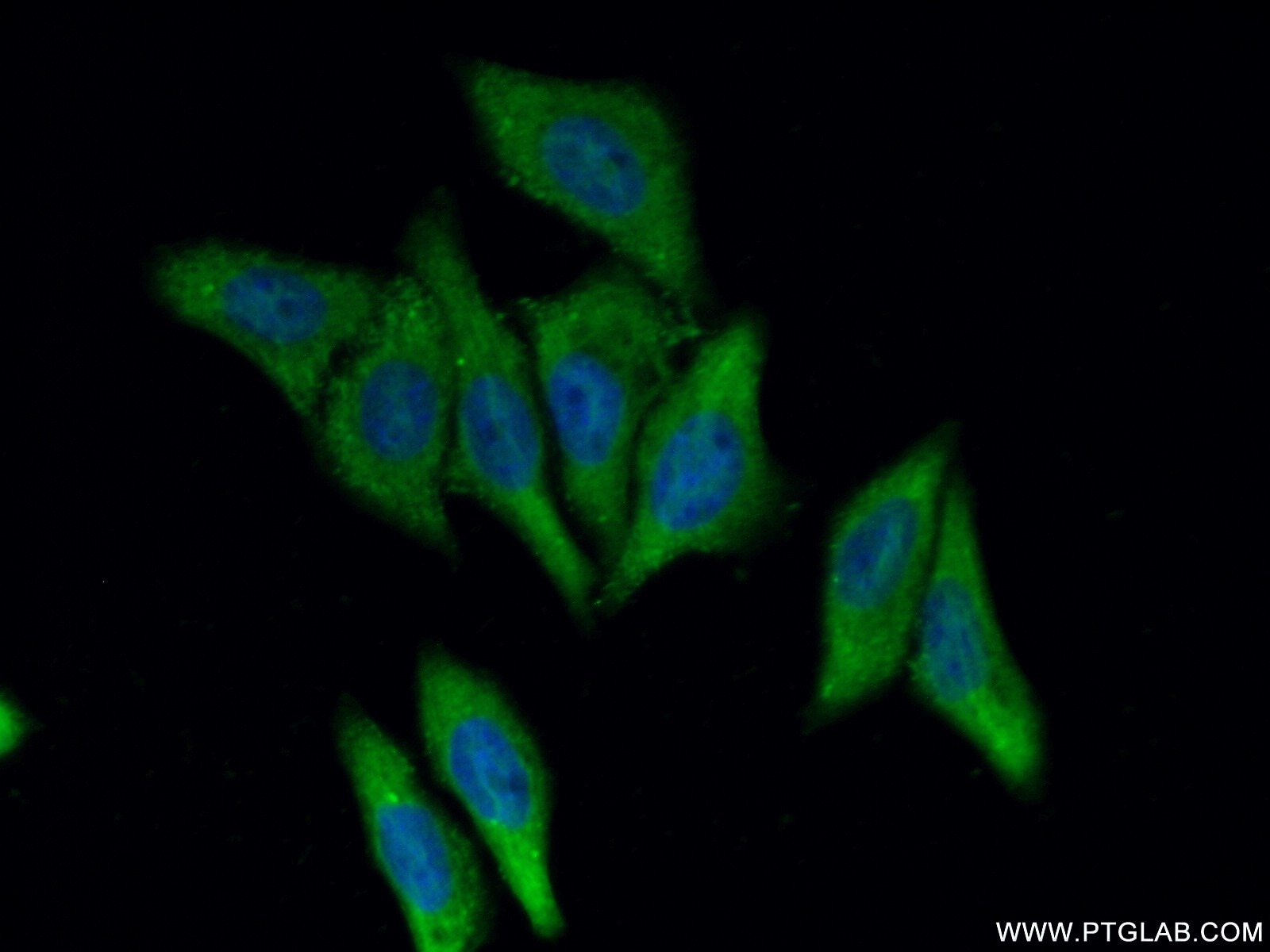
| Positive IF/ICC detected in | HepG2 cells |
Recommended dilution
| Application | Dilution |
|---|---|
| Western Blot (WB) | WB : 1:500-1:2000 |
| Immunohistochemistry (IHC) | IHC : 1:20-1:200 |
| Immunofluorescence (IF)/ICC | IF/ICC : 1:50-1:500 |
| It is recommended that this reagent should be titrated in each testing system to obtain optimal results. | |
| Sample-dependent, Check data in validation data gallery. | |
Product Information
17594-1-AP targets SMYD4 in WB, IHC, IF/ICC, IP, CoIP, ELISA applications and shows reactivity with human, rat samples.
| Tested Reactivity | human, rat |
| Cited Reactivity | human, zebrafish |
| Host / Isotype | Rabbit / IgG |
| Class | Polyclonal |
| Type | Antibody |
| Immunogen |
CatNo: Ag11552 Product name: Recombinant human SMYD4 protein Source: e coli.-derived, PET28a Tag: 6*His Domain: 201-578 aa of BC035077 Sequence: KDSLTESFPAALAKTLEDAALREENEQLSNASSSIGLCVDPLKGRCLVATKDILPGELLVQEDAFVSVLNPGELPPPHHGLDSKWDTRVTNGDLYCHRCLKHTLATVPCDGCSYAKYCSQECLQQVWELYHRTECPLGGLLLTLGVFCHIALRLTLLVGFEDVRKIITKLCDKISNKDICLPESNNQVKTLNYGLGESEKNGNIVETPIPGCDINGKYENNYNAVFNLLPHTENHSPEHKFLCALCVSALCRQLEAASLQAIPTERIVNSSQLKAAVTPELCPDVTIWGVAMLRHMLQLQCNAQAMTTIQHTGPKGSIVTDSRQVRLATGIFPVISLLNHSCSPNTSVSFISTVATIRASQRIRKGQEILHCYGPHKS Predict reactive species |
| Full Name | SET and MYND domain containing 4 |
| Calculated Molecular Weight | 804 aa, 89 kDa |
| Observed Molecular Weight | 89 kDa |
| GenBank Accession Number | BC035077 |
| Gene Symbol | SMYD4 |
| Gene ID (NCBI) | 114826 |
| RRID | AB_10694429 |
| Conjugate | Unconjugated |
| Form | Liquid |
| Purification Method | Antigen affinity purification |
| UNIPROT ID | Q8IYR2 |
| Storage Buffer | PBS with 0.02% sodium azide and 50% glycerol, pH 7.3. |
| Storage Conditions | Store at -20°C. Stable for one year after shipment. Aliquoting is unnecessary for -20oC storage. 20ul sizes contain 0.1% BSA. |
Background Information
SMYD4, also named as SET and MYND domain-containing protein 4, is a 804 amino acid protein, which contains 1 MYND-type zinc finger and 1 SET domain. SMYD4 belongs to the class V-like SAM-binding methyltransferase superfamily. SMYD4, as a potential tumor suppressor, plays a critical role in breast carcinogenesis at least partly through inhibiting the expression of Pdgfr-alpha, and could be a novel target for improving treatment of breast cancer. SMYD4 is a muscle-specific transcriptional modulator involved in development.
Protocols
| Product Specific Protocols | |
|---|---|
| IF protocol for SMYD4 antibody 17594-1-AP | Download protocol |
| IHC protocol for SMYD4 antibody 17594-1-AP | Download protocol |
| WB protocol for SMYD4 antibody 17594-1-AP | Download protocol |
| Standard Protocols | |
|---|---|
| Click here to view our Standard Protocols |
Publications
What published studies show
| Species | Application | Title |
|---|---|---|
PLoS Genet The roles of SMYD4 in epigenetic regulation of cardiac development in zebrafish.
| ||
Cancer Sci SMYD4 monomethylates PRMT5 and forms a positive feedback loop to promote hepatocellular carcinoma progression | ||
Breast Cancer Res SMYD4 promotes MYH9 ubiquitination through lysine monomethylation modification to inhibit breast cancer progression | ||
Front Oncol The genetic landscape of primary malignant melanoma of the cervix using integrated bioinformatics analysis and whole-exome sequencing.
|

