

Tested Applications
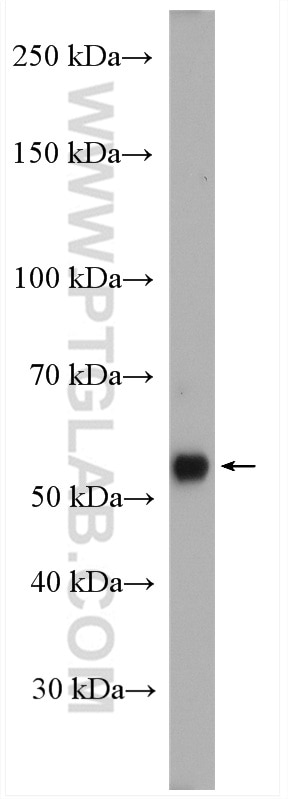
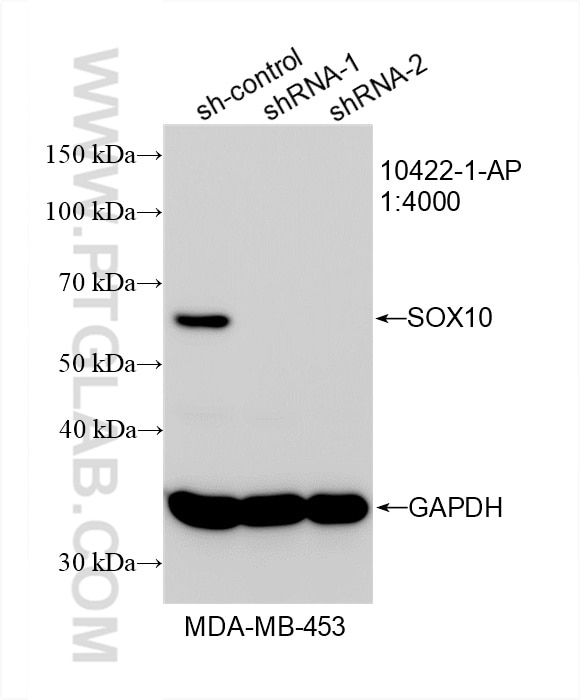
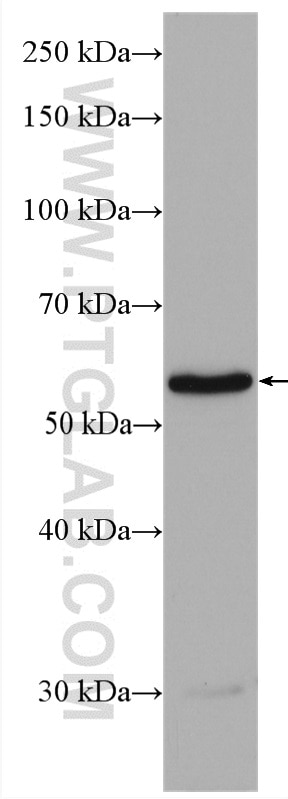
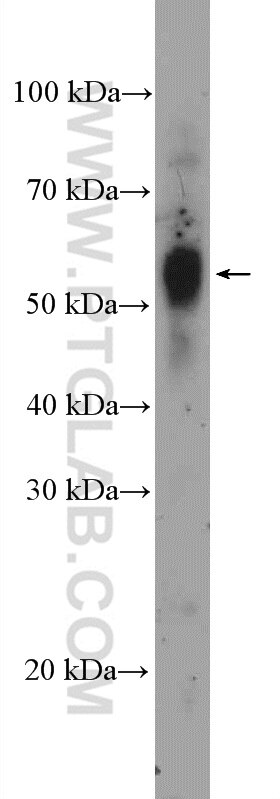
| Positive WB detected in | mouse brain tissue, MDA-MB-453 cells, mouse small intestine tissue, SH-SY5Y cells |
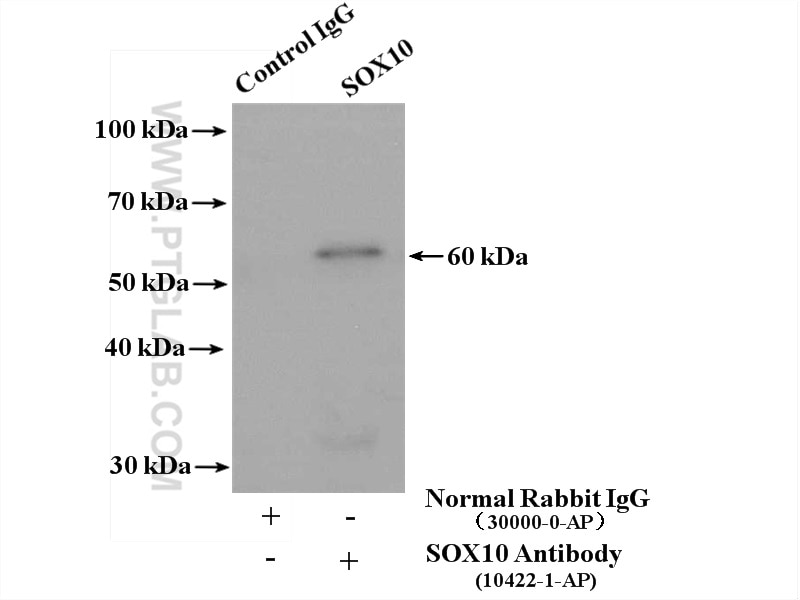
| Positive IP detected in | mouse colon tissue |
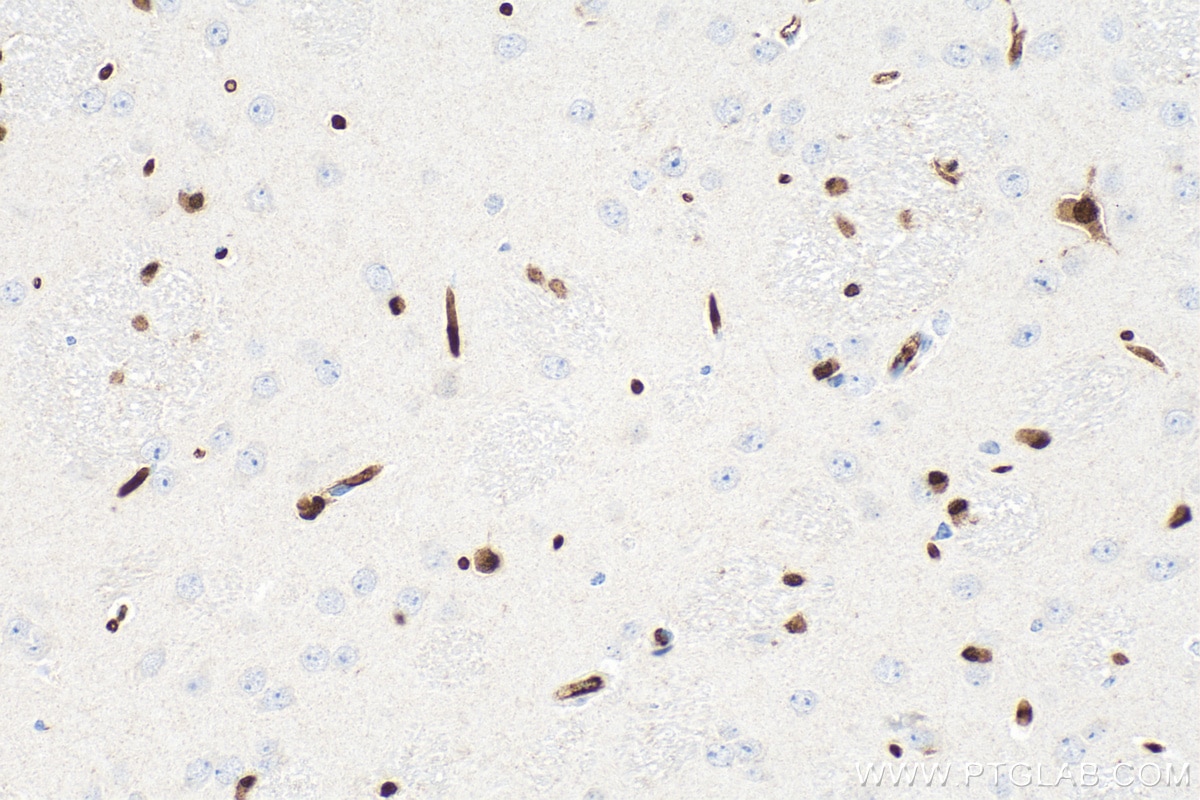
| Positive IHC detected in | mouse brain tissue Note: suggested antigen retrieval with TE buffer pH 9.0; (*) Alternatively, antigen retrieval may be performed with citrate buffer pH 6.0 |
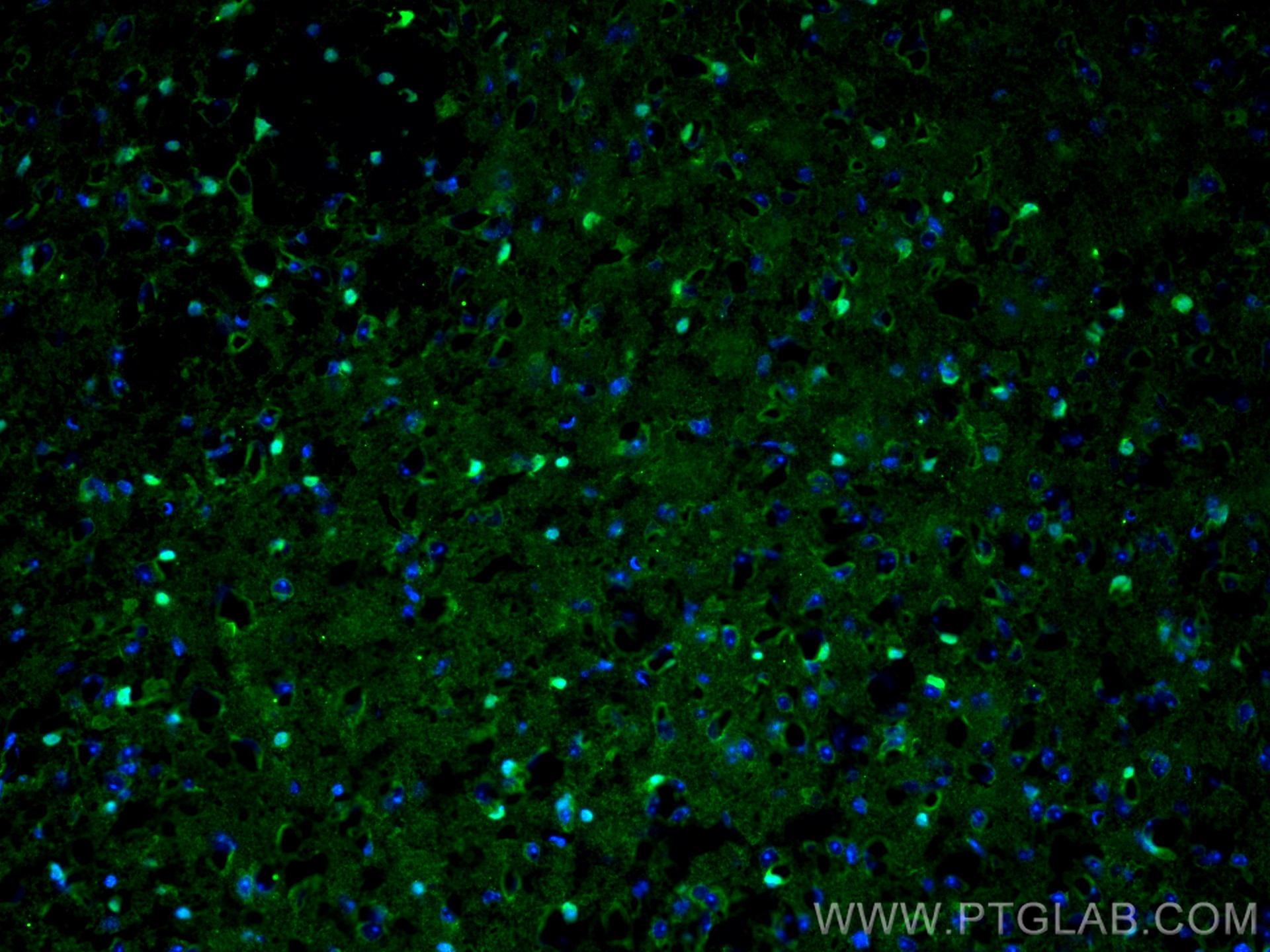
| Positive IF-Fro detected in | mouse brain tissue |
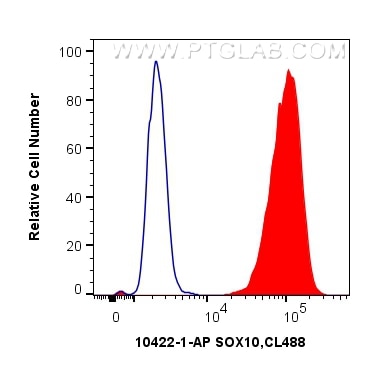
| Positive FC (Intra) detected in | C6 cells |
Recommended dilution
| Application | Dilution |
|---|---|
| Western Blot (WB) | WB : 1:1000-1:8000 |
| Immunoprecipitation (IP) | IP : 0.5-4.0 ug for 1.0-3.0 mg of total protein lysate |
| Immunohistochemistry (IHC) | IHC : 1:500-1:2000 |
| Immunofluorescence (IF)-FRO | IF-FRO : 1:50-1:500 |
| Flow Cytometry (FC) (INTRA) | FC (INTRA) : 0.40 ug per 10^6 cells in a 100 ul suspension |
| It is recommended that this reagent should be titrated in each testing system to obtain optimal results. | |
| Sample-dependent, Check data in validation data gallery. | |
Product Information
10422-1-AP targets SOX10 in WB, IHC, IF-Fro, FC (Intra), IP, CoIP, ELISA applications and shows reactivity with human, mouse, rat samples.
| Tested Reactivity | human, mouse, rat |
| Cited Reactivity | human, mouse, rat, pig |
| Host / Isotype | Rabbit / IgG |
| Class | Polyclonal |
| Type | Antibody |
| Immunogen |
CatNo: Ag0673 Product name: Recombinant human SOX10 protein Source: e coli.-derived, PGEX-4T Tag: GST Domain: 267-466 aa of BC002824 Sequence: GKPHIDFGNVDIGEISHEVMSNMETFDVAELDQYLPPNGHPGHVSSYSAAGYGLGSALAVASGHSAWISKPPGVALPTVSPPGVDAKAQVKTETAGPQGPPHYTDQPSTSQIAYTSLSLPHYGSAFPSISRPQFDYSDHQPSGPYYGHSGQASGLYSAFSYMGPSQRPLYTAISDPSPSGPQSHSPTHWEQPVYTTLSRP Predict reactive species |
| Full Name | SRY (sex determining region Y)-box 10 |
| Calculated Molecular Weight | 50 kDa |
| Observed Molecular Weight | 50-60 kDa |
| GenBank Accession Number | BC002824 |
| Gene Symbol | SOX10 |
| Gene ID (NCBI) | 6663 |
| RRID | AB_2195371 |
| Conjugate | Unconjugated |
| Form | Liquid |
| Purification Method | Antigen affinity purification |
| UNIPROT ID | P56693 |
| Storage Buffer | PBS with 0.02% sodium azide and 50% glycerol, pH 7.3. |
| Storage Conditions | Store at -20°C. Stable for one year after shipment. Aliquoting is unnecessary for -20oC storage. 20ul sizes contain 0.1% BSA. |
Background Information
Sox10 is a transcription factor that has a crucial role in complex signalling pathways regulating central nervous system and neural crest development. The calcualted molecular weight of SOX10 is 50 kDa, but modified SOX10 is about 55-60 kDa. (PMID: 23799842)
Protocols
| Product Specific Protocols | |
|---|---|
| FC protocol for SOX10 antibody 10422-1-AP | Download protocol |
| IF protocol for SOX10 antibody 10422-1-AP | Download protocol |
| IHC protocol for SOX10 antibody 10422-1-AP | Download protocol |
| IP protocol for SOX10 antibody 10422-1-AP | Download protocol |
| WB protocol for SOX10 antibody 10422-1-AP | Download protocol |
| Standard Protocols | |
|---|---|
| Click here to view our Standard Protocols |
Publications
What published studies show
The SOX10 Polyclonal antibody (Cat# 10422-1-AP) has accumulated 40 citations across journals including Nature, Nature Communications, Neuron, Development, Dev Cell, Cell Death Discovery, Journal of Neuroscience, Journal of Neurochemistry, Experimental Neurology, Frontiers in Immunology, International Journal of Molecular Sciences, Scientific Reports, and others. Associated research fields encompass neuroscience, neurodevelopment, Schwann cell biology, hair follicle stem cells, melanoma, glioma, Parkinson's and Alzheimer's disease, peripheral nerve regeneration, craniofacial dysmorphology, stroke, and pulmonary fibrosis.
| Species | Application | Title |
|---|---|---|
Nat Commun A branching model of lineage differentiation underpinning the neurogenic potential of enteric glia | ||
Neuron Gut-induced alpha-Synuclein and Tau propagation initiate Parkinson's and Alzheimer's disease co-pathology and behavior impairments | ||
Int J Biol Sci The SOX10-ACAT2-Cholesterol Synthesis Axis Is Required for Melanoma Proliferation.
| ||
Cell Death Discov NeuroD4 converts glioblastoma cells into neuron-like cells through the SLC7A11-GSH-GPX4 antioxidant axis |

