

Tested Applications
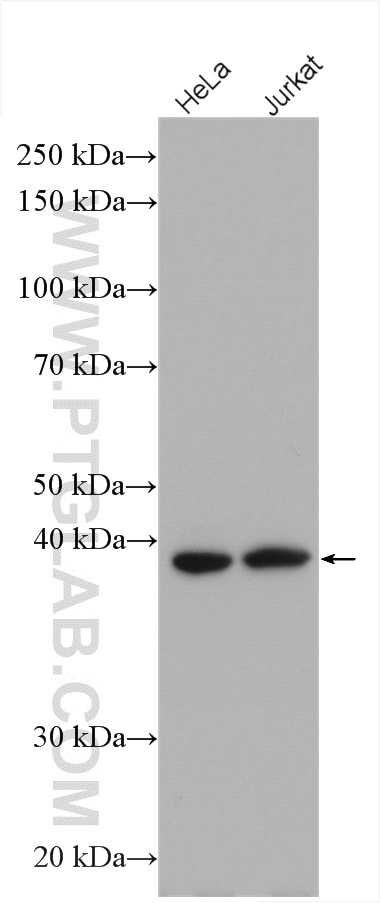
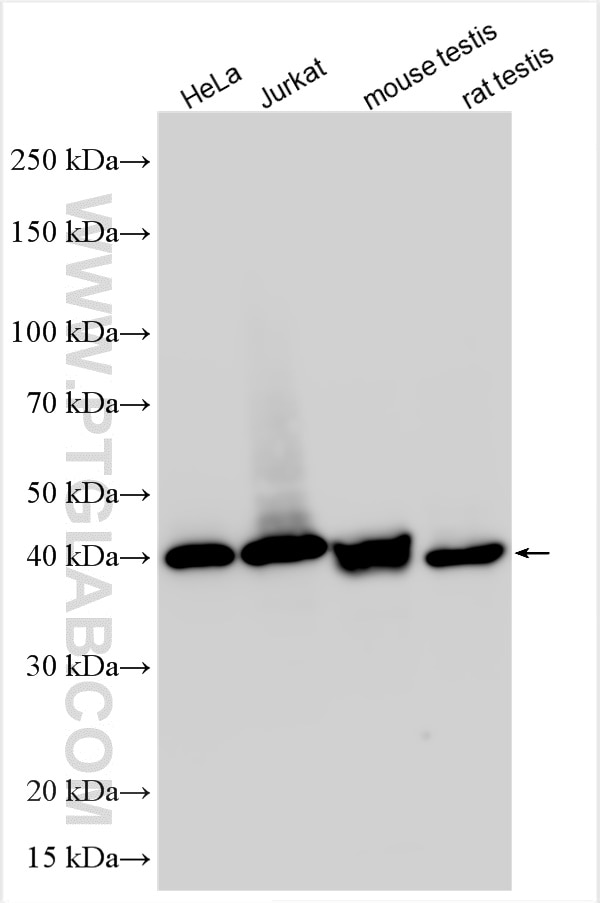
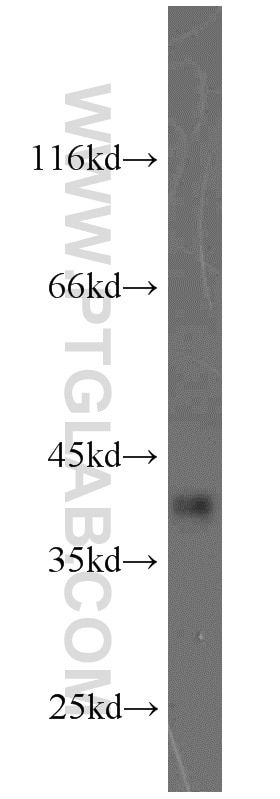
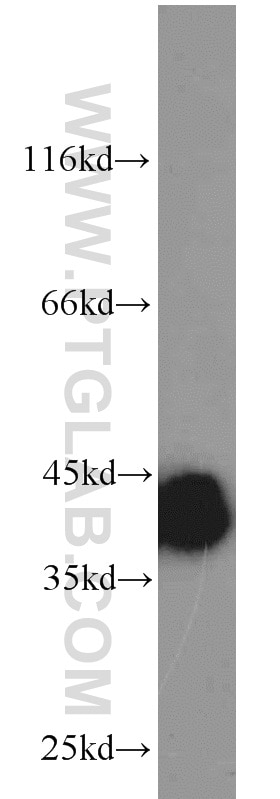
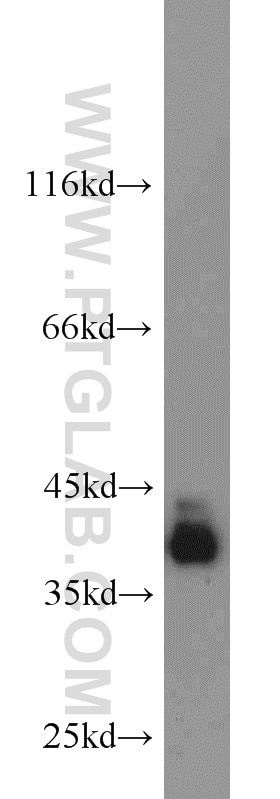
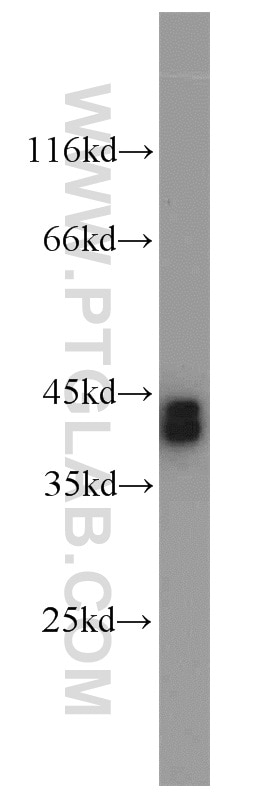
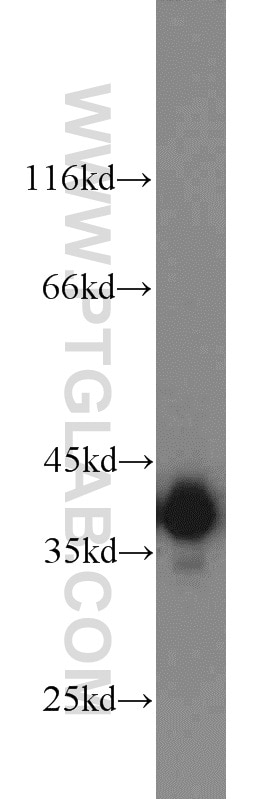
| Positive WB detected in | HeLa cells, Jurkat cells, mouse ovary tissue, mouse testis tissue, NIH/3T3 cells, rat testis tissue |
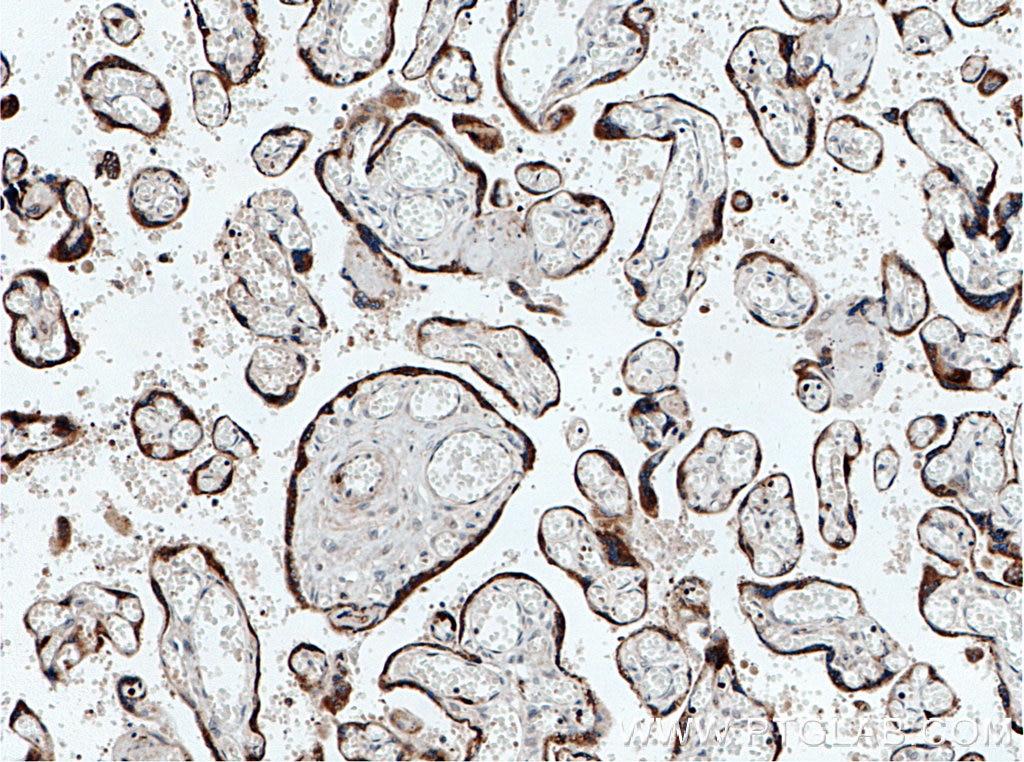
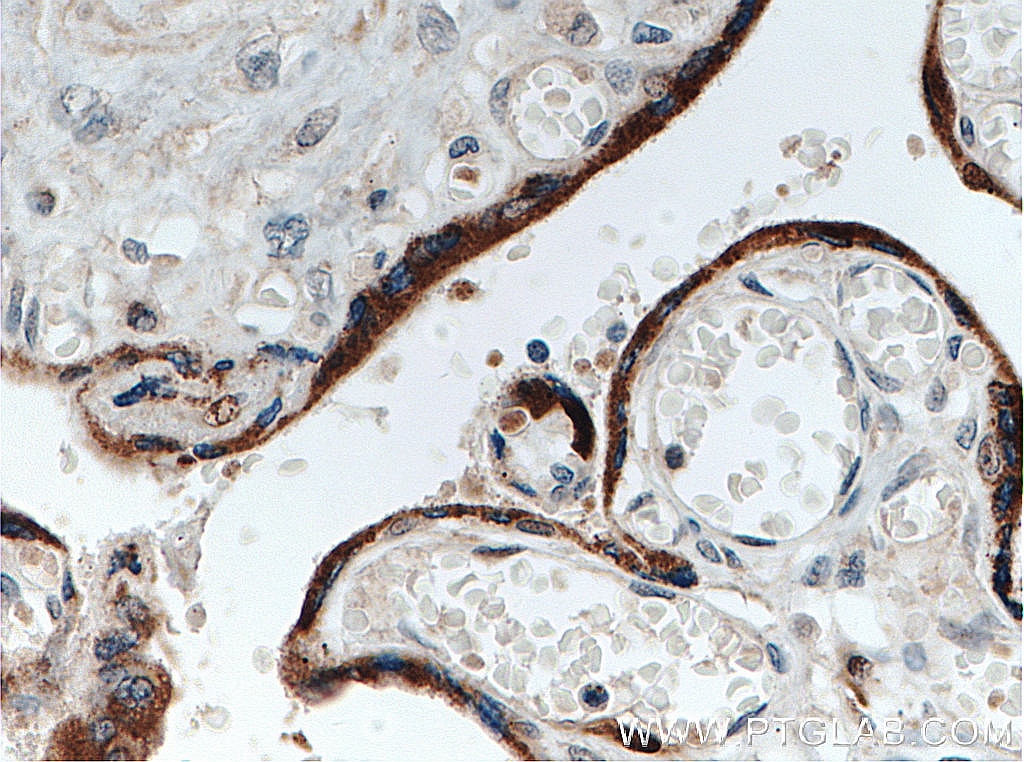
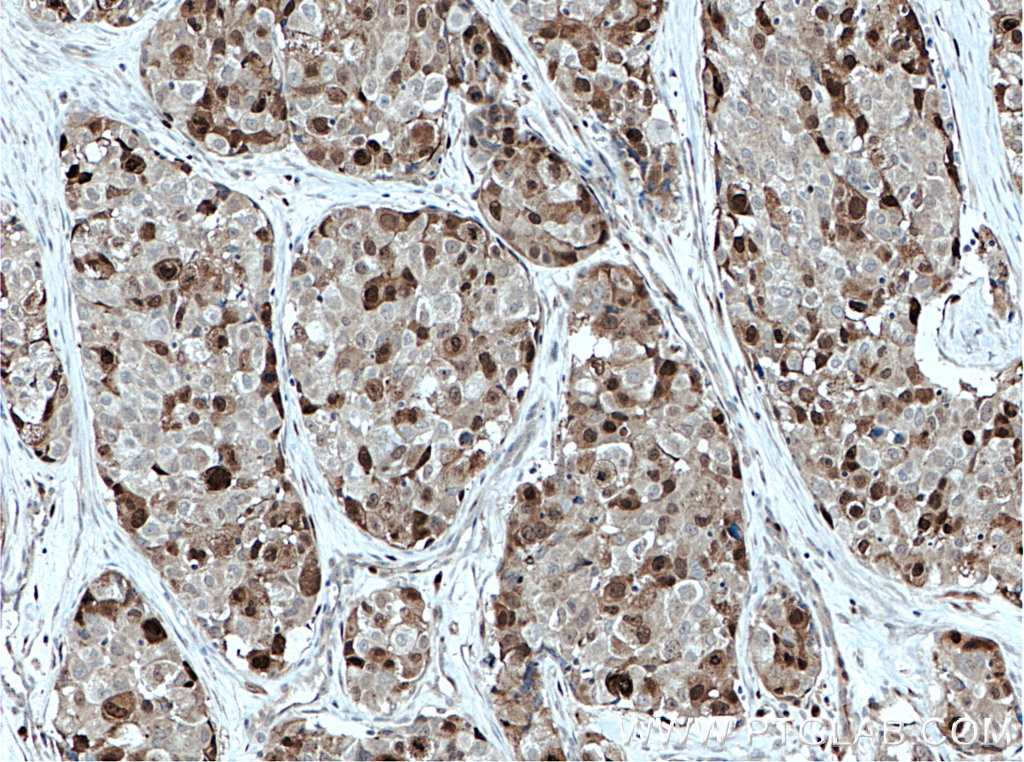
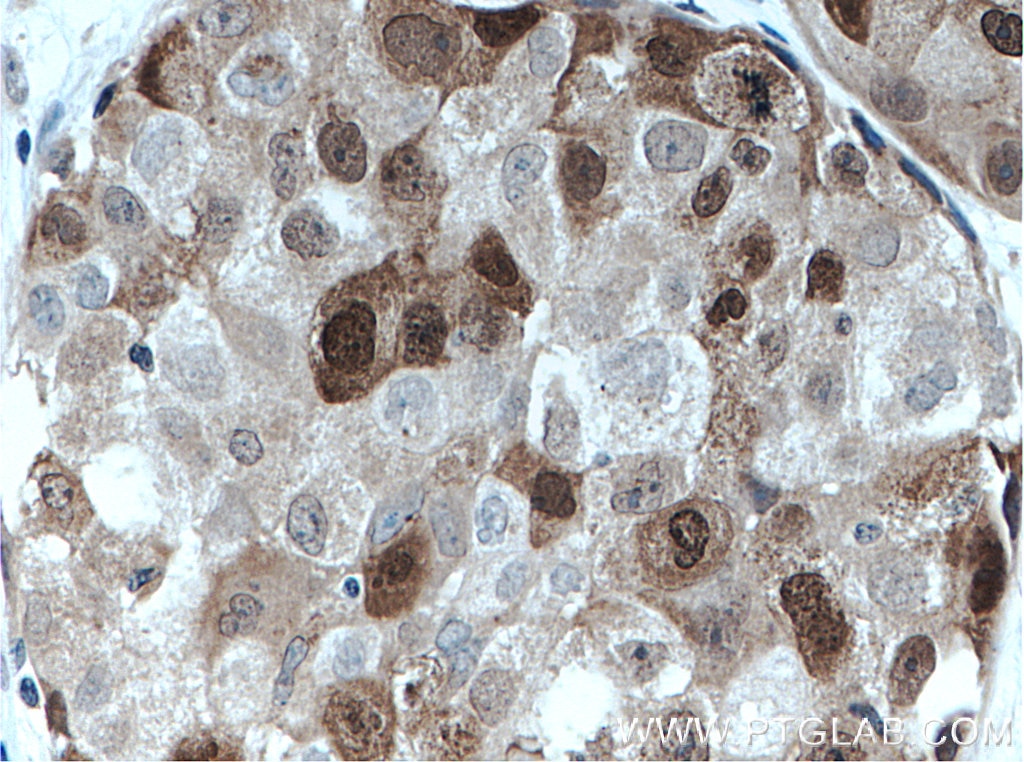
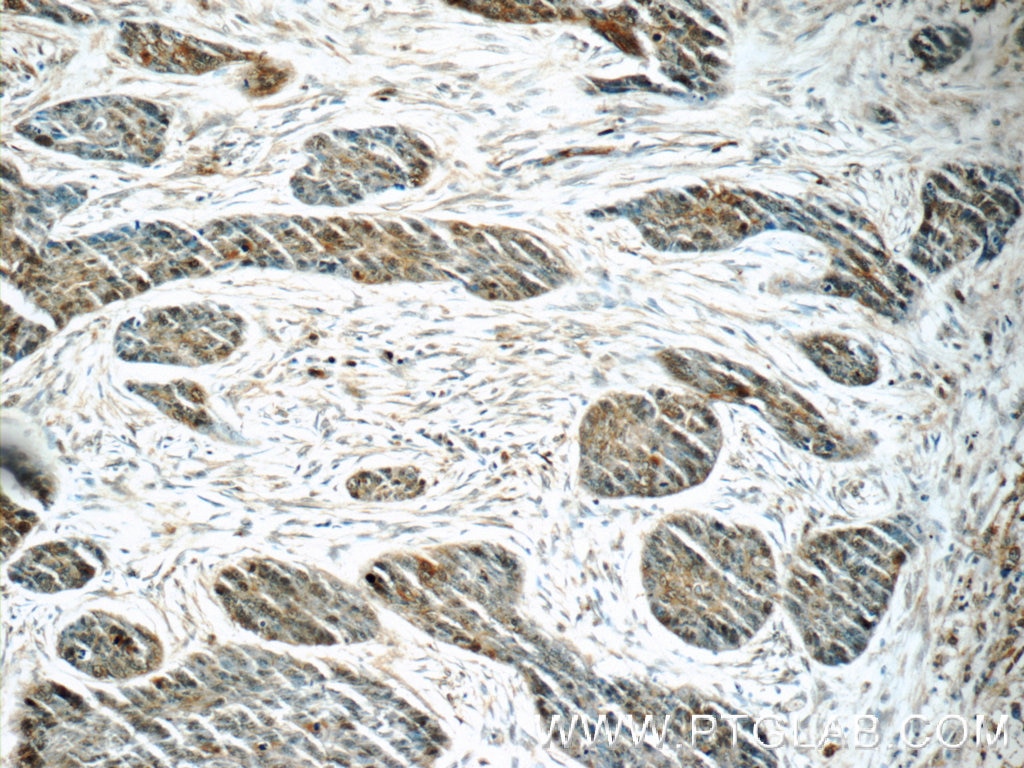
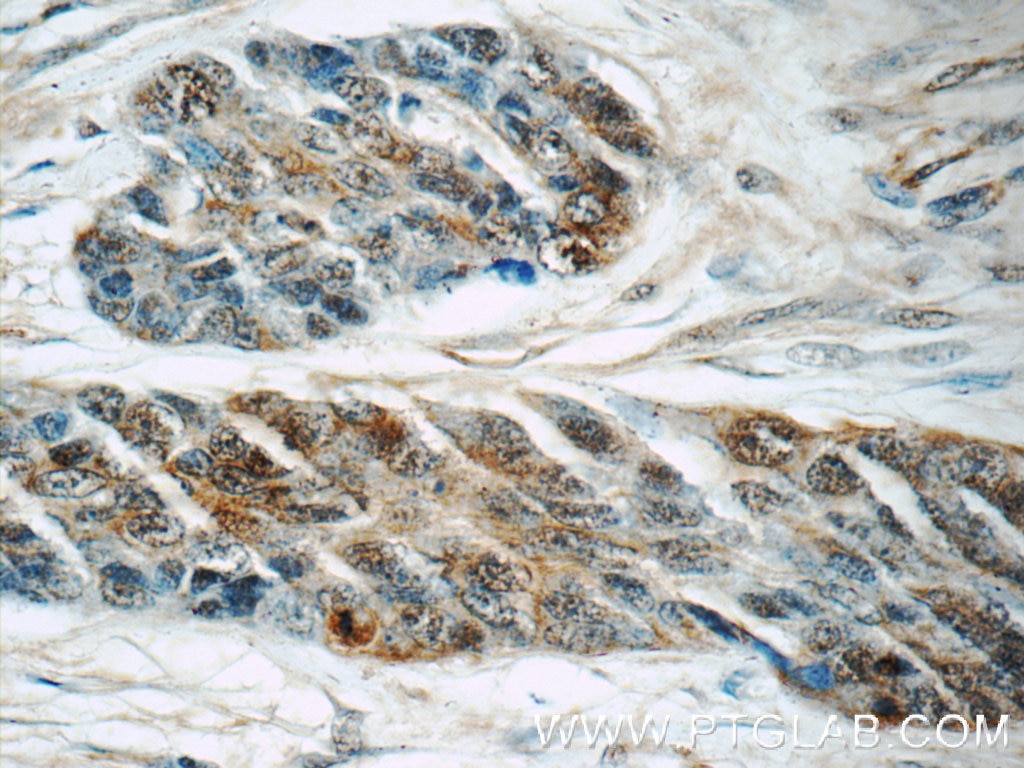
| Positive IHC detected in | human placenta tissue, human lung cancer tissue, human skin cancer tissue Note: suggested antigen retrieval with TE buffer pH 9.0; (*) Alternatively, antigen retrieval may be performed with citrate buffer pH 6.0 |
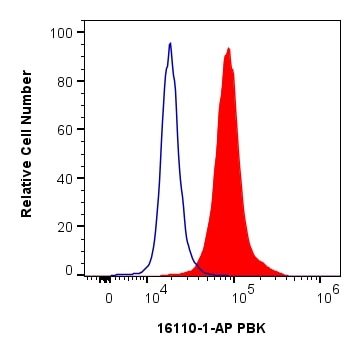
| Positive FC (Intra) detected in | HepG2 cells |
Recommended dilution
| Application | Dilution |
|---|---|
| Western Blot (WB) | WB : 1:3000-1:10000 |
| Immunohistochemistry (IHC) | IHC : 1:50-1:500 |
| Flow Cytometry (FC) (INTRA) | FC (INTRA) : 0.80 ug per 10^6 cells in a 100 ul suspension |
| It is recommended that this reagent should be titrated in each testing system to obtain optimal results. | |
| Sample-dependent, Check data in validation data gallery. | |
Product Information
16110-1-AP targets PBK/SPK in WB, IHC, IF, FC (Intra), IP, CoIP, ELISA applications and shows reactivity with human, mouse, rat samples.
| Tested Reactivity | human, mouse, rat |
| Cited Reactivity | human, mouse, rat |
| Host / Isotype | Rabbit / IgG |
| Class | Polyclonal |
| Type | Antibody |
| Immunogen |
CatNo: Ag9033 Product name: Recombinant human SPK protein Source: e coli.-derived, PGEX-4T Tag: GST Domain: 1-322 aa of BC015191 Sequence: MEGISNFKTPSKLSEKKKSVLCSTPTINIPASPFMQKLGFGTGVNVYLMKRSPRGLSHSPWAVKKINPICNDHYRSVYQKRLMDEAKILKSLHHPNIVGYRAFTEANDGSLCLAMEYGGEKSLNDLIEERYKASQDPFPAAIILKVALNMARGLKYLHQEKKLLHGDIKSSNVVIKGDFETIKICDVGVSLPLDENMTVTDPEACYIGTEPWKPKEAVEENGVITDKADIFAFGLTLWEMMTLSIPHINLSNDDDDEDKTFDESDFDDEAYYAALGTRPPINMEELDESYQKVIELFSVCTNEDPKDRPSAAHIVEALETDV Predict reactive species |
| Full Name | PDZ binding kinase |
| Calculated Molecular Weight | 322 aa, 36 kDa |
| Observed Molecular Weight | 36-40 kDa |
| GenBank Accession Number | BC015191 |
| Gene Symbol | PBK |
| Gene ID (NCBI) | 55872 |
| RRID | AB_2283508 |
| Conjugate | Unconjugated |
| Form | Liquid |
| Purification Method | Antigen affinity purification |
| UNIPROT ID | Q96KB5 |
| Storage Buffer | PBS with 0.02% sodium azide and 50% glycerol, pH 7.3. |
| Storage Conditions | Store at -20°C. Stable for one year after shipment. Aliquoting is unnecessary for -20oC storage. 20ul sizes contain 0.1% BSA. |
Background Information
PBK(PDZ-binding kinase) is also named as TOPK, CT84, Nori-3, SPK and belongs to the MAP kinase kinase subfamily. PBK may have a role in the regulation of cellular proliferation and progression of the cell cycle. It has a characteristic cdc2ycyclin B phosphorylation site(SyT-P-X-KyR) at its N terminus,which is conserved across species, and it is phosphorylated in a cell cycle-dependent manner at mitosis, and that this phosphorylation is required for its activation(PMID:10779557).
Protocols
| Product Specific Protocols | |
|---|---|
| IHC protocol for PBK/SPK antibody 16110-1-AP | Download protocol |
| WB protocol for PBK/SPK antibody 16110-1-AP | Download protocol |
| Standard Protocols | |
|---|---|
| Click here to view our Standard Protocols |
Publications
What published studies show
The PBK/SPK Polyclonal antibody (catalog #16110-1-AP) has 15 total citations. They appear in journals including Experimental & Molecular Medicine, Genomics, Proteomics & Bioinformatics, Biochemical Pharmacology, Frontiers in Endocrinology, Respiratory Research, Biomolecules, Investigative Ophthalmology & Visual Science, FASEB Journal, Endocrinology, American Journal of Cancer Research, Frontiers in Genetics, Aging (Albany NY), International Journal of Biological Macromolecules, and Translational Oncology. Research fields span ovarian cancer therapy resistance, glioblastoma, pulmonary fibrosis and hypertension, prolactinomas, glioma, corneal/epidermal biology, hepatocellular carcinoma, multiple myeloma, and thyroid carcinoma.
| Species | Application | Title |
|---|---|---|
Exp Mol Med PBK drives PARP inhibitor resistance through the TRIM37/NFκB axis in ovarian cancer
| ||
Genomics Proteomics Bioinformatics Specific Regulation of m6A by SRSF7 Promotes the Progression of Glioblastoma. | ||
Biochem Pharmacol Targeting PBK in the fibroblast-to-myofibroblast transition: A novel therapeutic strategy for IPF | ||
Respir Res Activation of PBK by Gal-3 contributes to pulmonary artery hypertension by promoting PRC1 activation.
| ||
Front Endocrinol (Lausanne) PBK/TOPK Inhibitor Suppresses the Progression of Prolactinomas. | ||
Biomolecules Identification of a Fibroblast-Related Prognostic Model in Glioma Based on Bioinformatics Methods |

