
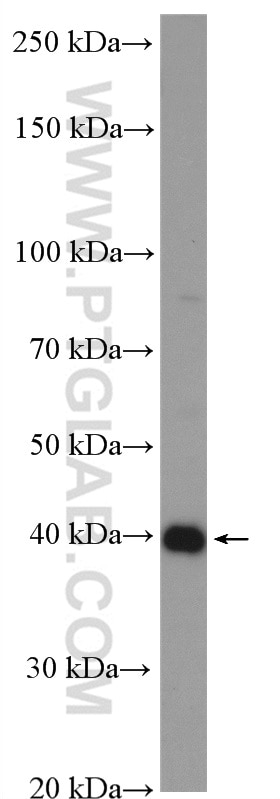
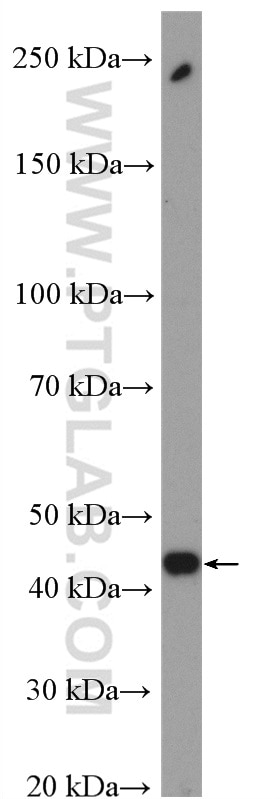
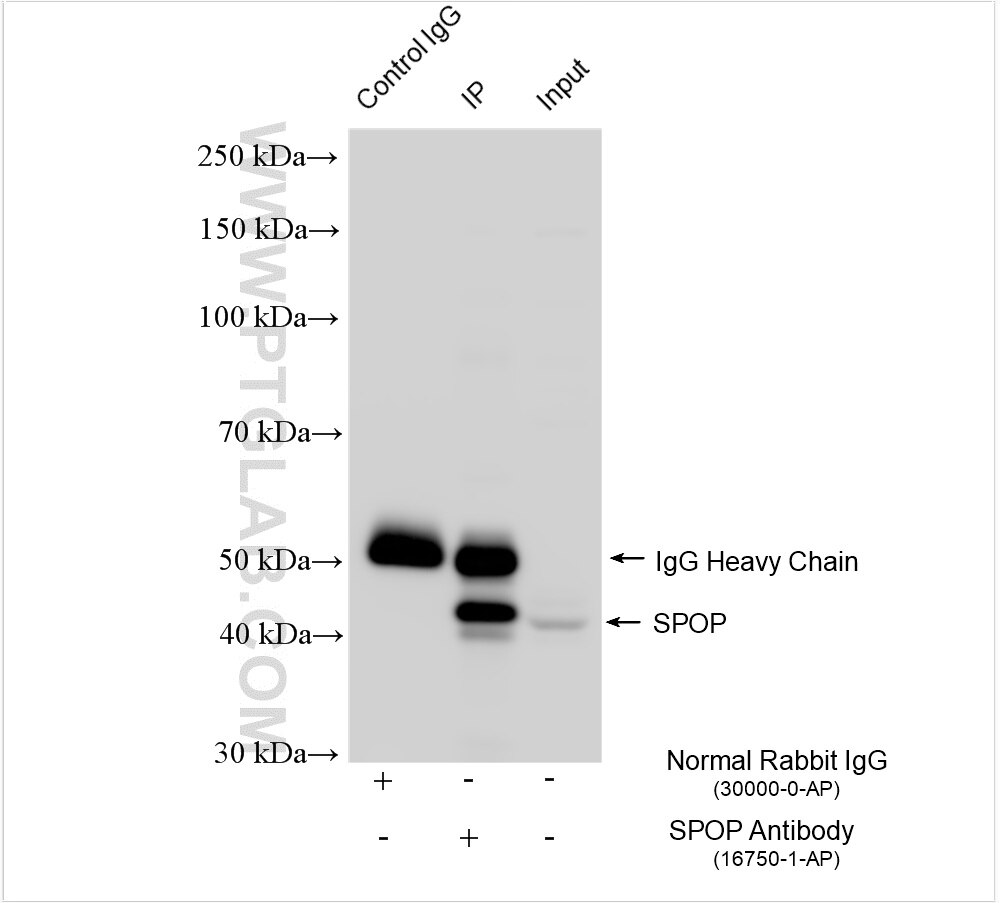
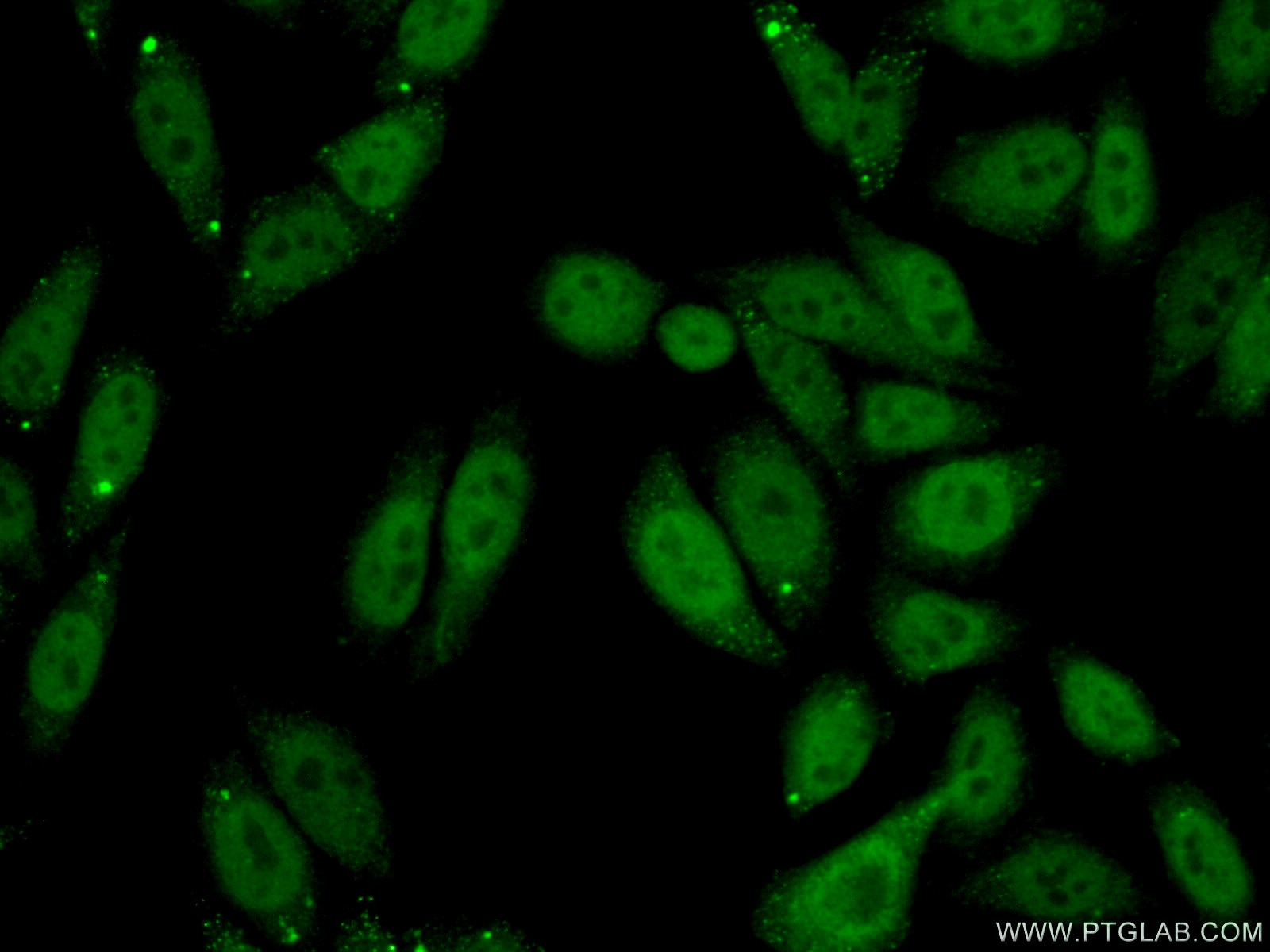

Tested Applications
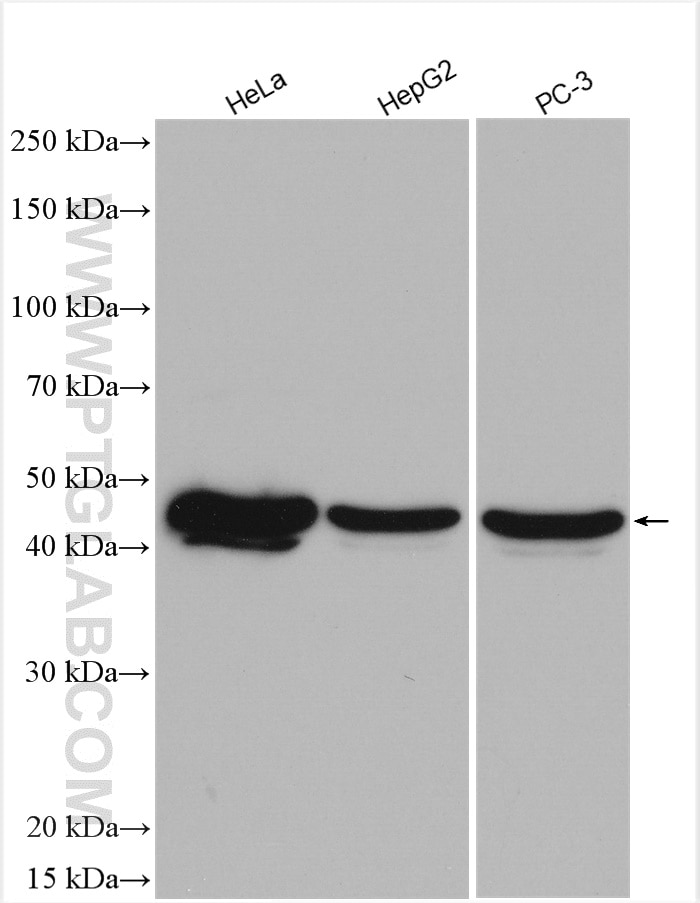
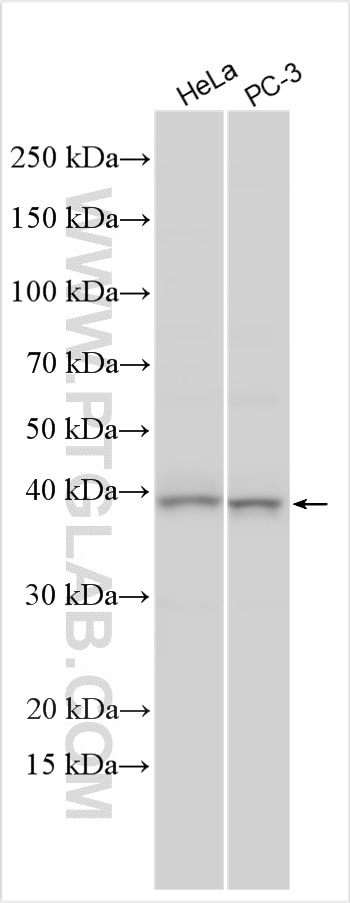
| Positive WB detected in | HeLa cells, HepG2 cells, PC-3 cells |
| Positive IP detected in | HepG2 cells |
| Positive IF/ICC detected in | HepG2 cells |
Recommended dilution
| Application | Dilution |
|---|---|
| Western Blot (WB) | WB : 1:500-1:5000 |
| Immunoprecipitation (IP) | IP : 0.5-4.0 ug for 1.0-3.0 mg of total protein lysate |
| Immunofluorescence (IF)/ICC | IF/ICC : 1:50-1:500 |
| It is recommended that this reagent should be titrated in each testing system to obtain optimal results. | |
| Sample-dependent, Check data in validation data gallery. | |
Product Information
16750-1-AP targets SPOP in WB, IHC, IF/ICC, IP, CoIP, RIP, ELISA applications and shows reactivity with human, mouse, rat samples.
| Tested Reactivity | human, mouse, rat |
| Cited Reactivity | human, mouse, rat |
| Host / Isotype | Rabbit / IgG |
| Class | Polyclonal |
| Type | Antibody |
| Immunogen |
CatNo: Ag10215 Product name: Recombinant human SPOP protein Source: e coli.-derived, PGEX-4T Tag: GST Domain: 1-374 aa of BC003385 Sequence: MSRVPSPPPPAEMSSGPVAESWCYTQIKVVKFSYMWTINNFSFCREEMGEVIKSSTFSSGANDKLKWCLRVNPKGLDEESKDYLSLYLLLVSCPKSEVRAKFKFSILNAKGEETKAMESQRAYRFVQGKDWGFKKFIRRDFLLDEANGLLPDDKLTLFCEVSVVQDSVNISGQNTMNMVKVPECRLADELGGLWENSRFTDCCLCVAGQEFQAHKAILAARSPVFSAMFEHEMEESKKNRVEINDVEPEVFKEMMCFIYTGKAPNLDKMADDLLAAADKYALERLKVMCEDALCSNLSVENAAEILILADLHSADQLKTQAVDFINYHASDVLETSGWKSMVVSHPHLVAEAYRSLASAQCPFLGPPRKRLKQS Predict reactive species |
| Full Name | speckle-type POZ protein |
| Calculated Molecular Weight | 374 aa, 42 kDa |
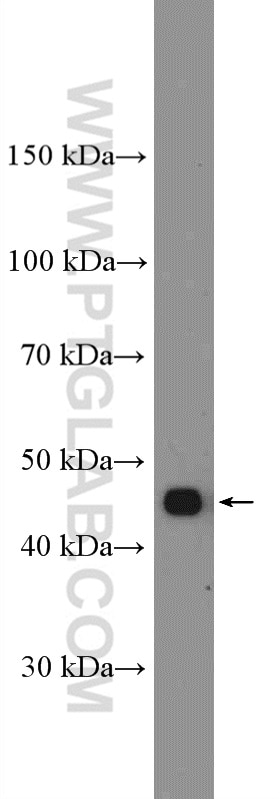
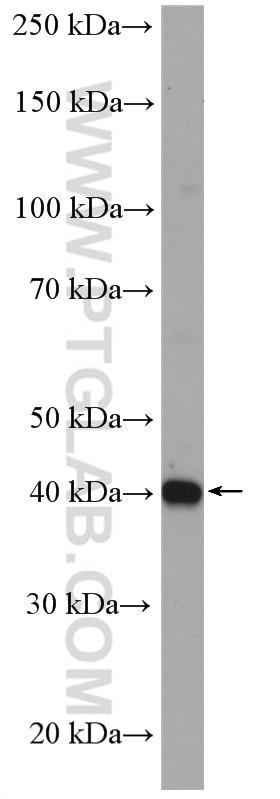
| Observed Molecular Weight | 42 kDa |
| GenBank Accession Number | BC003385 |
| Gene Symbol | SPOP |
| Gene ID (NCBI) | 8405 |
| RRID | AB_2756394 |
| Conjugate | Unconjugated |
| Form | Liquid |
| Purification Method | Antigen affinity purification |
| UNIPROT ID | O43791 |
| Storage Buffer | PBS with 0.02% sodium azide and 50% glycerol, pH 7.3. |
| Storage Conditions | Store at -20°C. Stable for one year after shipment. Aliquoting is unnecessary for -20oC storage. 20ul sizes contain 0.1% BSA. |
Background Information
The SPOP (TEF2) protein was previously identified as an autoantigen in a patient with scleroderma pigmentosum. SPOP (speckle-type POZ protein), also known as TEF2, HIB homolog 1 or Roadkill homolog 1, is a member of the Tdpoz family containing one N-terminal MATH (Meprin and TRAF Homology) domain and one C-terminal BTB/POZ domain. SPOP can exist as a homodimer and is expressed in a variety of tissues localizing to the nucleus. BTB-mediated SPOP dimers form linear oligomers via BACK domain dimerization, and we determine the concentration-dependent populations of the resulting oligomeric species (PMID: 27220849 ). Through an interaction with CUL-3, SPOP is involved in ubiquitinylation and protein degradation. SPOP specifically interacts with CUL-3 via its BTB/POZ domain and recruits substrates to the CUL-3-based ubiquitin ligase via its MATH domain. Substrates recruited by SPOP and targeted for ubiquitylation via the CUL-3/SPOP complex include PDX-1, Bmi-1, MacroH2A, PIPK II ∫ and Daxx. These substrates are subsequently degraded by the proteasome. In addition, SPOP itself becomes ubiquitylated by the CUL-3-based ubiquitin ligase and is targeted for proteasomal degradation.
Protocols
| Product Specific Protocols | |
|---|---|
| IF protocol for SPOP antibody 16750-1-AP | Download protocol |
| IP protocol for SPOP antibody 16750-1-AP | Download protocol |
| WB protocol for SPOP antibody 16750-1-AP | Download protocol |
| Standard Protocols | |
|---|---|
| Click here to view our Standard Protocols |
Publications
What published studies show
The SPOP Polyclonal antibody (16750-1-AP) has 103 citations for Western blot, IP, IHC, and IF applications. Findings appear across leading journals including Nature, Nature Medicine, Cell, Cell Research, Molecular Cancer, Cancer Discovery, Nature Communications, Molecular Cell, Cancer Research, and JCI. Research fields span prostate, colorectal, renal, breast, ovarian, lung, gastric, liver and pancreatic cancer, covering E3 ubiquitin ligase function, PD-L1/immune evasion, BET inhibitor resistance, DNA damage repair, stemness, and androgen signaling. Human tissues were the primary specimens.
| Species | Application | Title |
|---|---|---|
Nature Cyclin D-CDK4 kinase destabilizes PD-L1 via cullin 3-SPOP to control cancer immune surveillance.
| ||
Nat Med Intrinsic BET inhibitor resistance in SPOP-mutated prostate cancer is mediated by BET protein stabilization and AKT-mTORC1 activation.
| ||
Nat Med Prostate cancer-associated SPOP mutations confer resistance to BET inhibitors through stabilization of BRD4.
| ||
Mol Cancer SPOP-mediated ubiquitination and degradation of PDK1 suppresses AKT kinase activity and oncogenic functions.
| ||
Cell Res ILF3 is a substrate of SPOP for regulating serine biosynthesis in colorectal cancer.
| ||
Cancer Discov Germline-Somatic Liaison Dictates Cancer Subtypes via de novo Steroid Biosynthesis |
Reviews
What customers say
Able is busy answering your previous question. Please try again later.
The reviews below have been submitted by verified Proteintech customers who received an incentive for providing their feedback.
Mada (Verified Customer) (01-23-2026) | Support très compétent, nos commandes sont prises en charge immédiatement et le suivi est très fluide.
|

