

Tested Applications
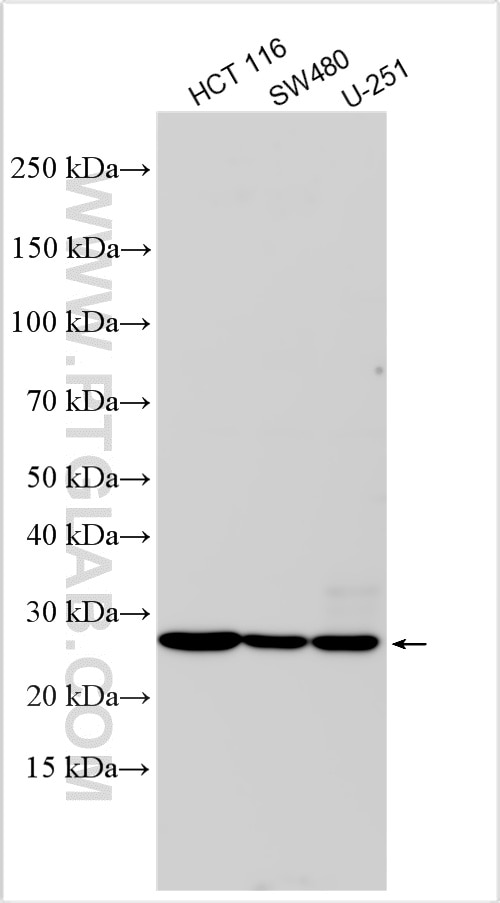
| Positive WB detected in | HCT 116 cells, SW480 cells, U-251 cells |
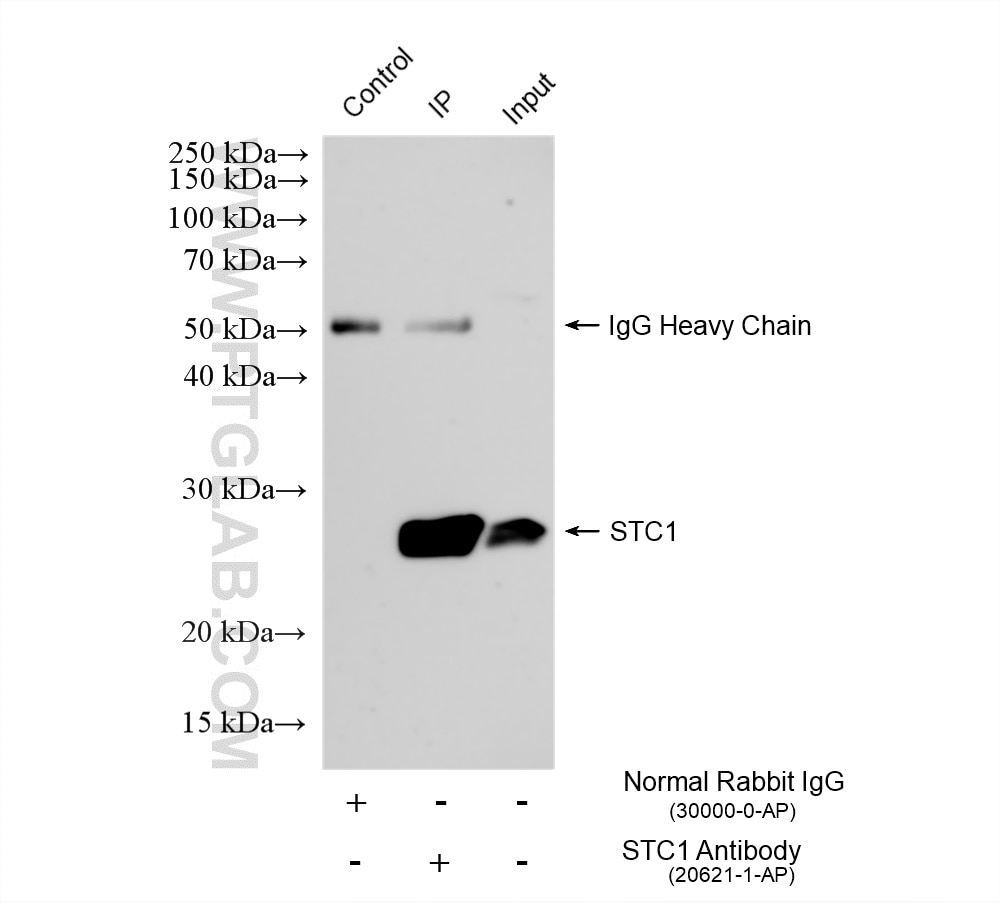
| Positive IP detected in | SW480 cells |
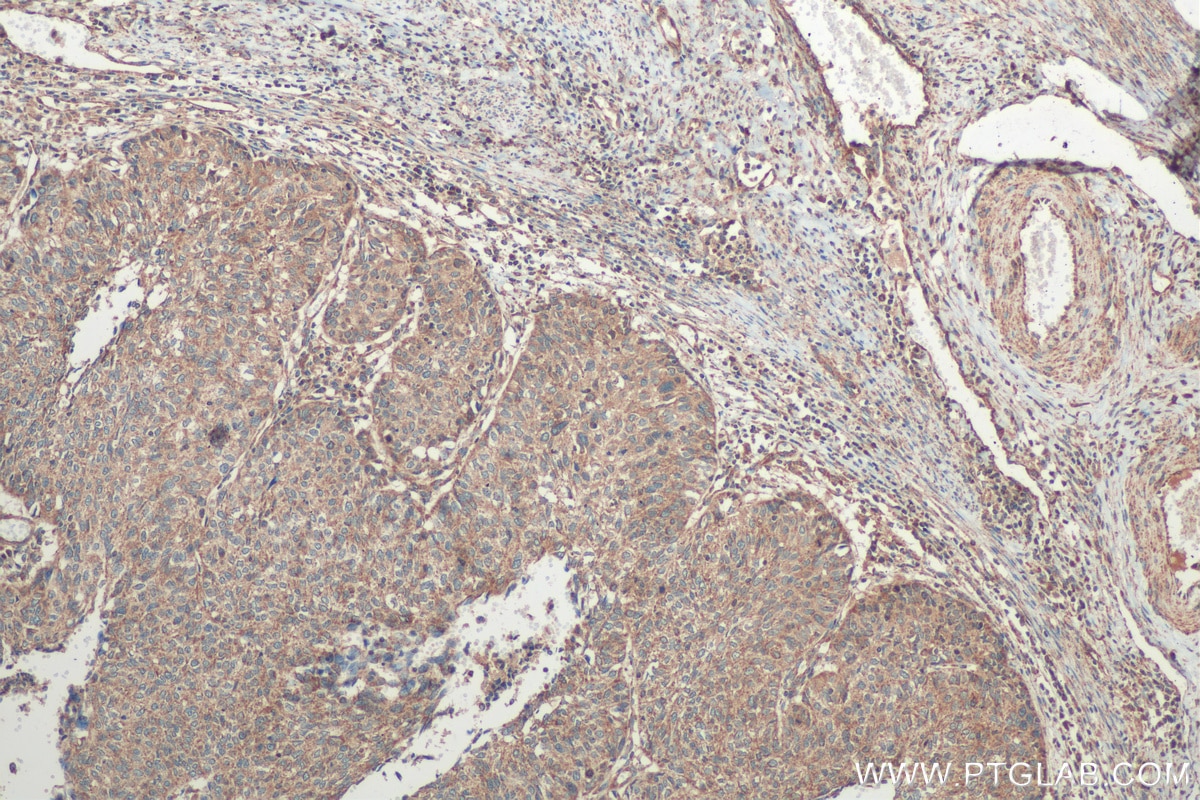
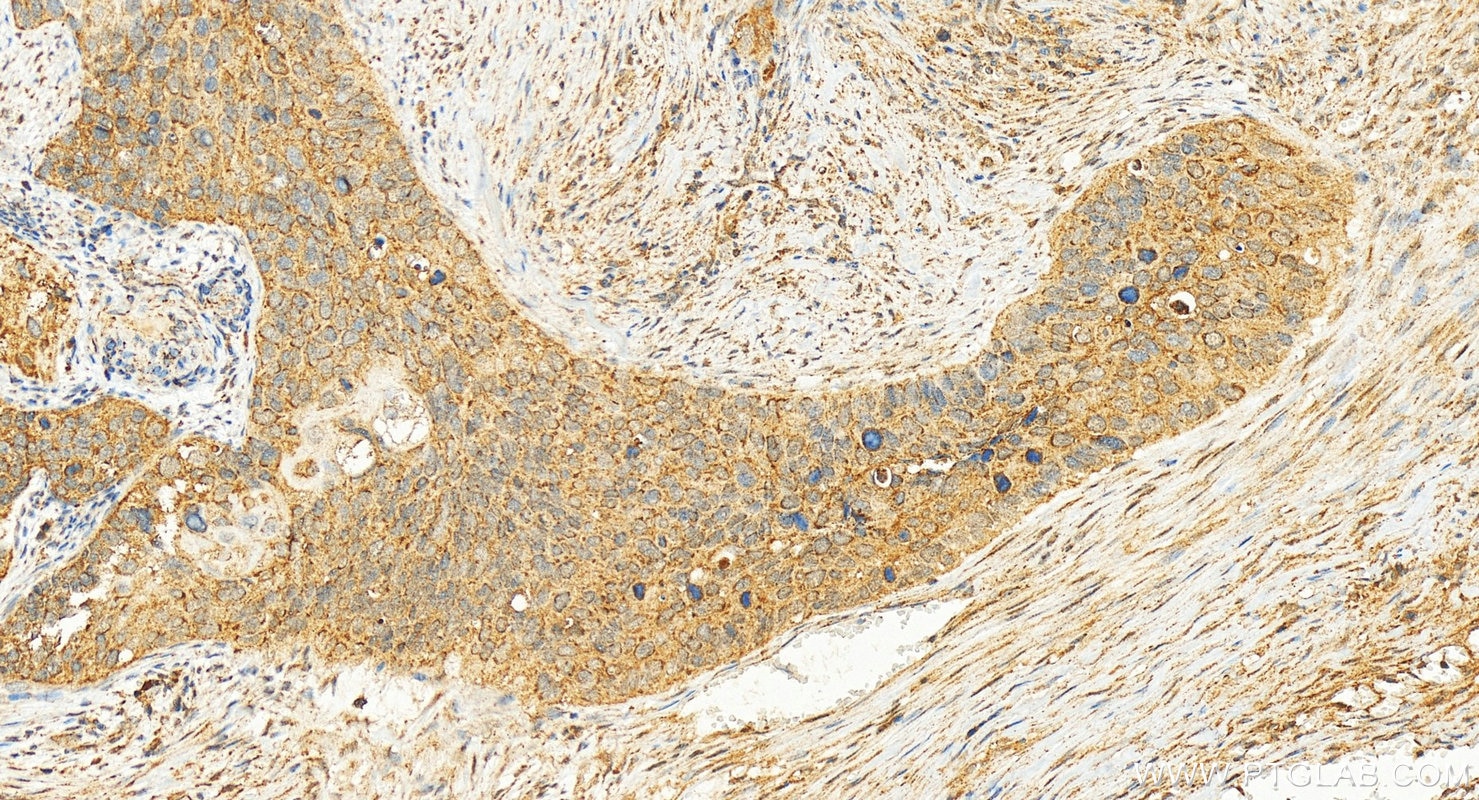
| Positive IHC detected in | human cervical cancer tissue Note: suggested antigen retrieval with TE buffer pH 9.0; (*) Alternatively, antigen retrieval may be performed with citrate buffer pH 6.0 |
Recommended dilution
| Application | Dilution |
|---|---|
| Western Blot (WB) | WB : 1:1000-1:4000 |
| Immunoprecipitation (IP) | IP : 0.5-4.0 ug for 1.0-3.0 mg of total protein lysate |
| Immunohistochemistry (IHC) | IHC : 1:50-1:500 |
| It is recommended that this reagent should be titrated in each testing system to obtain optimal results. | |
| Sample-dependent, Check data in validation data gallery. | |
Product Information
20621-1-AP targets STC1 in WB, IHC, IF, IP, ELISA, Cell treatment applications and shows reactivity with human samples.
| Tested Reactivity | human |
| Cited Reactivity | human |
| Host / Isotype | Rabbit / IgG |
| Class | Polyclonal |
| Type | Antibody |
| Immunogen |
CatNo: Ag14697 Product name: Recombinant human STC1 protein Source: e coli.-derived, PGEX-4T Tag: GST Domain: 98-247 aa of BC029044 Sequence: CIANGVTSKVFLAIRRCSTFQRMIAEVQEECYSKLNVCSIAKRNPEAITEVVQLPNHFSNRYYNRLVRSLLECDEDTVSTIRDSLMEKIGPNMASLFHILQTDHCAQTHPRADFNRRRTNEPQKLKVLLRNLRGEEDSPSHIKRTSHESA Predict reactive species |
| Full Name | stanniocalcin 1 |
| Calculated Molecular Weight | 247 aa, 28 kDa |
| Observed Molecular Weight | 25-28 kDa |
| GenBank Accession Number | BC029044 |
| Gene Symbol | STC1 |
| Gene ID (NCBI) | 6781 |
| RRID | AB_10694290 |
| Conjugate | Unconjugated |
| Form | Liquid |
| Purification Method | Antigen affinity purification |
| UNIPROT ID | P52823 |
| Storage Buffer | PBS with 0.02% sodium azide and 50% glycerol, pH 7.3. |
| Storage Conditions | Store at -20°C. Stable for one year after shipment. Aliquoting is unnecessary for -20oC storage. 20ul sizes contain 0.1% BSA. |
Background Information
STC1, also named as stanniocalcin 1, a 56kDa homodimeric glycoprotein hormone, is highly expressed in a variety of cancers such as breast, ovarian, and colorectal cancers (PMID: 27459971). This gene encodes a secreted, homodimeric glycoprotein that is expressed in a wide variety of tissues and may have autocrine or paracrine functions. The protein may play a role in the regulation of renal and intestinal calcium and phosphate transport, cell metabolism, or cellular calcium/phosphate homeostasis. STC1 is implicated in several pathologies including retinal degeneration, cerebral ischemia, angiogenesis and inflammation (PMID: 25391215). The calculated molecular weight of STC1 is usually approximately 28 kda.
Protocols
| Product Specific Protocols | |
|---|---|
| IHC protocol for STC1 antibody 20621-1-AP | Download protocol |
| IP protocol for STC1 antibody 20621-1-AP | Download protocol |
| WB protocol for STC1 antibody 20621-1-AP | Download protocol |
| Standard Protocols | |
|---|---|
| Click here to view our Standard Protocols |
Publications
What published studies show
The STC1 Polyclonal antibody (Cat# 20621-1-AP) has 23 citations across journals including Theranostics, J Exp Clin Cancer Res, Front Immunol, Cancer Cell Int, Life Sci, J Am Heart Assoc, FASEB J, Inflamm Bowel Dis, and others. Research fields span oncology (pancreatic, ovarian, gastric, colorectal, glioma, testicular cancer), cardiac fibrosis, rheumatoid arthritis, diabetic nephropathy, renal ischemia, viral replication, gout, and osteoarthritis.
| Species | Application | Title |
|---|---|---|
Theranostics Lactylation-driven NSUN2-mediated RNA m5C modification promotes perineural invasion in pancreatic cancer. | ||
J Exp Clin Cancer Res Stanniocalcin 1 promotes metastasis, lipid metabolism and cisplatin chemoresistance via the FOXC2/ITGB6 signaling axis in ovarian cancer.
| ||
Front Immunol Identification of prognosis and therapy related intratumoral microbiome and immune signatures in gastric cancer | ||
Cancer Cell Int Gastric cancer cell-originated small extracellular vesicle induces metabolic reprogramming of BM-MSCs through ERK-PPARγ-CPT1A signaling to potentiate lymphatic metastasis | ||
Life Sci STC-1 improves scar remodeling and is associated with PI3K/AKT signaling and immune modulation. |

